PVC-Free Surface Film for Hygienic Wall PanelsHealthcare walls are judged on cleaning, material content and paperwork, not looks alone.
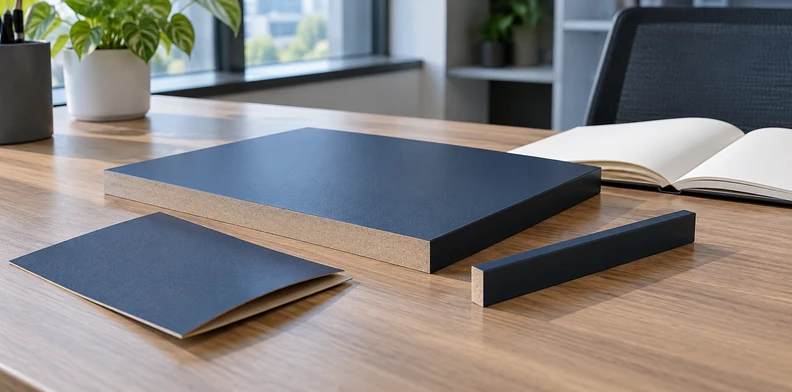
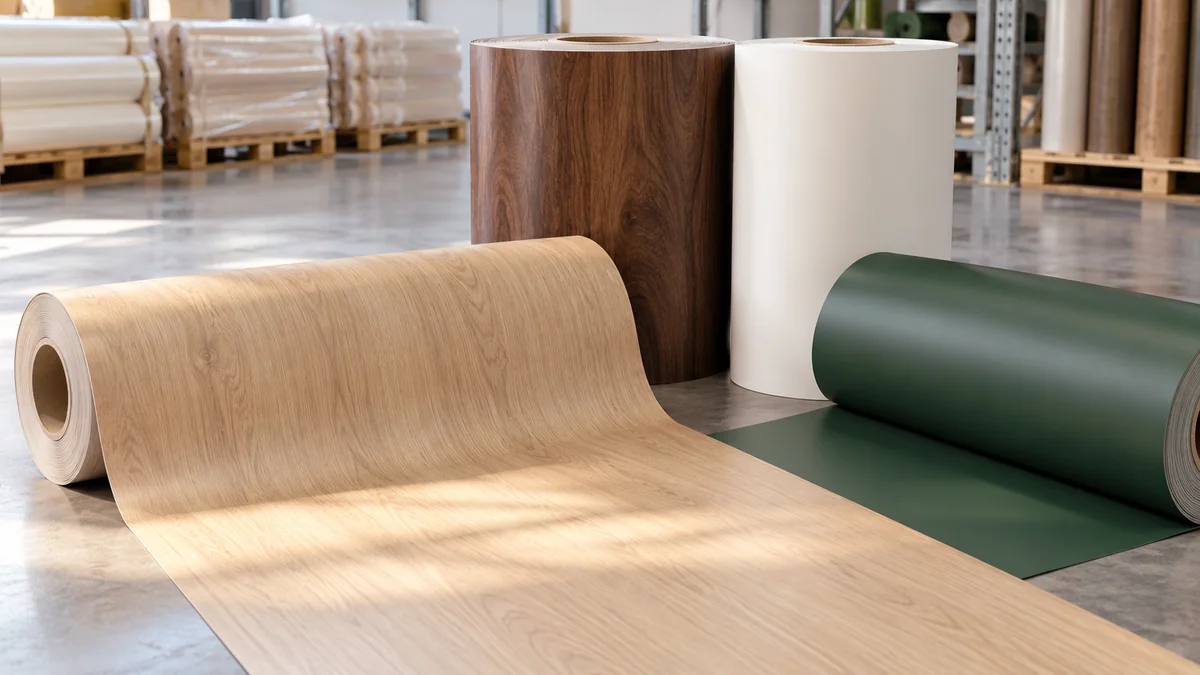
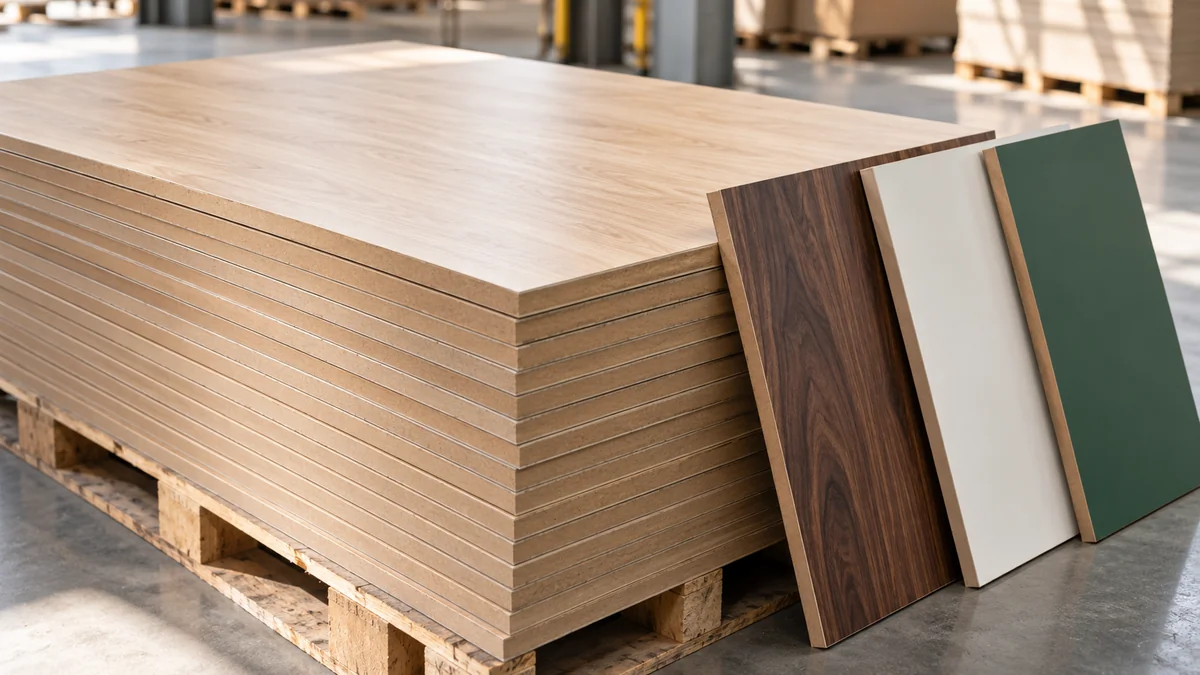
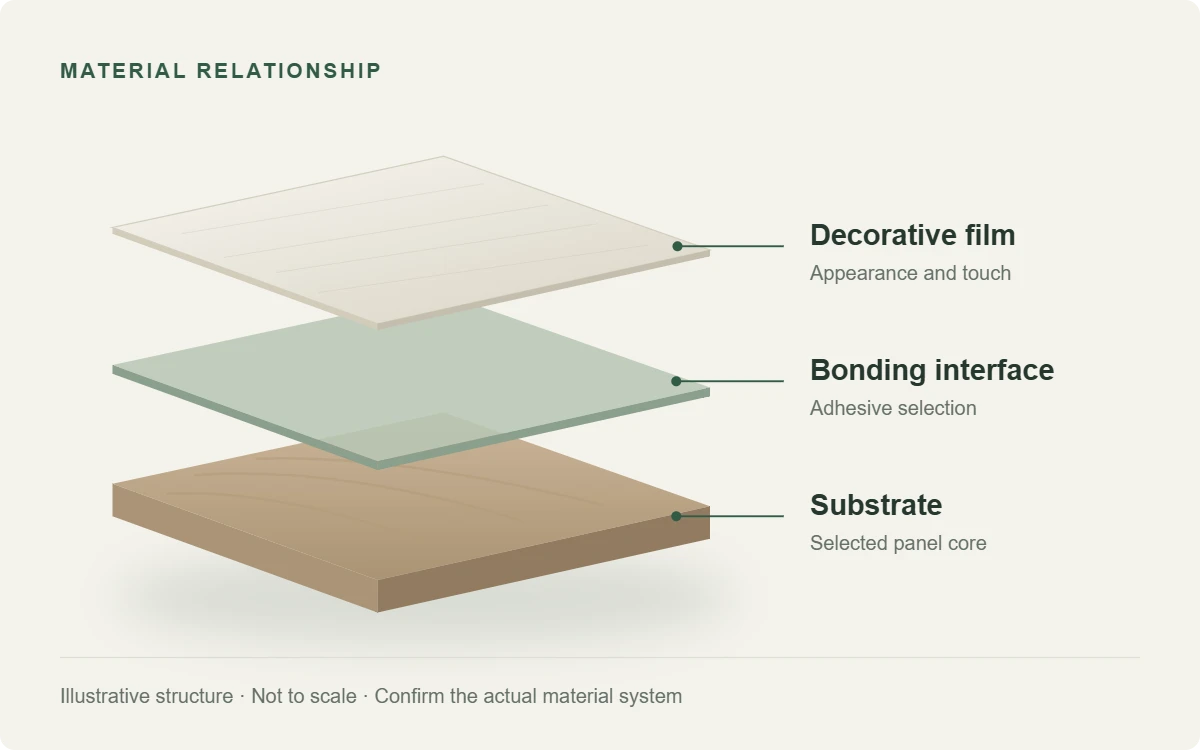
We make a silicone-surfaced decorative film on a PET carrier. Panel makers laminate it to MDF, plywood or particleboard with PUR adhesive, the same flat-lamination route used for PVC film. Buy the film in rolls, or ask us to quote film-faced panels for your project.
Free samples are separate from production orders. Production MOQ: standard film 500 m; panels 200 sheets at 1220 × 2440 mm. Technical guidance for your first lamination trial.
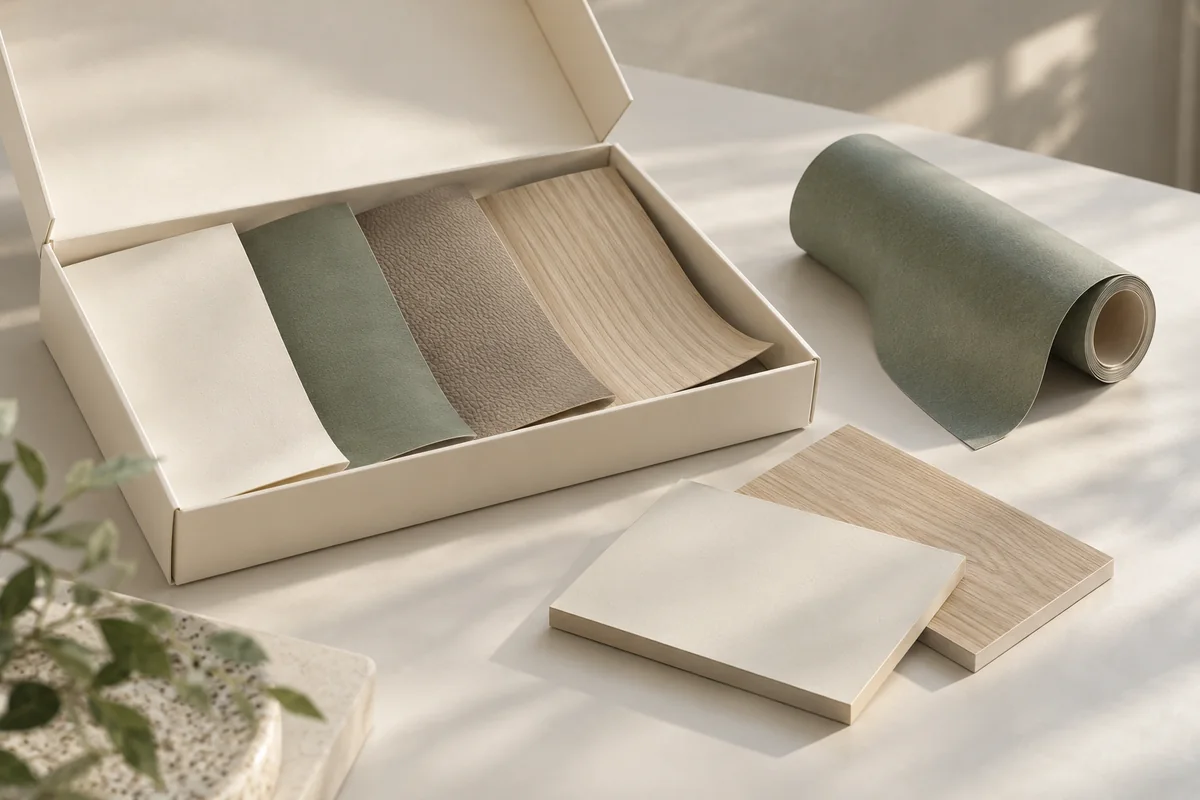
Film sample kit
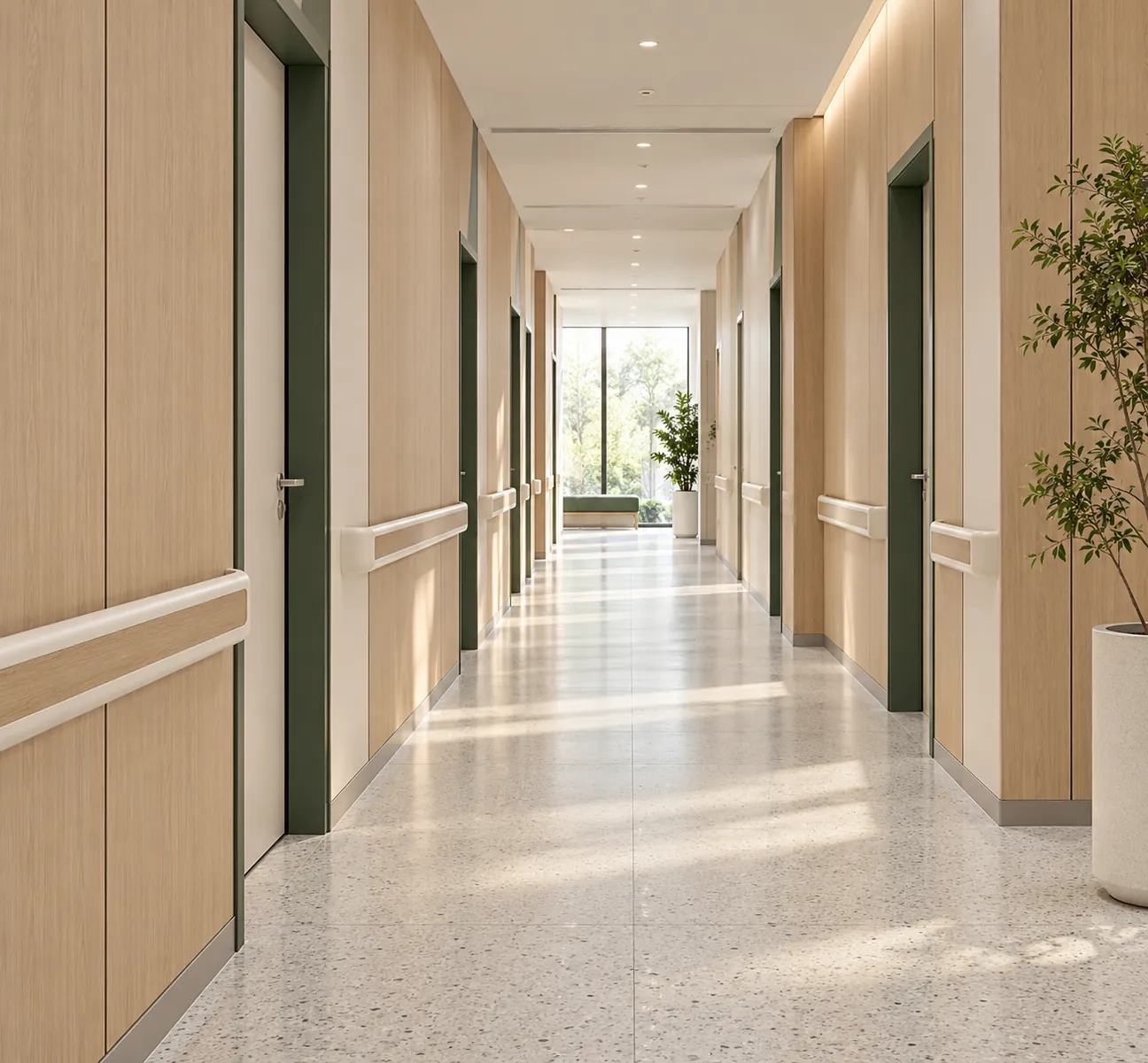
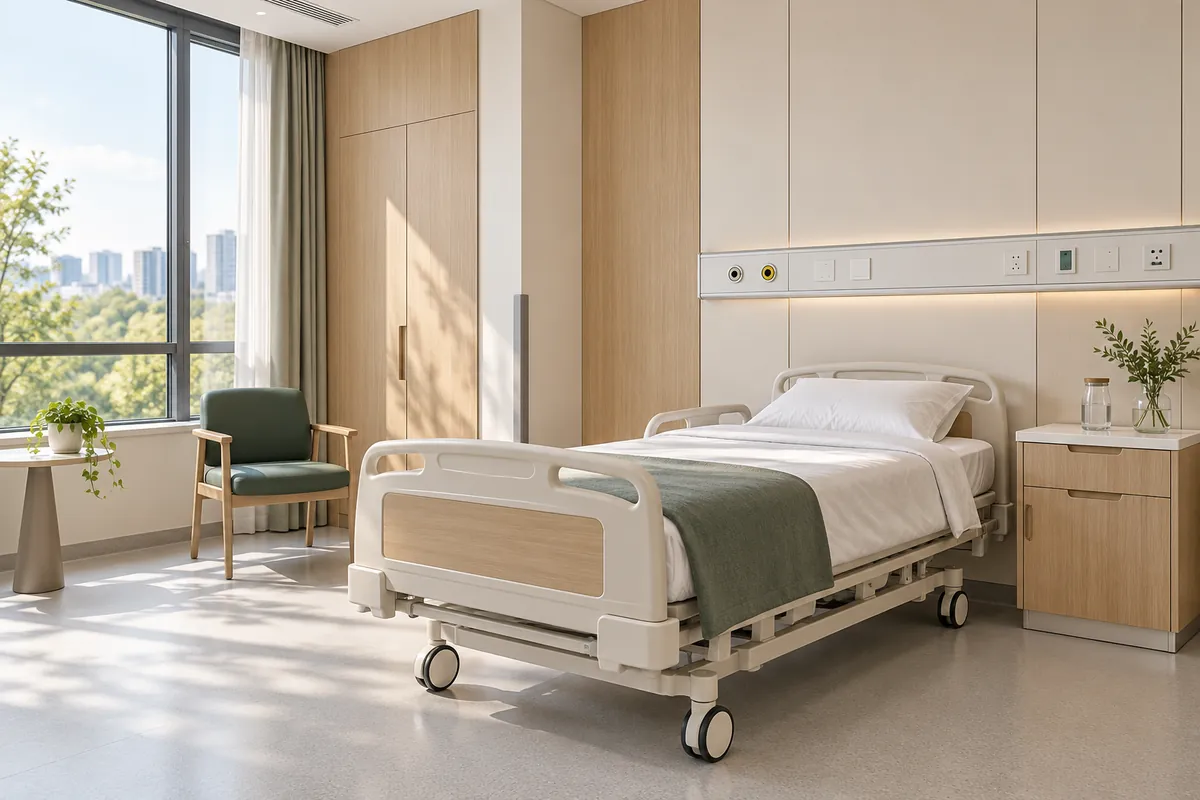
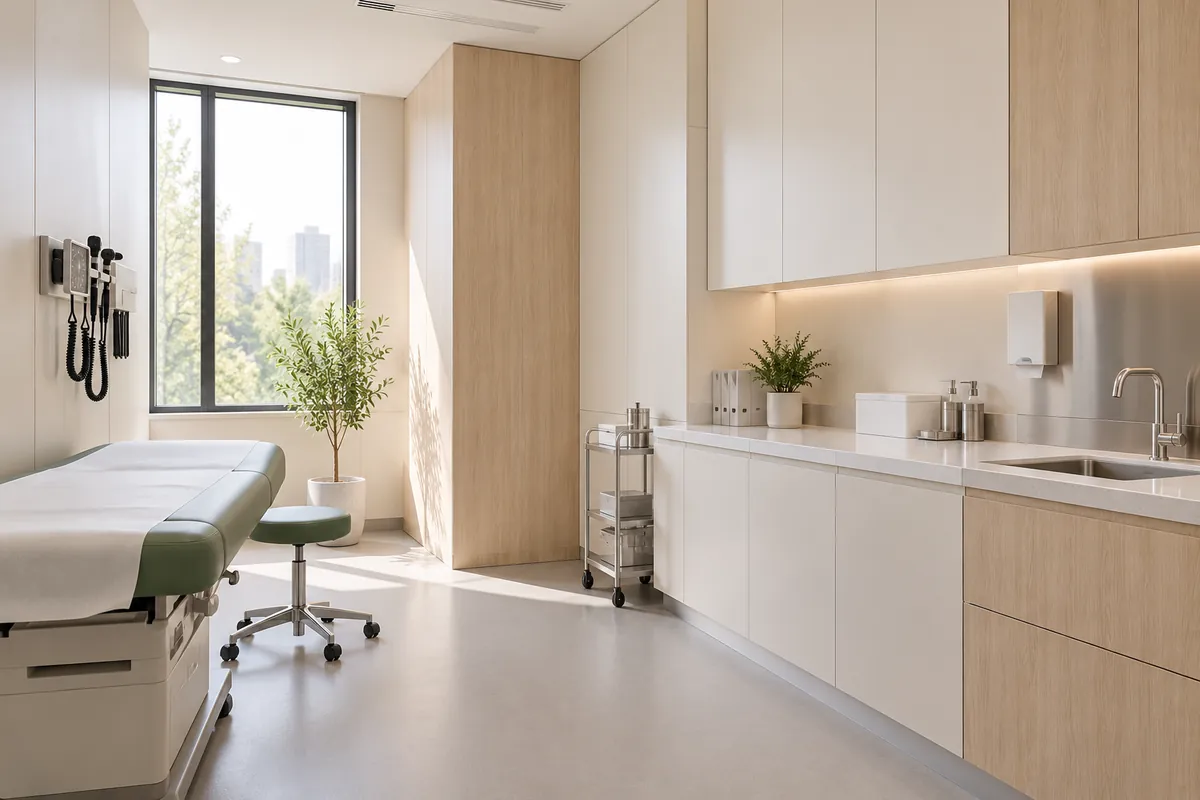
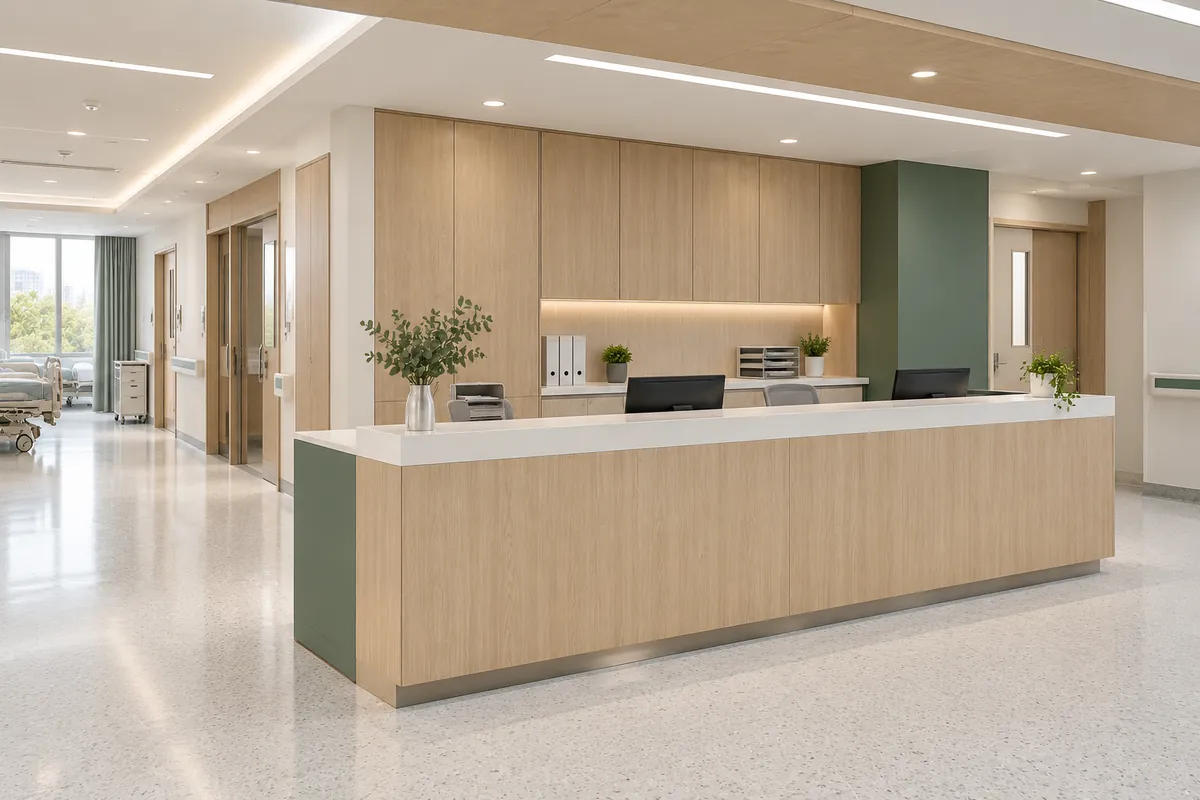
Healthcare interiors
What Makes Healthcare Wall Surfaces Different From Ordinary Interiors?
Home and office interior expectations
Walls cleaned now and then, with mild detergent
The finish is chosen mainly for colour and texture
A worn panel can be replaced at the next refurbishment
Material content is rarely checked
Fire papers handled once, for the whole fit-out
Healthcare interior requirements
Walls wiped with disinfectant several times a day
Surfaces must not trap ink, food or body fluids
Carts, beds and wheelchairs hit walls at touch height
Specs may exclude PVC, phthalates or formaldehyde
Fire documents asked for each wall finish
Replacing a panel means closing a room
The difference for a panel maker
In a home, the face only has to look right on day one. In a clinic, the same face is cleaned thousands of times, checked against a material spec and documented for the fire officer. The film you choose decides most of that before the panel leaves your line.
Send us the wall spec you are working to and we tell you which parts the film already covers.
Real Challenges Facing Hygienic Wall Panel Projects
01
PVC faces dropped at tender
Some hospital purchasing programmes and healthy-building checklists ask for PVC-free or phthalate-free materials. A PVC-faced panel can be ruled out before price comes up, and the panel maker loses the job, not the film supplier. Compare project settings in our commercial interior applications overview.
02
Cleaning that never stops
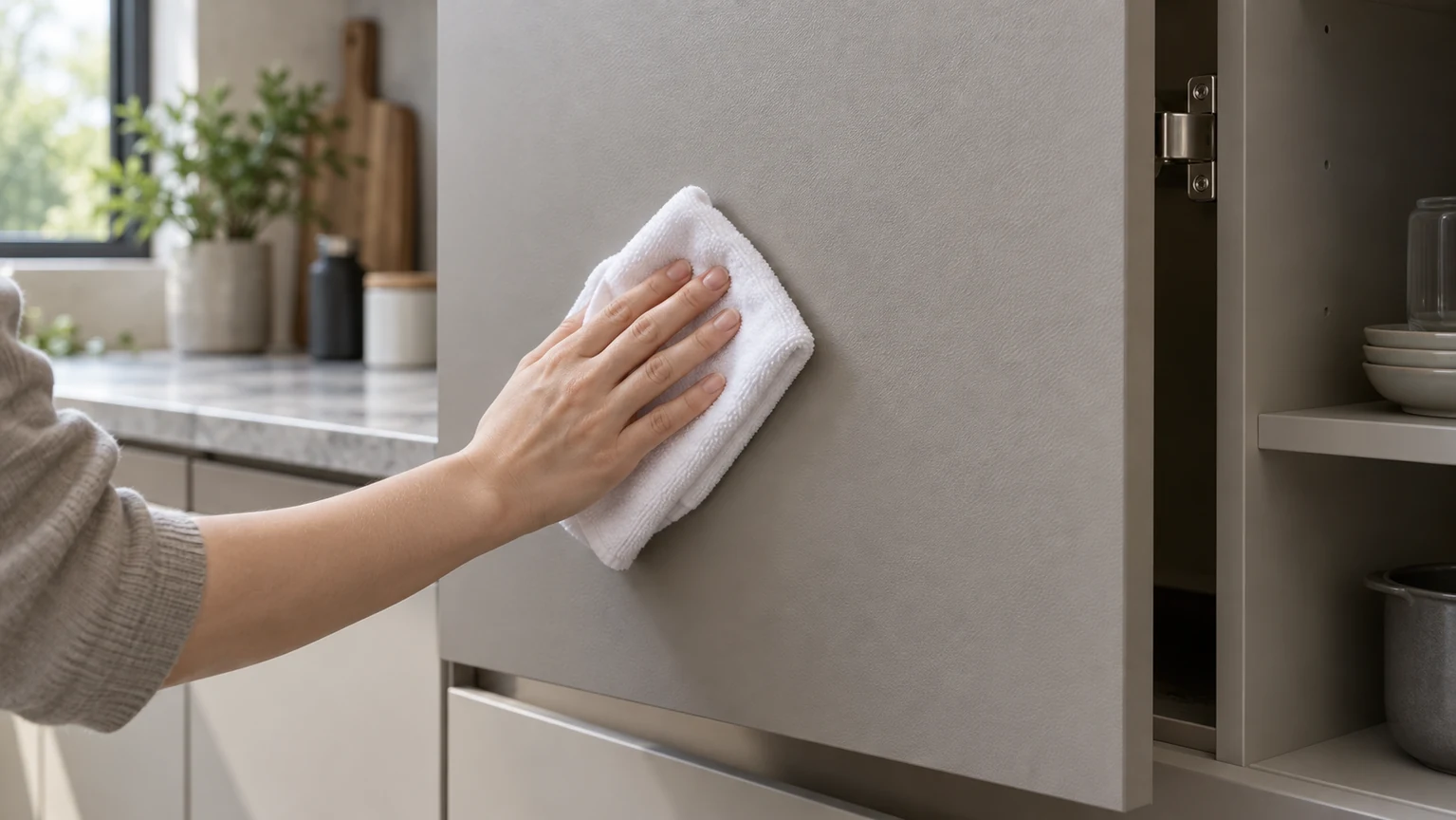
Walls beside beds, doors and sinks are wiped every shift for years. A face that dulls, goes tacky or holds stains turns into a complaint against whoever supplied the panel.
03
Paperwork for every layer
Contractors ask for material content, fire and cleaning data on the face, the board and the adhesive. If the film supplier cannot provide its part, the panel waits on site.
Tell us which of these is costing you projects now.
5 Most Common Problems With Wall Surfaces in Clinics and Hospitals
Each problem is followed by what the film does about it and the evidence we can show. Results describe film samples under the stated conditions, not a finished panel.
01Disinfectant wiping marks the surface
Alcohol-based cleaners leave some faces dull or tacky after months of daily wiping.
In the manufacturer's laboratory tests, 75% alcohol, 75% acetone and light naphtha were applied to the film and held at 85 °C / 85% RH for 720 hours. After they evaporated, none had left a visible change. Send us the disinfectants in your cleaning schedule and we tell you which results apply.
Wards and waiting rooms collect pen marks and spilled drinks. Hard scrubbing scratches the face, and the scratches hold the next stain.
Coffee, red wine, soy sauce and lipstick left for 24 hours at 25 °C wiped off with no visible change. Ballpoint pen, water-based and oil-based marker showed no change or slight staining. With a surface energy of about 21 mN/m, liquids bead up on the silicone instead of spreading. Watch cleaning video↗
24 hoursEvidenceStains: manufacturer laboratory tests. Surface energy: worked examples in our patent application.
03Carts and hands wear through the face
Once the decorative layer wears through at touch height, the panel has to be replaced, not cleaned.
A Taber test (ASTM D4060, CS-10 wheels, 1,000 g per wheel, 2,000 cycles) left slight matting only, with no exposed substrate and no peeling. A 2H pencil at 500 gf and 45° left no visible scratch. Abrasion is not impact, so plan corner guards and bumper rails on bed routes. Watch scratch video↗
2,000 cyclesEvidenceSGS reports SZIN2608002405PL04 and PL02, film samples.
04Fire documents missing when the inspector asks
If the face supplier has no papers for the grade used, the panel maker carries the delay.
Flame retardancy is a standard property of the film. Higher grades up to UL 94 V-0 can be formulated as an option and come with the test report for that grade. The fire rating of a panel depends on its core and adhesive, so test the assembled panel for your project.
UL 94 V-0EvidenceStandard film property. Graded options supplied with a matching report.
05Antibacterial claims nobody can back up
A claim without test data, or one that promises infection control, puts the panel maker at legal risk.
Antibacterial grades are optional and formulated per order at extra cost. In worked examples in our patent application, the antibacterial rate against E. coli and S. aureus was at least 99%. We make no claim that the film prevents infection or replaces cleaning.
at least 99%EvidenceWorked examples, patent application (pending). Optional grade only.
Send the cleaning agents and test methods in your specification. We reply with the results we hold and any tests still needed.
Why Healthcare Projects Leave No Room to Swap the Wall Face Later
Rooms stay in service
Replacing a wall panel in a ward or treatment room means moving patients and closing the room. A face that fails after handover costs far more than its price per square metre.
One face across a whole building
Corridors, rooms and casework often use the same decor. A problem found in one area is usually in every area, because the same film went on every panel.
The claim belongs to the panel maker
The contractor holds the panel supplier to the spec. If the face cannot meet it, the panel maker answers for it, so the film data has to be in hand before the order.
Test the film on your own line before you quote it into a project.
How We See the Film's Role in a Hygienic Wall Panel
01
The face is what people clean and touch
Staff never see the board or the adhesive. Every wipe, stain and scuff lands on the top 20 to 100 μm of silicone, so that layer carries the hygiene performance.
02
Film and lamination decide service life
A good film on a poor bond still lifts at the edges. The PUR adhesive, board and line settings matter as much as the film, which is why we support the lamination trial.
03
Supplier and panel maker share the data
We give you the film data with its test conditions. You add the board and adhesive data. Together that becomes the document set the contractor asks for.
Tell us your board, adhesive and line, and we check the film fit.
Test Data & Compliance Documents for Healthcare Projects
SGSformaldehyde emission
SGSREACH SVHC
SGSRoHS
FourSGS reports on the film
ISO9001 / 14001
Test reports
Four SGS reports on the film
PL01: 0.06% / 0.10% length and width change after 100 °C for 600 minutes
PL02: no visible scratch, 2H pencil at 500 gf
PL03: tensile test, two specimens (reference only; specimens broke outside the gauge marks)
PL04: Taber abrasion, 2,000 cycles, slight matting only
Compliance
Chemical and quality documents
The film has passed SGS testing for formaldehyde emission, REACH SVHC and RoHS. Reports and ISO 9001 / ISO 14001 certificates are available with your enquiry. Certificates are issued to our sister company, which develops the silicone formulation.
Support
Data labelled by source
Every figure we send states where it comes from: an SGS report, a manufacturer laboratory test or a worked example in our patent application (pending). That keeps your document file accurate when a consultant checks it.
Tell us which documents your contractor has asked for.
From First Sample to Long-Term Supply: A Predictable Path
1. Spec and samples
Send your wall spec and the patterns you like. Free samples ship in 3–5 working days.
2. Wipe test and lamination trial
Test with your cleaning agents, then laminate a trial run on your line with our guidance.
3. Pilot batch
Request project evaluation samples separately from production orders. Production MOQ: standard film 500 m; panels 200 sheets at 1220 × 2440 mm.
4. Stable supply
Repeat orders against the approved colour reference, from six lines with over 1 million m² of monthly capacity.
Typical lead times
Standard film orders take 15–25 days after deposit. Custom patterns add 7–10 days for proofing. Film-faced panels are quoted per project, with lead times in line with standard PVC-faced panels.
Give us your project dates and we work back to a sample and order schedule.
Why Panel Makers Choose Puremorfilm for Healthcare Projects
10+years in decorative surface materials
sixlines
1 millionm² of monthly capacity
100+patterns
01
Factory direct
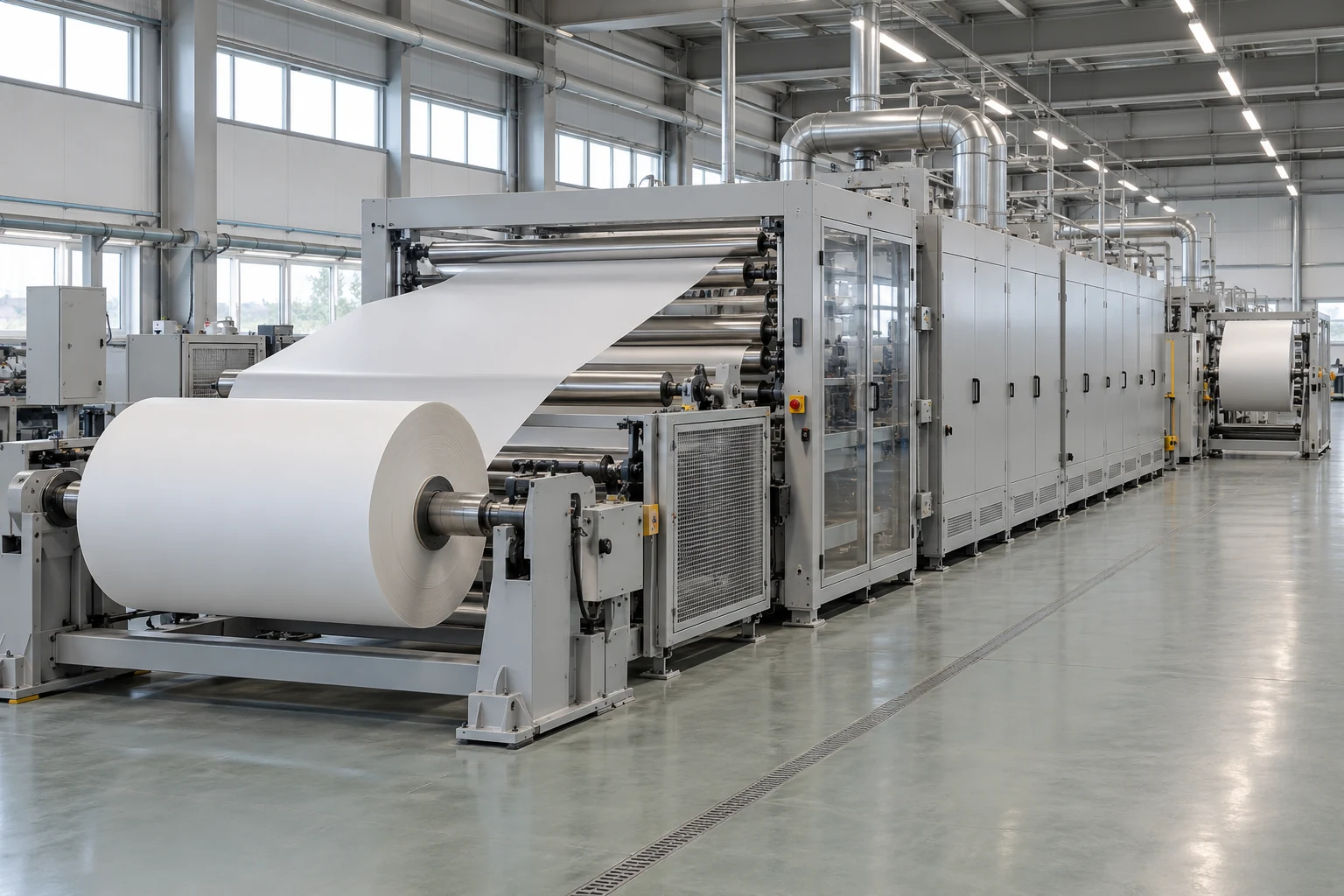
Printing, silicone coating, curing and slitting run on our own six lines. You deal with the plant that makes the film, with 10+ years in decorative surface materials. Watch the factory video↗
02
Chemistry behind the surface
The silicone formulation comes from our sister company. Its chemists support grade changes such as antibacterial or higher flame-retardant versions.
03
Easy to start, easy to scale
Free samples are separate from production orders, with technical guidance on your line. Production MOQ: standard film 500 m; panels 200 sheets at 1220 × 2440 mm. When a project needs finished panels, we quote those too.
Building Healthcare Wall Panels? Let's Discuss Your Project
Yes. The wall film contains no PVC and 0 plasticizers, including no DOP. The film also contains no formaldehyde. Emissions from a finished panel depend on the board and adhesive as well.
Which cleaning agents has the film been tested with?
In the manufacturer's laboratory tests, 75% alcohol, 75% acetone and light naphtha held on the film at 85 °C / 85% RH for 720 hours left no visible change. Send us the products in your cleaning schedule and we tell you which results apply.
Can you supply finished film-faced panels?
Yes, on request. We quote per project, faced on one or both sides, on any board that takes flat-laminated PVC film. Send the board type, size, thickness and quantity.
Is the film antibacterial?
An antibacterial grade is available as an option at extra cost. In worked examples in our patent application, the rate against E. coli and S. aureus was at least 99%. We make no infection-control claims.
What fire rating will my panel get?
That depends on the core board and adhesive, so the assembled panel has to be tested. The film itself is flame-retardant as standard, and higher grades up to UL 94 V-0 are available with a matching report.
Can the film go on floors, worktops or shower walls?
No. The surface has a leather-like texture and some give, so it is not used on floors, worktops, shower floors or any surface people walk on.
Request received
We reply by email with the samples, documents or quote you asked for.