
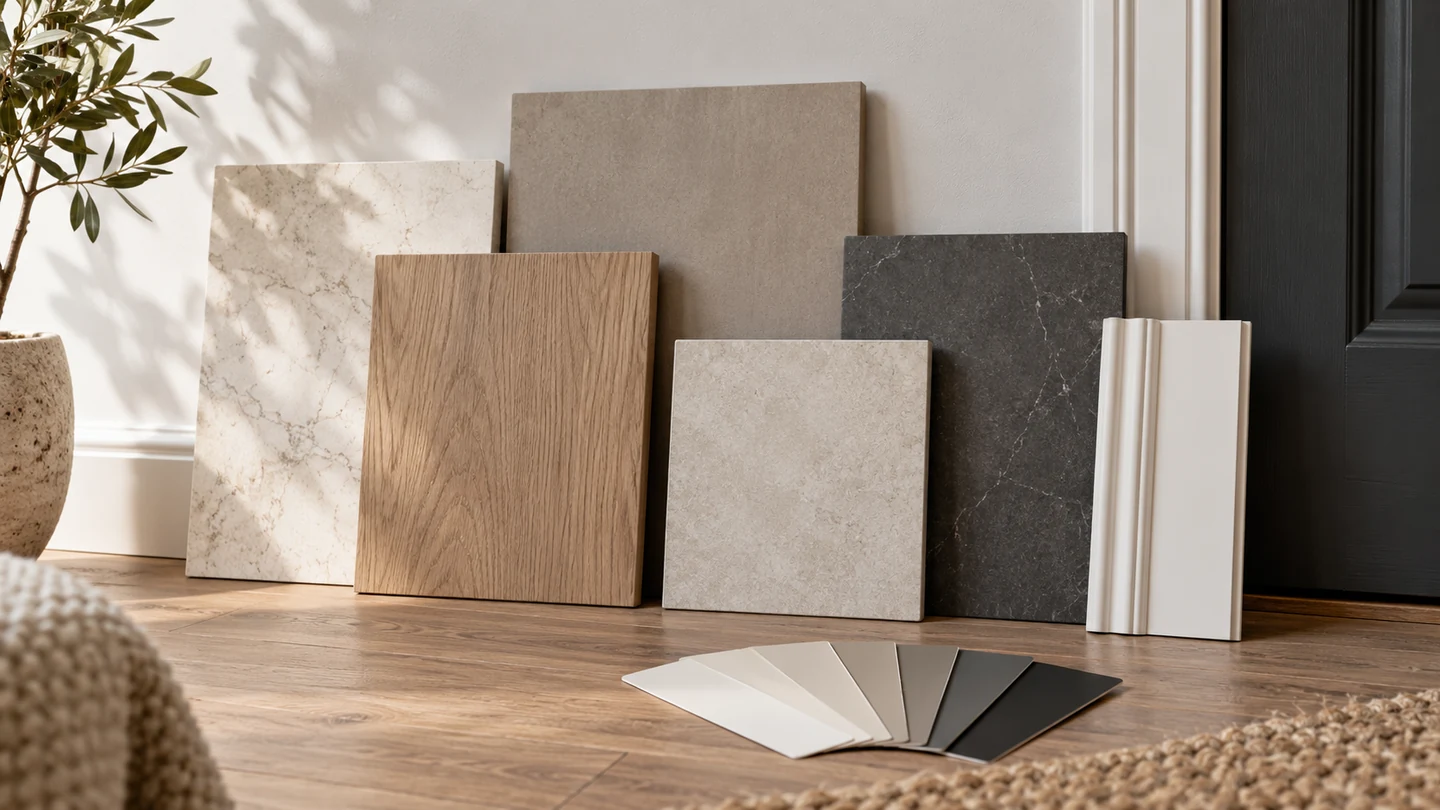
Decorative film light reflectance value, or LRV, describes the visible light reflected by the particular finish being assessed as an opaque surface. The scale runs from 0 for an ideal absorbing black to 100 for an ideal reflecting white. Use it to compare surface lightness and contrast, then view the actual color in the room.
Glass film needs a broader optical description, including visible light transmittance and visible reflectance from the relevant sides. Its published measurements belong to a stated film-and-glass combination; changing which side of the window is brighter changes the appearance and privacy effect people see.
What is light reflectance value?
LRV describes how much visible light a surface reflects, using an ideal black-to-white reference scale. It helps compare how light or dark surfaces are, while hue, saturation, gloss and texture describe other aspects of appearance.
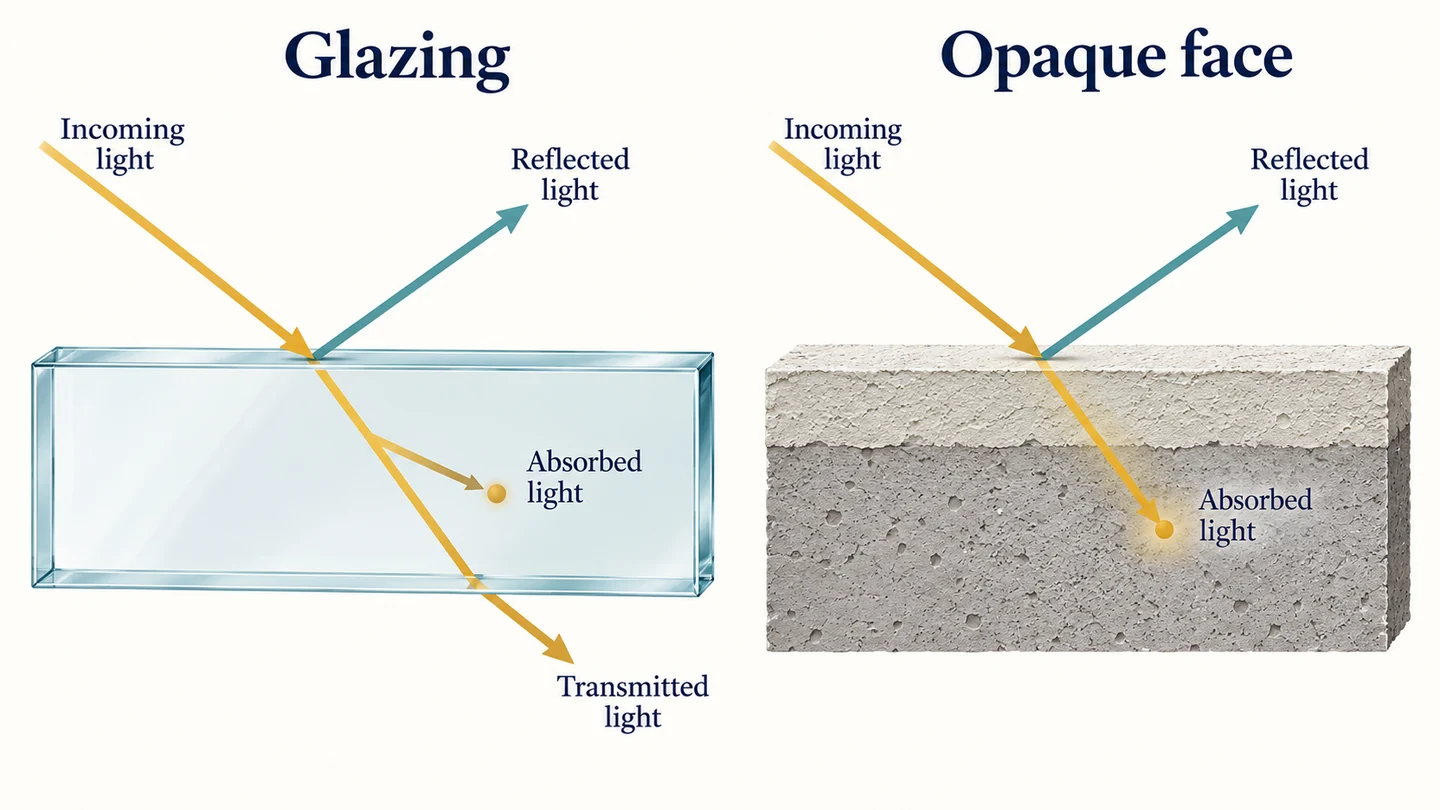
The definition in England’s building-access guidance concerns visible light reflected across wavelengths and directions. In this article, LRV refers to opaque decorative faces such as wall coverings, fabrics and panel finishes. An opaque face reflects some incident light and absorbs the rest.
| Parameter | What it concerns | Useful design question |
|---|---|---|
| Surface LRV | Visible light reflected by the measured decorative sample | Will adjacent opaque finishes differ enough in lightness? |
| Glass-system VLT | Visible light transmitted through the glazing system | How much visible light passes through? |
| Glass-system visible reflectance | Visible light reflected under the stated test and side conditions | How reflective will the selected film/glass combination be? |
A pale neutral and a bright saturated color can have different lightness values even when both feel visually strong. Read the published LRV for the exact color instead of estimating it from the color name. The decorative wall surfaces overview covers those finish choices alongside their construction.
How does window-film reflectance differ from surface LRV?
A glass system transmits and reflects visible light, so read its VLT and the relevant inward and outward visible-reflectance values together. For an opaque wall face, the reflected-light value is the useful surface-selection parameter here.
The window-film industry’s education guide distinguishes transmitted, reflected and absorbed energy and discusses the role of glazing. ISO 9050:2026’s public text concerns optical characteristics of building glazing. The specified measurement and film/glass combination stay with a published percentage.
Daytime and nighttime privacy are a separate viewing problem. A reflective film can obscure a view into a darker interior when outdoors is brighter; if the room becomes the brighter side at night, that privacy effect changes. The film’s published VLT stays the same; what changes is which side of the glass is brighter.
A fully opaque design can block a view through it, while a frosted or diffusing pattern can still reveal silhouettes according to its design and the lighting. For a bathroom window, examine the actual privacy requirement by day and night. For a wall panel, evaluate the selected decorative sample and mounting without borrowing a window film’s transmission figure.
Will a higher LRV make a room feel brighter?
Higher-reflectance light surfaces return more visible light into a room, while darker low-reflectance surfaces return less. The room’s daylight, lamps, surface locations and geometry still determine the result you experience.
The U.S. Department of Energy’s architectural guidance discusses interior surface reflectance as part of daylight design. A bright ceiling or wall can help distribute available light. It works with the openings and lighting design, without supplying a fixed energy-saving percentage for any paint or film.
In a small room with limited daylight, a light broad wall or ceiling is a useful starting choice. In a well-lit open space, darker accents can create a different atmosphere while leaving other surfaces to distribute light. The position and area of each finish matter alongside its individual number.
Gloss changes the direction and strength of highlights, so it can make a surface look strikingly different as you move. LRV and gloss therefore answer different selection questions. The wallcovering types guide helps identify the actual face material before you compare its color, texture and lighting behavior.
How do you use LRV to create contrast?
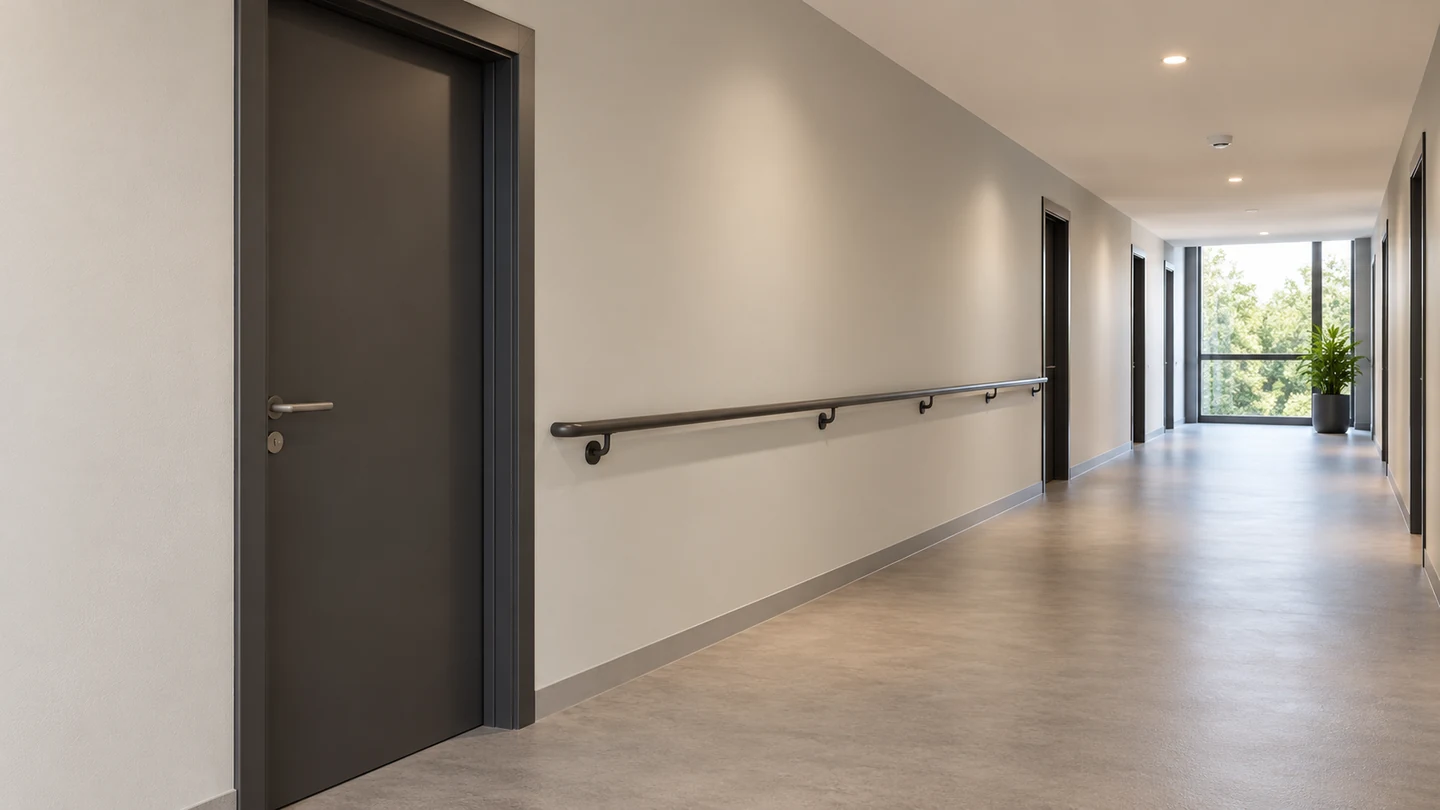
Compare adjacent surfaces’ measured lightness and use a difference appropriate to the feature and applicable design requirements. A door, handrail or sign needs to remain distinguishable from its background in the lighting where it is used.
Approved Document M, Volume 2, with the 2024 amendments provides an England non-dwelling design-guidance example. Its general visual-contrast guidance uses an LRV difference greater than 30 points. Where surface illuminance exceeds 200 lux, it gives a minimum difference of 20 points. For door-opening furniture that projects from the door or otherwise creates enhanced differentiation and shade, it considers 15 points adequate.
Those conditions belong to that document and application. The U.S. Access Board’s sign guidance requires light-on-dark or dark-on-light contrast and a non-glare finish for the relevant visual characters, while explaining that the ADA Standards specify no minimum contrast level. Keep the jurisdiction and feature with the requirement you use.
Points and percentages also need their units kept clear. Subtracting one LRV from another gives a point difference; a relative percentage additionally needs a stated reference and calculation. An Australian standard’s percentage terminology should be read in its actual adopted method instead of being replaced with a simple point rule.
For a corridor, put the handrail sample against the wall sample and inspect the combination in place. The wall paneling ideas article covers visual arrangements; the measured contrast and applicable project requirements decide whether the chosen features are sufficiently distinct.
How is LRV measured for walls, fabrics and panels?
It is measured for the actual color and surface using an appropriate optical method, with the specimen and conditions recorded. A product category such as wall film or fabric has no single value covering every color and construction.
For a specific example, Resene describes spectrophotometer measurements of its color samples and reports LRV as the CIE tristimulus Y value. That explains its color information, while other materials need their own stated measurement basis.
The current public ASTM E1477-98a(2022) catalog entry covers luminous reflectance factor of acoustical materials. It is a material-specific test scope. The catalog for BS 8493:2008+A1:2010 identifies a surface-LRV method, but a catalog identity alone leaves its detailed procedure to the actual standard.
Record the sample’s color, finish, mounting or backing where relevant, method and reported result. Surface texture and the way specular reflection is handled can affect how a measurement should be interpreted. Compare values on a compatible basis, then use a real sample to assess the reflections and appearance in the intended room.
A printed swatch on a screen cannot replace that physical comparison: the display emits light and depends on its settings. For a panel project, keep the approved sample with the material description so later measurements and color decisions concern the same construction.
Does a darker, lower-LRV finish get hotter in sunlight?
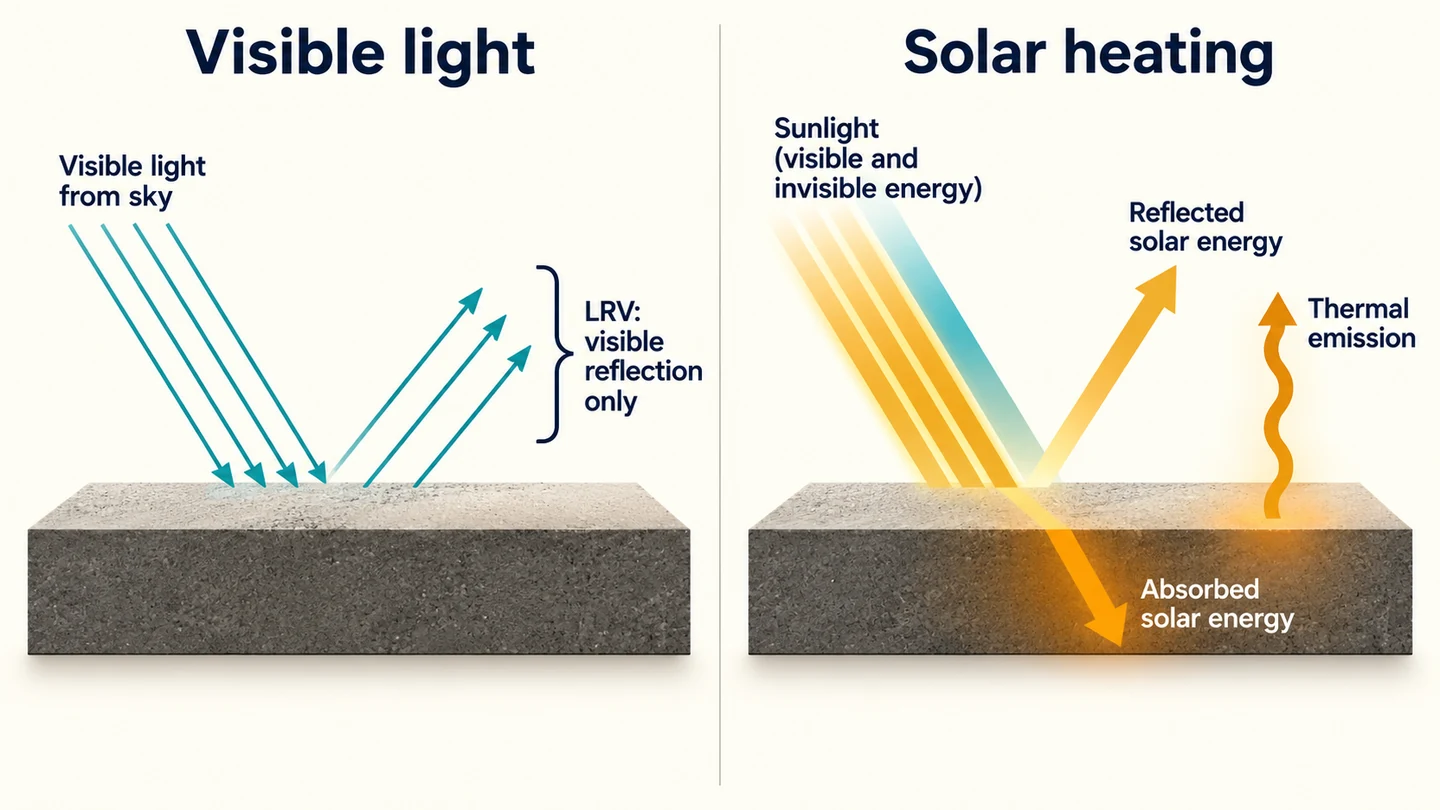
Traditional dark surfaces often absorb more solar energy than light ones under comparable exposure, but LRV alone cannot predict the temperature. Solar absorption, infrared behavior, thermal emittance and the actual exposure also matter.
The Lawrence Berkeley National Laboratory explanation of cool roofs distinguishes solar reflectance from thermal emittance. Visible light is only part of the solar spectrum. The same optical distinction explains why a visible-light color value is insufficient for judging solar heating of another surface.
Special pigments can change solar behavior while preserving a dark visible appearance. That possibility prevents a simple lowest-LRV-equals-hottest ranking across different materials and formulations. Use the actual solar and material data when heat exposure governs a choice.
For a dark cabinet near a strongly sunlit window, consider the glazing, direct sun and the finish’s permitted use as well as the visible color. For an exterior surface, use the relevant solar data and construction assessment. A room-color LRV reading supplies neither a surface temperature nor a heat-resistance rating.
How should you choose a decorative surface by LRV?
Set the room’s lightness and contrast goals, identify colors with measured data and compare the actual samples beside the adjacent materials. Evaluate glare and texture as additional appearance questions.
| Step | Practical action | What it resolves |
|---|---|---|
| Set the visual aim | Decide which broad surfaces should feel light and which features should stand out | The role of each finish |
| Find measured color data | Read the actual color’s LRV and method | Whether the number belongs to that sample |
| Compare neighboring faces | Assess the required contrast for the feature and jurisdiction | Whether an important edge or object is distinguishable |
| View in place | Use the room’s daylight and installed lighting | Reflections and appearance the occupants will see |
| Keep the approval record | Retain the selected sample and material description | A consistent basis for supply and later checks |
In a living room, a dark cabinet can be an intentional accent beside light walls. In a corridor, a rail may need more deliberate differentiation. For a wardrobe or kitchen, the matte and gloss comparison explains why reflection patterns and care remain part of the decision even after the color is chosen.
Use the measured values to narrow the selection, then inspect the chosen combination. Hue, texture, proportion and lighting still decide the final choice.
Where does a silicone-faced decorative film fit?
Puremorfilm makes decorative film with a silicone functional face for flat furniture and wall panels, with more than 100 designs and texture and gloss customizable on request. We supply mainly rolls for PUR flat lamination, with film-faced panels available on request. The silicone face is inherently flame-retardant; higher grades up to UL 94 V-0 are available on request.
In the manufacturer’s laboratory tests, stated stains held at 25°C for 24 hours wiped away with no obvious change. Our formulation is No DOP, and the wall film contains no PVC. Our newer paint-free facing uses silicone functionality, distinct from PVC, melamine, PP and PETG faces. The film is not suitable for floors, stovetop counters or shower floors.
We have no published LRV series for the colors. Use the actual selected sample and its mounting construction when a measured value is needed; our patterns and finishes page covers sample selection.
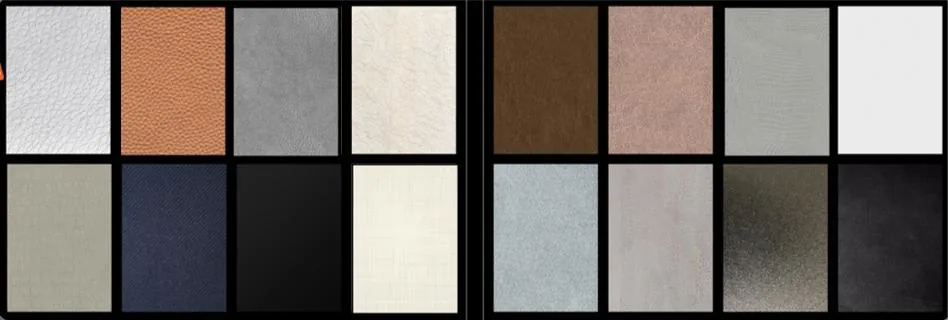
What LRV should you look for in your project?
Choose a value for the job the surface performs: higher reflectance for a light broad face, an appropriate difference for a feature that must stand out, and separate glazing or solar information when transmission, privacy or heat is the concern.
| Project need | Information to prioritize |
|---|---|
| A brighter-looking broad wall or ceiling | Measured surface LRV with the actual lighting design |
| A recognizable rail, doorway or sign | Adjacent-surface contrast and the applicable feature requirements |
| A dark sun-exposed finish | Relevant solar properties and material-use conditions |
| A window needing daylight and privacy | Film/glass VLT, inward/outward reflectance and the day/night viewing conditions |
| A decorative furniture panel | Exact color, face, mounting, gloss and a physical sample |
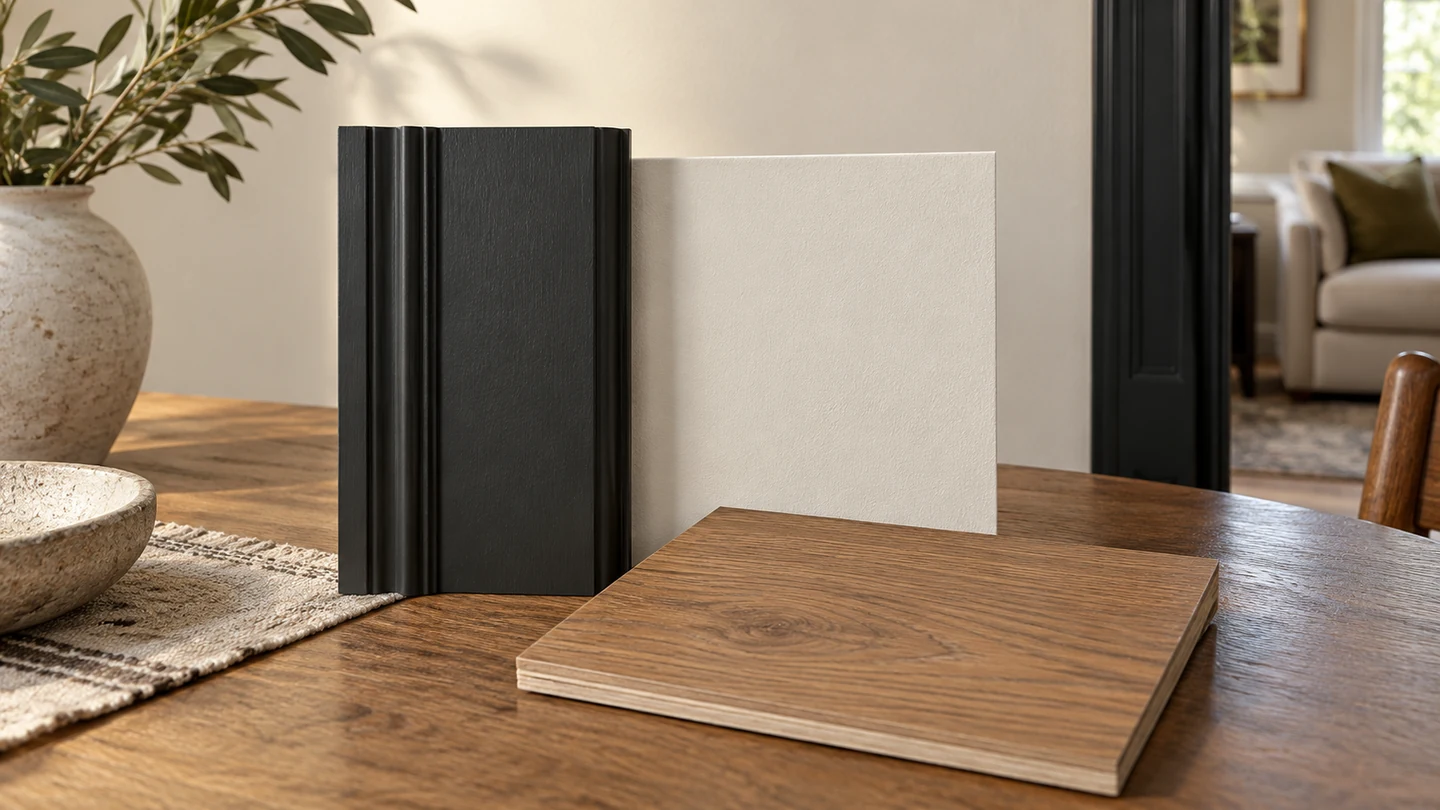
For a decorative wall or furniture-panel facing, contact us with its location, desired color and any measured contrast requirement.
Frequently Asked Questions
What is a good LRV for walls?
A higher-reflectance light color is a useful starting choice when you want a brighter broad wall, while a lower value can create a darker accent. The room lighting and contrast with neighboring features determine what is useful for that location.
Is a higher LRV better?
No. Higher reflectance suits some brightness goals, while a darker surface may provide the contrast or appearance a design needs. Assess the combination of surfaces and lighting.
Does gloss change LRV?
No. Gloss does not necessarily change LRV; it changes directional reflections, while the measured value also depends on the actual finish and method. A stronger visible highlight does not automatically mean a higher LRV.
Does decorative window film work at night?
Yes, a completely opaque design can still block the view, while a reflective privacy effect depends on which side is brighter. Frosted and patterned films need assessment for the level of visibility or silhouette privacy required.
What is the difference between VLT and LRV?
VLT describes visible light transmitted through the stated glazing system; LRV here describes visible light reflected by an opaque decorative sample. A glass-film specification also needs its own visible-reflectance information.