
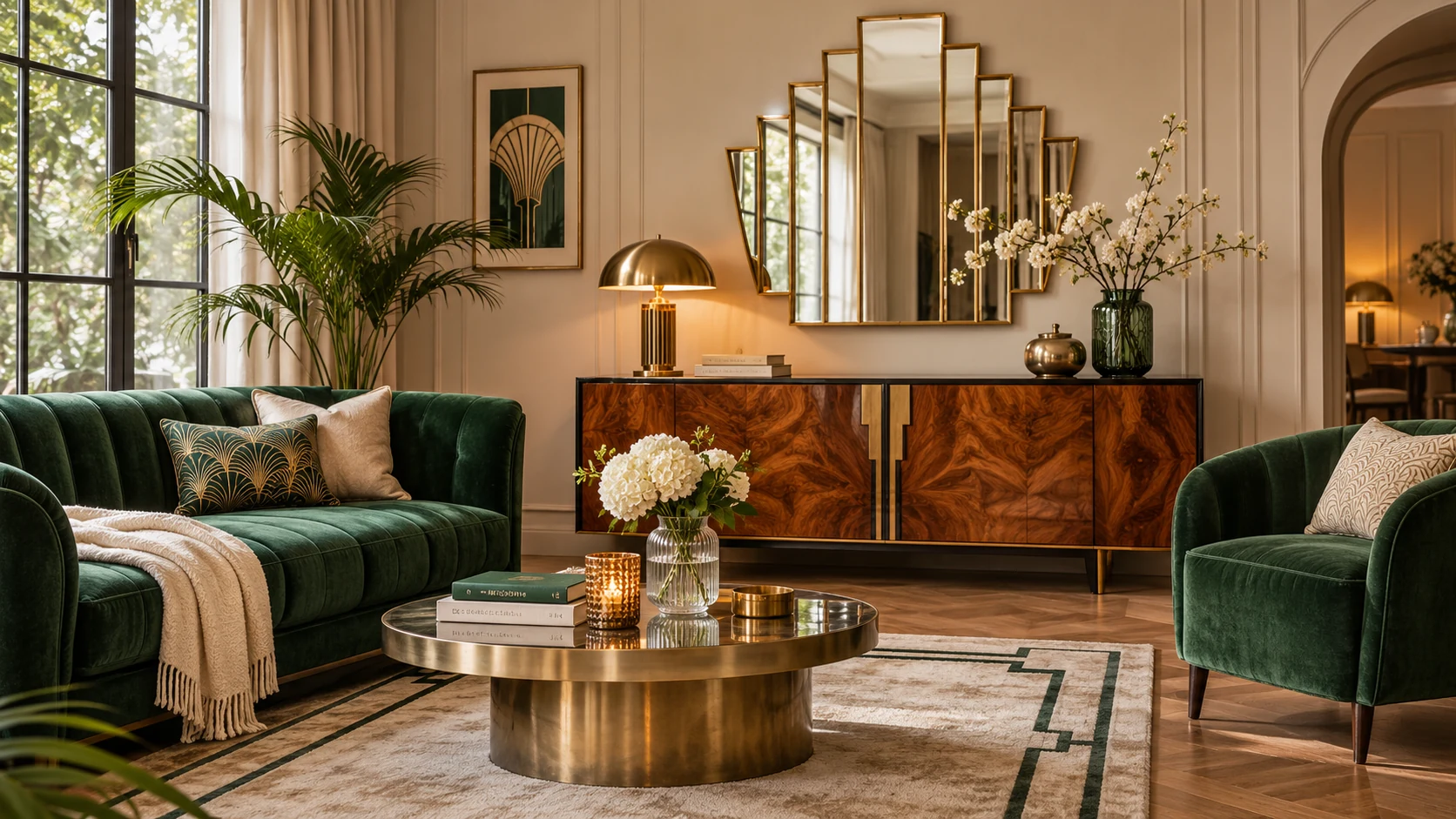
Art Deco interior design is associated with the 1920s and 1930s, combining geometric motifs, symmetry and rich, reflective materials. For a room today, choose an ornamented or a more streamlined direction, repeat a few shapes and finishes, and keep enough plain surface around them. You can borrow its glamour without recreating an entire period interior.
What is Art Deco interior design?
Art Deco is a decorative design style known for geometric pattern, strong composition and materials such as lacquer, metal, glass and figured wood. Its interiors can be lavish, but the style also includes simpler, streamlined work.
The name refers back to the 1925 Paris exhibition, the Exposition Internationale des Arts Décoratifs et Industriels Modernes. The label itself became established later, in the 1960s. Earlier descriptions included Style Moderne, so an object made during the period would not necessarily have been sold under today’s familiar name.
The National Building Museum’s discussion of Art Deco at 100 describes a broad movement rather than one fixed look. Its vocabulary could appear in architecture, furniture and everyday objects. That range explains why a restrained metal lamp and an elaborate marquetry cabinet can both belong in the conversation.
For your home, separate the historic style from a contemporary interpretation. A period room ties architecture, furniture and fittings together. A current room might take only a stepped mirror, a lacquered cabinet and a repeated metal finish. You can make that smaller intervention convincing by giving the chosen elements a clear relationship.
What are the key features of an Art Deco interior?
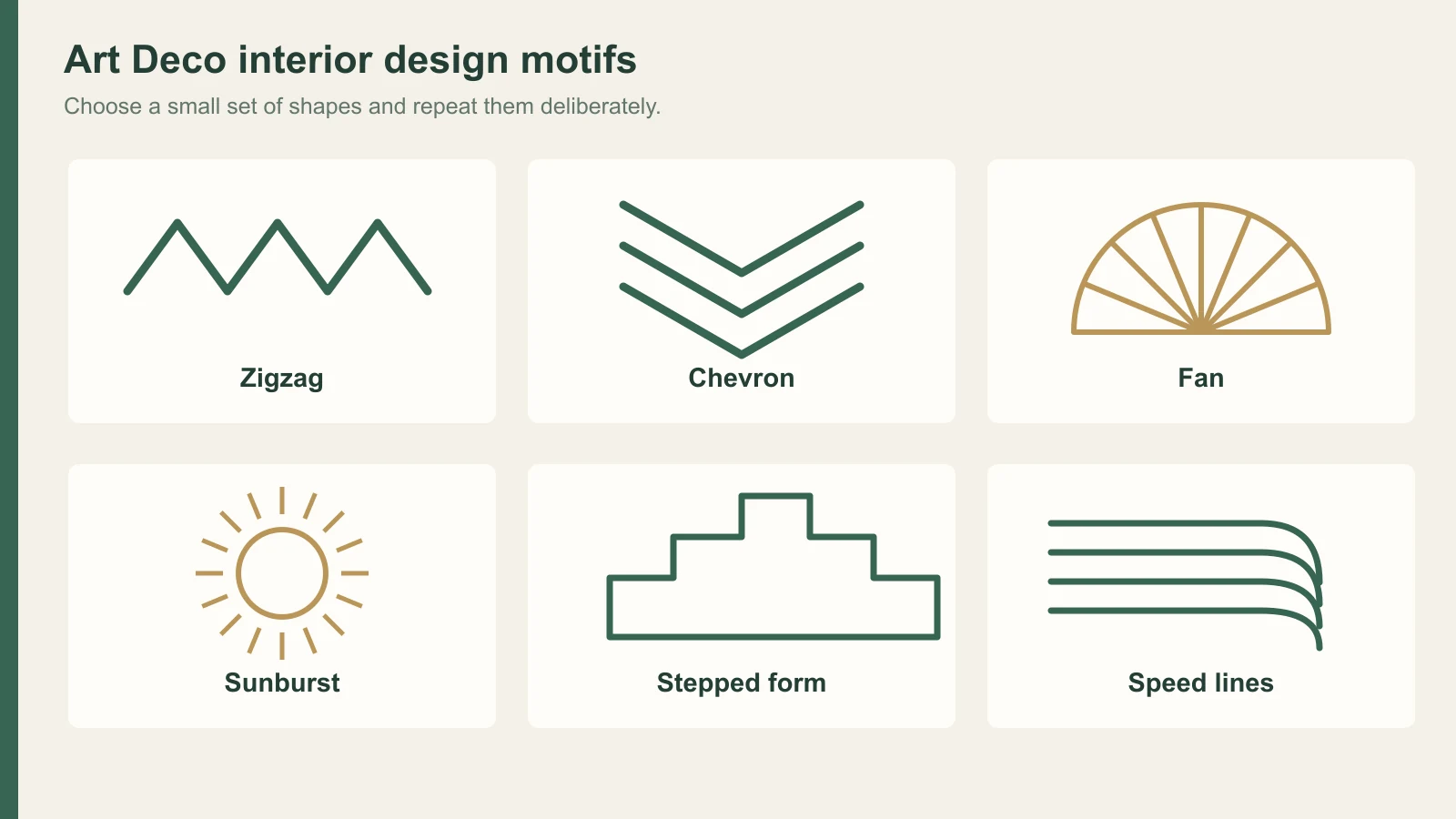
Geometry, symmetry, strong shapes and reflective materials are the most recognizable features. Zigzags, fans, sunbursts and stepped forms can appear in furniture, lighting, textiles or architectural details.
| Feature | Historic vocabulary | A current-room application |
|---|---|---|
| Geometry | Zigzags, chevrons, fans and stepped forms | Repeat one motif in a rug or light fitting |
| Symmetry | Balanced furniture and ornament | Center a cabinet and artwork on a clear axis |
| Streamlining | Horizontal lines and rounded transitions | Use a simple low cabinet with a strong continuous line |
| Reflective surfaces | Lacquer, polished metal, mirror and glass | Give one cabinet or lighting group the reflective role |
| Figured wood | Patterned veneer and marquetry | Let a large wood panel supply the main pattern |
| Color contrast | Rich colors, dark outlines and metallic accents | Set a strong accent against a quieter background |
A motif becomes easier to read when it has room around it. A fan-shaped headboard against a plain wall has a different effect from the same headboard beside fan wallpaper, a patterned rug and a sunburst mirror. Pick the shape you want the eye to notice first.
Symmetry can provide order even when the objects differ. Lamps of similar visual weight can frame a cabinet without needing to be identical antiques. Check the view from the doorway: the room should have a readable center or a deliberate balance across its main wall.
Horizontal “speed lines” are another Deco reference, sometimes carried around corners. They require an appropriate construction if expressed as grooves or curved details. A flat decorative face can supply color and sheen, while the shaped component must be designed separately.
How did Art Deco change from the 1920s to the 1930s?
Art Deco moved from richly ornamented work toward a more streamlined vocabulary, so choosing a direction makes the rest of the room easier to edit. You can emphasize decorative pattern and figured wood, or cleaner geometry and metal.
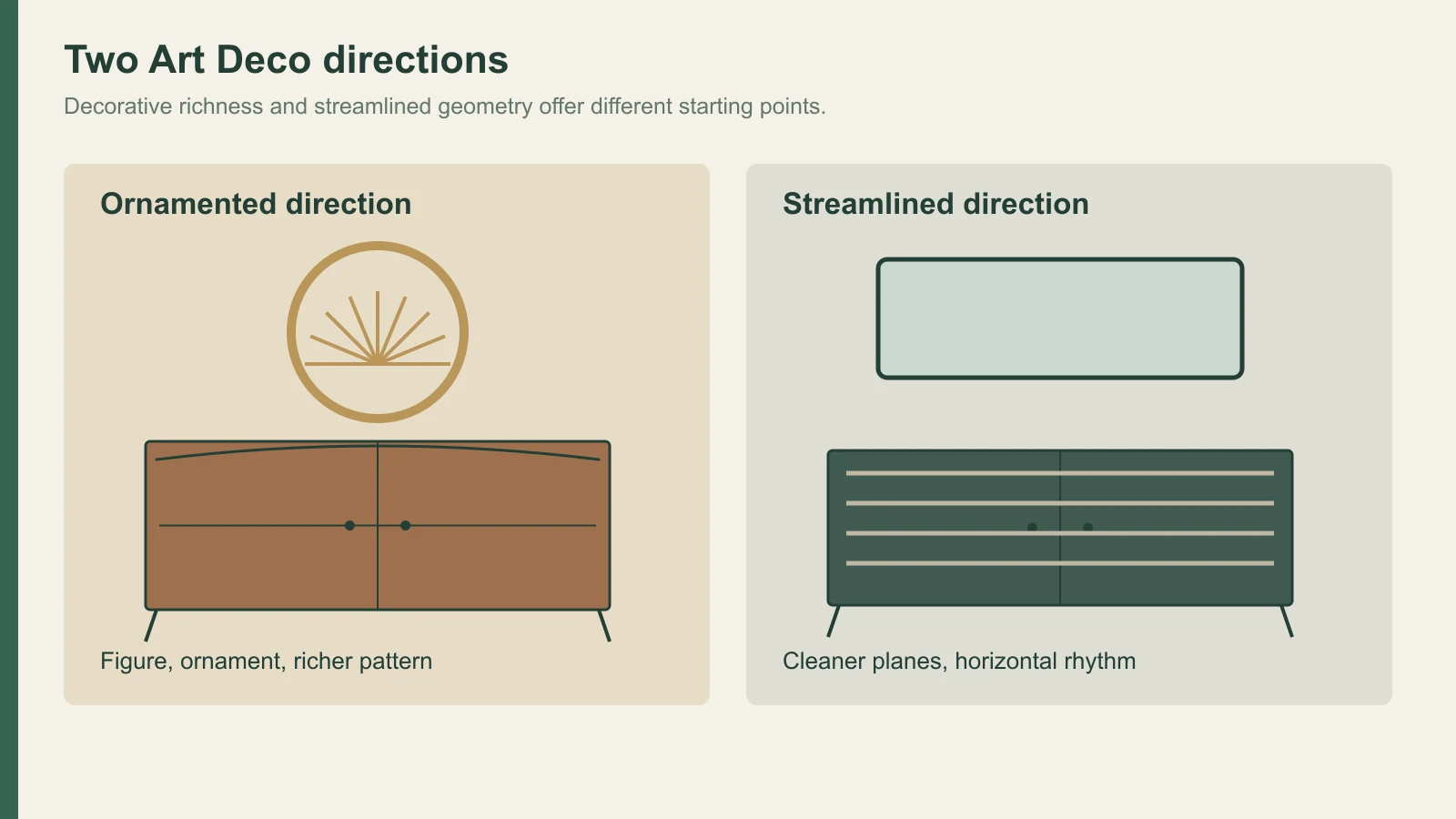
The V&A’s account of Art Deco’s global influences describes designers drawing on African, Asian, Central American and classical sources. It also explains how, as the 1930s progressed, elaborate exotic decoration gave way to simpler geometric forms associated with the avant-garde.
When a mood board feels inconsistent, choose which historical direction will lead. A strongly patterned wood cabinet, decorative metalwork and rich textiles suggest the more ornamented direction. Plain planes, repeated horizontal lines, chrome-like highlights and less surface pattern suggest the streamlined one.
Materials changed with the vocabulary. Aluminum, chrome-plated steel and early plastics such as Bakelite belong to accounts of the later machine-age look. They expand the style beyond the idea that every Deco room must use rare wood and expensive stone.
You need not reproduce historical materials to follow a composition. For a current scheme, choose available materials for their actual application and judge the decorative effect separately. Historic use of a material does not establish that a modern substitute performs the same way.
Which materials and finishes give an Art Deco look today?
Glossy planes, metal accents, glass, mirror and expressive woodgrain can each create a Deco reference. Decide which will lead, then compare the surface, edge and supporting construction of your chosen component.
| Material or effect | Where it can appear | What to assess today |
|---|---|---|
| Lacquered appearance | Cabinet fronts, doors and furniture | Reflection, edge detail and the specified coating or decorative face |
| Brass or chrome | Handles, lamps and furniture frames | Color beside the other metals and consistency of finish |
| Figured veneer | Cabinet faces and wall panels | Leaf arrangement, joints and the range across the whole surface |
| Mirror or decorative glass | A mirror, cabinet detail or lighting | Position, reflections and the complete component design |
| Marquetry or geometric inlay | A feature panel or furniture face | Pattern scale and how the geometry meets an edge |
One large reflective plane has more visual weight than several small metal handles. If you choose a glossy cabinet, give its reflected view some attention: an uncluttered wall or soft curtain may read better than a busy shelf. Reflection becomes part of the composition.
The guide to gloss measurement explains why sheen needs its own description. “Black” is a color request; it does not tell a fabricator whether you want a mirror-like or softer surface. A sample should resolve both.
Keep the wood, metal, fabric and decorative-face samples together on a material board. Use enough of each to see the intended proportions. A small gold-colored chip should not decide how a large gold-colored panel will feel in the room.
Which Art Deco colors work in a contemporary room?
Cream, beige and other quiet backgrounds can support emerald, sapphire, deep red, black or metallic accents. Choose one strong color relationship and repeat it across a few elements.
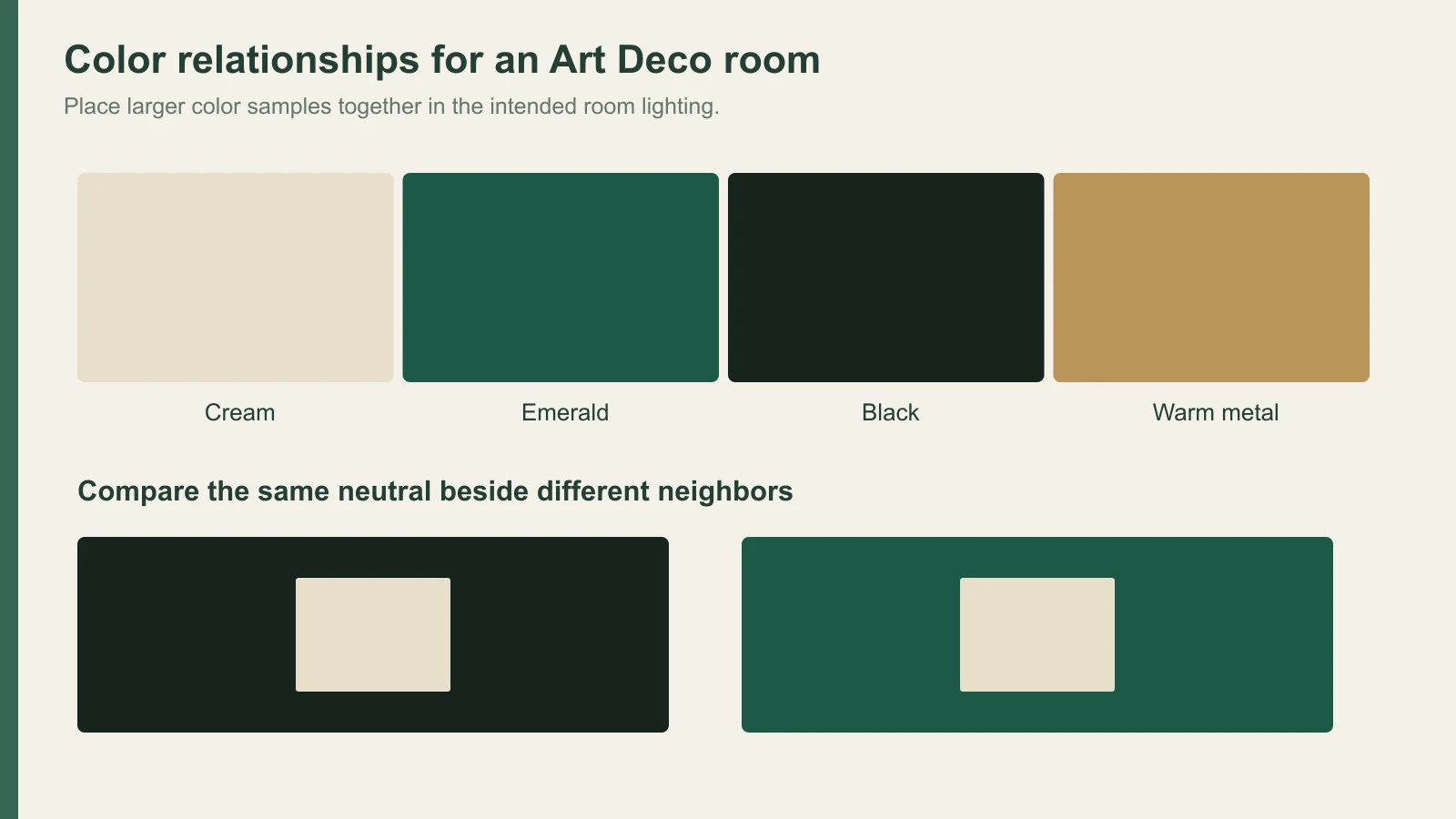
Black and gold is familiar, but it is only one option. An emerald chair beside cream walls and a warm metal lamp can carry the style without a large black surface. Deep blue with pale upholstery and chrome gives a cooler direction. Dark red with figured wood creates a richer, more enclosed feeling.
Judge colors next to their neighbors. The CIE definition of chromatic induction describes how adjacent color stimuli affect each other’s appearance. In a room, a pale neutral beside black and a pale neutral beside warm wood can therefore read differently even when the sample is unchanged.
Place the proposed colors together at the wall or cabinet location. The interior design color palette guide covers the fuller comparison method. Keep the largest surface quieter if the furniture, rug and lighting already supply several strong motifs.
A bedroom may need only a rich upholstered headboard, plain bedding and a small metal accent. In a living room, a jewel-colored chair or curtain can introduce the same vocabulary while leaving the sofa neutral. Decide which existing item you want to keep before buying a new accent color.
How should you light an Art Deco room?
Use decorative pendants, wall lights or floor lamps as visible elements, then add the light needed for reading and daily tasks. Glass and metal fittings can repeat the geometry already present in the furniture.
A stepped shade, globe grouping or fan-like wall fitting can carry the theme. Give the main fixture a clear position over a table or seating group instead of asking every light to compete for attention. A room with a strong central lamp may need quieter supporting fittings.
Check the proposed finishes under the actual light sources. X-Rite’s explanation of visual evaluation shows that color temperature and color rendering index are incomplete descriptions: lamps with the same stated color temperature can produce different object colors. The metal and upholstery samples that worked in daylight need an evening comparison too.
Reflective surfaces also make the direction of light visible. A light placed close to a wall can emphasize its texture or irregularities. The distinction between wall washing and wall grazing helps when a glossy panel looks more uneven than expected.
Choose lighting and the main surface together. Moving a fitting or softening its direction may solve a reflected bright spot more effectively than changing the entire color scheme. Keep a usable reading light at the chair even if the decorative pendant is the room’s visual centerpiece.
How do you plan an Art Deco feature wall or panel?
Start with the panel composition, then decide grain direction, joints and where a material change can occur. A geometric drawing needs to survive the actual panel sizes and interruptions in the wall.
For a figured veneer feature, book matching creates a mirrored pattern across adjoining leaves. Plan where that symmetry sits relative to a door, artwork or cabinet. A centered pattern on a sample may become off-center when the wall includes an opening. For cabinet faces, grain matching across doors and drawers needs the same attention to interruptions.
ANSI/AWI 0642–2024’s wood-paneling aesthetic requirements call for defined grain or directional patterns to run vertically on vertical surfaces. For transparent-finished veneer panels divided with the grain, the maximum grain-alignment variance is 3.2 mm at Premium grade and 6.4 mm at Custom grade. These are the standard’s specific wood-paneling provisions, not tolerances for every decorative film or cabinet door.
The same standard places a flitch transition at a change of plane or wall opening when a made-to-order veneer set cannot sequence the entire room from one flitch. Put that decision on the layout. A planned change at a corner reads more deliberately than an unexpected break at the center of the wall.
For broader compositions, the wall paneling ideas guide shows different ways panels divide a surface. A flat panel, a grooved detail and a curved corner require different constructions. Choose a decorative face only after those shapes are resolved.
Where does silicone-faced film fit in an Art Deco scheme?
Silicone-faced decorative film can give flat cabinet doors and vertical wall panels a customized decorative face, including a deeper or softer sheen chosen for the scheme. Grooved speed lines and curved wrapping need another construction.
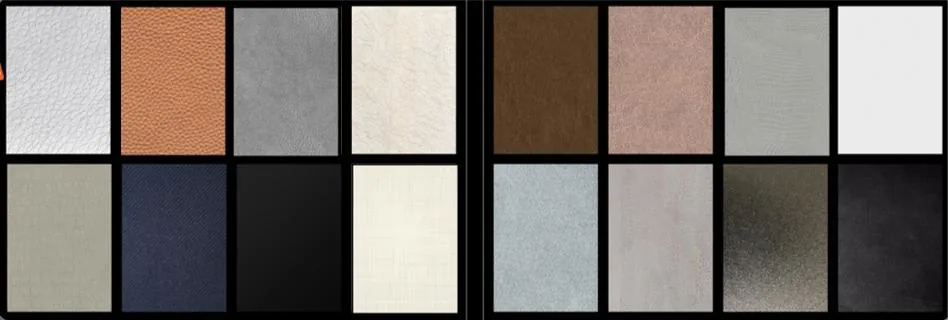
Puremorfilm produces it as a paint-free surface: a silicone functional face on PET support, unlike PVC film, melamine-faced board, PP film or PETG-faced products. Panel makers apply it by PUR flat lamination; it ships mainly in rolls, and we can quote film-faced panels on request. Standard supply has no back adhesive, and gloss and texture are customized from samples.
Its silicone surface is inherently flame-retardant. In the manufacturer’s laboratory tests, coffee, red wine and soy sauce left at 25°C for 24 hours wiped off with no obvious change. We use a No DOP formulation, and the formaldehyde-free statement applies to the film, not the finished cabinet.
For furniture decorative film, compare a custom sheen against your metal and upholstery samples. Flat lamination excludes curved wrapping, speed-line grooves, floors, countertops, stovetops, shower floors and other walking surfaces.
How much Art Deco should you use in your home?
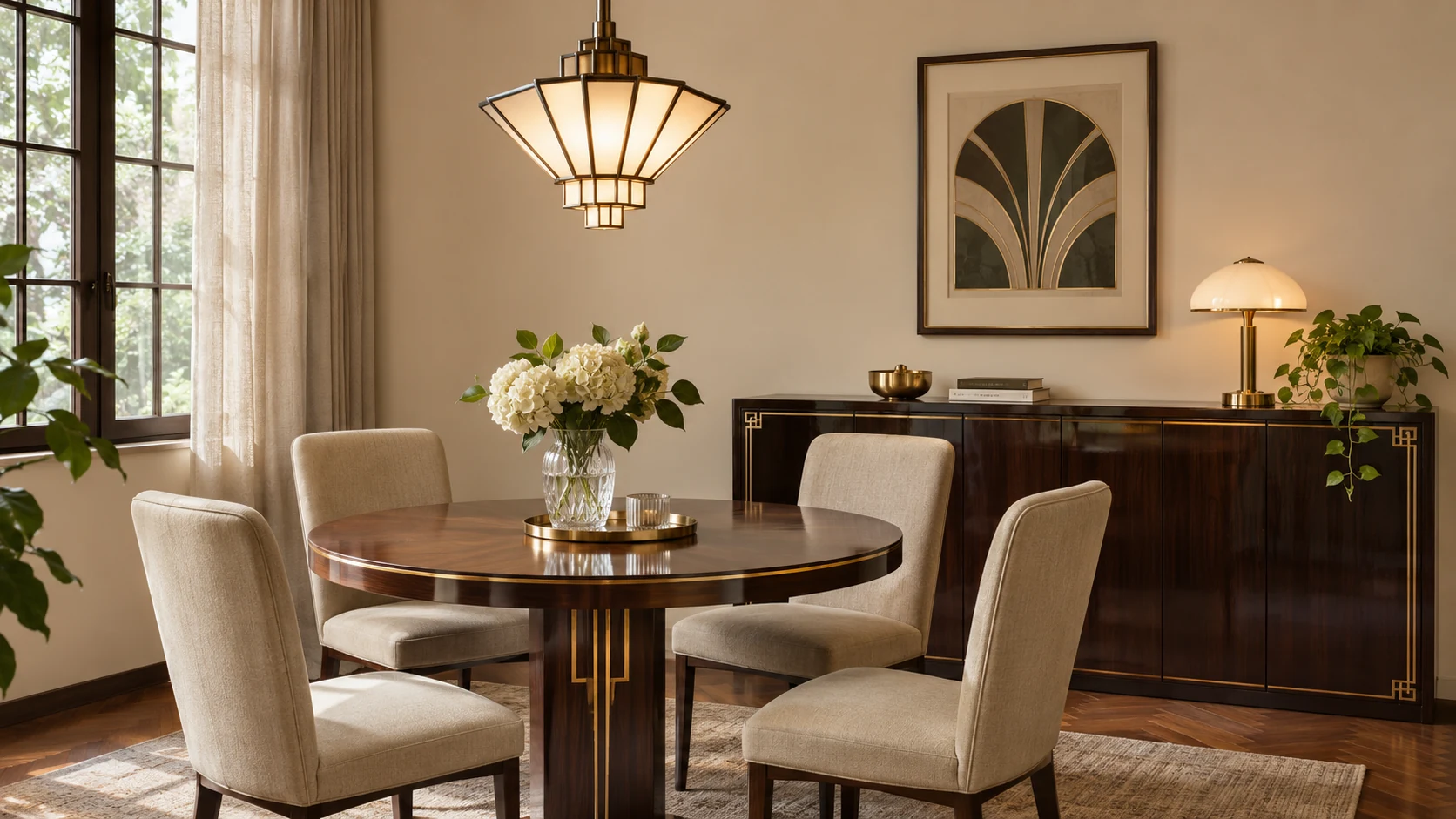
Use a few related Deco elements where they strengthen the room’s main composition. The amount should follow the architecture and the furniture you intend to keep.
| Room | A useful starting pair | Leave quieter |
|---|---|---|
| Living room | A figured cabinet and geometric light | The surrounding wall or main upholstery |
| Dining room | A strong table composition and reflective pendant | The smaller accessories |
| Bedroom | A shaped headboard and metal-accented lamp | Bedding and the background wall |
| Small reception or restaurant | One clear feature wall and repeated lighting detail | Secondary storage and circulation areas |
Keep adding only while each element has a visible role. If the rug already supplies a large geometric pattern, a plain cabinet may be the better partner. For a flat vertical surface with a customized sheen, contact us to compare the silicone-faced option with your scheme.
Frequently Asked Questions
What are the four key features of Art Deco?
Geometric motifs, symmetry or streamlining, rich materials, and strong color with metallic accents are four useful identifiers. A current room can use a selection of them without reproducing a period interior.
What is the difference between Art Deco and Art Nouveau?
Art Nouveau favors flowing, plant-like curves, while Art Deco generally emphasizes geometry and streamlined forms. Both include decorative craftsmanship, but their characteristic shapes differ.
Can Art Deco be minimalist?
Yes, a contemporary interpretation can emphasize the simpler, streamlined direction of the 1930s. Keep the furniture forms clear and use a limited number of geometric or reflective accents.
How do you bring Art Deco into a bedroom?
A shaped upholstered headboard, a geometric lamp and a restrained metal finish can give a bedroom an Art Deco reference. Plain bedding and a quiet background help those elements remain readable.
Which design styles work well with Art Deco?
Traditional, mid-century modern and other clean-lined modern furniture can work beside selected Art Deco pieces. Connect them through scale, color or finish so the mix looks deliberate.