
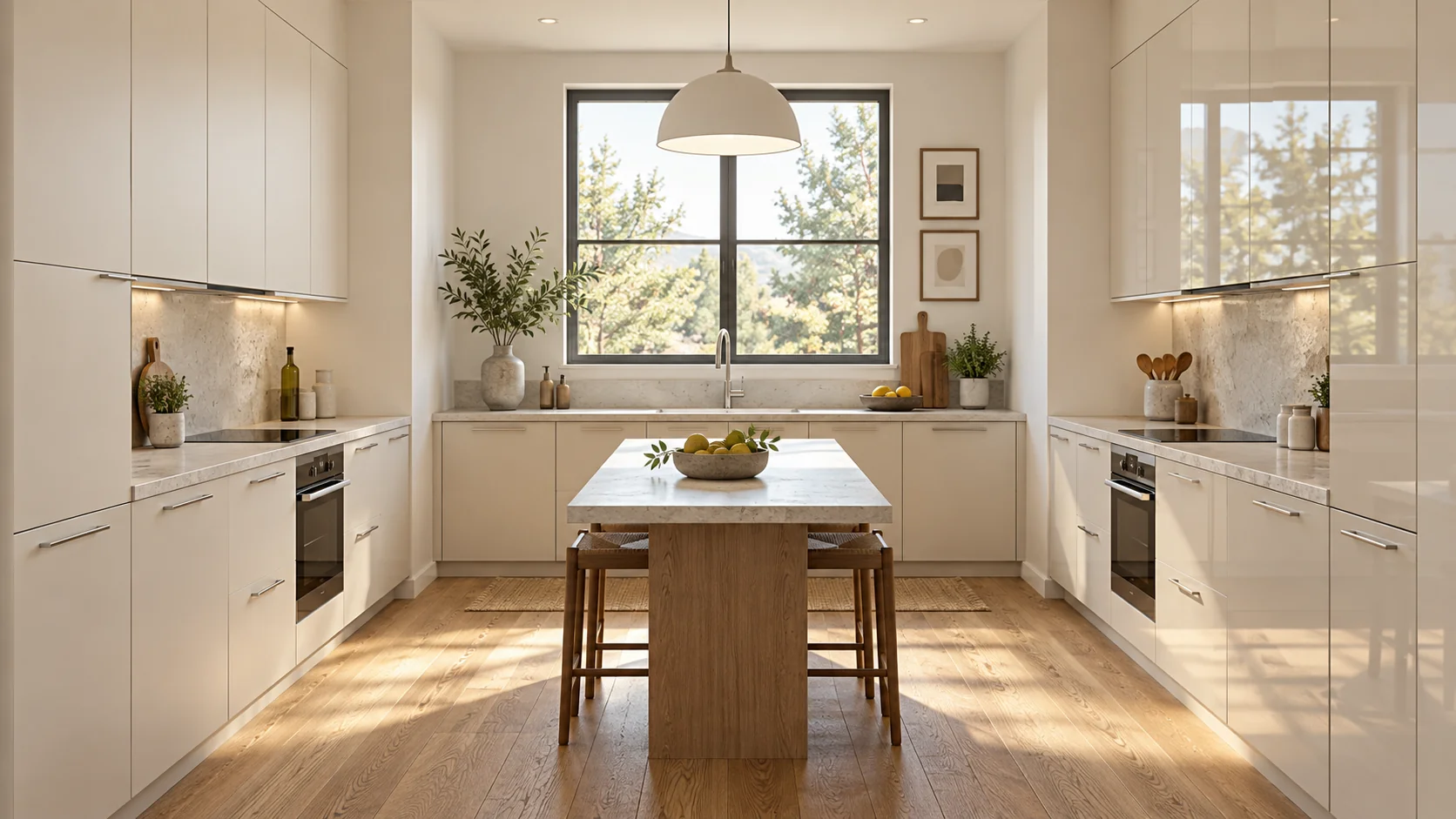
When comparing matte vs gloss kitchen cabinets, choose matte for a quieter surface with soft reflections. Choose gloss if you like seeing windows and lights mirrored across the doors. For fingerprints, cleaning and scratches, judge the actual cabinet fronts, because the sheen label alone won’t tell you how they behave.
The choice gets easier once you split the look you want from the material you’re buying. A painted matte door and a matte laminated door can look alike and still need different care. Start with the room, then look at the surface, edges and cleaning instructions before you order.
How do matte vs gloss kitchen cabinets reflect light?
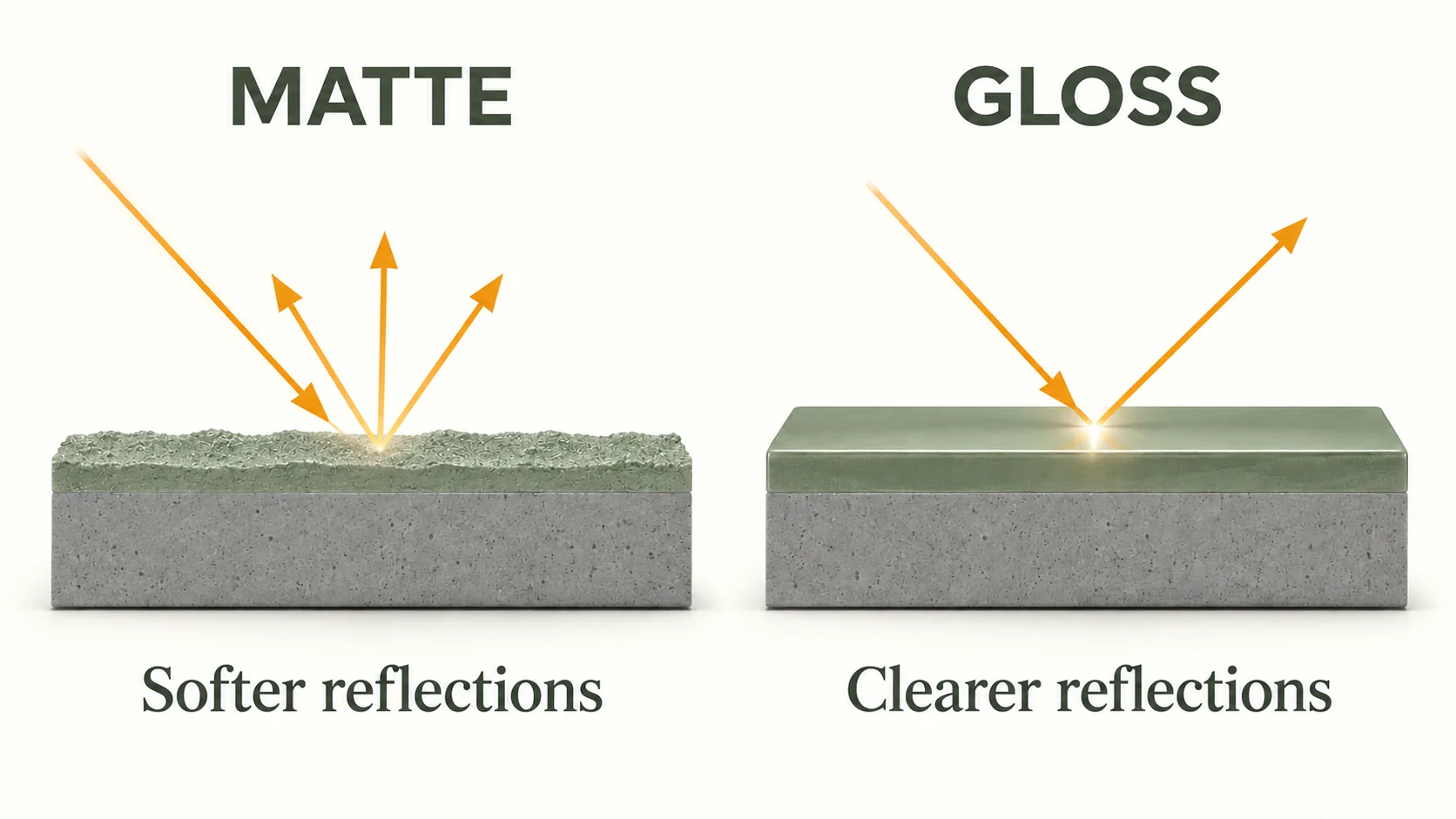
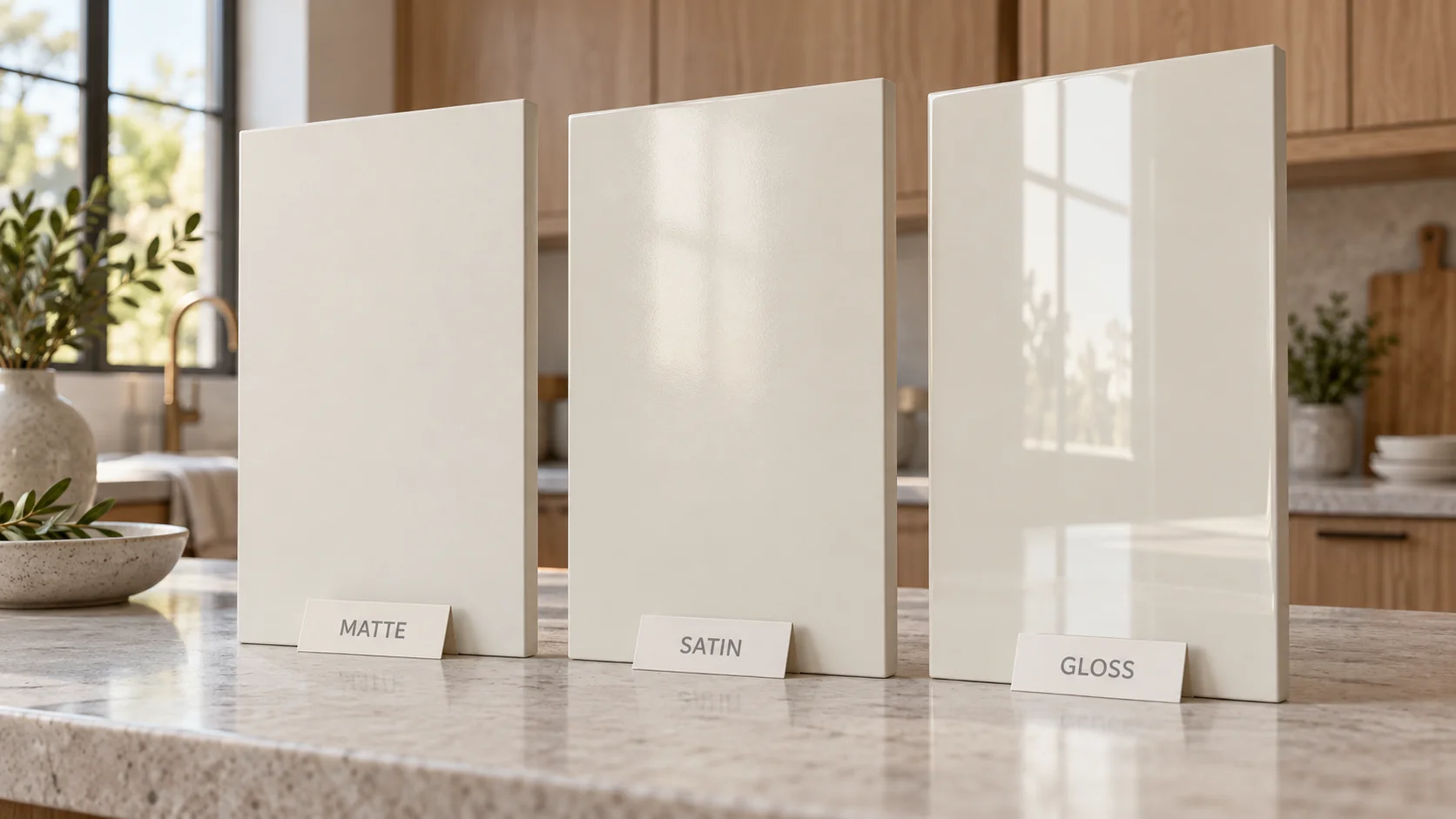
Matte scatters light into soft, blurred reflections; gloss gives clear highlights and mirror-like reflections. Satin sits between the two, though names and looks vary from one product range to the next.
| Decision | Matte cabinets | Gloss cabinets |
|---|---|---|
| Surface appearance | Low shine with subdued reflections | Noticeable shine with sharper reflections |
| Design effect | Suits a restrained appearance alongside stone, wood or painted finishes | Adds a reflective surface and stronger highlights |
| Window and light reflections | Usually less visually prominent | More noticeable; their position matters |
| Marks in everyday use | Greasy touches or rubbed areas can still show | Smears can interrupt the reflection and become conspicuous |
| Cleaning and wear | Check the exact coating or facing and its care guide | Check the exact coating or facing and its care guide |
| Before ordering | Inspect a real door sample under your kitchen lighting | Inspect reflections from standing and seated positions |
A low-sheen surface still reflects light; it just scatters it. A smoother surface concentrates its reflection, while surface irregularities scatter it. Each cabinet material gets to its finish in its own way, but the principle holds for all of them.
Sheen says nothing about what the door is made of. The front may be paint, laminate, decorative film or another facing over a board, and our guide to kitchen cabinet materials explains those options. When you compare quotes, make sure each one names the facing and door construction, not just matte or gloss.
Which finish suits your kitchen’s light and layout?
The one whose reflections you like from where you actually stand and sit. A gloss door opposite a window can show a bright rectangle of sky; a low-sheen door blurs it. Neither finish replaces good task lighting over the worktop.
Room size alone is a weak reason to choose. Gloss can make a compact kitchen feel brighter, but dark fronts, busy reflections or badly placed lights can still feel heavy. Matte works in a small room when the color, lighting and surrounding surfaces give you the look you want. A small floor plan doesn’t oblige you to pick gloss.
Light direction and viewing angle change how sheen and color appear. The examples concern paint, but they show why one photo is a poor way to compare finishes, and why a glossy dark color won’t necessarily look lighter than the matte version.
Stand the door samples upright in the kitchen, next to the countertop and backsplash. Look at them in daylight and again with the evening lights on. Then sit at the dining table or stand in the doorway: from there you may see reflections that vanish when you face a sample head-on.
Compare the same color first. White gloss against charcoal matte mixes up color and sheen. Once you prefer a finish, widen the palette, and check those samples in the room too, because natural and artificial light change how cabinet colors look.
Which finish shows fingerprints and is easier to clean?
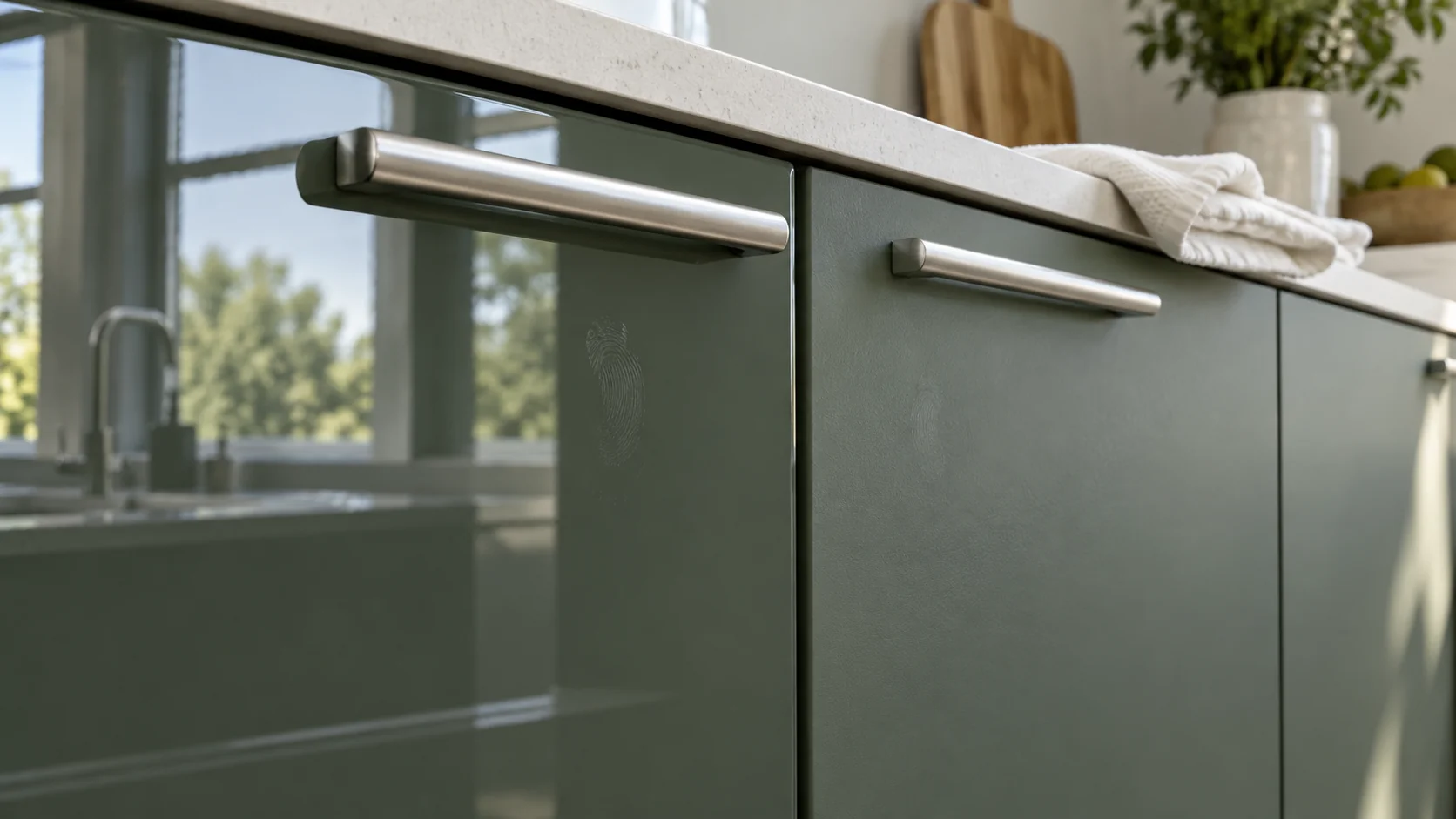
Both show fingerprints, in different ways. On gloss, a smear breaks up a clear reflection; on matte, oily touches can sit as darker patches. Color, lighting, texture and any surface treatment change how much you see.
How visible a mark is and how easily it comes off are separate questions. A mark that catches the light at once may wipe away in one pass, and a faint one can still need work. Ask about both, and don’t assume the finish that hides marks also releases them more easily.
Matte and anti-fingerprint are different things. Some door ranges carry a specific anti-fingerprint coating, such as nobilia’s treated fronts, but you need to confirm it for the exact door you order; it doesn’t come with every matte surface, and treated fronts still need cleaning.
For a quick sample check, open and close the front as you would a cupboard door, look at it under your normal lighting, then clean it with the supplier’s approved method. See whether it returns to an even look without repeated rubbing. It’s a buying check, not a standard stain or scratch test.
Care instructions can differ even within one brand. Howdens’ care guide gives gentle cleaning advice for matt and gloss doors, then separate rules for particular Super Matt finishes. Keep the care sheet for your own doors and don’t borrow a cleaner or abrasive sponge recommended for another range.
For laminated fronts, see the material-specific precautions in our guide to cleaning laminate cabinets. Look at handles and finger pulls too: on a handleless gloss run, your hand lands on the finish every time you open a door.
Does matte or gloss resist scratches and wear better?
Neither, by sheen alone. Scratch resistance and service life come from the coating or facing, what supports it, the edge construction and the care it gets. A scratch that is harder to see is not proof of a harder surface.
Gloss depends on an unbroken reflection, so a fine mark or uneven patch can catch your eye from some angles. Matte has the opposite problem: a rubbed or polished patch near a handle can shine against the low sheen around it. Inspect the actual finish and ask how it is repaired.
Ask the door supplier what happens after a small chip or scratch. Is there a matching touch-up product? Can the facing be repaired in place? Or is the fix a new door? A repair can restore coverage and still leave a difference in color, texture or reflection, so ask to see a repaired example if that matters to you.
Naming the material sharpens those questions. Melamine and laminate, for example, are different surface constructions, and neither term fixes the sheen. A matte front and a gloss front from different material families differ in more than looks, so ask for evidence on the exact products and the conditions behind any performance claim.
Should you choose satin or mix different sheens?
Satin, if you want some shine without the full reflection of gloss. View it beside matte and high-gloss samples, especially if neither extreme sits right with your countertop or floor.
For painted cabinets, Benjamin Moore lists satin, semi-gloss and high-gloss among its recommended finishes. That advice covers its cabinet paints; a factory-made matte facing can still suit a kitchen. Pick a product made for cabinets, then compare the sheens in that range.
Mixing finishes can be a deliberate design choice. A gloss island or a run of gloss upper cabinets can be a focal point while the other fronts stay quiet. Change finish at a clear boundary, such as the island or a full cabinet run; alternating doors is much harder to get right.
Check neighboring panels before you commit. One color name in two sheens can look different, and separate materials can have different undertones. Include end panels, filler strips and exposed edges so the kitchen looks intentional from the side as well as the front.
A restrained palette makes the decision simpler. If the backsplash and countertop already have strong patterns, ask whether another reflective surface adds anything. If the surroundings are quiet, gloss can supply the contrast. Neither finish is more current or more expensive by default.
What should you confirm before ordering cabinet fronts?
The exact door range, color, sheen and construction, written into the quote. That ties the showroom sample to the fronts that arrive and lets you compare offers on the same basis.
| Item | What to specify | Why it matters |
|---|---|---|
| Visible finish | Product range, color reference, sheen and texture | A generic label such as matte leaves room for visible differences |
| Door construction | Facing material, board type and door thickness | Similar appearances can conceal different constructions |
| Edges and exposed parts | Edge treatment, end panels, fillers and visible backs | These parts need to work visually with the front |
| Handling | Handles, finger pulls or push-to-open arrangement | Shows where hands will contact the surface |
| Care | Written instructions for the exact finish | Identifies approved cleaning methods and restrictions |
| Repair and replacement | Available touch-up method and replacement-door process | Helps you understand the options after damage |
| Quotation scope | Doors, panels, hardware and installation included | Prevents a misleading price comparison |
Keep a labeled sample with the agreed finish details. On delivery, compare the fronts under the same lighting, and peel off any protective film first, following the supplied instructions, because you can’t judge the final sheen through it.
If you are a cabinet maker or custom furniture brand, the surface specification should also say how the facing is bonded and how the edges are finished. Confirm the supply form, such as rolls or faced panels, before you schedule production. Those choices sit next to the visual reference even when your customer only asks about matte versus gloss.
Compare prices across the same door construction and quote scope. An offer that includes installation and matching end panels covers more work than a doors-only price.
When is decorative film an option for the cabinet face?
When the cabinet uses film-faced board, usually for flat fronts. Puremorfilm makes a furniture decorative film with an organosilicon functional surface, and the cabinet maker can match it to the door design, board and edge treatment.
We offer more than 100 designs and can customize texture and gloss for a project, so judge the reflection on physical samples beside your color and surrounding materials. The film is flat-laminated to board with PUR adhesive; we mainly supply rolls, with film-faced panels on request. In an SGS Taber test (ASTM D4060-25, 2,000 cycles), the submitted sample showed only slight matting. The silicone surface is inherently flame-retardant, with higher grades up to UL 94 V-0 available on request, and the film uses a No DOP formulation. See our furniture decorative film page for details.
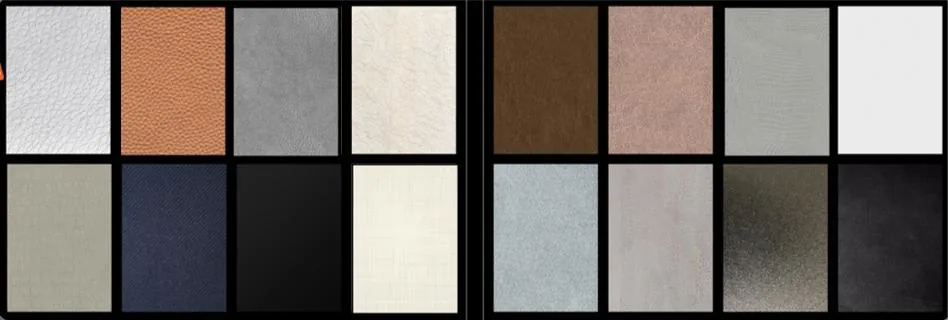
The film has a leather-like feel and some elasticity, so it doesn’t suit floors, cooktop countertops, shower floors or anything people walk on. Here its job is the decorative face of furniture. Confirm cleaning and anti-fingerprint behavior for the surface you select; a matte or glossy look won’t tell you.
Which finish should you choose for everyday use?
The look you enjoy, as long as the exact door passes your care and use checks. A short rule:
- Choose matte when you prefer subdued reflections and a quieter cabinet surface.
- Gloss suits you when you enjoy visible shine and are comfortable seeing reflected windows and lights across the doors.
- Satin offers a softer degree of shine; a mixed scheme also works when the boundary between finishes is clear.
- For any choice, check fingerprints, approved cleaning and repair options on the actual front.
Our paint-free decorative surface has an organosilicon functional face, a different surface from PVC, melamine, PP and PETG decorative faces, and it gives flat fronts one more option alongside the choice of sheen. To discuss a cabinet finish and supply form, contact us with the application and the look you want.
Frequently Asked Questions
Is matte or gloss better for kitchen cabinets?
No one finish wins everywhere, but matte or satin suits most busy family kitchens because small scratches and smudges show less under kitchen lights. Choose gloss for a bright, modern look if you don’t mind wiping the fronts often.
Which is better for cabinets, satin or semi-gloss paint?
Satin for a gentler shine, semi-gloss for more reflection. Either way, use a paint made for cabinets and follow its preparation and curing instructions; a wall-paint sheen chart isn’t enough to choose by.
Do matte kitchen cabinets show fingerprints?
Yes. Oily fingerprints can show as patches against the surrounding surface. Color, lighting and any anti-fingerprint treatment change how visible they are, so check the exact door.
Are gloss kitchen cabinets easier to clean?
No, not across every material. Some surfaces release everyday marks easily, but the facing and its approved care method decide what you can use, and smears are easier to spot on a reflective finish even when they wipe off.
What colors should you avoid in kitchen cabinets?
Colors that clash with your fixed finishes or look wrong under your kitchen’s lighting. Look at the door beside the countertop, backsplash and floor in daylight and evening light before you settle on a pale or dark scheme.