
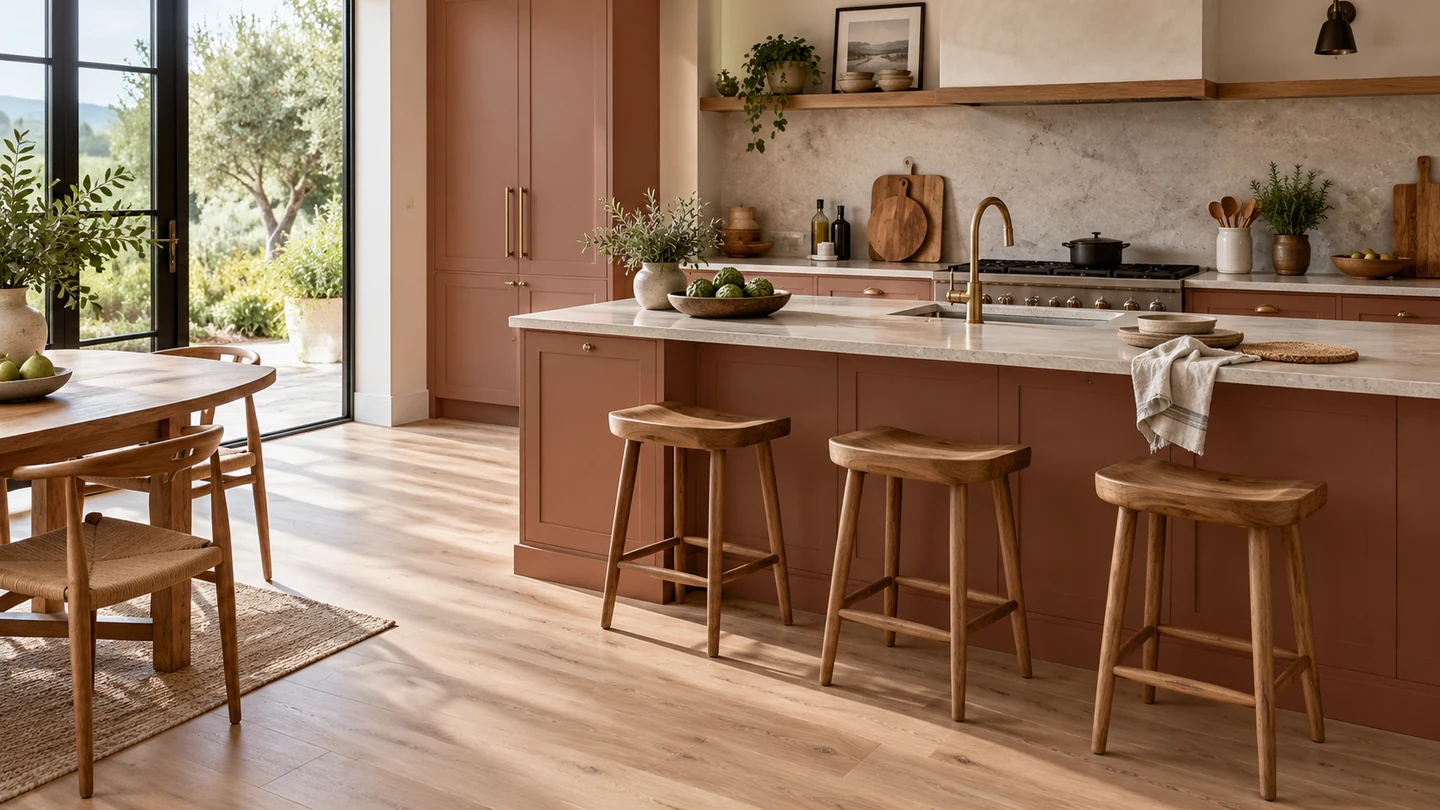
Easy clean decorative surfaces for ordinary household use include vinyl or glazed tile floors and engineered quartz countertops. Their faces are straightforward to wipe, while wood-floor finishes, natural stone and cement grout can add particular care requirements. The practical shortlist still needs to suit the room, joints and permitted cleaning method.
Choose the material before choosing the cleaner. A stone-care product, a wood-finish cleaner and a cement-grout cleaner address different surfaces. Use the appropriate routine for each material; no single strong household mixture cleans everything safely.
Which decorative surfaces are easiest to keep clean?
Vinyl and glazed tile are useful low-care flooring choices, and engineered quartz is a useful low-sealing-work countertop choice. Granite, soapstone, quartzite and finished wood remain practical options when their individual maintenance needs fit your routine.
The broad difference is between removing daily dirt and maintaining the surface over time. A granite counter can be easy to wipe while still needing an appropriate sealer assessment. A tile face can wipe clean while its grout takes more attention.
| Surface | Ordinary cleaning | Additional care | Detail that needs attention |
|---|---|---|---|
| Vinyl floor | Remove grit and use the permitted damp-cleaning method | Follow the specific floor system’s instructions | Seams, edges and excessive water |
| Glazed tile floor | Remove loose dirt and clean with a compatible product | Maintain grout and sealant as appropriate | Porous cement grout and adjoining materials |
| Finished wood floor | Sweep, dry mop or vacuum appropriately; clean spills promptly | Care for the actual wood-floor finish | Standing water, steam and abrasive grit |
| Engineered quartz counter | Approved mild cleaning and a soft cloth | No routine stone-sealing treatment | Heat and damaging cleaners |
| Granite or quartzite counter | Gentle cleaning suited to the stone | Assess whether that slab needs sealing | Porosity, joints and the specific stone |
| Soapstone counter | Gentle routine cleaning | Oiling can be an appearance choice | Scratches and the desired patina |
For a busy kitchen, first decide whether you want to avoid grout cleaning, stone sealing or water-sensitive wood care. Those are different tradeoffs. The decorative surface materials overview covers furniture facings elsewhere in the room; floors and worktops need products intended for those jobs.
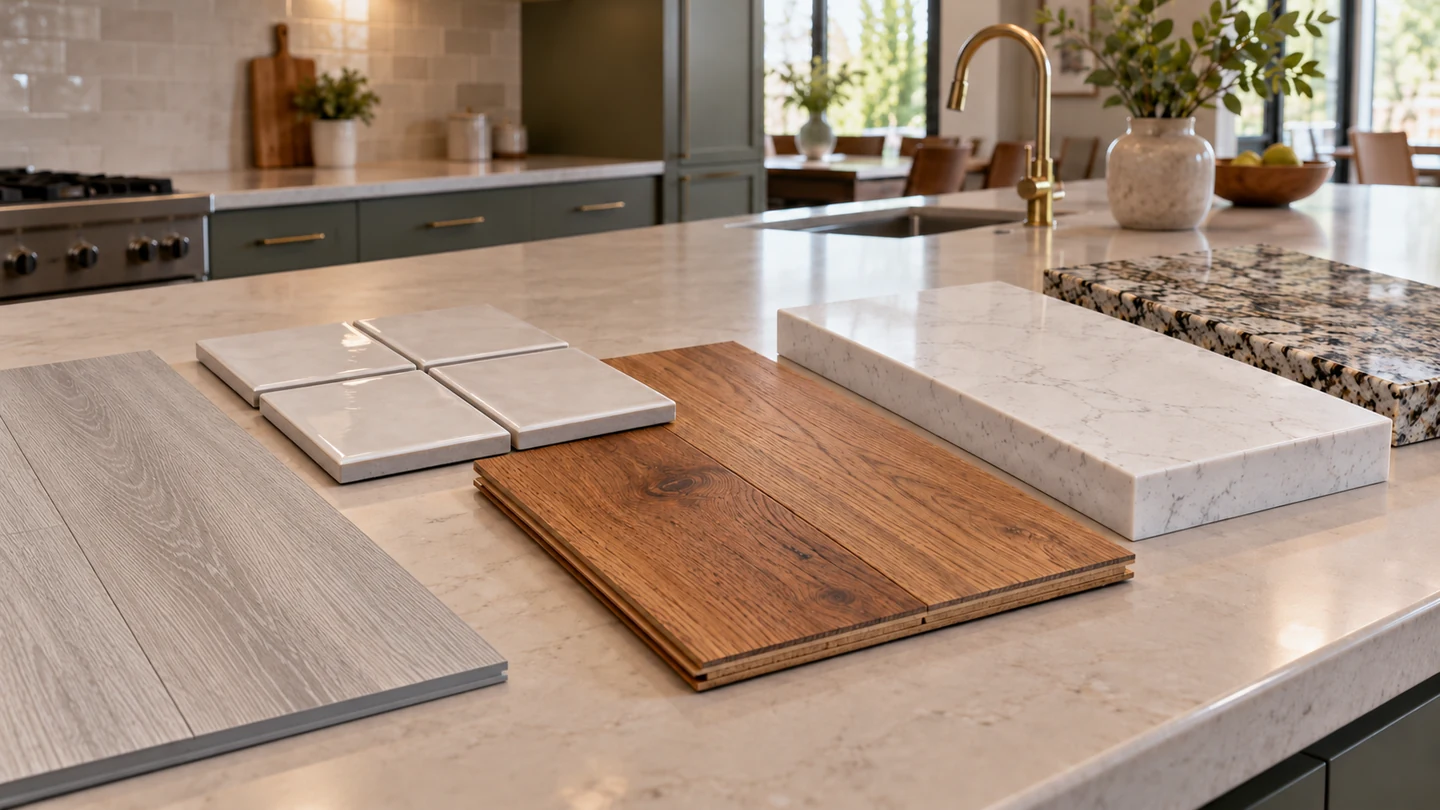
What is the easiest flooring to keep clean?
Vinyl or glazed tile is a practical starting choice for many households, with tile adding grout maintenance. Finished wood needs more care with moisture and the correct routine for its coating.
Flooring retailers commonly shortlist vinyl and tile for everyday care. Their surface-spill convenience should be assessed alongside the actual installation: the plank or tile face, seams, edges and supporting floor form the complete system. A product labeled waterproof still has installation instructions that determine how it is used.
For wood, the National Wood Flooring Association’s maintenance guidance recommends prompt spill removal with a dry or slightly damp cloth, appropriate dust removal and cleaners made for the floor finish. Wet and steam mops can damage wood and its finish over time.
At an entrance with muddy shoes, easy grit removal and the permitted wiping routine matter. In a room where wood is the preferred appearance, its care can still be manageable if you accept the moisture restrictions. A wood-based laminate plank also needs its own water-exposure limits checked; it should not inherit a vinyl product’s claim because both display a wood print.
For a kitchen floor, compare the whole surface you will actually clean, including the joints. A simple face with an inaccessible or porous junction can still create work where spills collect.
How do grout and seams change maintenance?
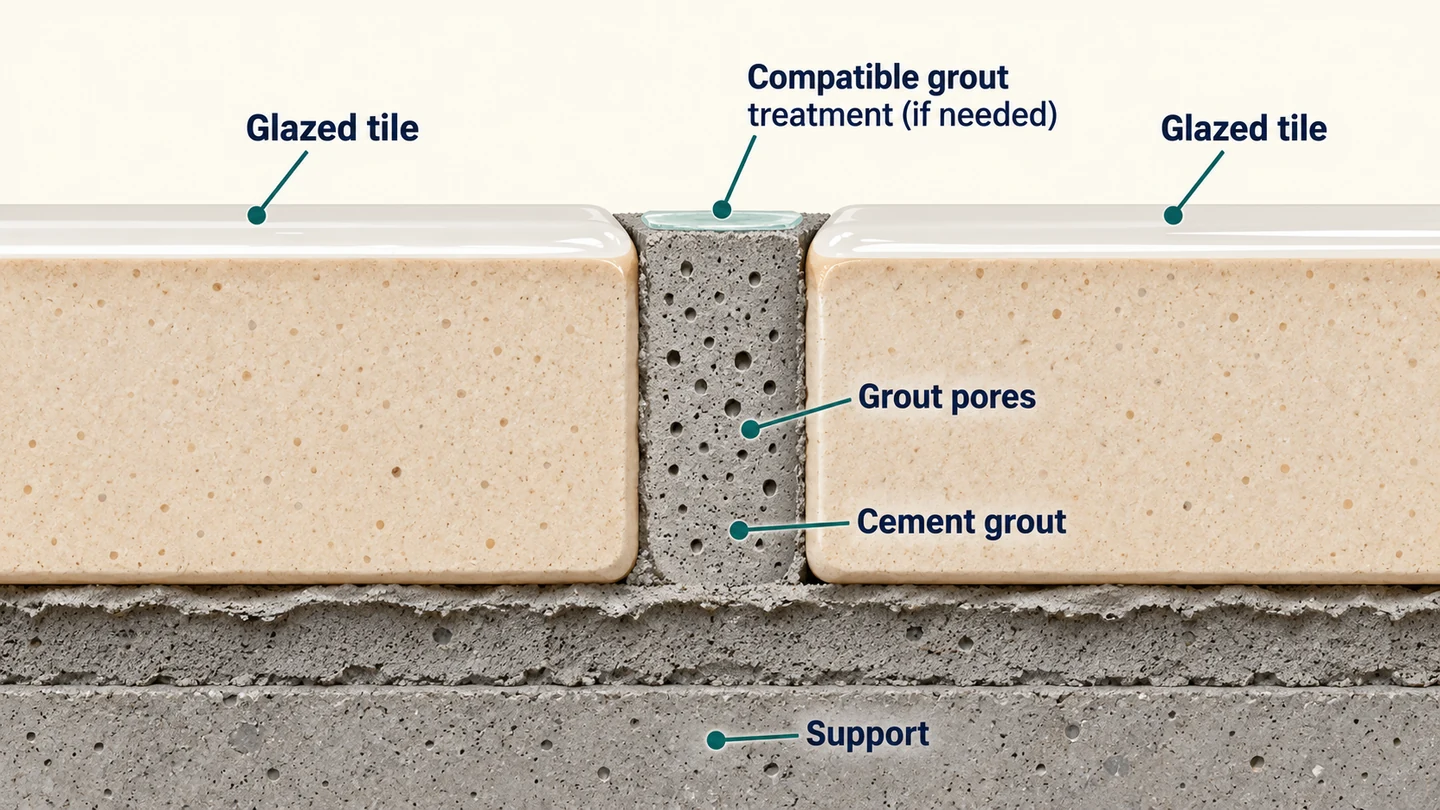
Cement grout can absorb dirt and need different care from the glazed tile beside it. A sealer can improve stain resistance where appropriate, while epoxy grout is a different material with its own instructions.
The tile industry’s grout-cleaning guidance explains that cement-based grout is porous and alkaline. Acid can attack it, while oily or waxy cleaners can leave a film that attracts more dirt. Its alkaline-cleaner advice must also suit the adjoining tile or stone.
That compatibility matters in a mixed installation. A cleaner intended for cement grout may conflict with a neighboring natural stone or another finish. Read the material identities together before treating the whole floor with the same product.
Sealing is also specific. Treat cement grout when appropriate for its type and condition; spraying a coating over the entire glazed tile face adds a different surface. Keep the tile, grout and sealant instructions with the installed floor.
In front of a kitchen sink, examine where dirty water collects and how easily the joints can be reached. Around a bathroom wall, the panels and tiles comparison discusses the related joint-maintenance tradeoff. A cleanable face and a maintainable assembly should be planned together.
How should you clean wood, tile and vinyl floors?
Remove loose grit first, then use the cleaning method intended for the floor and its finish. Control moisture instead of turning a damp-cleaning task into a flooded surface.
For wood, the wood-floor care instructions support sweeping, dry mopping or a vacuum setting suitable for hard floors, with a cleaner made for the actual finish. Wipe spills promptly. Keep wet mops and steam out of the routine.
For glazed tile, remove loose soil and select the product for the tile and grout combination. For vinyl, follow the particular manufacturer’s approved cleaner and application. Rinsing and drying should follow those directions, without assuming a stone-cleaning or wood-cleaning recipe transfers to it.
Set the frequency around what reaches the floor. A kitchen with children or pets may need crumbs and grit removed more often than a quiet bedroom. Two flooring retailers give a routine example of sweeping a few times a week and dry mopping or vacuuming weekly; treat it as a starting habit, not a rule.
Check the result after ordinary cleaning. Residue, a slippery-feeling film or a change in gloss is a reason to review the product and method, not automatically add a stronger chemical. Keep the approved routine available to everyone who cleans the room.
Which countertops need the least everyday care?
Engineered quartz avoids routine stone sealing and is a useful starting choice for easy daily wiping. Granite can also be straightforward after any needed treatment; soapstone has very low water absorption, and quartzite needs assessment as an actual slab.
The Natural Stone Institute’s July 2019 quartz comparison describes engineered quartz’s low porosity and lack of sealing need, alongside heat-related limitations of its resin-bearing construction. The organization represents the natural-stone industry, so read that comparison with its perspective in mind. Use a trivet for a hot pan and follow the quartz product’s care information.
For soapstone, the July 2019 care explanation describes very low water absorption and gentle cleaning. Scratches and the developing appearance are part of the choice. Optional oiling changes how it looks; it is not a sealing requirement.
A countertop retailer’s 2025 maintenance guide also shortlists quartz and discusses the different care demands of natural stones. Compare an actual slab or sample, its permitted cleaners and whether you want the appearance changes that come with use.
For the family worktop, wiping convenience is the main question. An antimicrobial surface claim requires different evidence and should not be inferred from a low-porosity face.
Does a low-maintenance countertop need sealing?
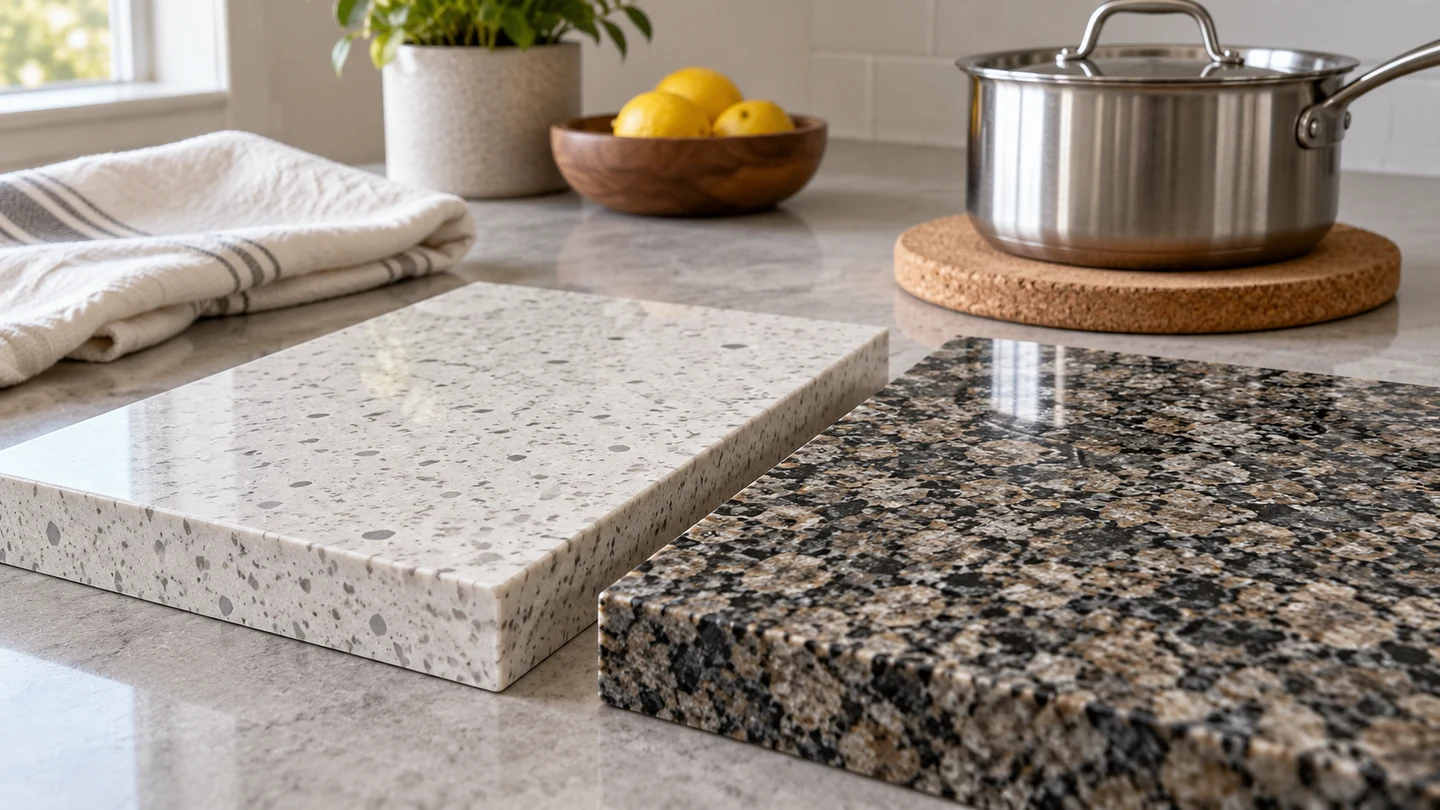
Engineered quartz normally does not need a stone sealer, and soapstone usually avoids that work too. Granite and quartzite vary by slab and porosity, from little or no sealing need to treatment followed by periodic reassessment.
The April 2019 quartzite-care guidance explains why the stone’s density and porosity affect the decision. A penetrating treatment improves resistance to staining on a suitable stone. It leaves ordinary cleaning and prompt spill handling necessary.
A fixed annual calendar is less useful than the instructions for the actual stone, sealer and exposure. A slab near a frequently used sink has a different daily environment from a lightly used dry counter. Review the supplied maintenance information and the condition observed during use.
When comparing natural-stone options, ask what the proposed slab needs at installation and how future treatment is assessed. That is a concrete way to compare care work without assigning every granite or quartzite the same interval. If avoiding that task matters most, quartz and normally soapstone belong on the initial shortlist.
What is the best way to clean worktops?
Identify the worktop, use its allowed mild cleaner and a soft cloth, and remove residue and dry as directed. For natural stone, neutral stone-cleaning products or the mild methods permitted by its care information are a better starting point than acidic household recipes.
The stone-care guide recommends neutral cleaners, stone soap or mild dishwashing liquid with warm water, following product directions, rinsing thoroughly and drying with a soft cloth. It also advises blotting a spill instead of spreading it across the surface.
Calcium-carbonate stones such as marble and limestone are sensitive to acids, including vinegar and lemon. Abrasive cleaners can scratch finishes. Stone type and finish therefore belong in the decision before applying a product across the whole worktop.
For engineered quartz, use the actual quartz maker’s approved routine. For another worktop material, use its own directions instead of extending natural-stone guidance to it. A fresh food spill and a long-standing unknown mark can need different treatment; persistent stains deserve a material-specific assessment rather than a progression through stronger chemicals.
In a busy kitchen, keep a suitable soft cloth and the approved cleaner accessible. That makes prompt cleanup realistic while keeping improvised mixtures out of the routine.
Are easy-clean surfaces also scratch- and heat-proof?
No. Wiping convenience, scratch behavior and heat tolerance are different properties. Protect a quartz worktop from hot pans, use a cutting board and remove abrasive grit from floors.
A resin-bearing quartz face can be easy to clean while heat remains a concern. Soapstone can avoid routine sealing while picking up scratches. A finished wood floor can look attractive and stay serviceable while still needing protection from excess water and grit.
Think about the action as well as the material label. A hot pan needs a suitable protective rest, cutting needs a board, and tracked-in grit needs removal before it is dragged around the floor. Those small routines address the specific damage instead of asking stain resistance to cover every kind of use.
The scratch-resistant cabinet surface comparison discusses a related distinction on furniture faces. A favorable scratch result still belongs to the surface and method tested, separate from a cleaning claim or a floor-use approval.

How do cabinet doors and wall panels fit the room?
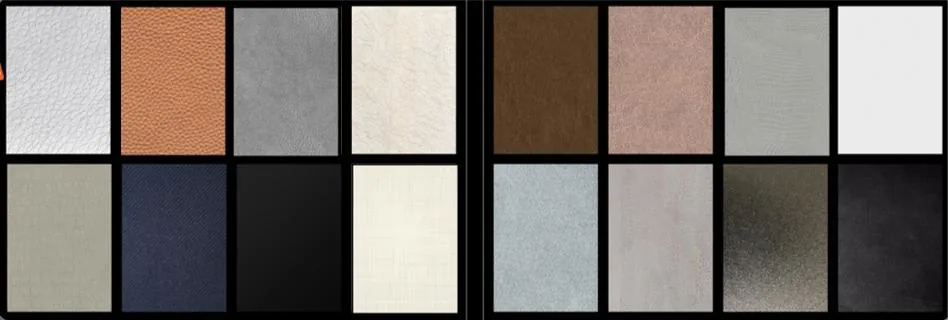
Puremorfilm makes decorative film with a silicone functional face for flat cabinet and wall panels, adding a separate furniture-facing choice after the floor and worktop are selected. We supply mainly rolls for PUR flat lamination, with film-faced panels available on request. The silicone face is inherently flame-retardant; higher grades up to UL 94 V-0 are available on request.
In the manufacturer’s laboratory tests, stated stains held at 25°C for 24 hours wiped away with no obvious change. Our formulation is No DOP. Our newer paint-free face uses silicone functionality, distinct from PVC, melamine, PP and PETG facings. The film is not suitable for floors, stovetop counters or shower floors.
The furniture decorative film page covers that application, separate from stone or quartz worktops. The cabinet-cleaning guide addresses routine care for the room’s other furniture faces.
Which easy-clean surfaces suit your home?
Choose the maintenance work you are willing to do: vinyl for a simple floor-care route, glazed tile with grout care, wood with controlled moisture, and quartz when avoiding stone sealing matters. Natural stone remains an option when its particular care and appearance suit you.
| Household priority | Useful direction |
|---|---|
| Frequent kitchen spills | Suitable vinyl or glazed tile flooring, with appropriate joints and cleaning |
| Fewer grout-cleaning tasks | Compare a floor construction with fewer exposed grout joints |
| A real wood floor | Accept the finish-specific routine and avoid wet or steam mopping |
| A low-sealing-work counter | Compare engineered quartz and suitable soapstone |
| A particular natural-stone appearance | Choose the actual slab and its cleaning and sealer requirements |
| Coordinated cabinet and wall faces | Select a facing intended for those flat panels |
For a cabinet or wall-panel facing, contact us with the room’s use and the color or texture you want.
Frequently Asked Questions
What is the easiest type of flooring to keep clean?
Vinyl or glazed tile is a useful shortlist for ordinary household cleaning. Tile adds grout care, while either option needs its actual system’s approved cleaning method.
What is the best way to clean worktops?
A material-approved mild cleaner and a soft cloth are the starting choice, with residue removal and drying as directed. Identify the worktop before borrowing a natural-stone, quartz or other surface’s routine.
How to clean floor surfaces?
Cleaning starts with removing loose dirt and grit, followed by the method permitted for that floor and finish. Keep moisture controlled, especially on wood and vulnerable joints.
How often should hardwood floors be cleaned?
Remove dirt as it accumulates and spills when they happen; a weekly vacuum or dry-mop reminder is a practical starting routine, with more frequent attention in busy areas. Use the actual floor finish’s care instructions.
Does a low-maintenance countertop still need sealing?
No. Engineered quartz does not normally need a stone sealer and soapstone usually avoids that work; granite and quartzite depend on the actual slab and may need sealing and periodic reassessment.