
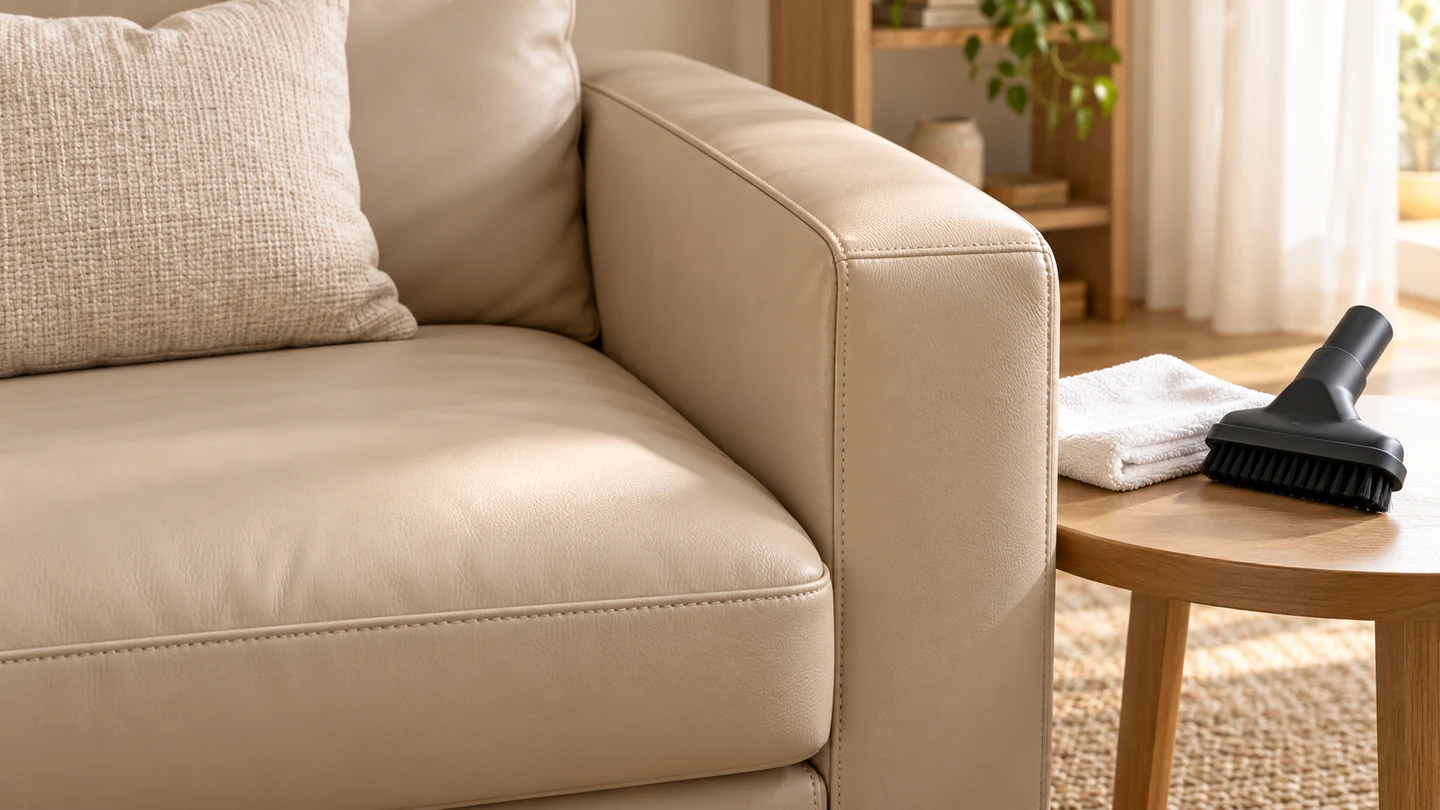
To care for faux leather furniture, remove dust gently, blot fresh spills promptly and use a slightly damp cloth where the furniture’s care instructions allow water-based cleaning. Keep the piece away from direct heat and strong sun, and use stronger cleaners only when they are approved for that surface. Dusting once a week is a practical reminder; spills are best handled the moment they happen.
Faux leather is commonly a coated fabric, with a PU or PVC face over a backing. It needs care for that coating, not an automatic application of the oils or conditioners used on animal hide. If the surface is already sticky, cracking or shedding, stop experimenting with cleaners and assess the damage first.
What is faux leather, and why does its care differ?
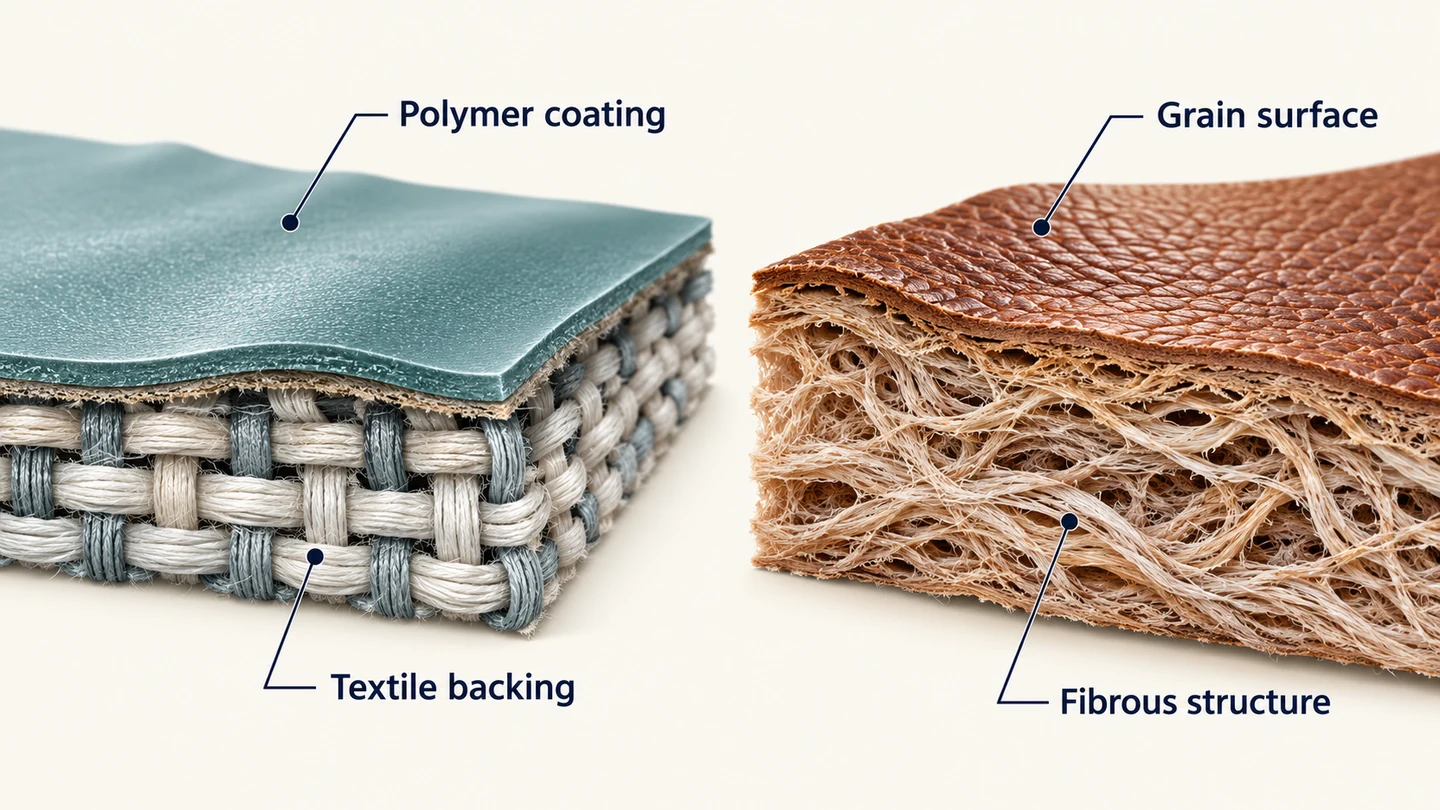
Faux leather is commonly a textile backing with a polymer coating that creates the leather-like face. Its appearance can resemble hide, while the coating, backing and approved care method differ from genuine leather.
The Association for Contract Textiles’ coated-fabric guidance describes that construction. A flexible sofa covering must keep its face attached to its support while it bends and is cleaned. The furniture’s actual care label is therefore more useful than a guess based on the grain pattern.
PU and PVC also name different coating families. A care method suited to one particular product should stay with that product, because formulation and construction vary within either family. Some furniture marketed with leather terminology can contain genuine leather with a protective coating, which is another reason to read the materials description.
For a new sofa, save the supplied care document and identify the exact upholstery before buying a cleaner. If your question is about a rigid cabinet face instead of flexible seating, the decorative furniture surfaces overview covers that separate material choice.
How do you clean faux leather day to day?
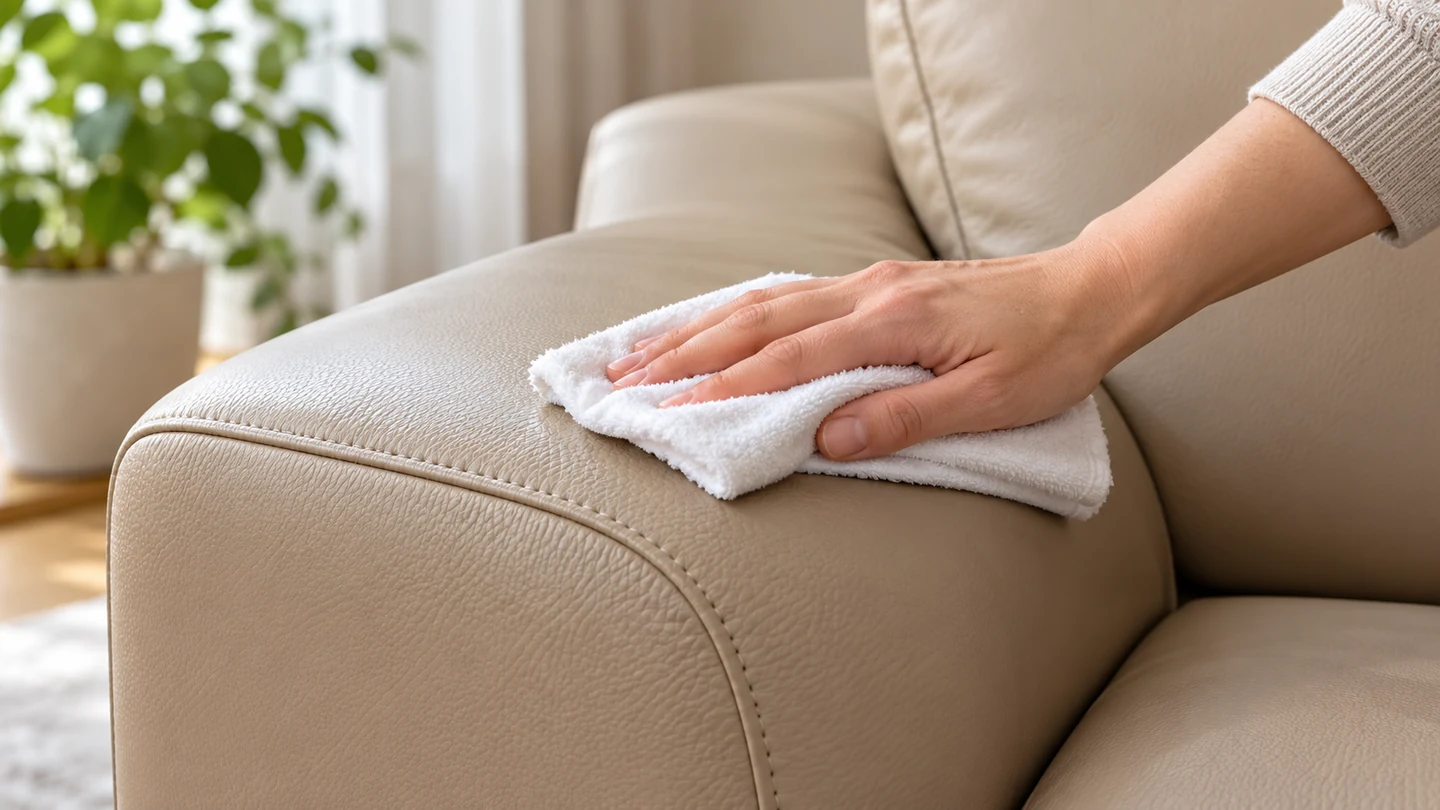
Dust gently, blot a fresh spill, wipe with the permitted method and dry as directed. For a surface approved for damp wiping, use a little moisture rather than soaking the seams or backing.
The furniture maker’s upholstery-care guide recommends gentle damp wiping for imitation leather and avoiding greasy household cleaning products. It describes a soft vacuum attachment for suitable upholstery, with a dusting cloth for more delicate imitation-leather surfaces, and advises keeping leather and imitation leather away from heaters and direct sunlight.
For an intact, water-cleanable covering, work in this order:
- Remove crumbs and dust with a soft cloth or the permitted soft vacuum attachment. Avoid dragging grit across the face.
- Blot a fresh spill with a clean soft cloth. Lift the liquid gently before spreading it farther.
- Wipe the affected area lightly with the damp-cloth method allowed by the furniture instructions.
- If an approved cleaner was needed, remove residue only as the material instructions direct. Add a water-wipe step only when it is allowed.
- Dry gently as directed and leave the surface ready for use before covering it again.
On a dining chair, inspect the seat seam while removing food marks. On a sofa, pay attention to the arm where hands and snacks regularly meet the covering. A small amount of frequent care is easier to manage than repeated hard scrubbing of a neglected patch.
What can you use to clean a fake leather sofa?
A damp cloth is the starting method for a surface that permits it; a cleaner needs approval for that exact upholstery. Test an allowed product somewhere hidden before treating the visible area, and stop if the color, gloss or feel changes.
The textile association’s care-code explanation describes W, S and WS as cleaning categories assigned to a fabric. W refers to water-based spot cleaning, S to the specified mild water-free dry-cleaning solvent approach, and WS allows the relevant approach according to the stain. Neither PU nor PVC identifies the care code by itself.
| Method or product | Practical rule |
|---|---|
| Soft dry cloth or permitted soft brush attachment | Start with gentle dust removal |
| Slightly damp cloth | Use where the actual covering permits water-based care |
| Mild cleaner listed for the upholstery | Follow its instructions and hidden-area test |
| Vinegar, alcohol, baby wipes or other household products | Leave unused unless explicitly approved for the actual surface |
| Greasy cleaners, abrasive tools or unapproved strong chemicals | Keep them out of the routine |
| Bleach or solvent products | Use only if the upholstery’s instructions specifically allow that product |
A W label still leaves steam, saturation and arbitrary water-based chemicals outside the permission it actually gives. Likewise, S is no invitation to try household alcohol or an unknown solvent. If the facility needs disinfection as well as an antimicrobial surface claim, match the cleaning product and material instructions before using it on the seat.
Does faux leather need conditioning?
Usually no, when conditioning means feeding it with an oil intended for real leather. An intact coated fabric can have a simple dust-and-wipe routine; use a separate faux-leather care product only if its instructions and the furniture’s care requirements permit it.
Conditioners do not all have the same formulation or intended surface. For example, the care-product maker’s own FAQ excludes vinyl and simulated leather from its conditioner, while treating its cleaner as a different product. That is a product-specific permission example, not a recommendation to buy it.
If a sofa feels dry or stiff in a heated room, first look at its location and condition. Moving it away from direct heat addresses the exposure; adding an unapproved oily coating can introduce another cleaning problem. A soft leather-like feel does not establish a need for nourishing oil.
Check the furniture document for any approved protector or maintenance treatment before making conditioning part of the calendar. Keep the product name with the care instructions so later cleaning uses the same permitted routine.
Why does faux leather crack and peel?
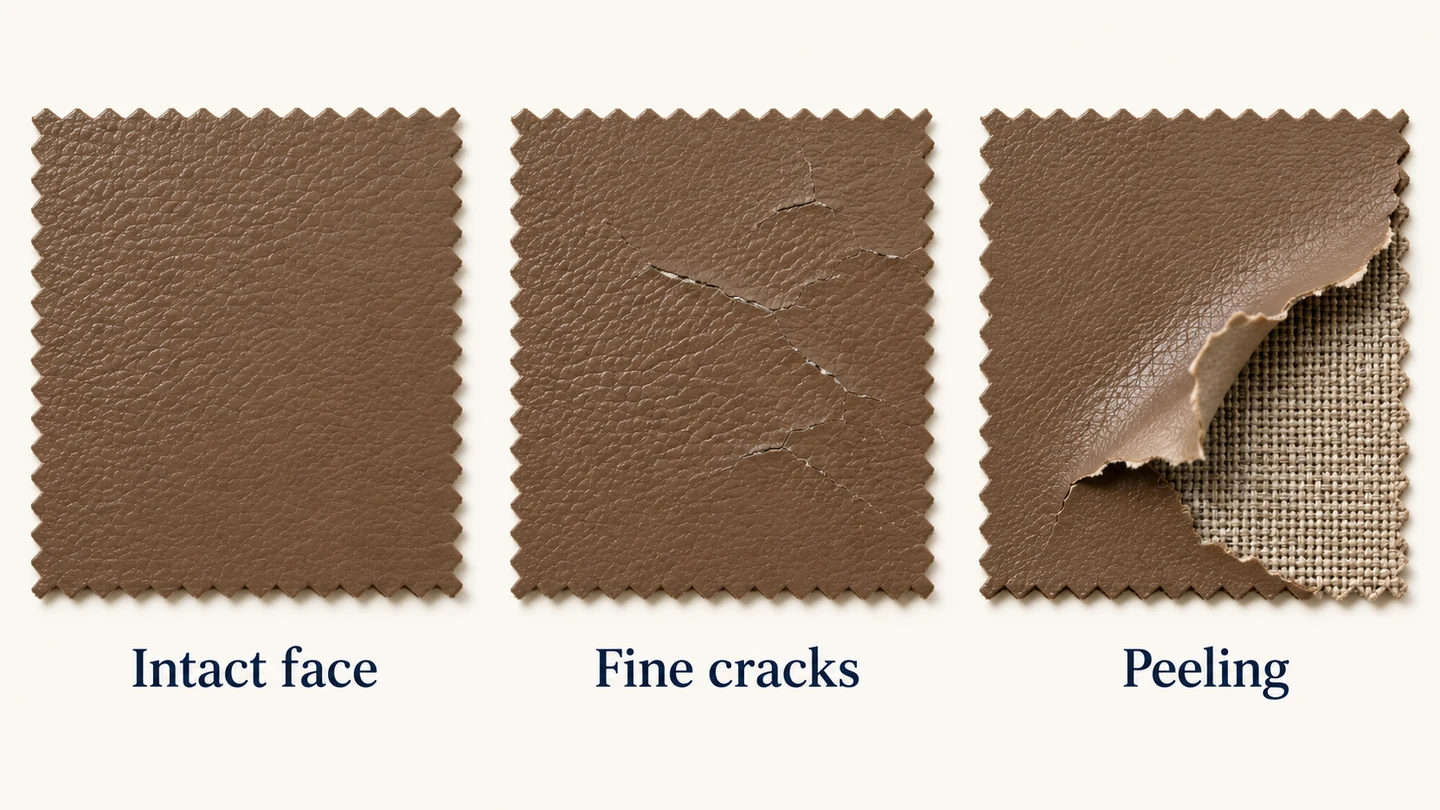
PU-coated fabrics can fail through hydrolysis under heat and moisture, and unsuitable or excessive cleaning and disinfecting can produce similar cracking or flaking. The appearance alone cannot identify which process caused a damaged seat.
The ACT hydrolysis explanation concerns PU-coated fabrics and excludes the PVC-based constructions identified in its scope, including PVC-based fabric with a PU top finish. Keep that scope with the mechanism instead of diagnosing every synthetic covering as hydrolyzed PU.
| Symptom | Possibility to investigate | Useful next action |
|---|---|---|
| New tack or a change in feel | Cleaner residue, incompatibility or deterioration | Stop the new treatment and consult the material care information |
| Fine cracks or flaking | Coating deterioration or chemical damage | Record the condition and cleaning products used |
| Broad unstable peeling | Widespread coating failure | Assess replacement covering or reupholstery |
| Fading or local discoloration | Light exposure, staining or damage | Review exposure and approved care before further treatment |
Follow both the chemical maker’s and textile supplier’s instructions when a stronger product is needed. For a sofa arm exposed to sun or a chair beside a radiator, change that exposure before expecting a different cleaner to solve the problem.
For a newly purchased piece, an odor question belongs with the furniture off-gassing explanation, rather than being treated by adding a scented cleaner to the covering.
Can damaged faux leather be repaired?
Small cosmetic damage on a stable compatible surface can have a repair route; widespread unstable peeling usually makes a new cover or reupholstery more practical. Assess what remains firmly attached before spending time on another surface treatment.
The repair-coating maker’s discussion of peeling materials distinguishes a surface that can accept a compatible repair from a failing layer underneath. A new finish has difficulty staying attached when the material below continues to flake.
For a minor color mark on an otherwise intact compatible covering, ask whether an approved matching repair product exists. For a cushion shedding across the seating area, investigate a replacement cover or upholstery work. If the furniture is under warranty, contact the seller before applying a coating that may complicate assessment.
Regularly used faux-leather furniture can hold up well when its grade and care suit the job, but condition and exposure decide the actual repair opportunity. There is no need to sand, scrape, recolor or glue the entire sofa based on a generic tutorial. A professional can establish whether the damage is local or part of broader coating failure.
Where does a silicone-faced panel film fit?
Puremorfilm makes decorative film with a silicone functional face for rigid furniture and wall panels, separate from sewn sofa upholstery. We supply mainly rolls for PUR flat lamination, with film-faced panels available on request. The silicone face is inherently flame-retardant; higher grades up to UL 94 V-0 are available on request.
In the manufacturer’s laboratory tests, stated stains held at 25°C for 24 hours wiped away with no obvious change. Our formulation is No DOP. Our newer paint-free face uses silicone functionality, distinct from PVC, melamine, PP and PETG facings. The film is not suitable for floors, stovetop counters or shower floors.
The furniture decorative film page covers that panel application. For a rigid resin-faced cabinet, the laminate cabinet cleaning guide addresses a different care task from upholstery.
What care routine works for faux leather furniture?
Handle spills promptly, remove dust regularly, keep direct heat and sun off the piece, and assess a changed surface before adding more chemicals. Use the furniture’s care instructions to write down how to care for faux leather furniture, so everyone follows the same permitted routine.
| When | What to do |
|---|---|
| A spill occurs | Blot, then use the permitted local-cleaning method |
| Weekly as a practical reminder | Dust gently and remove crumbs without dragging grit |
| During a regular room check | Look at seams, heat and sun exposure, and the condition of heavily used areas |
| Tack, cracks or peeling appear | Stop experimenting, document the products used and assess repair or replacement |
For a hard furniture or wall-panel facing, contact us with the panel application and the color or texture you want.
Frequently Asked Questions
What can I use to clean my fake leather sofa?
A slightly damp cloth is a useful first method where the upholstery allows water-based cleaning. Any stronger cleaner should be approved for the exact covering and tested discreetly first.
How to keep faux leather good?
Gentle dusting, prompt spill removal, suitable cleaning and protection from direct heat and sun form the basic routine. Keep the care document so different people use the same permitted products.
Does faux leather furniture hold up?
Yes, a suitable grade can withstand ordinary use when maintained appropriately. Heat, moisture, wear and incorrect chemicals affect the coating, so a material name cannot supply a fixed service life.
How to prepare faux leather?
Preparation for cleaning starts with identifying the actual material and care instructions, removing loose dirt and testing the permitted method in a hidden area. Avoid treating an already peeling face as a routine cleaning job.
Should you condition faux leather?
No, not as an automatic real-leather oiling routine. Consider a separate care treatment only where both the upholstery instructions and the product’s label allow it.