
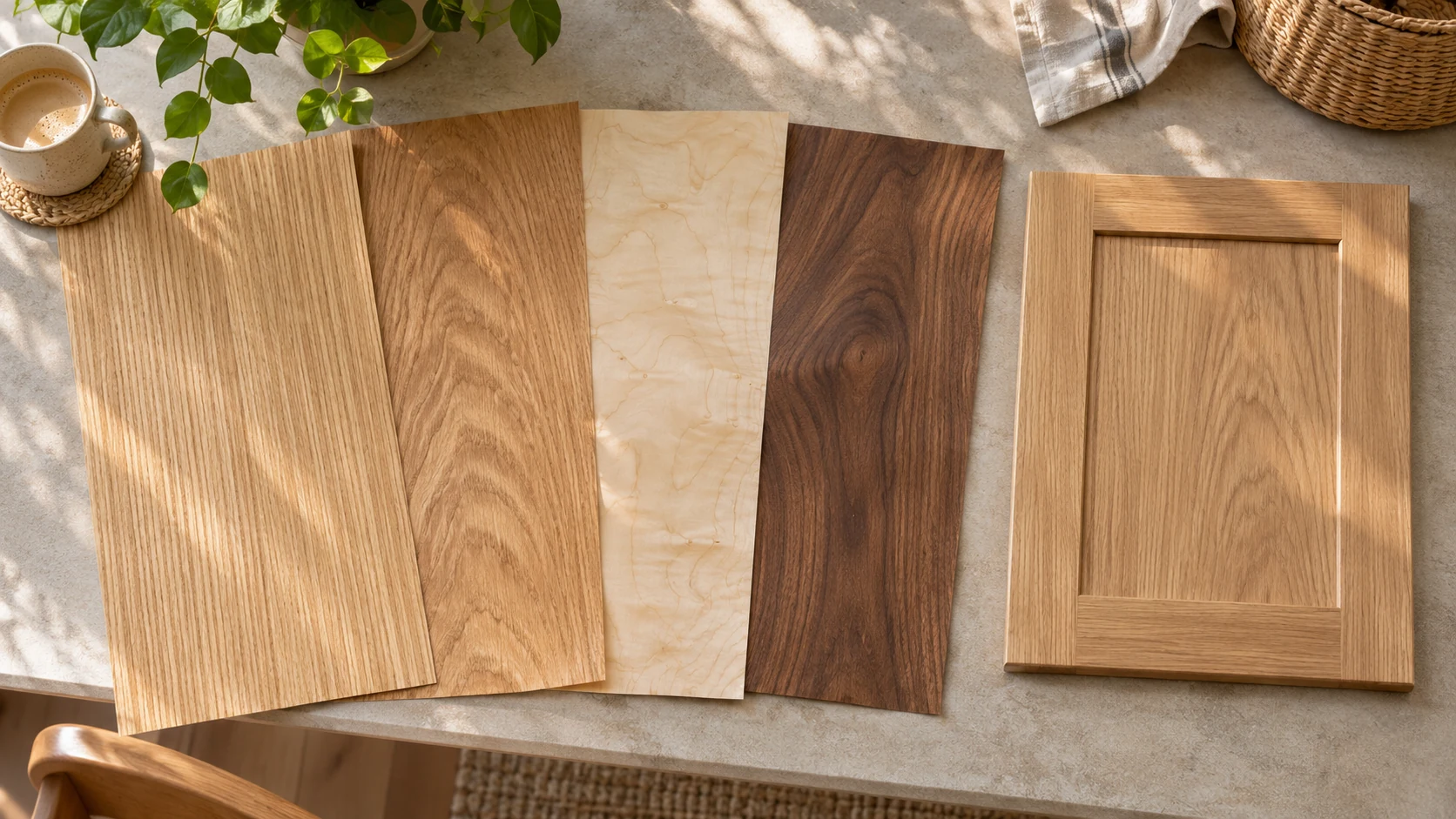
Wood veneer types describe several separate choices: the cut, species, backing, natural or reconstituted construction, match and grade. The cut and match determine the grain pattern across a surface; the species and selected part of the log determine much of its color. For a cabinet or wall, choose the visible pattern first, then settle the backing and grade for that application.
What are the main types of wood veneer?
Wood veneer is a thin layer of real wood attached to a supporting material, and its “type” needs more than a species name. A walnut veneer can be plain sliced, paper backed, book matched and selected to a particular face grade. Each description answers a different question.
The Composite Panel Association’s veneer overview identifies real wood veneer as a decorative surface available in domestic and imported species. The core underneath may be MDF, particleboard or plywood. You see the wood face, while the core supplies the panel’s body.
| Description | Common options | What it tells you |
|---|---|---|
| Cut | Rotary, plain sliced, quarter sliced, rift cut | Shape and direction of the grain |
| Species and selection | Oak, walnut, maple, birch; selected sapwood or heartwood | Color range and natural character |
| Construction | Natural or reconstituted | How the wood pattern was produced |
| Backing | Raw, paper, phenolic and other backings | Handling and suitability for the intended shape |
| Match | Book, slip, random and other arrangements | How neighboring leaves form a larger pattern |
| Grade | Face grades and architectural aesthetic grades | Permitted appearance and workmanship |
A veneer-faced cabinet is still a real wood surface. It differs from a solid wood component in construction, as the wood veneer versus solid wood comparison explains. Film printed with a woodgrain pattern belongs to a different material category.
How do rotary, plain, quarter and rift cuts look different?
Rotary cutting produces broad, varied grain; plain slicing often produces cathedral arches; quarter slicing favors stripes; rift cutting is used especially for oak with straighter grain and reduced ray fleck. The cutting direction changes the pattern before any leaves are assembled into a panel.
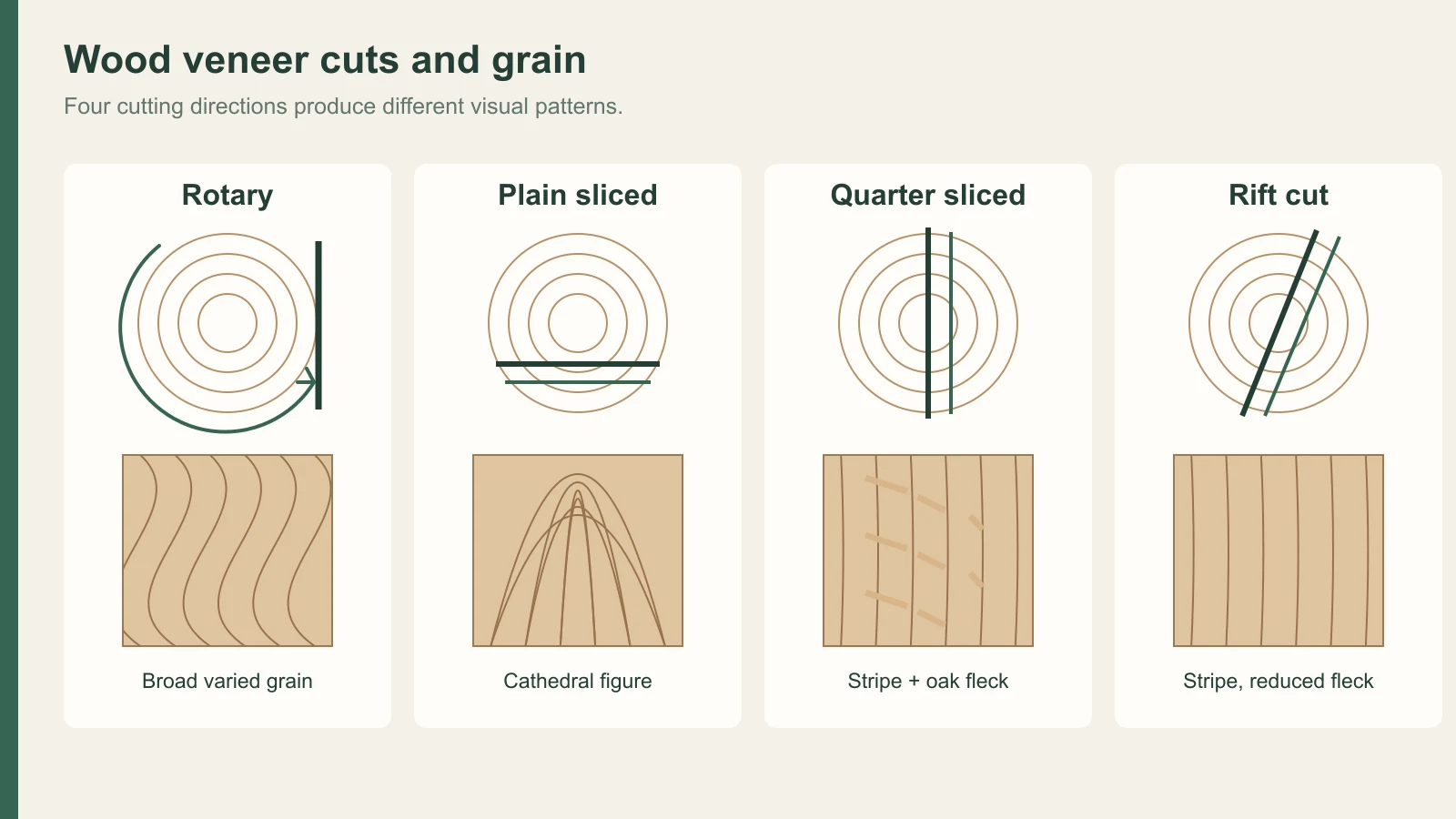
Think about the size of the finished surface. A strong cathedral can suit a single door but become busy when repeated across an entire wall. A quiet stripe is easier to carry along a long run of storage, although the joins still need planning.
| Cut | Cutting approach | Typical appearance | Selection consequence |
|---|---|---|---|
| Rotary | A log turns against a blade, producing a continuous sheet | Broad, irregular and sometimes dramatic grain | Less suited to a planned sequence of matching leaves |
| Plain sliced | Successive slices are taken across a prepared log section | Cathedral or arched figure | Useful when you want a recognizable, expressive wood pattern |
| Quarter sliced | Slices run approximately perpendicular to growth rings | Straighter stripes; ray fleck can be prominent in oak | Choose it when the fleck is part of the intended character |
| Rift cut | The cutting direction reduces the oak’s visible rays | More even, linear oak grain | A choice for restrained cabinetry; availability and yield affect cost |
Ray fleck is the pale, sometimes shimmering figure associated with quarter-cut oak. Rift cutting reduces that effect; it does not turn oak into a featureless material. The natural grain and the selected log still influence the result.
“Straight grain” leaves the cut and leaf arrangement unresolved. Ask to see the actual cut and the proposed leaf arrangement together. A close-up of one small sample cannot show how the pattern will repeat across several cabinet doors.
Which wood species change the color and character?
Species sets a useful starting color and grain character, but it does not promise that every sheet will look the same. Walnut, oak, maple, birch and cherry each include variation within a tree and between logs.
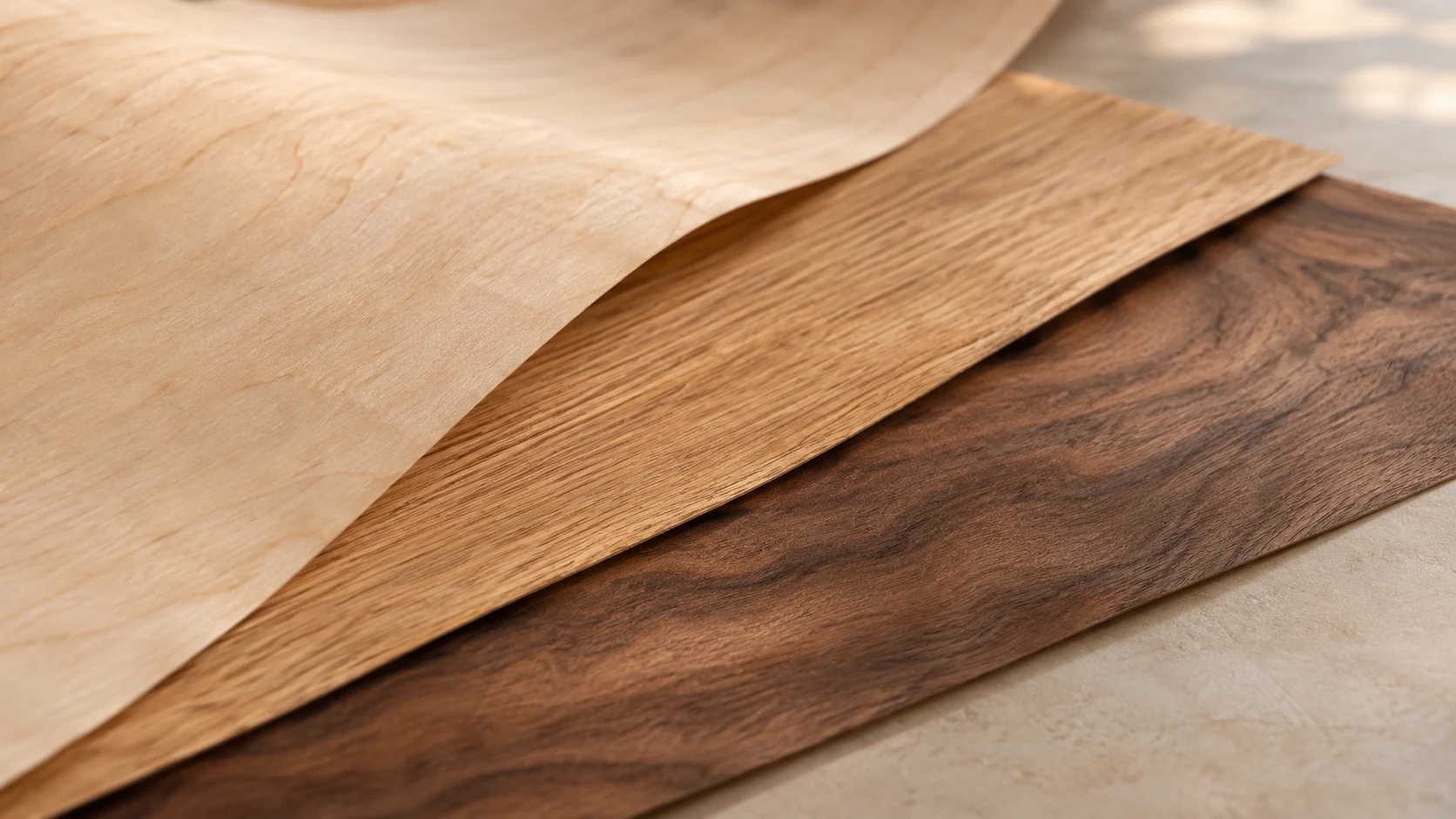
The difference between sapwood and heartwood can be as important as the species name. In maple and birch, sapwood is the light portion of the log and heartwood the darker portion. A specification allowing both can produce a wider color range than a sample containing only the pale portion.
For light maple or birch, “natural” and “Select White” are different requests in architectural veneer selection. Natural selections can contain both sapwood and heartwood. Select White calls for the pale sapwood appearance. An attractive pale sample labeled only “maple” leaves that choice unresolved.
A flitch is a group of veneer leaves from a log section. Leaves from a different flitch can vary even when the species and cut match. For a long cabinet run, look at the proposed range across leaves, including the strongest and quietest examples.
Finish changes the appearance too. A clear coating, stain and the light in the room all affect what you see; gloss measurement helps describe the sheen separately from color. Keep the sample beside the intended wall and metal finishes on an interior material board, especially if you are adding new cabinetry next to existing wood furniture.
What is the difference between natural and reconstituted veneer?
Natural veneer retains the grain arrangement of the log from which it was cut. Reconstituted veneer is made by processing wood into a new block and slicing that block to create a more controlled pattern.
The reconstituted route commonly starts with rotary-cut wood that is colored, assembled and bonded before reslicing. It can give a more repeatable visual rhythm than selecting unrelated natural flitches. It remains a wood veneer, although its appearance has been deliberately reconstructed.
Natural veneer suits a surface where variation and the history of the tree are part of the appeal. Reconstituted veneer suits a design that needs a more regular pattern. Look at full-width sheets in either case: controlled appearance does not remove the need to plan seams and color range.
Neither construction tells you the whole panel’s moisture resistance, fire classification or finish quality. Those belong to the complete panel and coating specification. For the separate choice between real wood and a manufactured decorative face, see wood veneer versus laminate.
Which veneer backing suits flat panels and curves?
Raw veneer gives the fabricator an unbacked wood leaf to assemble, paper backing helps with handling and suitable curved work, and phenolic backing is offered as a heavier-duty sheet for high-wear areas. The backing must suit the actual shape and bonding method.
Unbacked leaves can be fragile during handling and joining. They are useful when a skilled workshop is selecting and assembling individual leaves, but they require more preparation than a ready-made backed sheet.
Paper-backed veneer is often considered for larger surfaces and curves because the backing supports the thin wood. Check the supplier’s permitted bend and adhesive system for that particular sheet. A gentle radius and a tight wrapped edge are different jobs; the word “flexible” does not define either one.
The Architectural Woodwork Institute’s veneer overview presents phenolic-backed veneer as the heavier-duty choice for high-wear areas. Cloth, foil and other backings also exist. Select by the intended component rather than assuming the thickest or stiffest backing is the highest quality.
The supporting board remains a separate choice. A flat cabinet door and a curved furniture shell may need different constructions even if their visible veneer is the same. On a wall, compare the complete assembly with other wall panel materials before choosing the decorative face.
How do book, slip and other matches change a panel?
Matching controls how neighboring leaves are placed, while panel assembly controls their widths and position within the finished panel. You need both decisions to predict the appearance of a full wall or cabinet run.
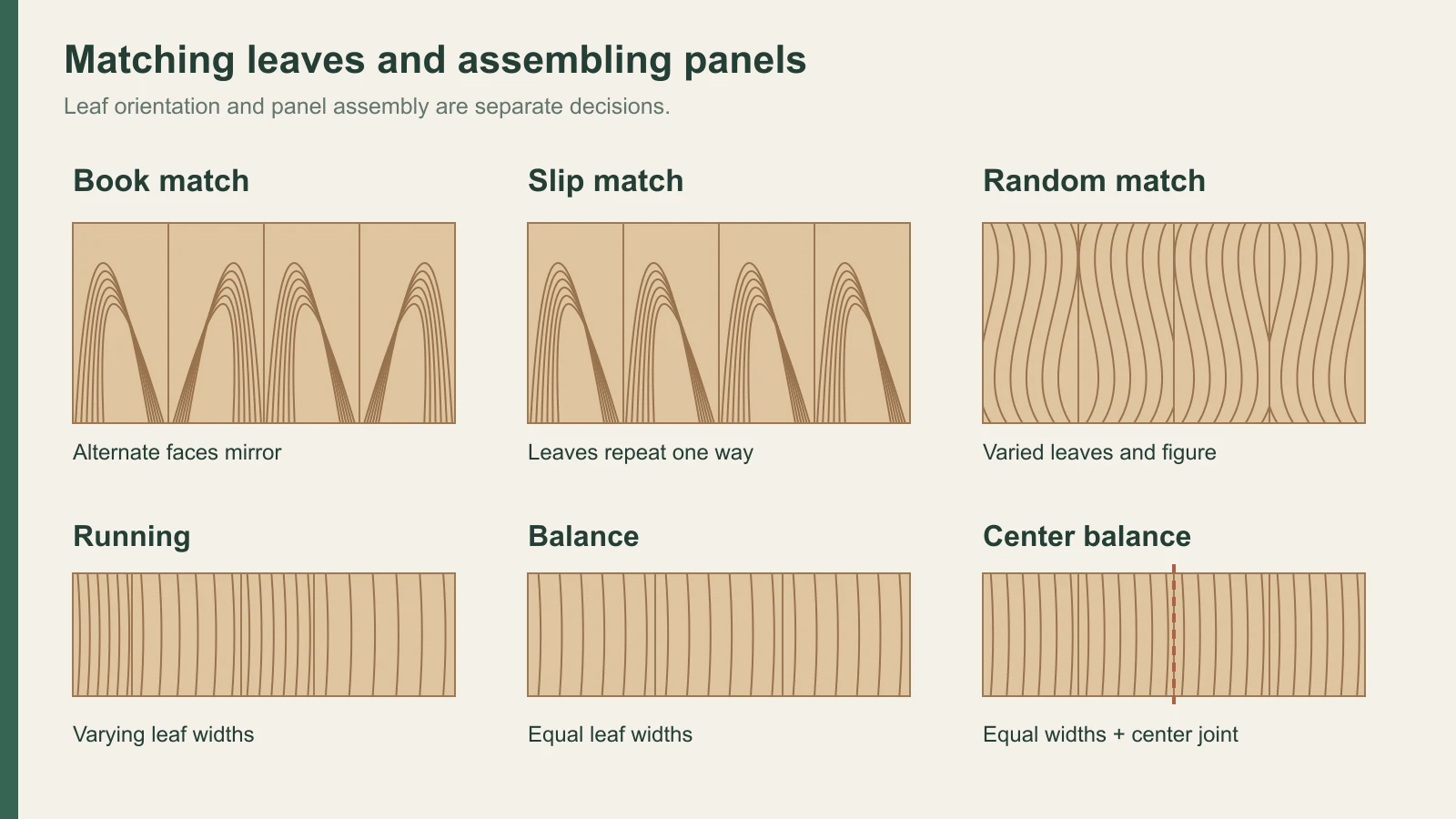
Matching neighboring leaves
In book matching, alternate leaves turn over like pages, creating a mirrored pattern. Their opposite faces can reflect light differently and produce alternating light and dark bands, often called barber pole. That visual effect can occur in correctly made veneer and deserves a look in the intended lighting.
| Arrangement | What you see | Main choice to resolve |
|---|---|---|
| Book match | Mirrored figure across adjoining leaves | Whether symmetry and alternating reflection suit the room |
| Slip match | Leaves repeat in the same orientation | Whether a repeating stripe is preferable to a mirror |
| Random or plank match | Deliberately varied leaves or board-like pieces | How much variation is acceptable across the whole surface |
| Running assembly | Leaf widths can vary across a panel | Economical use of leaves versus a highly ordered layout |
| Balance assembly | Equal-width leaves within the panel | More regular rhythm with lower material yield |
| Center balance assembly | Equal widths arranged around a central joint | A centered composition with further yield implications |
Slip matching is common with quarter- and rift-cut grain and can reduce the alternating reflection associated with book matching. Reverse slip and other arrangements offer further variations. Name the arrangement on the drawing instead of relying on a photograph of a small sample.
Planning a panel set
For transparent-finished wood paneling, ANSI/AWI 0642–2024, section 3.4.1 distinguishes Premium and Custom aesthetic grades. Adjacent veneer faces must be well matched under Premium and compatible under Custom. For panels divided with veneer grain, maximum grain-alignment variance is 3.2 mm for Premium and 6.4 mm for Custom; figure or heart progression between adjacent panels is limited to 12.7 mm and 25.4 mm respectively.
Those figures apply to the standard’s wood-paneling conditions, not to every veneer product or cabinet gap. Its made-to-order panel-set provisions also require balance matching and place a flitch change at a change of plane or wall opening when one flitch cannot cover the room. Planning that break at a corner can prevent an abrupt change in the middle of a feature wall.
Cabinet doors introduce their own interruptions. The guide to grain matching on cabinets explains how doors and drawers affect the direction and continuity you see.
What do veneer grades like AA, A and Premium mean?
Face grades such as AA and A describe the veneer face, while Premium and Custom describe architectural woodwork appearance requirements. They belong to different grading systems and should not be treated as interchangeable labels.
Face grading addresses permitted natural characteristics and repairs. A more selective face grade narrows what is acceptable on the visible side. A face grade says nothing about the species’ hardness, the panel’s water resistance or the finish’s stain resistance.
Door specifications illustrate how the systems can work together: a Premium door specification can call for an AA face with particular matching and assembly, while a Custom specification can call for an A face. The applicable door standard and supplied specification control the combination; a wall-paneling requirement is not automatically a door requirement.
For quotations, ask which standard defines the grade and whether the quote includes the same cut, color selection, match and panel layout. Two offers labeled “oak veneer” can describe visibly different work. Buy the appearance defined by the complete specification.
Where should wood veneer not be used?
Wood veneer is a poor default for wet, heavily worn horizontal surfaces such as kitchen countertops, and it needs protection from prolonged direct sunlight. A clear finish does not remove those limitations.
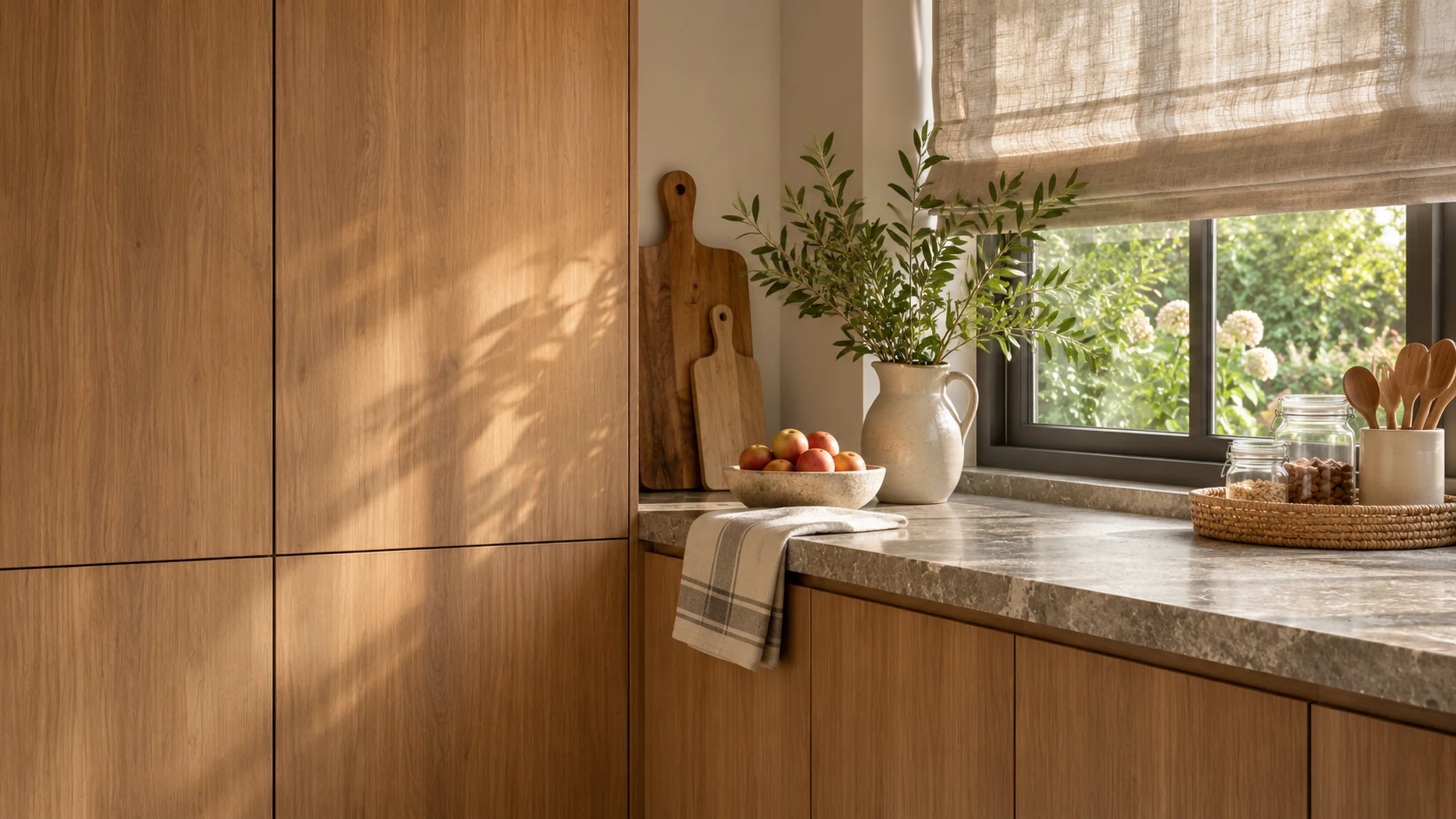
The Timber Veneer Association of Australia’s care guidance excludes high-wear, wet horizontal uses unless the veneer is fully enclosed in a suitable resin system. A veneered cabinet front beside a counter is a different application from the counter itself.
Wood color changes under natural and artificial light, and ordinary clear coatings can yellow over time. For new work, discuss a low-yellowing coating and position valued veneer furniture away from direct sun. Rounded edges can also help because coatings tend to be thinner on sharp edges.
Refinishing has a finite allowance: sanding can reach through a thin face into the core. A deep dent is different from a damaged coating, and a harder topcoat cannot prevent the wood underneath from compressing. Before planning a restoration, have the remaining veneer and the damage assessed.
Where does a silicone woodgrain film fit beside real veneer?
A silicone-faced woodgrain film is another decorative surface for flat cabinet fronts and vertical panels; its woodgrain is a reproduced pattern. It is separate from natural and reconstituted wood veneer.
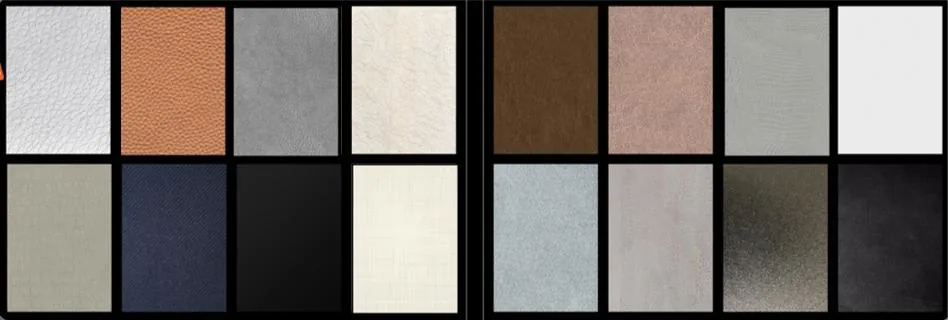
Puremorfilm makes this film with a silicone functional surface carried on PET, a paint-free route that differs from PVC film, melamine-faced board, PP film and PETG-faced products. Cabinet and panel makers bond it to flat boards by PUR flat lamination; we supply it mainly in rolls and quote faced panels on request. Standard supply carries no back adhesive, and texture and gloss can be customized for the project.
The silicone surface is inherently flame-retardant; that describes the film, not a cabinet or wall rating. In the manufacturer’s laboratory tests, coffee, red wine and soy sauce left at 25°C for 24 hours wiped off with no obvious change. The film uses a No DOP formulation and is formaldehyde-free; the formaldehyde statement covers the film itself, not the finished board.
For furniture decorative film, keep the application to flat faces. Curved wrapping, floors, countertops, stovetops, shower floors and walking surfaces are outside this route. Free samples let you compare the reproduced grain with real veneer leaves under your own lighting.
Which wood veneer type should you choose?
Choose the grain arrangement first, the wood color next, and the backing and grade for the finished component. Bring those choices together on a panel layout so the attractive sample can become an attractive larger surface.
| Application | Main question | Selection direction |
|---|---|---|
| Cabinet run | Quiet stripes or a mirrored feature? | Quarter or rift with slip for linear grain; plain with book for symmetry |
| Architectural wall | How will the grain cross panel joints? | Plan balanced leaves, the aesthetic grade and any flitch transition |
| Curved furniture face | Can this exact sheet follow the shape? | Discuss a suitable backed veneer and bonding system |
Keep the selected leaves, coating and room lighting together when reviewing the appearance. For a reproduced woodgrain on flat vertical faces, contact us to discuss the silicone-faced alternative and samples.
Frequently Asked Questions
What are the four main types of veneers?
The four commonly named wood veneer cuts are rotary, plain sliced, quarter sliced and rift cut. Species, backing, match and grade describe additional choices within those cuts.
What is the best quality wood veneer?
The best veneer is the one whose specified face grade, grain and color range suit the component. AA is a highly selective face grade; Premium architectural woodwork also controls matching and workmanship, rather than naming a superior species.
What are the downsides of wood veneer?
Wood veneer can change color with light, has limited sanding depth and is unsuitable as a default wet, high-wear countertop surface. Its coating and supporting board need their own specification.
Can all wood veneers be stained?
No, you should not assume every supplied veneer will accept the same stain system. Raw wood species absorb stain differently, opposite faces in book matching can respond differently, and a prefinished or specially processed veneer needs its own finishing guidance.
Which wood veneer types work best for cabinets?
Quarter- or rift-cut veneer with slip matching suits cabinets needing straight grain; plain-sliced veneer with book matching suits a mirrored figure. Check the full door-and-drawer layout before choosing the final combination.