
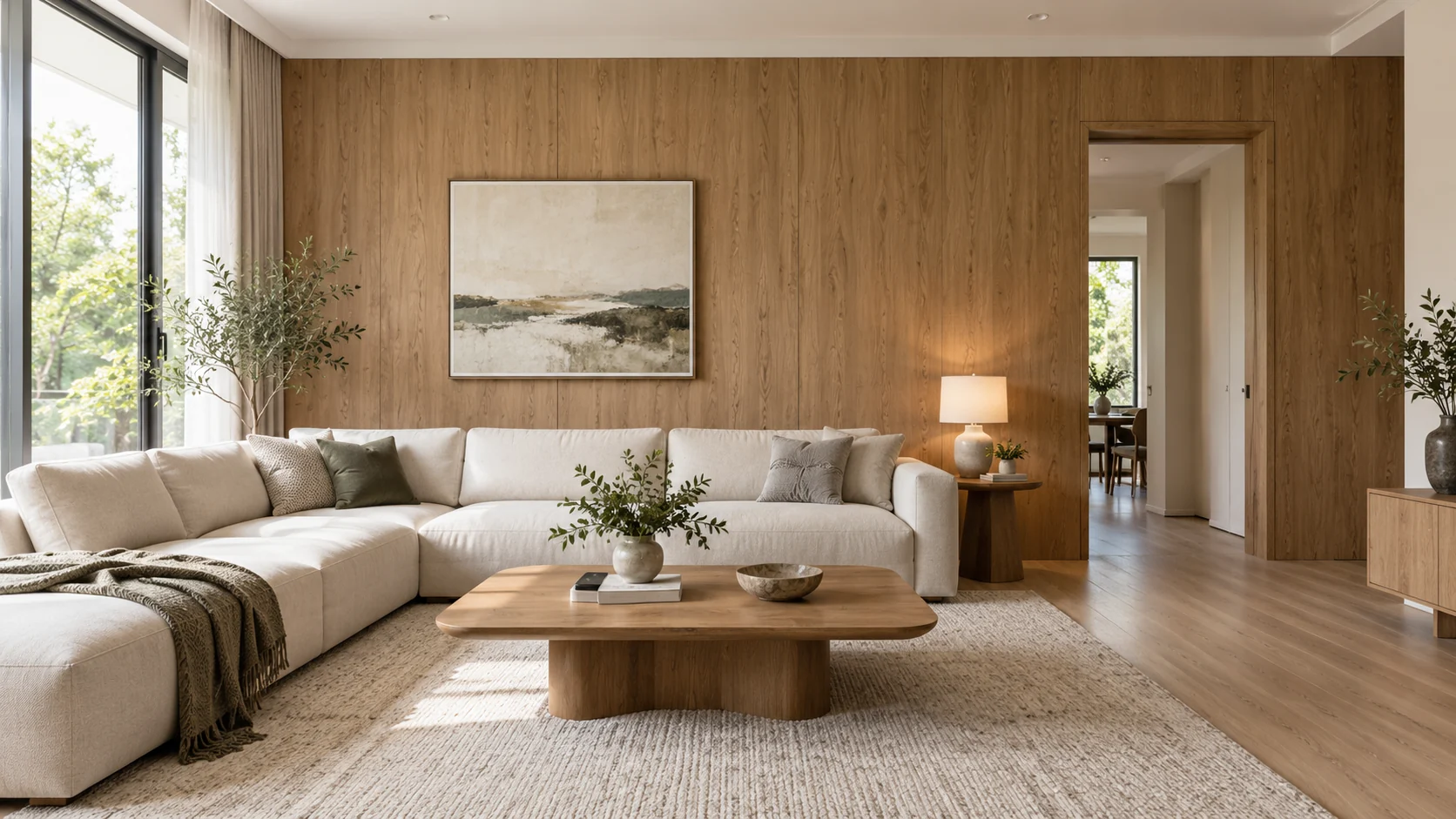
The 6 wall paneling ideas to start with are beadboard wainscoting, shiplap, board and batten, wood slats, picture-frame molding and sculptural 3D panels. Fine grooves suit a cottage hallway, broad boards relax a bedroom, and framed panels give a dining room formal detail. Pick the pattern first, then a material that suits the room’s moisture and the finish you want.
Paneling can cover a lower wall, a feature wall or the whole room. Draw your furniture, windows and doors into the sketch so the pattern fits the room you already have.
What are decorative wall panels called?
Decorative wall panels go by several names, and most describe a style or a construction rather than a material:
| Name | What it means |
|---|---|
| Wainscoting | Paneling on the lower part of a wall, often topped with a rail |
| Beadboard | Narrow vertical boards with a small groove or bead between them |
| Shiplap | Wide horizontal or vertical boards with overlapping edges and a visible gap |
| Board and batten | Flat panels with narrow vertical strips (battens) over the joints |
| Slat or fluted panels | Repeated narrow strips or grooves, often over an acoustic backing |
| Picture-frame molding | Rectangles of trim applied to a flat wall |
| 3D panels | Sculpted or textured panels in gypsum, PVC, MDF or other materials |
| Wall cladding | A general term for any finished panel system that covers a wall |
Any of these can be made in wood, MDF, PVC, gypsum or faced boards; see our guide to wall panel materials to compare them.
When does beadboard wainscoting suit a room?
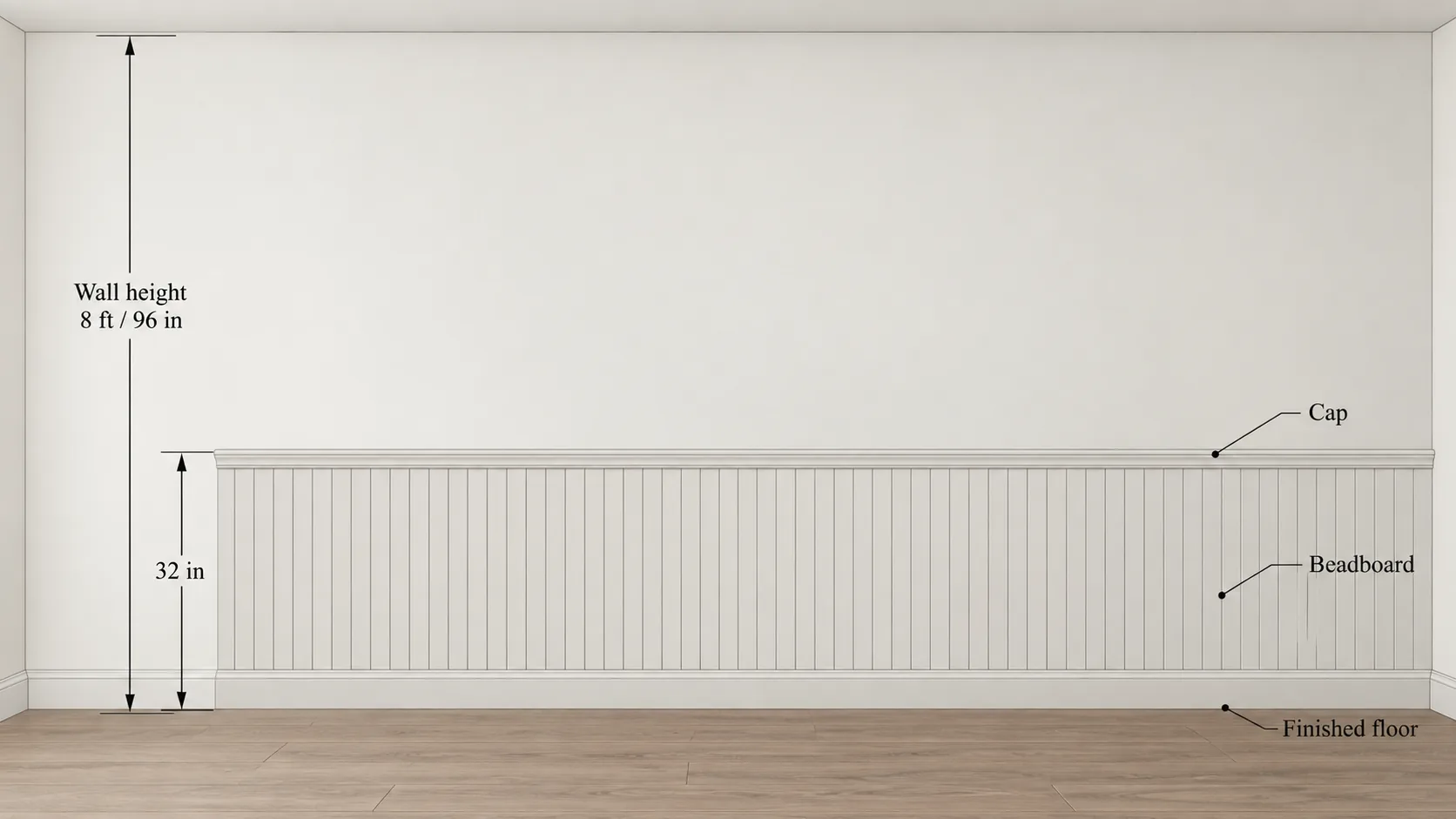
In hallways, dining corners and cottage bedrooms, wherever you want fine vertical grooves along the lower wall. Beadboard is the grooved pattern; wainscoting is any treatment that stops partway up the wall. You can also run beadboard to the ceiling.
For a starting height, This Old House’s wainscoting guide, updated May 26, 2026, puts the cap about one-third of the way up the wall. These heights are worked out from that proportion, cap included:
| Ceiling height | One-third starting height |
|---|---|
| 8 feet | 32 inches |
| 9 feet | 36 inches |
| 10 feet | 40 inches |
Tape the cap line on the wall before you buy anything, and look at it next to window sills, chair backs and any hallway bench. If the line slices awkwardly through them, move it; the fraction is only a starting point.
Painted MDF beadboard works in a dry room. Solid wood shows grain, and sheet panels give you the grooves with far fewer pieces to fit. Our guide to MDF uses, strength and grades explains the board behind many painted panels. In a bathroom, use a panel approved for humidity and splashes, such as a suitable PVC system or porcelain tile, and keep ordinary MDF away from direct water.
To compare panels with the other wall finish categories, see the types of wall coverings.
How can shiplap create a relaxed feature wall?
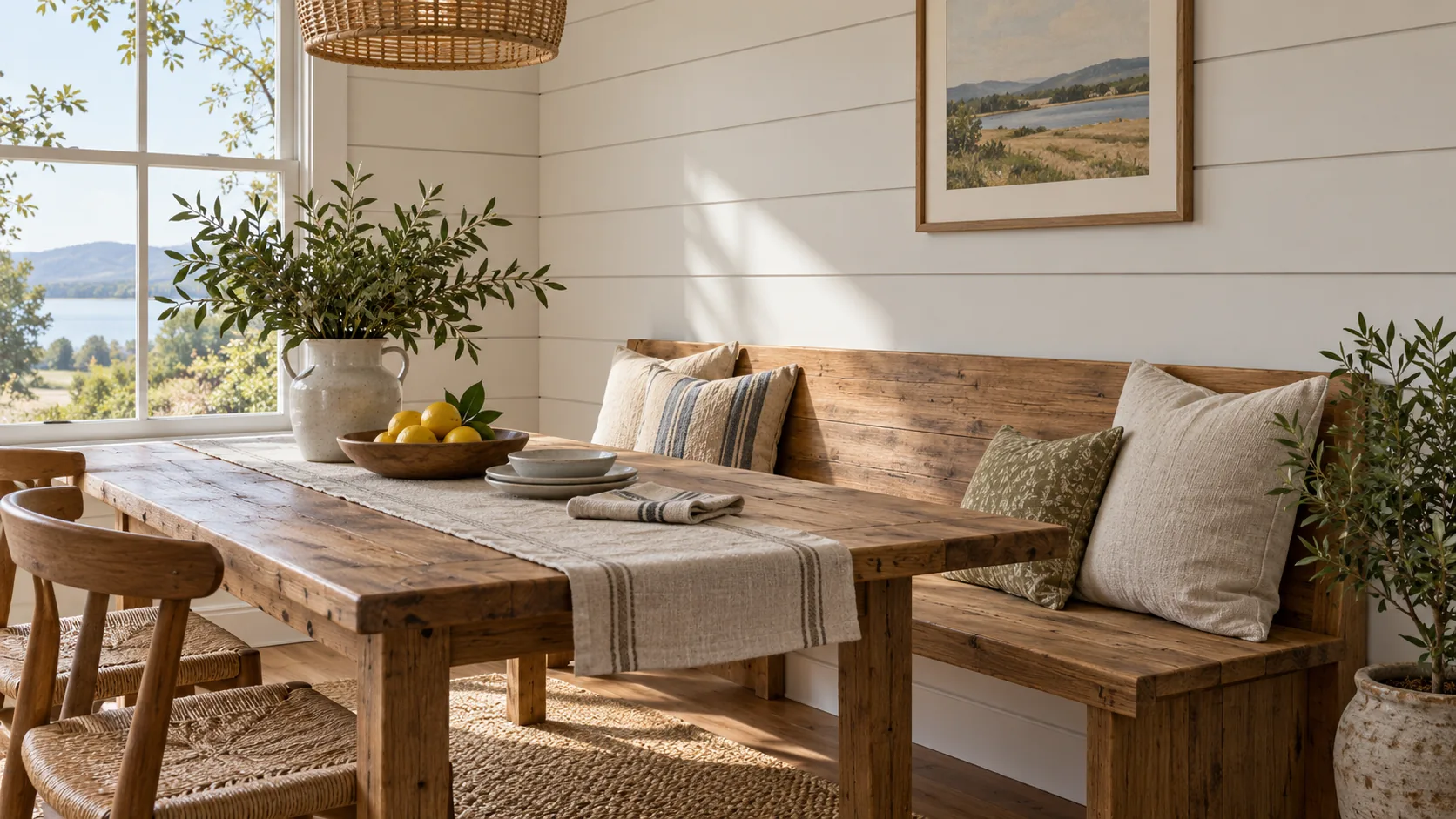
With broad boards and repeating shadow lines: run them horizontally along a long wall, or vertically to make a room feel taller. The overlapping edge joint is what separates shiplap from beadboard’s smaller decorative grooves.
White or warm neutral boards run horizontally behind a dining bench make an easy, casual backdrop. Vertical boards in a bedroom draw the eye up past a low headboard. Herringbone is busier, so save it for a wall where furniture and art leave most of the pattern on show.
Match board width to the room. Wide courses give a big wall fewer breaks; narrow boards put more lines into a small space. Keep the pattern continuous across the visible area.
Natural wood suits a stain. Primed MDF is the painted option for dry rooms; if you cut paint-grade boards, prime the cut ends too, and our MDF finishing guide covers the face and edge work. Pre-finished boards save you painting the wall once it’s up.
Where does board and batten make the strongest accent?
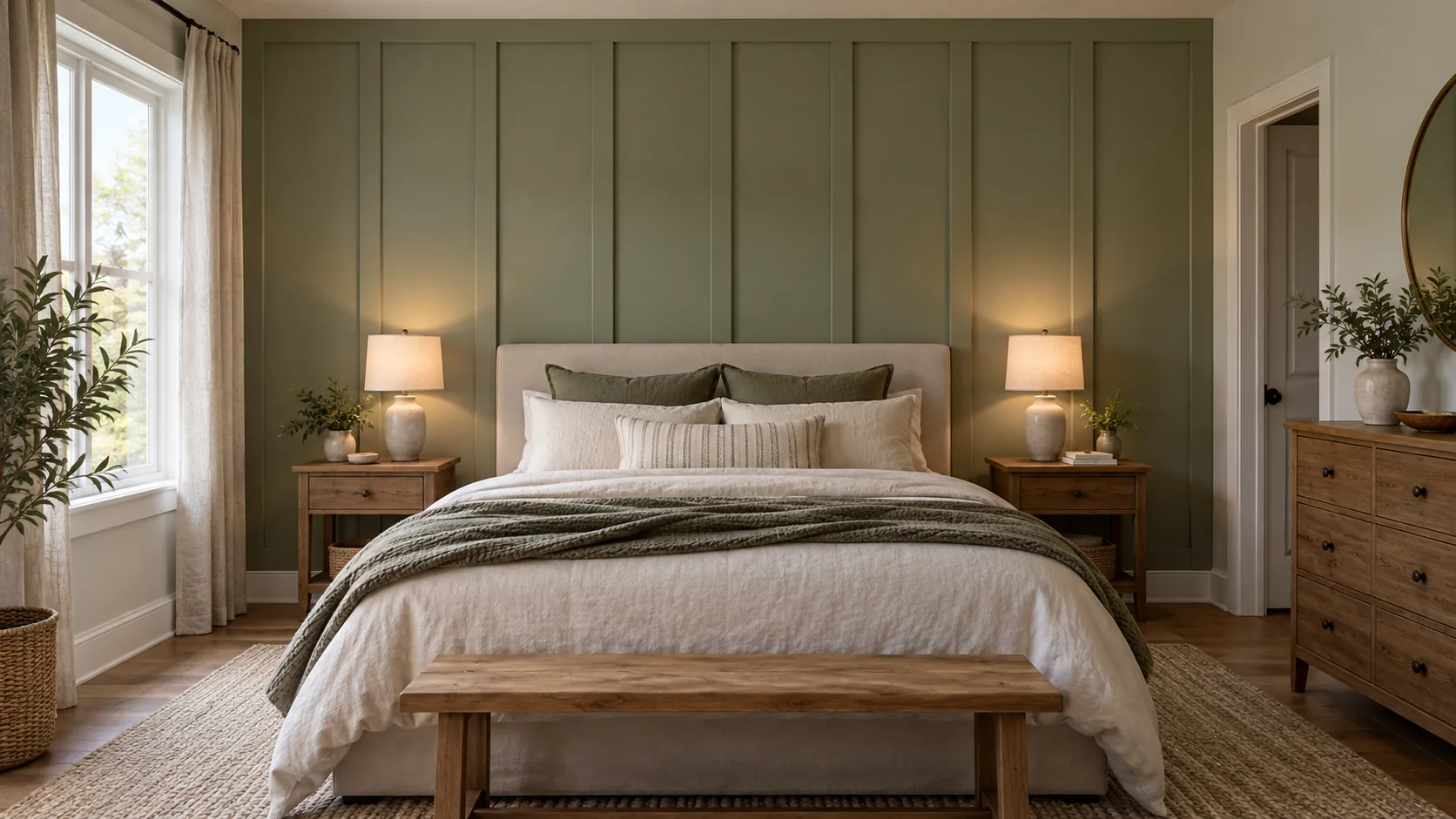
Behind a bed, along an entry wall or around a dining room, where wide flat fields between raised strips have room to show. Traditionally the battens cover the joints between boards; the usual indoor shortcut is to fix the strips straight onto a smooth existing wall.
Lowe’s indoor tutorial, updated July 1, 2022, spaces vertical battens roughly 10–12 inches apart. Start there, then draw the real layout around your outlets and wall ends. Equal fields look calmer than a thin leftover strip beside a door.
An all-white lower wall feels restrained; a full-height grid in a deep color takes over the room. Tall rectangles read quieter than small squares, while a square grid suits a wide, mostly empty wall behind low furniture.
Before you fix anything, mark the top and bottom rails and tape the batten positions. Check that the outer strips meet the baseboard cleanly; a baseboard thinner than the new strips may need a different transition. Keep electrical boxes accessible, and wear eye, hearing and respiratory protection when cutting and sanding. Our guide to MDF cutting tools and dust control covers tools and dust for MDF strips.
Which rooms work well with wood slat paneling?
Bedrooms, living rooms and dining nooks, behind a bed, TV or bench, when you want real wood grain and a strong vertical rhythm. The open gaps between slats cast deeper shadows than beadboard’s narrow grooves.
Pale wood suits a light room with simple furniture; dark-stained or black slats make a bolder backdrop. End the slats at a deliberate edge, such as an alcove or a corner.
Martha Stewart’s paneling examples, updated August 21, 2026, include both natural and black vertical slats. Hold a sample against your floor to compare red, yellow or gray undertones.
Slats can have a solid-wood face, a wood veneer or another decorative finish; our veneer and laminate comparison explains those surfaces. If echo is the problem, pick an acoustic panel with documented sound-absorption performance and its specified mounting.
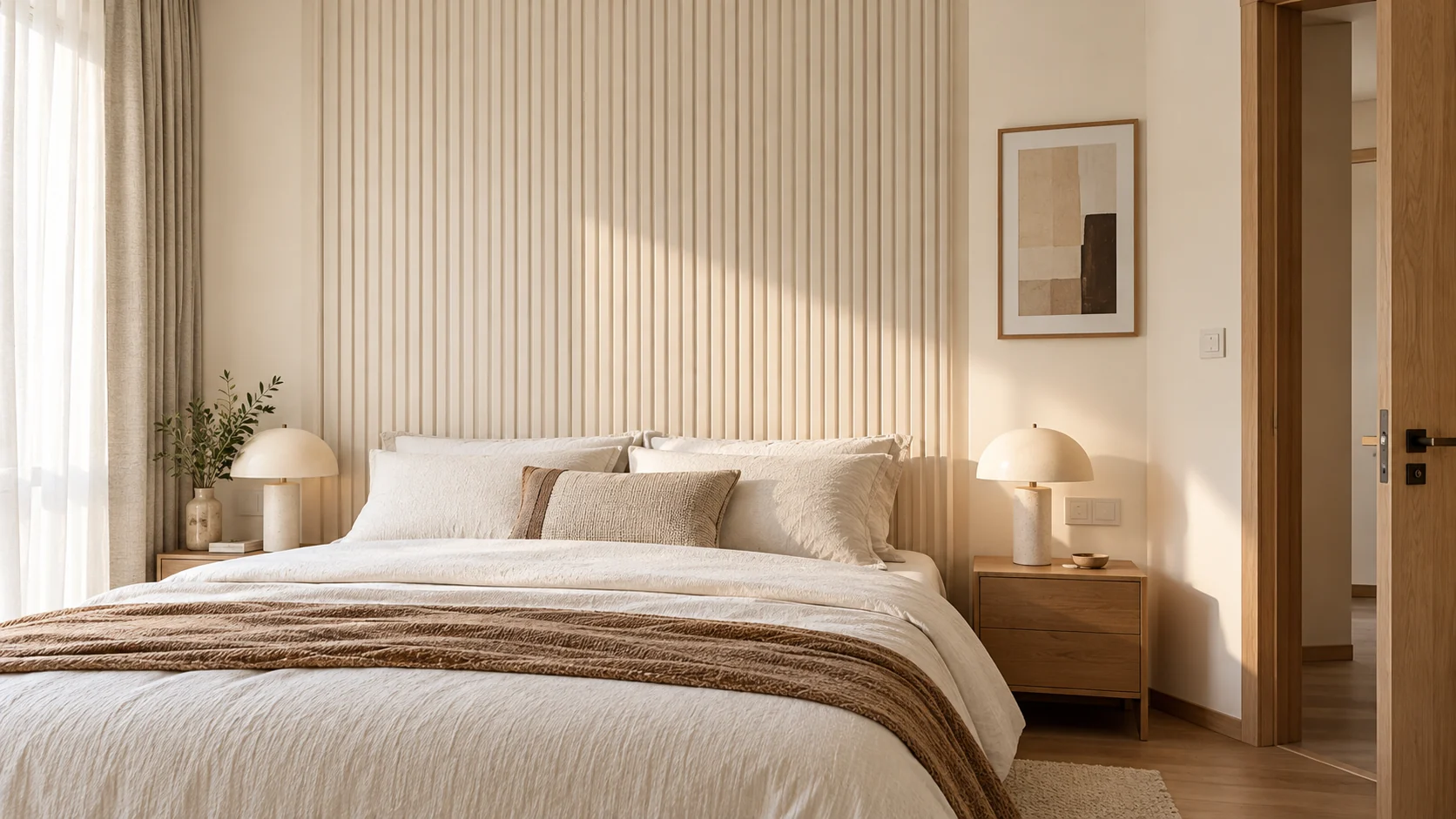
What finish options do fluted wall panels come in?
Fluted wall panels come in solid wood, wood veneer, painted or primed MDF, foil- or laminate-wrapped MDF, PVC or WPC, and gypsum or plaster finishes. Veneer and solid wood give the warmest look; painted MDF suits custom colors; wrapped MDF and PVC/WPC are the easiest to clean; gypsum gives a seamless, sculptural finish that is painted on site.
| Finish | Look | Practical notes |
|---|---|---|
| Solid wood or wood veneer | Natural grain, warm | Highest cost; veneer needs a sealed topcoat |
| Painted or primed MDF | Any color, crisp profiles | Grooves need careful priming and spraying; paint can chip on edges |
| Foil- or laminate-wrapped MDF | Woodgrain, solid colors, matte or textured | Factory finish, wipe-clean; check the wrap at groove edges |
| PVC or WPC | Woodgrain or solid color | Moisture-tolerant and light; can look more plastic up close |
| Gypsum or plaster | Seamless, sculptural | Painted on site; heavier and less impact-resistant |
Whatever the finish, deep grooves collect dust, so choose a profile you can clean with a soft brush or vacuum attachment.
How does picture-frame molding add formal detail?
By outlining rectangles on the existing wall, often below a chair rail or around a large piece of art. Slim molding leaves more of the wall showing than board and batten’s wider strips.
It suits a dining room or a living room with traditional window trim. Paint molding and wall the same color for a quiet relief, or put wallpaper above the lower frames to split the wall into two zones.
Lay out the frames around the biggest fixed features first. Center a frame under a window or behind a sideboard, then work out toward the corners. On a short wall, one wide rectangle often looks calmer than several narrow boxes. Check the proportions from the doorway and from a chair.
Applied molding needs a smooth, sound wall. Heavy texture may need skimming or a flat backing so the fields inside the frames look even. Paint-grade wood and MDF behave differently at edges and in damp; our MDF and solid-wood comparison helps you choose. Cut one test corner before you miter the lot.
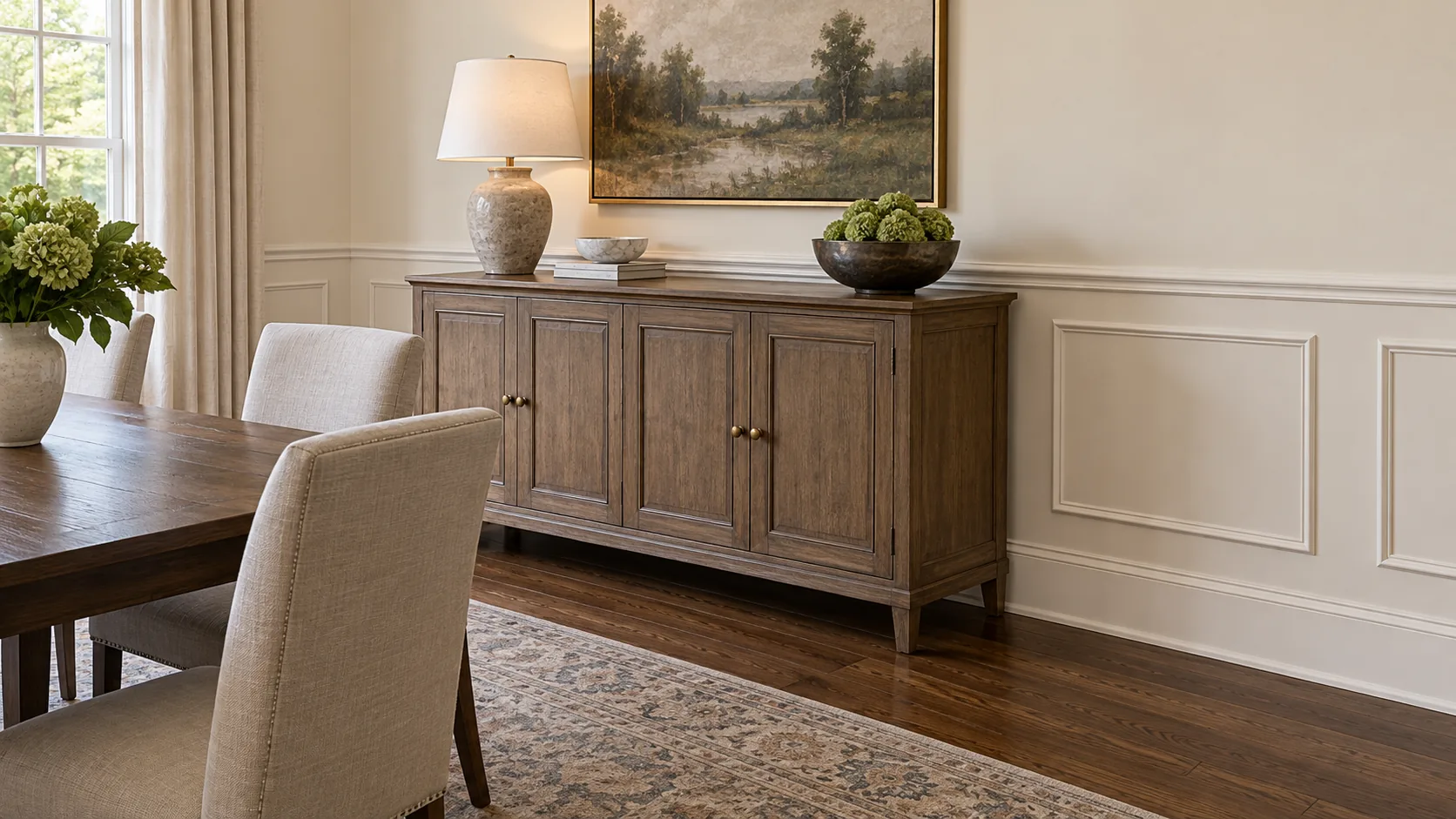
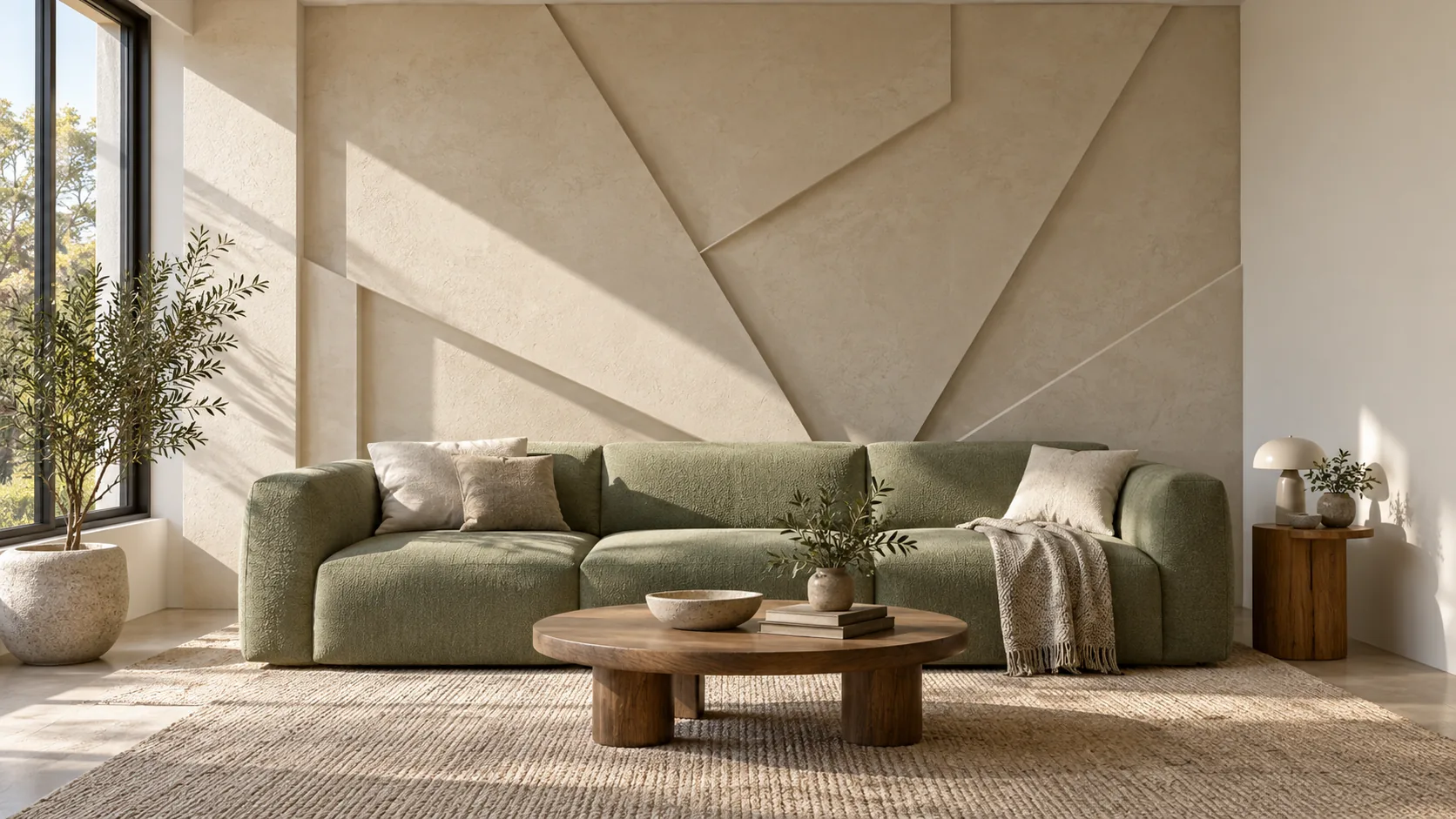
Where should sculptural 3D panels go?
On one focal wall where ridges, waves or geometric relief can catch the light, ideally behind a low sofa or beside a stair where furniture leaves most of the texture on show.
Fluted clay, dimensional tile and shaped wood give different kinds of relief: rounded flutes feel soft, angular tiles feel sharp. Side lighting brings out the depth, and light aimed straight at the face flattens it. Look at a sample near the actual light source before you commit to a deep profile.
Keep the rest of the wall simple. A relief wall is already a pattern, so a large plain mirror or one artwork usually sits better beside it than a cluster of small objects. For a bed wall, upholstered panels are a softer alternative, with their own cleaning routine.
Choose the material as carefully as the pattern. Heavy tile needs a suitable wall and installation system, and a wood or fiberboard panel belongs only in the conditions its instructions allow. Grooves and ridges collect dust, so make sure you can reach them. Our wall panel material guide compares the main material families.
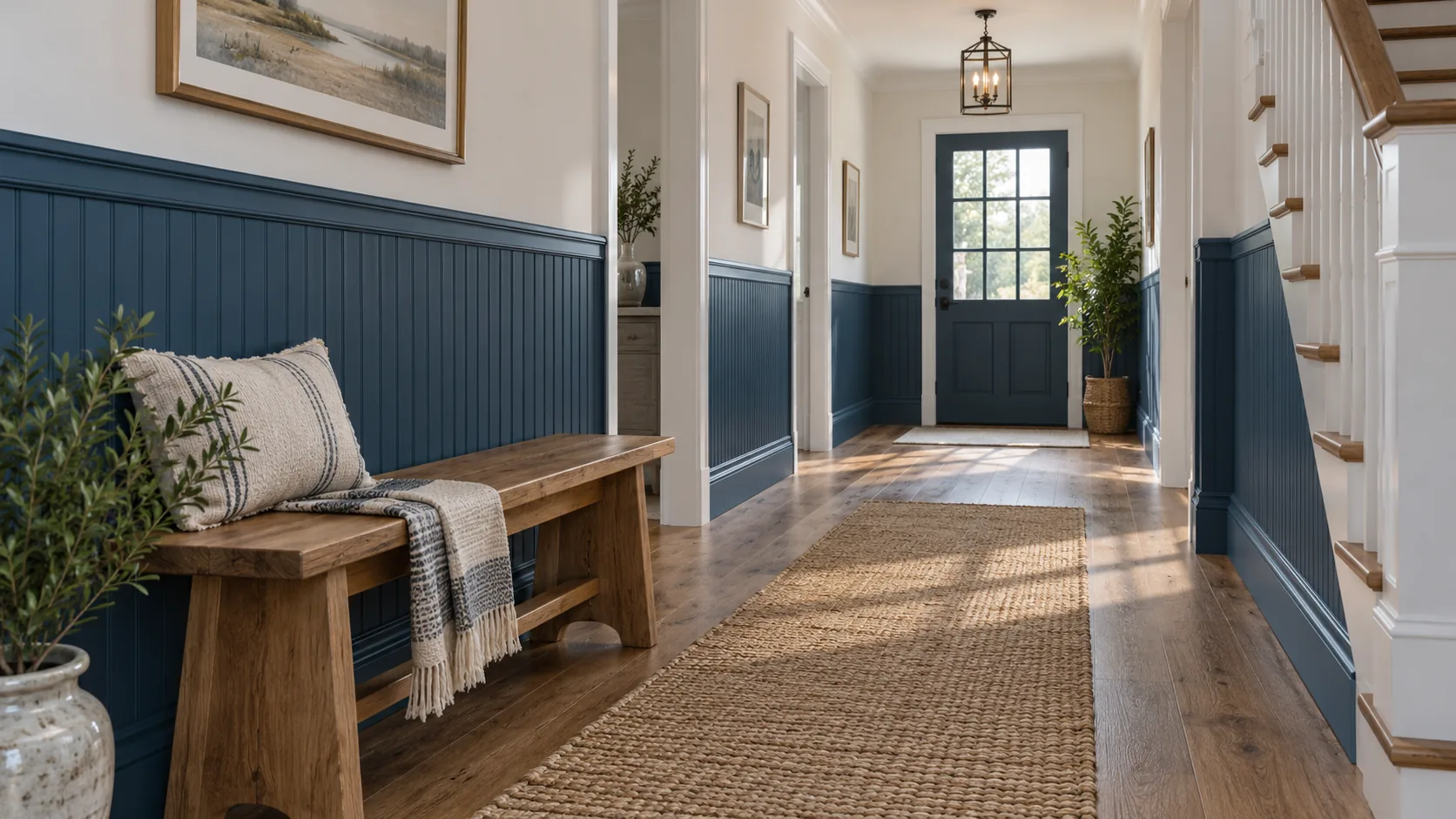
Which colors make wall paneling look current?
Paint the paneling the same color as the wall for a quiet, tailored look, or a deeper color to make it the focal point. The same Martha Stewart roundup shows a dark blue checkered board and batten, sage-green bedroom wainscoting and a bold orange board and batten, alongside lighter walls with contrasting trim.
Same-color paneling suits a small room or hallway, where strong contrast chops up the space. Deep blue, green or charcoal works best on one feature wall or on a lower wainscot under a lighter upper wall. Wallpaper above wainscoting adds pattern without boarding the whole wall. Paint a sample board and check it in morning and evening light before you commit to a strong color.
Where can a flat decorative-film face fit?
Puremorfilm makes decorative film with an organosilicon functional surface for flat interior wall faces. It offers a smooth material option when your design calls for broad panels or flat fields between trims.
Our silicone surface is inherently flame-retardant, with higher grades available on request up to UL 94 V-0 at the film level; the complete wall assembly needs its own fire assessment. In the manufacturer’s laboratory tests, coffee, red wine, soy sauce and lipstick left at 25°C for 24 hours were wiped away with no obvious change. Our wall film uses a No DOP formulation, is formaldehyde-free and contains no PVC. We offer more than 100 existing decors and can customize texture and gloss.
We mainly supply rolls, with film-faced panels available on request, using PUR adhesive and flat-lamination equipment. Our decorative wall film is a new paint-free facing with an organosilicon functional surface, distinct from PVC, melamine, PP and PETG decorative faces. Its application scope excludes floors, cooktop countertops, shower floors and other walked-on areas.
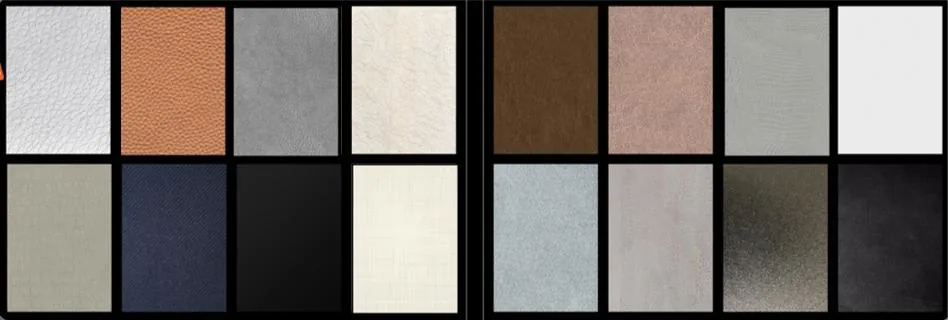
Explore film finishes for flat wall panels for this surface route.
Which style fits your room and budget?
Beadboard or shiplap for a relaxed painted room, framed molding for a formal one, and slats or 3D relief for a wall you want people to notice. Match the material to the room’s moisture before you compare prices.
For a US budgeting reference, HomeGuide’s cost guide, dated September 2, 2025, gives these installed wainscoting ranges per square foot of covered wall. They are guide estimates, not a quote:
| Treatment | Published installed cost per square foot |
|---|---|
| Flat-panel wainscoting | $10–$15 |
| Beadboard or shiplap wainscoting | $10–$20 |
| Board-and-batten wainscoting | $10–$23 |
To compare quotes fairly, include the covered area, baseboard and cap, corners, wall preparation and final paint. Covering only the lower wall or one feature wall cuts the cost without changing the style.
| Your priority | A useful starting point |
|---|---|
| Fine detail in a narrow passage | Lower-wall beadboard |
| Broad lines in a casual room | Shiplap |
| Painted structure behind furniture | Board and batten or picture-frame molding |
| Wood grain or strong shadow | Slats or sculptural relief |
For help with a flat decorative face, contact us with a room photo, wall dimensions and a color or finish reference.
Compare wall panel material options alongside the layout.
Frequently Asked Questions
What is the best way to decorate a wall?
A paneled feature wall, when you want lasting texture or architectural detail. Start with the wall you see first from the doorway.
Is wall paneling trendy?
Yes. Current design examples feature slats, sculptural relief and updated painted paneling, and beadboard and wainscoting have a long history behind them.
Does paneling need drywall?
No. Some plywood systems allow installation over studs or furring, while thin MDF panel sheets need a solid backing such as gypsum board. Keep any required fire-protective lining in place.
Which wood is best for paneling?
Pine or poplar for painted paneling on a budget; a clear-finished hardwood where you want the grain to show.
Can you DIY half wall paneling?
Yes. Beadboard sheets, shiplap or applied molding are reasonable DIY projects if you can measure and cut accurately. Leave complex corners, heavy tile and electrical changes to a qualified installer.