
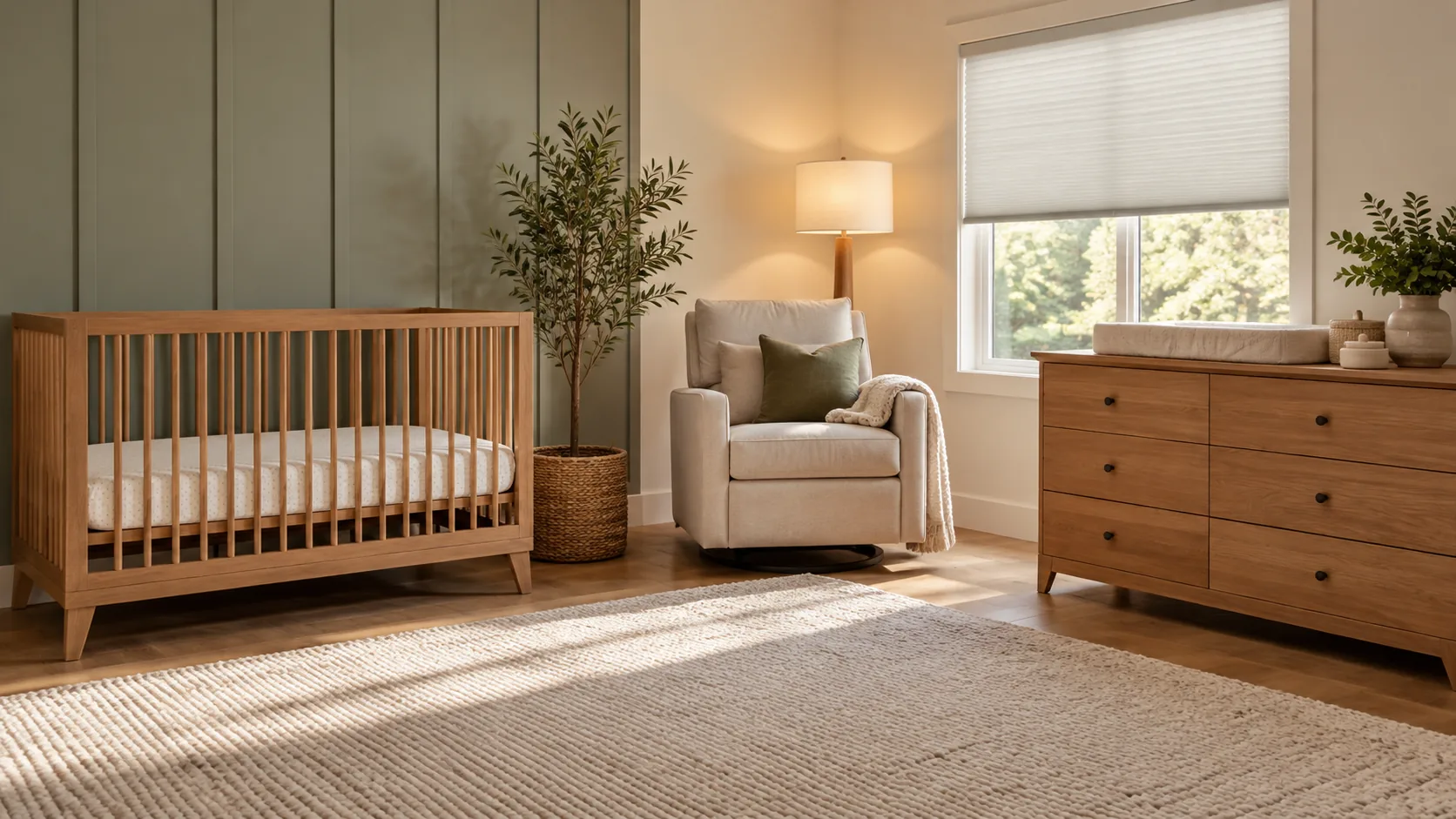
Nursery design should connect sleep, care and storage: plan your baby’s own sleep space in your room for at least the first 6 months, keep changing supplies within reach, and keep a baby monitor and all its cords at least 3 feet from the crib. Draw those positions before choosing a theme or ordering furniture.
The room in the decorating photograph may become a nursery gradually. Early on, it can hold clothes, changing supplies and a feeding chair while your baby sleeps nearby in your bedroom. A small home can use the same care plan without a separate decorated room.
What should a nursery design plan around first?
Plan the care routine before the theme: where your baby sleeps, where a change happens, where you sit to feed and where each supply returns. The route between those places matters during a night-time change as well as during the day.
Write down what you reach for while holding a baby. Nappies, wipes, clean clothes and spare bedding need assigned storage positions. Keep the route free of loose baskets, spare furniture and trailing cables so the arrangement remains usable after the room has been lived in.
The practical experiences collected in TODAY’s nursery decorating advice include putting changing supplies within reach and controlling daylight. Treat those accounts as household experience. The infant-sleep and cord-placement guidance below comes from official sources.
Choose the large pieces around the available room. A wide dresser may serve for longer than a separate piece bought only for the changing stage. Check the actual furniture instructions and the space left for opening drawers; a room plan needs to show the furniture in use.
Where should your baby sleep in the first months?
Give your baby their own infant sleep space in your room for at least the first 6 months. The nursery can serve as a changing, feeding and storage room during that stage, with its later sleeping arrangement planned separately.
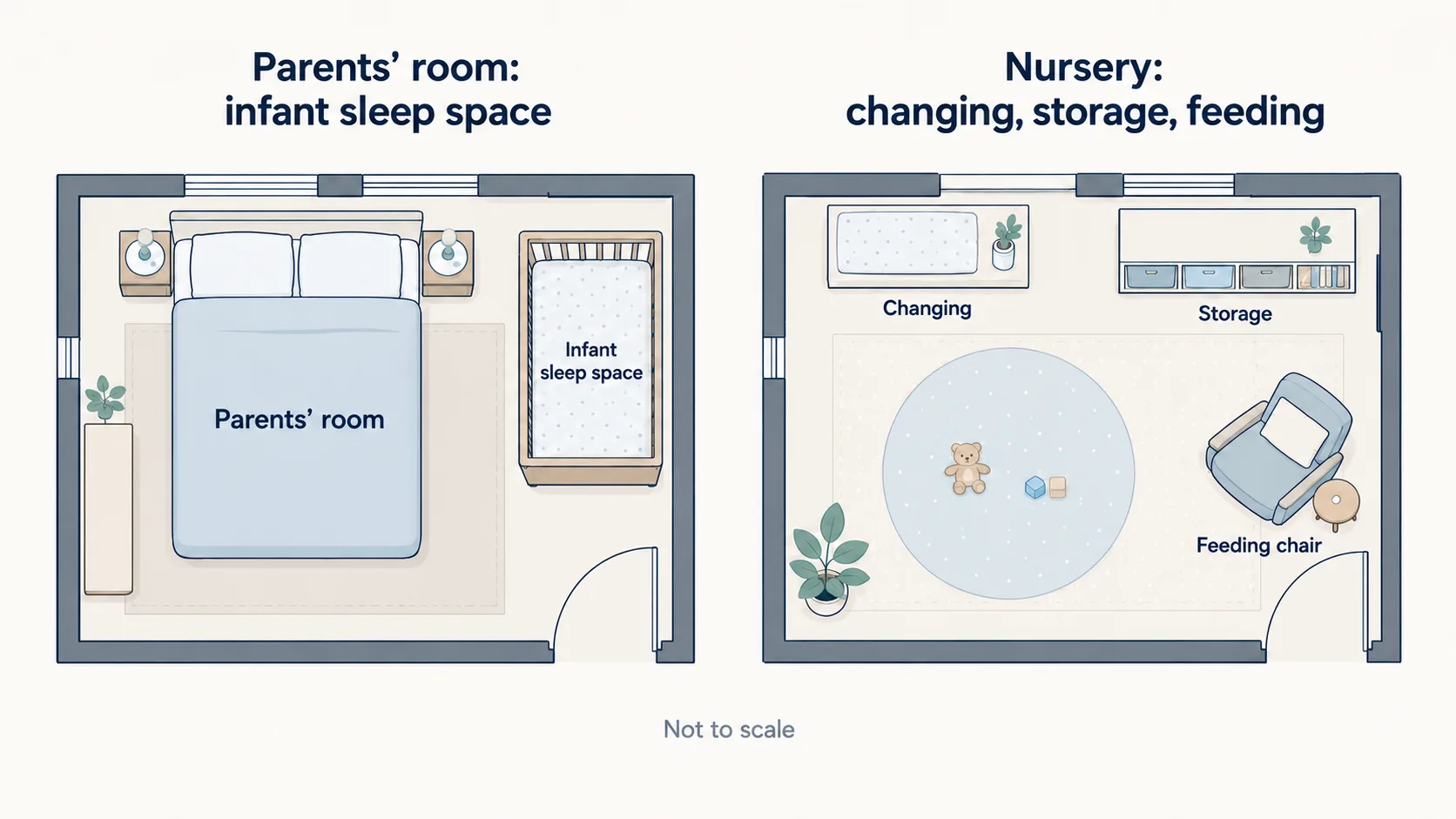
NICHD’s risk-reduction guidance describes room sharing with a crib, bassinet or portable play yard separate from the adult bed. Its sleep-environment explanation distinguishes that arrangement from bed sharing. Use a crib, bassinet or portable play yard designed for infant sleep; avoid adult beds, couches and armchairs as sleep surfaces for the baby.
| Stage or arrangement | Baby’s sleeping place | Role of the nursery | Planning priority |
|---|---|---|---|
| Early stage (room sharing) | Baby’s own infant sleep space in the parents’ room | Care supplies, changing and clothing storage | Keep the night-time care route usable |
| A home without a spare room | Baby’s own sleep space in the shared room | Care and storage functions distributed through the home | Choose pieces for their actual jobs |
| A later sleeping arrangement | Planned around the baby’s stage and relevant guidance | Sleeping can join the existing care functions | Review the layout before moving furniture |
That guidance sets a minimum period and gives no automatic moving date. Check the sleep product’s instructions as your baby develops when planning the later arrangement.
The NICHD sleep-environment guidance calls for a firm, flat, level surface with a fitted sheet and a bare sleeping area. Keep pillows, blankets, bumpers and toys out of it. Keep decorative bedding and styling props out of the actual infant sleeping space.
Where should the baby monitor and its cords go?
Keep the baby monitor and every part of its cord at least 3 feet from the crib, checking the whole cable route. A high mounting position still needs a cord route that remains out of reach.
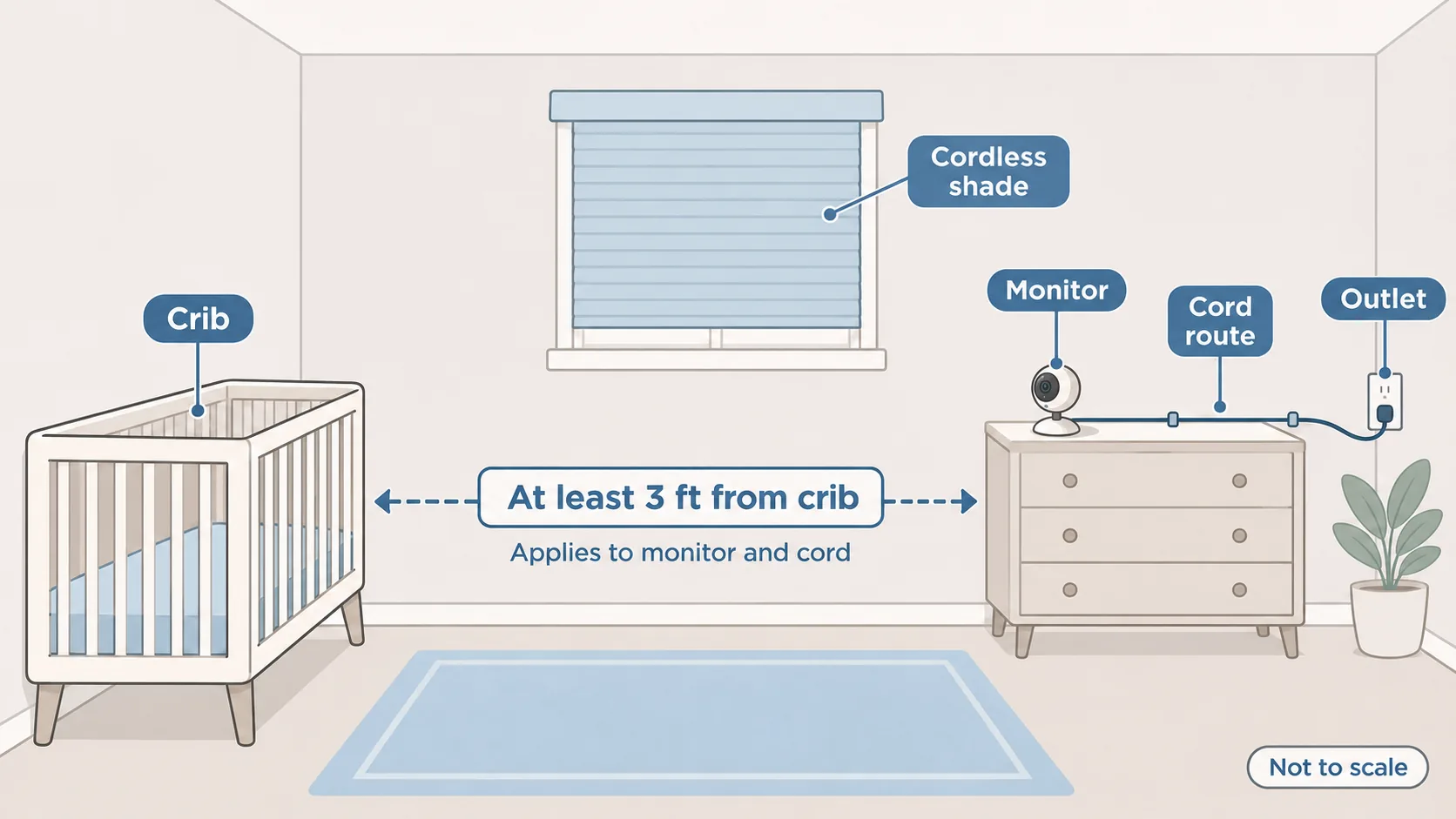
CPSC’s Safer Spaces for Baby handout gives that distance for monitors and cords. The handout does not state a publication date. Apply the check to the device, the power cable, slack near the outlet and any section fixed along a wall.
An April 23, 2026 CPSC staff letter about baby monitors discusses hazards when high-mounted devices fall or a secured cord section comes loose. The letter presents staff advice to a standards committee and states that the Commission has not reviewed or approved it. The practical layout response is to inspect the whole arrangement instead of treating camera height as the safety check.
Also keep the crib and other furniture away from window-covering cords. The agency’s cordless-covering advice recommends cordless options where young children are present. Draw the window, outlet and monitor position together before deciding where the crib belongs.
A monitor does not replace the sleep environment described above. Review its placement again when furniture moves or the child can reach different parts of the room.
How should the changing and feeding spots be set up?
Put changing supplies within reach of the changing position, and give the feeding chair a clear route to the baby’s sleep space. Choose a lamp you can operate while holding the baby and storage that returns supplies to the same place.
| Care spot | Keep close | Check in the furnished room |
|---|---|---|
| Changing position | Nappies, wipes and the next clean outfit | You can reach supplies without stepping away |
| Feeding chair | The items you use during a feed | The lamp is accessible and the route stays clear |
| Clothing storage | Frequently used clothes in assigned drawers | Drawers open without blocking the care route |
| Spare supplies | Bedding and replenishment items | Restocking does not fill the floor with loose bags |
House Beautiful’s nursery selections by a design editor and parent favour flexible furniture, a useful dresser and lighting that is easy to operate. Use those functions to compare pieces before being drawn into a matching furniture set.
Use the feeding chair for an adult’s seated care, and return the baby to their own infant sleep space for sleep. Choose upholstery and covers using the maker’s actual care instructions rather than the appearance of the fabric in a photograph.
Which walls, colours and lighting work in a nursery?
Choose colours for the room’s appearance and plan light control separately. Paint, wallpaper, wall art and panelling offer different ways to change the scheme later; keep the sleep-space and cord positions on the plan whichever decorative surface you choose.
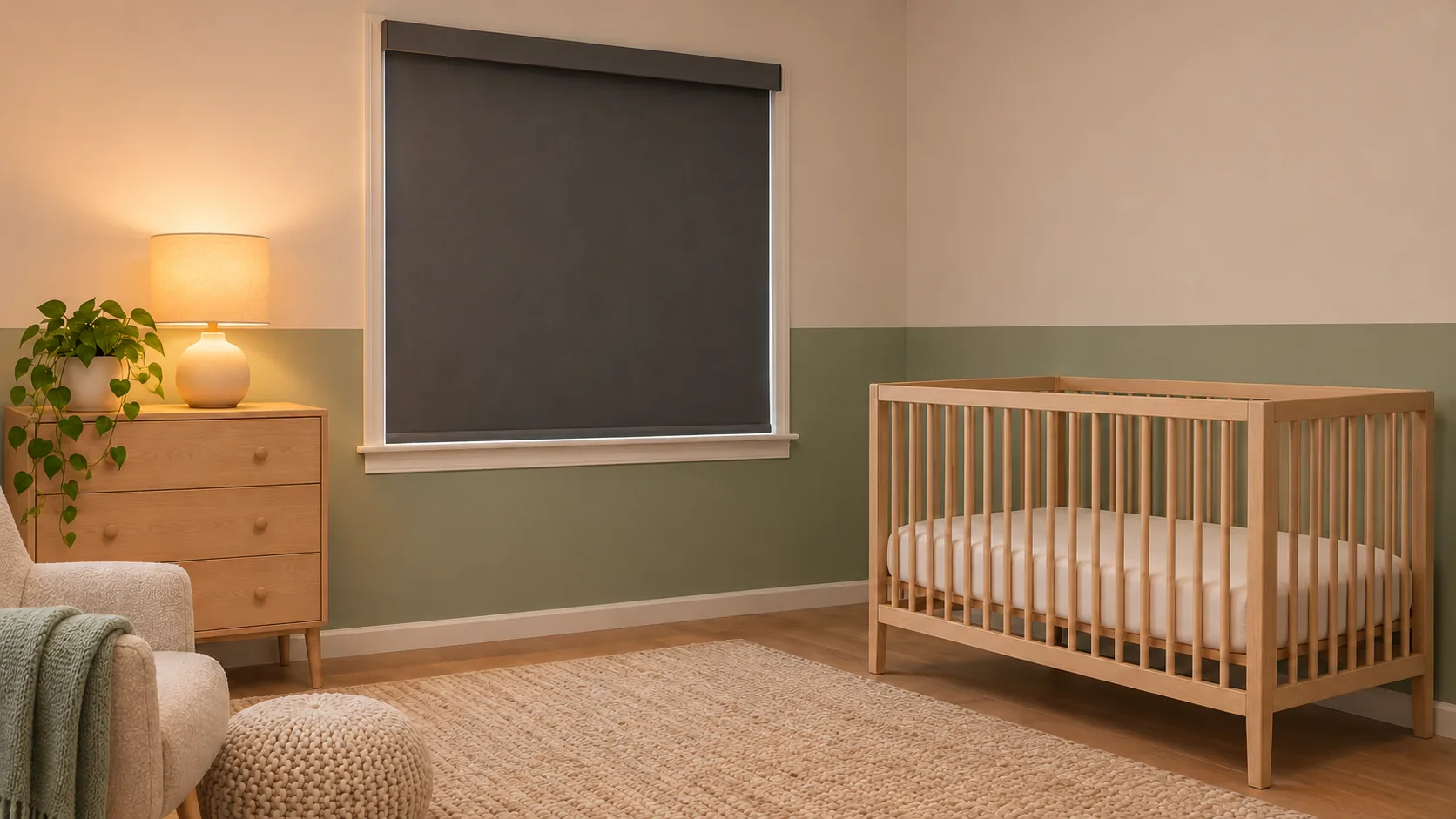
The Living House’s nursery decorating ideas include paint, colour blocking, wallpaper and other ways to make the room personal. Compare them by the work involved when the room changes, as well as by their initial appearance.
| Decorative choice | What it changes | Consider before committing |
|---|---|---|
| Paint or colour blocking | The wall’s colour and visual divisions | How much wall you will repaint if the scheme changes |
| Wallpaper or a removable wall treatment | Pattern and scale | Wall preparation and the maker’s removal instructions |
| Framed art and textiles | Smaller elements of the theme | Positions away from the infant sleeping area |
| Panelling or fitted furniture fronts | More permanent visual surfaces | How the finish will work with later furniture and colours |
A broad interior design colour palette can help keep the room coherent without covering every surface in the same motif. Compare wallpaper and paint if the wall scheme will change later. A nursery can use warm neutrals, brighter accents or a patterned wall, with the rest of the room kept simple enough to change.
Draw the room-darkening shade and the position of the softer care lamp on the plan. Keep decorations, shelves and hanging objects out of the infant sleeping area. Do not use a decorative arrangement over the crib as a template for the actual sleep setup.
How can a nursery grow with your child?
Keep much of the theme in changeable art and textiles, and choose large pieces for functions they can serve later. A dresser can remain useful after the changing stage, while a reading corner can take the place of a feeding area as needs change.
TeepeeJoy’s nursery theme guide discusses themes built around animals, places and colours. Those ideas leave room for different interests later. A very specific character scheme may require more decorative changes when the child’s preference shifts.
Choose convertible furniture only after checking its actual configuration, instructions and suitability for the child’s stage. Check which later configurations the supplied pieces and instructions actually permit. Keep the dresser anchored according to its instructions.
If you are commissioning new storage, review wardrobe door materials alongside the drawing. Bring real finish samples into the room using a material board; the future colour scheme should be part of that comparison. Furniture finishes have a different job from infant sleep products. For a new wardrobe or dresser, check the evidence behind formaldehyde-free furniture claims and ask about furniture off-gassing before choosing its materials.
Where does silicone-faced film fit in nursery furniture?
Puremorfilm makes decorative film for cabinetmakers applying a flat face to wardrobe or dresser fronts with PUR flat lamination. Its paint-free silicone functional surface differs from PVC, melamine, PP and PETG decorative faces. Supply is mainly rolls, with panels available on request; the standard film has no back adhesive.

The silicone surface is inherently flame-retardant, with higher grades up to UL 94 V-0 available on request for the film face. This does not give the furniture a fire rating. In the manufacturer’s laboratory tests, coffee, red wine and soy sauce left at 25°C for 24 hours showed no obvious change after wiping. The formulation is No DOP.
Those are material facts, not child-safety or disinfectant-compatibility ratings. Use this furniture decorative film on professionally made flat storage fronts. Keep it off cribs, changing tops, toys and mouthing parts. With its leather-like feel and some elasticity, it is also not for floors, stovetop counters, shower floors or other walked-on areas, and the standard unbacked film is for lamination, not peel-and-stick decoration.
Which nursery plan suits your home?
Choose the care layout that fits your actual home, keeping the early sleeping place in the parents’ room and buying furniture for a defined job. A separate decorated nursery can develop around that arrangement over time. We can provide decorative finish samples for those flat storage fronts.
| Home situation | Early sleep arrangement | Nursery or care role | First decision |
|---|---|---|---|
| Small bedroom or shared home | Baby’s own infant sleep space in the parents’ room | Compact changing and clothing storage | Fit the care route before decorative pieces |
| Spare room available | Same early room-sharing arrangement | A separate care room that can change later | Place storage, chair and changing supplies |
| New fitted storage planned | Sleep setup remains a separate decision | Wardrobe or dresser fronts made to the drawing | Compare finish samples with the cabinetmaker |
Bring the furniture drawing, intended finish and the cabinetmaker’s requirements when you contact us.
Frequently Asked Questions
Should I get a bassinet for my newborn in addition to the crib?
No, not necessarily. Official guidance lists a crib, bassinet or portable play yard as the baby’s own infant sleep space. A bassinet may fit the parents’ room more easily, but the product’s instructions and the baby’s stage determine its use.
Where should the changing table go?
The changing table belongs where supplies are within reach and the route to it stays clear. Draw nearby drawers and doors open so the plan reflects how the space will be used.
When should you pick a nursery theme?
The best time is after the care routine is planned and before the large furniture is bought, so the theme can guide colours and smaller decorative items. The room’s functional layout should remain useful if the theme changes.
Can a nursery theme grow with your child?
Yes, a theme based on an animal, place or colour can adapt as interests change. Art, bedding used outside infant sleeping areas and other small decorative pieces can be replaced while useful furniture remains.
What are good gender-neutral nursery themes?
Woodland, safari, farm, botanical, moon-and-stars, hot-air-balloon and mountain themes can suit any baby. Choose the colours and details for the household’s taste, with decorations kept clear of the infant sleep space.