
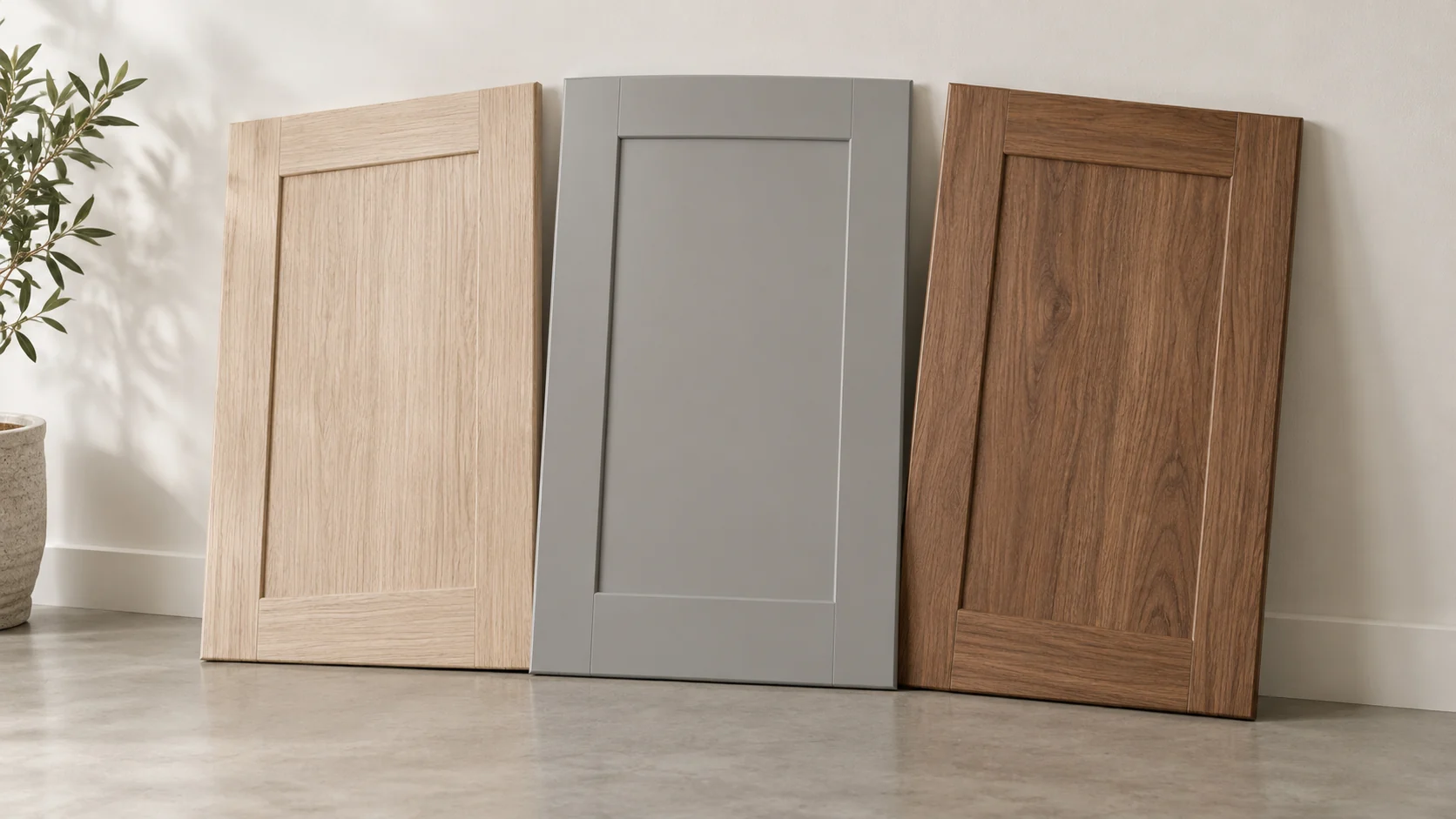
For scratch resistant kitchen cabinets with flat fronts, a suitable textured HPL grade is a practical starting point; shaped doors need a qualified formed film or coating system. Compare scratch and abrasion evidence separately from mark visibility, then check hot or wet edges and the repair route. No finish category is universally scratch-proof.
The face takes contact from fingernails, toys and cleaning cloths; the board behind it supplies support. A plywood box can have painted, laminated or film-faced doors, so core strength and surface scratch resistance require separate evidence.
What is the most durable finish for kitchen cabinets?
For flat cabinet doors, textured HPL (high-pressure laminate) is usually the most durable finish, followed by textured melamine (TFL). For Shaker or routed doors, a factory catalyzed lacquer or conversion varnish is the toughest paint-type finish. Thermofoil, standard paint and stained wood mark more easily, although wood can be refinished. Grade and texture matter more than the category name, so treat this ranking as a shortlist, not a guarantee:
| Typical scratch resistance | Finish | Why | Best fit |
|---|---|---|---|
| Highest | Textured HPL (high-pressure laminate) | A thick, pressed resin-paper sheet with a wear layer; texture hides fine marks | Flat doors in busy family kitchens |
| High | Textured TFL / melamine | Hard melamine resin face, but thinner than HPL and edges need separate banding | Flat doors and cabinet boxes on a budget |
| Medium | Catalyzed lacquer or conversion varnish (painted or clear) | Cross-linked factory coatings are tougher than ordinary paint and can be touched up | Shaker and profiled doors |
| Medium | Thermofoil / 3DL film | Wraps routed shapes in one piece, but the vinyl face is softer and dislikes heat | Profiled doors away from ovens |
| Lower | Standard paint or high-gloss finishes | Chips at edges, and gloss makes every scratch visible | Low-traffic or wall cabinets |
| Lower, but repairable | Stained or oiled solid wood and veneer | Scratches and dents easily, but marks can be sanded and refinished | Owners who accept patina |
Which finish suits the door shape and wear?
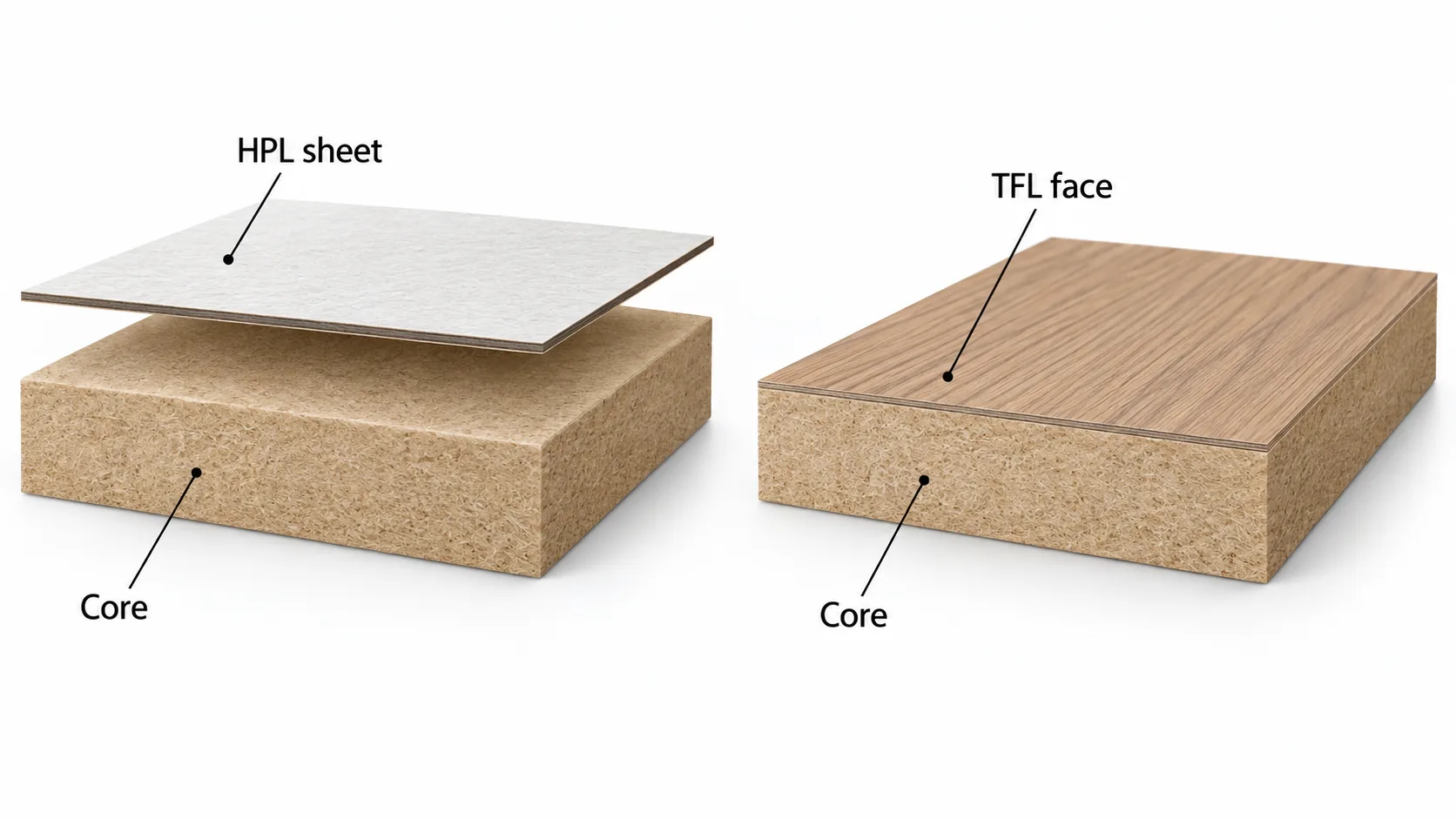
A suitable HPL grade is a useful flat-front shortlist, while shaped doors may favor a qualified film or coating. HPL is a separate resin-paper sheet bonded to a board; texture changes the appearance of a mark, while the product’s surface system governs resistance.
Compare the following finish routes on the same door profile and exposure. Super matte can be a coating, laminate or film surface, so the appearance label overlaps the construction categories rather than adding a sixth material.
| Decision dimension | HPL | TFL / melamine | Thermofoil / 3DL | Super-matte surface | Finished wood / veneer |
|---|---|---|---|---|---|
| Door shape | Flat slab is the usual route; specified postforming grades permit defined curves | Flat panels with separate edge treatment are the normal route | Membrane-pressed film suits routed contours and continuous edges | Depends on whether the matte face is paint, sheet or film | Coatings can follow supported profiles; veneer construction limits still apply |
| Scratch and wear choice | Choose a suitable grade and compare its scratch/abrasion evidence | Compare the supplied decor/top surface; no blanket ranking against HPL | Choose the actual foil and scuff-resistant coating, not PVC as a performance grade | Low sheen and anti-fingerprint behavior do not establish a scratch rating | Specify the coating; wood species or core strength does not establish its scratch resistance |
| Hot or wet edges | Assess the edge band, joints and adhesive on the finished door | Check protected edges and board exposure near sink/dishwasher | Check the bond, back termination and appliance clearances | Use the underlying construction’s edge and heat evidence | Check coating coverage, joints and any exposed wood or core |
| Damage and renewal | A missing printed face may need refacing or a replacement front | Through-face chips usually require a visible repair or component replacement | Lifted or torn film needs bond assessment, then approved repair or replacement | Uniform color can make a patch visible; follow the identified system’s repair route | Compatible recoating may renew a sound face; veneer has limited sanding allowance |
| Default fit | Manufactured flat fronts with specified wear performance | Coordinated flat cabinet faces using a finished panel | Shaped fronts when the film process is qualified | Low-sheen design when handling marks and damage are checked separately | Real grain or a planned compatible renewal route |
The Composite Panel Association’s HPL guidance distinguishes general-purpose and special grades, including high-wear products. That supports choosing a grade for the job, rather than claiming that every HPL finish beats every film or coating.
A texture or printed pattern can make a given mark harder to see; a sharp point can still cut the face. Look at the sample under the intended lighting and inspect the corners, where a chip may stand out more than a light surface mark.
For the wider test plan covering the face, core, edge and bond, see cabinet surface durability testing.
When is textured melamine the practical alternative?
Choose textured TFL when a supplied, coordinated flat panel face fits the job and its product evidence meets the wear requirement. In cabinets, “melamine” usually means resin-treated decorative paper fused directly onto MDF or particleboard.
Scratch and wear resistance, embossed textures and cabinet uses are all listed in the TFL description from the same association. Unlike HPL, TFL comes as a finished panel face, not a separate sheet glued on later.
A realistic woodgrain or a light texture makes everyday marks less obvious. Check the edge band where the face meets the narrow side, especially beside the sink and dishwasher.
When ordering replacement doors, hold the actual decor against the cabinet sides you’re keeping. A small difference in grain direction or sheen looks bigger across a row of doors, so match face and edge, not just the color name. Our melamine and laminate guide explains both constructions.
Are textured laminate kitchen cabinets more scratch resistant?
Usually yes, in the way that matters day to day. A textured or woodgrain laminate face scatters light, so the fine scuffs that would show as bright lines on a smooth face blend into the pattern. The actual wear resistance still comes from the laminate grade, not the texture, so compare the stated abrasion or wear rating for the same product family.
The trade-off is cleaning: deep textures hold grease and dust in the grooves. Wipe in the direction of the texture with a damp microfiber cloth and use a soft brush on heavier grime rather than a scouring pad, which can polish the high points and leave shiny patches.
When should you choose thermofoil or another thermoplastic film?
Choose a qualified thermofoil or 3DL route for a shaped or routed door with a continuous facing. Select the actual film and topcoat for the expected scuffing, then review the completed door’s bond and heat exposure.
The 3DL guidance from the same group explains how thermoplastic film is heated and pressed around shaped parts, and describes coatings that add scuff resistance and different gloss levels. A basic film and a scuff-coated version are different products, whatever polymer they share.
For oven-adjacent doors, follow the appliance’s installation clearances and the door supplier’s specified protection. The thermofoil care guidance warns that self-cleaning oven heat can discolor its thermofoil fronts; that warning is product-specific, not a universal film temperature rating.
Deal with lifting corners and bubbles early. A scratch and an opening bond are different faults, and polishing a bubble won’t reattach it. The thermofoil versus laminate comparison covers shapes and repairs, and our peeling-door guide covers failing film.
Is super-matte a sensible scratch-resistant finish?
Yes, if you want low sheen and fewer fingerprints and the specific finish also documents the scratch or scuff resistance you need. Matte is a look; anti-fingerprint treatment and resistance to a sharp point are separate features.
Identify whether the proposed super-matte front is painted, laminated or film-faced. Compare its actual scratch or abrasion report and its cleaning instructions with the other shortlisted finishes. A supplier’s anti-fingerprint claim addresses handling marks; it does not mean a sharp point cannot damage the face.
Compare a smooth matte sample with a textured one in the room where they’ll go. Touch each with clean fingers and look from your normal standing position. That shows handling marks, not scratch strength, so skip the key or knife test on a showroom sample.
Choose the renewal route as well as the look. A dark, uniform matte color can show a gouge in contrast; compare it with a lighter color or subtle pattern on the actual sample. The laminated MDF explanation shows how face and board work together.
Which cabinet finishes resist fingerprints?
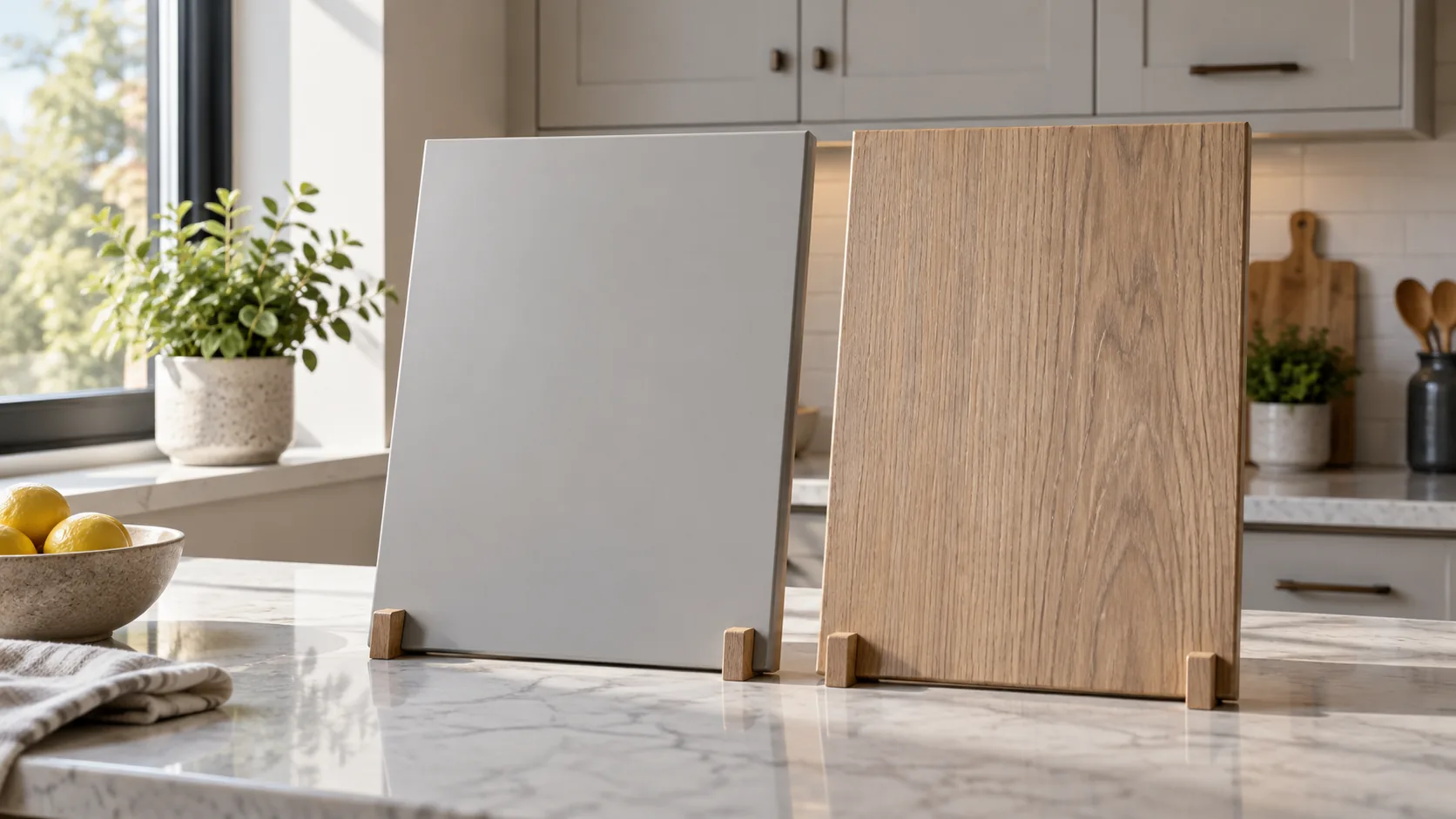
Low-sheen, textured surfaces show the fewest fingerprints. Super-matte laminates and coatings sold as “anti-fingerprint” use a very low-reflectance surface, so skin oils are harder to see. Woodgrain and mid-tone colors also hide prints better than solid dark or white fronts.
High-gloss, solid dark and metallic finishes show prints most. No finish is print-proof: anti-fingerprint means marks are less visible and easier to wipe, so plan for a damp microfiber wipe around handles either way.
Does finished wood offer an advantage when scratches occur?
Yes. A sound wood face can offer a compatible recoating route, but the existing coating and remaining wood determine how much renewal is possible. Veneer has less wood to remove than solid timber; neither construction makes the protective coating scratch-proof.
The Timber Veneer Association’s care guidance ties care to the actual coating and warns against abrasive treatment. Identify solid wood versus veneer before choosing a repair that removes material.
Stained woodgrain can swallow a small mark. An opaque painted finish may show the same damage as a pale line or a bare spot. A matching, finish-approved touch-up handles a small nick; heavier wear can justify professional refinishing.
Find out whether a wood-look front is solid wood, real veneer or printed decor before you sand it; heavy sanding goes through thin veneer and removes printed facings. Our MDF and solid-wood comparison covers the cores, and the veneer versus laminate guide covers the visible layers.
Which finishes handle pets and claws?
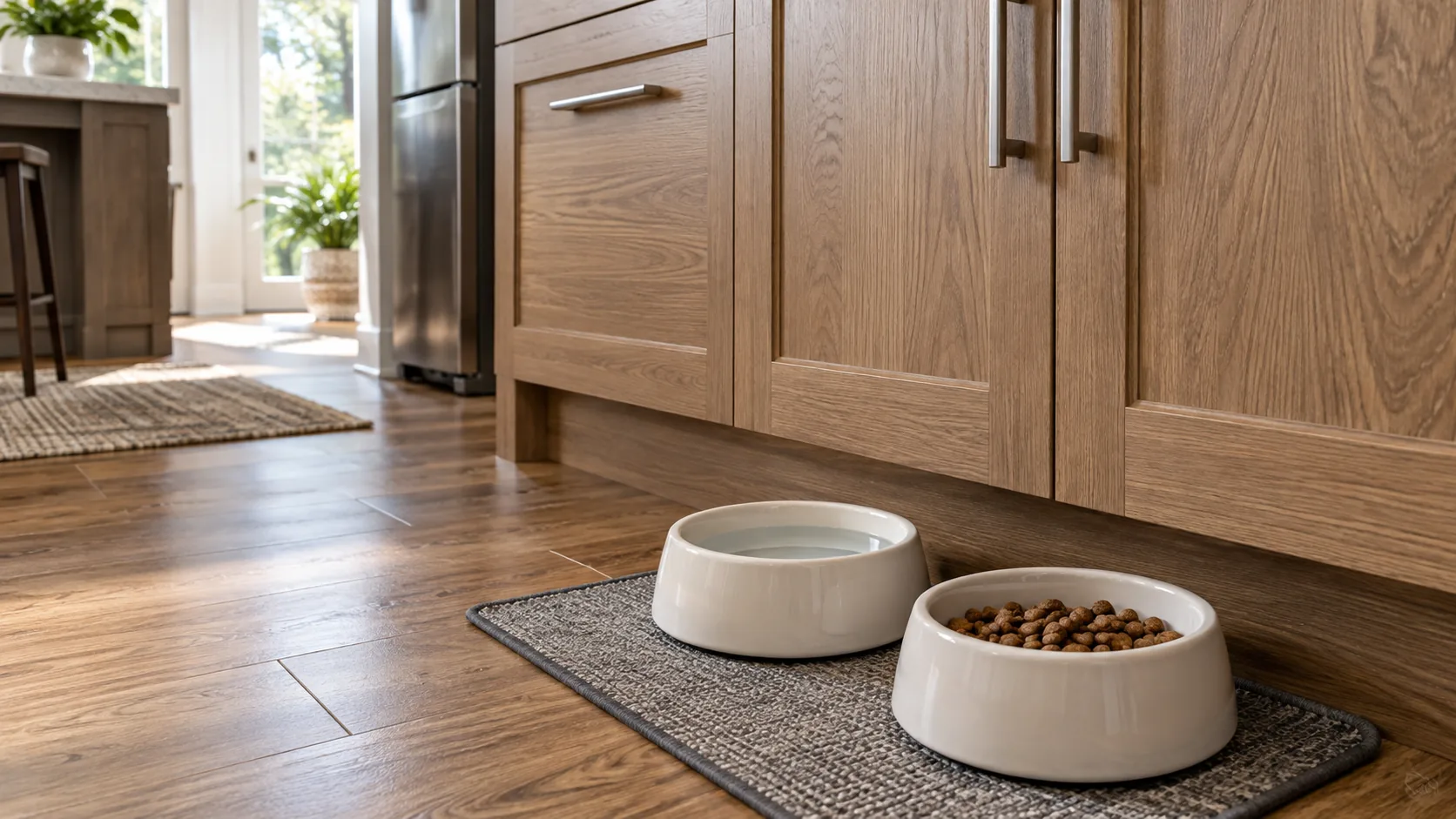
For lower doors that receive paw or toy contact, shortlist a finish with documented scuff resistance and judge the actual color and texture for visible marks. A lighter or patterned sample may make a given mark less conspicuous, but texture is not evidence that claws cannot cut the surface.
Inspect the lower edge, corners and handle area on a full sample. Where bowls or wet paws reach the door, clean and dry the affected area and assess the finished edge as well as the face. KCMA A161.1-2022 section 9.5 evaluates door-edge detergent/water exposure; it does not establish a pet-proof or scratch ranking.
Door stops, sound hardware and keeping grit out of cleaning cloths reduce avoidable rubbing. Choose the facing for the contact it will receive and the repair you would accept after a gouge.
Do black cabinets scratch easily?
Black cabinets do not scratch more easily than the same finish in another color, but they show scratches more. Light scuffs, dust and fingerprints contrast sharply against a dark face, and gloss makes them even more visible. The material decides how easily the surface is marked; the color decides how much you notice.
If you want dark cabinets in a busy kitchen, choose a matte or textured finish, or a dark woodgrain, rather than solid high-gloss black, and use a surface with a stated scratch or wear rating on the lower doors and drawer fronts that take the most contact.
How can you reduce scratches and deal with damage?
Keep grit out of your cloths, use the cleaner your finish approves, and stop doors and hardware rubbing on neighboring surfaces. A light surface mark, a chipped edge, lifted film and a swollen core each need a different fix.
- Remove loose grit gently before wiping. Use a clean, soft cloth rather than a scouring pad.
- Put a small amount of the approved cleaning solution on the cloth. Work on a small area, then wipe away residue and dry it.
- Check the handles and door movement. Correct loose hardware or rubbing before it damages a fresh finish.
- Clean a mark before deciding it is a scratch. A transferred scuff and missing surface material need different treatment.
For a coated wood or veneer front, the veneer care bulletin recommends soft-cloth care, prompt spill removal and avoiding abrasive products. The supplied coating or facing instructions govern stronger cleaners and repair materials.
| What you find | Useful next step |
|---|---|
| Dirt or a transferred scuff | Clean gently using an approved product, then inspect again |
| Small coating nick on a sound front | Use the matching finish’s touch-up route |
| Missing printed decor, torn film or extensive chips | Compare refacing or replacing the front |
| Swollen board or failed hinge fixing | Address the damaged component and moisture source |
Our laminate-cabinet cleaning guide covers routine care. If you replace fronts, a cabinetmaker can match the door shape, finish and edges to sound boxes, so a cosmetic update doesn’t become a whole new kitchen.
Where does our organosilicon furniture film fit?
Puremorfilm manufactures silicone decorative film in China for flat furniture fronts, with a silicone functional face on PET support film. For a scratch-focused assessment, the film is a separate route from HPL, TFL, painted wood or thermoformed PVC.
In SGS testing reported on August 26, 2026, a submitted film sample showed no obvious scratches after a Mitsubishi Uni 2H pencil at 500 gf and 45° made three lines longer than 20 mm. Pencil scratch testing does not establish a universal ranking against products assessed by a different abrasion or scratch method.
We supply rolls without self-adhesive backing for PUR flat lamination, starting at 500 m per pattern. Silicone laminated panels are quoted per project in 1220 × 2440 mm format, starting at 200 sheets per pattern. The film suits furniture fronts, cabinet doors and wall panels with vertical or low-wear exposure; it is not for floors, countertops, cooktops, shower floors or other walked-on areas.
Explore our furniture decorative-film options for a flat-front application.
Which finish should you shortlist for your kitchen?
Start with a suitable HPL or TFL grade for a flat manufactured front, a qualified 3DL or coating for a shaped door, or finished wood when real grain and a compatible renewal route matter. Then compare the actual surface evidence; the category does not name a universal durability winner.
For frequent rubbing, compare the same scratch or abrasion method and endpoint. For hot or wet locations, inspect the completed edge and bond and follow the appliance clearances. For a deep chip, decide whether you can accept a visible repair, a recoat or a replacement front.
Judge the selected color and texture beside adjacent finishes under the intended lighting. A practical choice combines the resistance you need with damage you can repair or replace acceptably.
For a batch of flat furniture fronts, contact Puremorfilm with the door drawing, intended exposure, preferred surface and quantity.
Frequently Asked Questions
What should you test before approving a batch of cabinet fronts?
Use completed samples with the same core, profile, backing and edges. Record the actual surface, scratch or abrasion method, conditioning and endpoint; assess wet-edge behavior separately and agree how visible damage will be repaired or replaced.
Is super matte laminate better than painted MDF for kitchen cabinets?
For most kitchens, yes. A super-matte laminate or coated panel gives a factory-made, even face that usually resists everyday scuffs, stains and fingerprints better than site-painted MDF, and it does not chip at the edges the way paint can. Painted MDF wins on custom colors, shaped profiles and on-site touch-ups. Compare the actual products, because super-matte surfaces vary widely in scratch and stain performance.
Does a matte or anti-fingerprint label mean scratch-proof?
No. Matte describes sheen and anti-fingerprint behavior concerns handling marks. Scratch and abrasion resistance need evidence for the identified surface under a stated method and conditions.
Can you sand scratches out of a laminate cabinet face?
No. Sanding can remove the printed decorative surface and change its texture or sheen. Assess an approved cosmetic repair for a small defect; missing decor, extensive chips or a failed bond may require a new facing or front.
Can a strong cabinet core compensate for a weak finish?
No. The core supports the door, while the facing or coating takes surface wear. A sound core cannot restore a scratched face, and a durable face cannot repair a swollen core or damaged edge.