
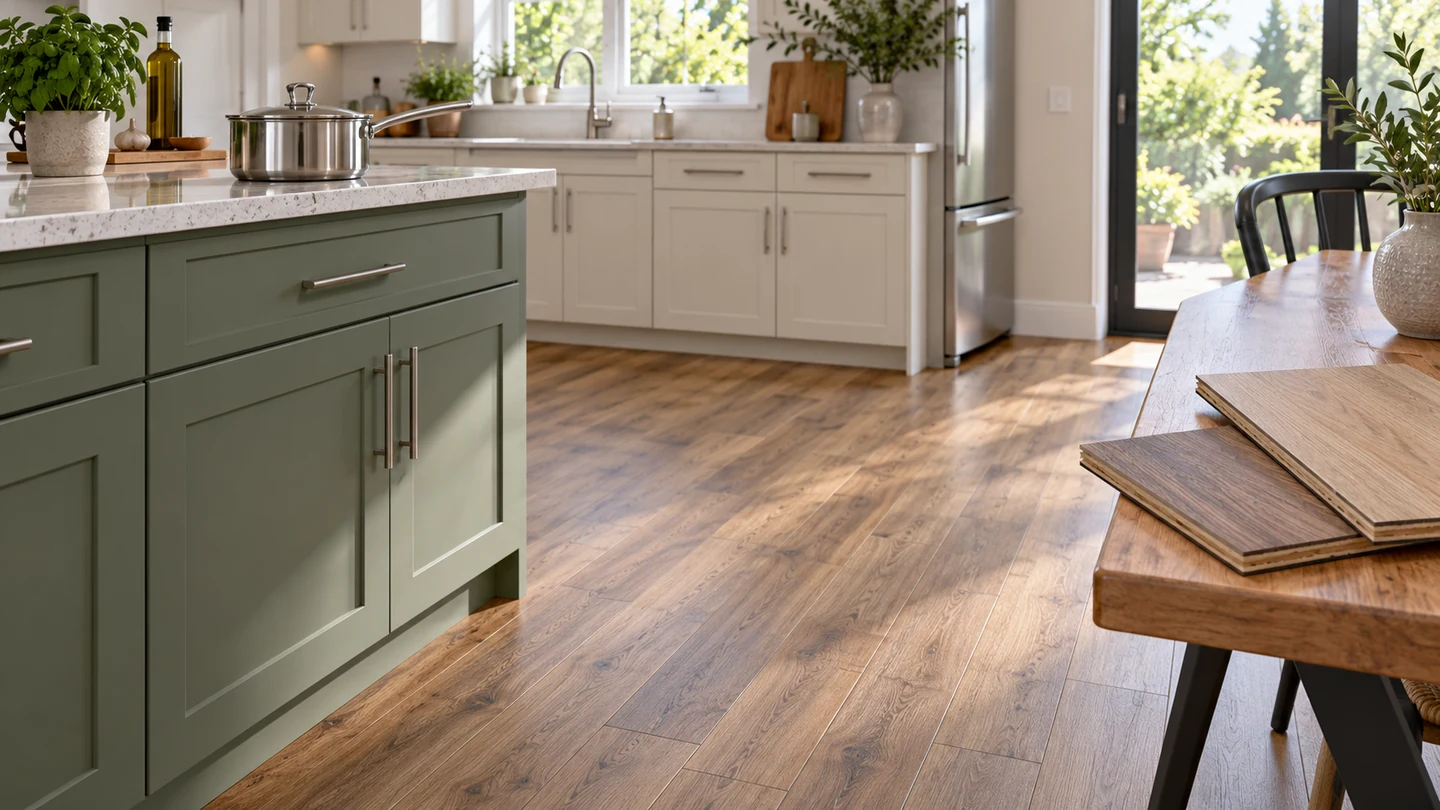
Laminated panel impact resistance describes how well a surface survives a dropped object. For laminate flooring, ISO 24335 measures this separately from wear by dropping small and large steel balls onto floor elements; the familiar AC rating describes abrasive wear. A thicker board or higher AC class alone cannot tell you what happens when a pan hits the floor. Look for an impact result for the construction, underlay and damage criteria that apply to your floor.
What does impact resistance mean for a laminated panel?
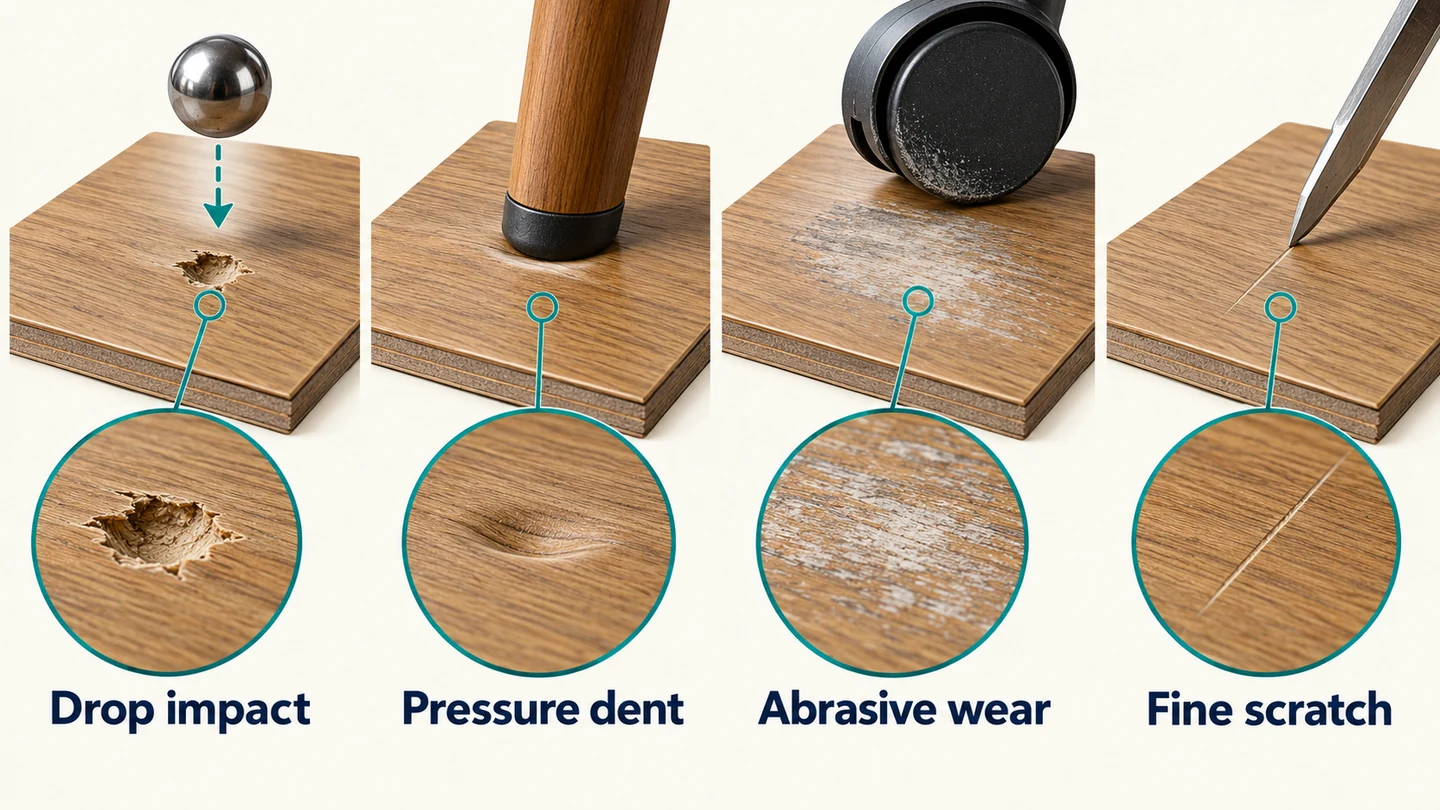
Impact resistance describes how well a panel withstands the sudden blow of a falling object without damage. A dropped saucepan, a furniture foot and repeated foot traffic put different demands on a floor, even when all leave a visible mark.
The flooring certification glossary distinguishes falling-object impact, dents and wear through to the decorative layer. A dent describes a depression: impact, sustained pressure or a rolling load can cause it. So the shape of a mark alone may not tell you what caused it.
| Property | Everyday example | Evidence to look for |
|---|---|---|
| Impact resistance | A dropped object dents, chips or fractures the surface | Falling-ball or dart result for the flooring construction |
| Indentation resistance | A loaded furniture foot presses into the floor | Test matched to the pressure or loading condition |
| Abrasion resistance | Repeated friction wears through the face | Wear test and applicable classification |
| Scratch resistance | A sharp contact leaves a fine line | Scratch or micro-scratch test suited to the material |
The phrase laminated panel also covers furniture boards faced with HPL and glass bonded through an interlayer. This article focuses on flooring. For cabinet projects, the broader surface durability tests guide helps separate these properties; a pencil hardness test addresses another kind of surface contact.
How is impact resistance tested on laminate flooring?
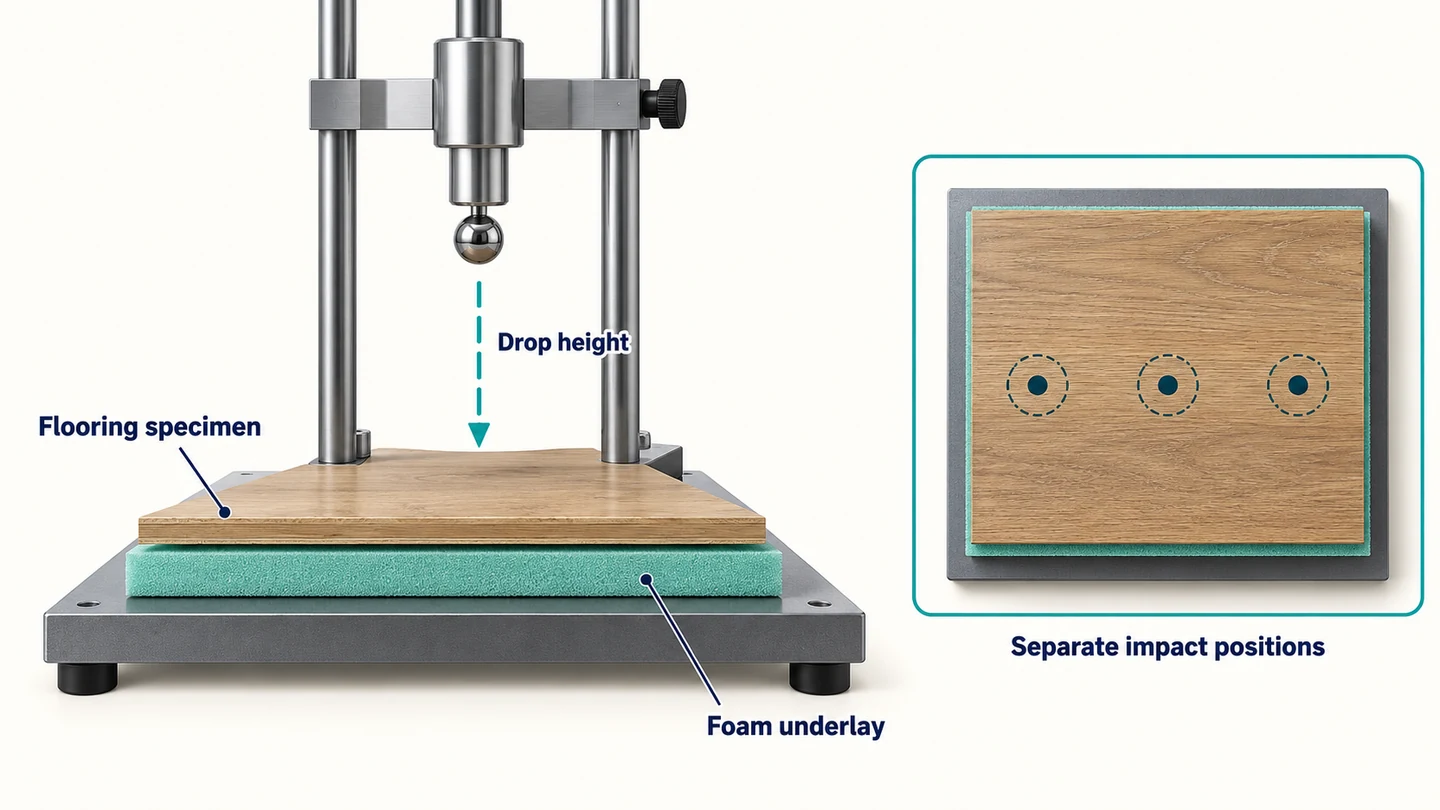
Small- and large-ball tests drop steel balls onto flooring elements and express resistance through the drop heights the surface withstands. The ISO 24335:2022 public abstract describes both methods and states that the precision of the large-ball method is unknown. It covers flooring elements, generally cut to a suitable test size.
A separate laboratory example makes the importance of setup easier to see. In Intertek’s public LF-01 section 3.6 summary, the specimen rests on foam underlayment of similar size. A small-ball dart starts at 5 in. The operator catches its rebound to avoid a second impact, shifts the next impact 5/8 in to the right and raises the drop height by 1 in. Testing seeks three successive failures at the same height.
That page identifies no edition of LF-01 and supplies no product pass height. It is a laboratory method summary, separate from the ball procedures above. Use it to understand why a report records support, spacing, rebound and the damage endpoint; household objects dropped by hand would give an uncontrolled comparison.
Does a thicker laminate floor resist impacts better?
Not necessarily. Total board thickness includes the core and backing, so an increase in overall thickness does not establish a thicker wear layer or a higher impact-test result. The core, the face and the support below the plank all matter to the assembly you install.
A 2024 retailer thickness guide describes flooring around 6–12 mm and suggests 8 mm or more for residential use, with 10–12 mm for busier or moisture-prone locations. Those are shopping recommendations: the article supplies no matched drop-test conditions to make them impact thresholds. Nor does selecting its thicker option establish moisture performance.
For example, a kitchen shopper comparing two 10 mm products should still ask for each product’s impact information and approved underlay. A taller board cannot compensate for an unsuitable installation. Core density is another construction detail; the HDF and MDF comparison explains the fiberboard distinction without assigning a flooring impact rating.
A 2025 durability guide also discusses the core, subfloor preparation and installation. Treat those as selection and installation factors, then use test evidence to compare the finished products.
Does a higher AC rating mean better impact resistance?
No. AC class describes abrasive wear resistance; it does not supply a falling-object result. In a 2023 association notice, NALFA explains AC1–AC6 as EN 13329 wear terminology and says its LF-01 system does not use AC classifications.
Some retail descriptions bundle several durability properties into their explanation of AC. One retailer article includes impact, scratches, stains and cigarette burns. The narrower wear definition above is the useful one when interpreting an AC label.
Consequently, an AC4 kitchen floor may still chip when a cast-iron pan falls edge first. Its wear classification helps with repeated abrasive traffic, while the drop brings a different load. Keep both questions on the shopping list: suitable wear performance for the room, and impact evidence for the product and support system.
What makes a laminate floor dent or chip after a drop?
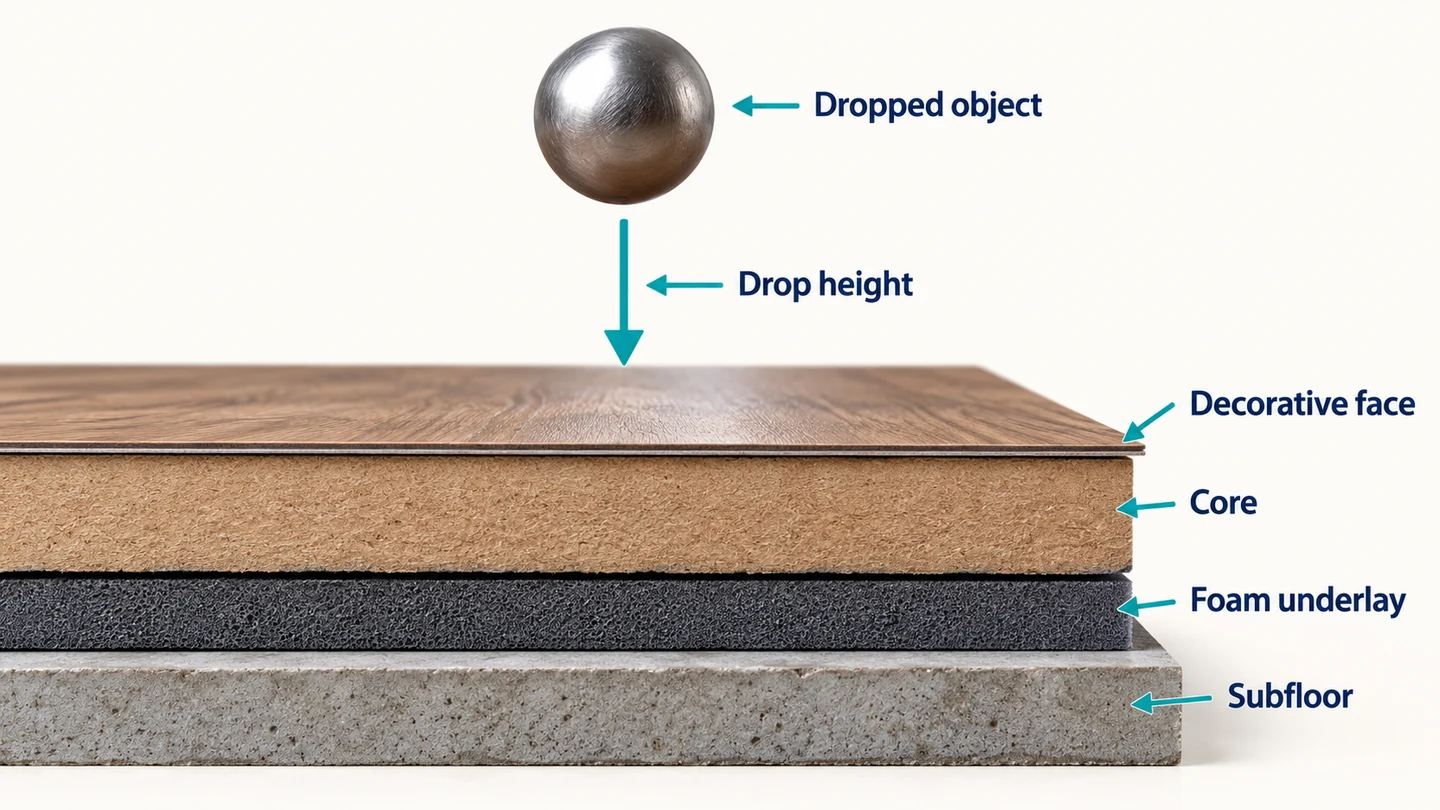
The falling object’s mass, contact shape and drop height interact with the face, core and support beneath the board. A broad rounded contact and a narrow sharp edge concentrate the blow differently. Likewise, the same surface on a different underlay or subfloor can respond differently.
The test methods’ stated impact objects, heights and support conditions show why these details belong together. It is a practical reading of those conditions, not a formula that predicts what a particular saucepan will do.
At a kitchen cooking area, think about pans and utensils that could fall from the worktop. Near a garage workbench, consider the tools in use and whether the flooring product is suitable for that space at all. In a children’s play area, wheeled furniture, dragged toys and dropped objects create several kinds of contact.
Start with the likely event, then ask which test addresses it. For example, a mark under a heavy chair may call for indentation evidence and suitable foot protection. Searching for a higher falling-ball result would leave that pressure-loading question unanswered.
How should you read an impact test result?
Read the tested construction, impact object, underlay, height and failure criteria before comparing the result. A larger height is useful only when the methods and test assemblies make that comparison meaningful.
| Report detail | What to check | Why it changes the interpretation |
|---|---|---|
| Flooring construction | Product identity, face and core | Another construction may respond differently |
| Impact object | Small ball, large ball or dart and its stated details | The contact and loading differ |
| Support | Underlay, backing and subfloor arrangement | Support is part of the tested setup |
| Drop height | Units, progression and reported result | A starting height may be only a procedure step |
| Failure criterion | Cracking, fracture or other stated damage | An intact face and an unmarked face are different outcomes |
| Method and edition | Full designation and applicable version | Similar names can conceal different procedures |
In particular, distinguish a test starting height from an acceptance requirement. The 5 in starting point in the example above tells the operator where that procedure begins. The summary gives no basis for advertising it as a pass rating.
Changing a face, core, support or installation also changes what the existing result describes. Ask the supplier whether the report covers the construction offered, and request the missing pages if the damage criterion or support arrangement is absent.
How thick is high-pressure laminate, and how is it impact-tested?
General-purpose HPL is typically a separate 0.71–1.22 mm facing bonded to a supporting board, according to the Composite Panel Association’s HPL guide. MDF and particleboard are common supports. That range describes the sheet, not the finished board’s total thickness or an impact grade.
HPL also has its own test families. The NC State testing service lists ball impact under section 3.8, dart impact under 3.9 and wear under 3.13 of NEMA LD 3-2005. Its page references that older edition and warns that applying HPDL procedures to other materials can produce misleading or incompatible comparisons.
The public scope of ISO 4586-2:2018, confirmed in 2022, covers HPL sheet property tests. These references explain the method family; unseen clauses cannot supply a pass limit here.
For furniture boards, the melamine and laminate comparison also distinguishes TFL, for which large-ball impact can be an optional test. Select evidence for the actual faced board, rather than transferring a flooring result to it.
Is laminated glass the same as an impact-rated window?
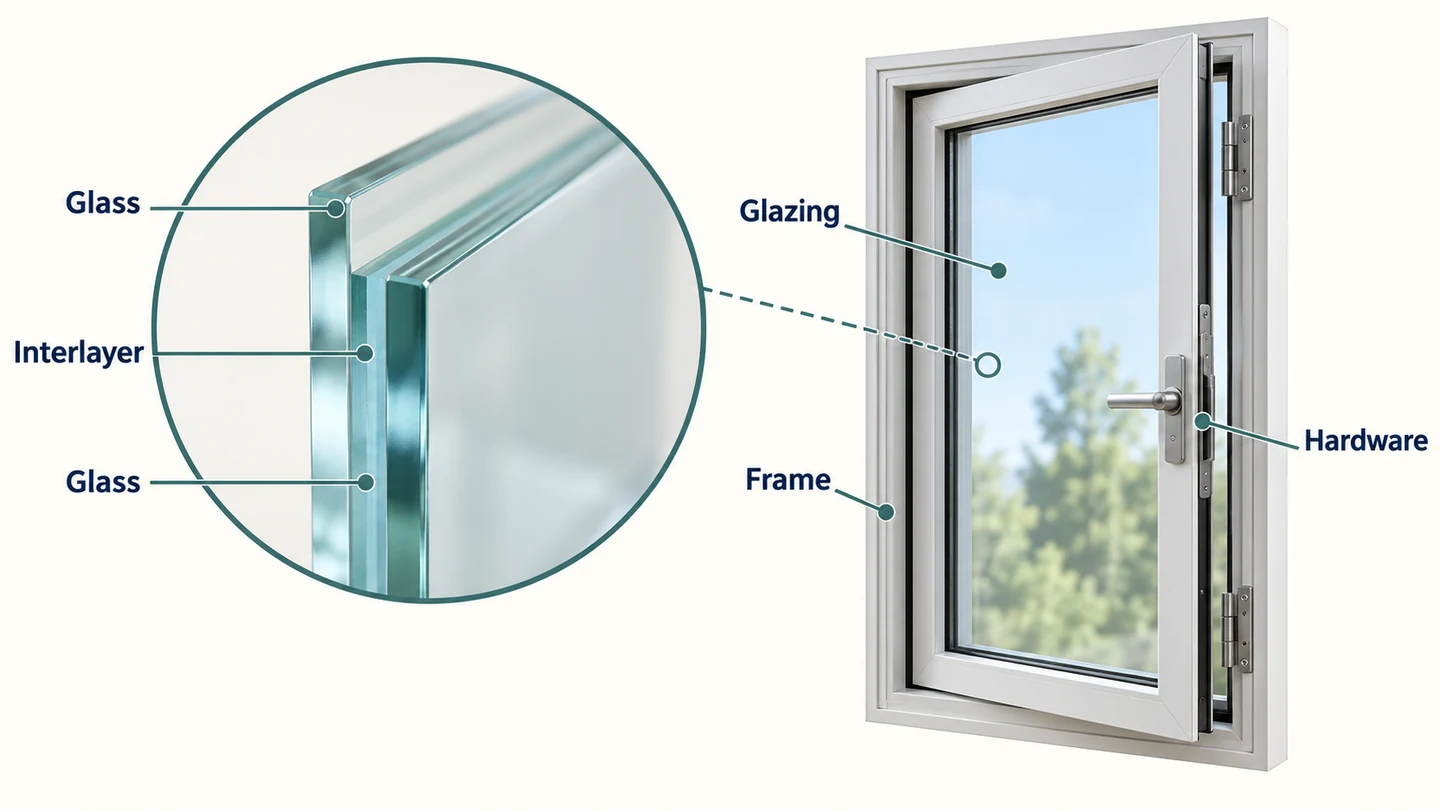
No. Laminated glass describes a glass-and-interlayer construction, while an impact-rated window depends on the tested assembly. The assembly needs its own qualification evidence.
For example, Pilkington’s laminated-glass description explains how an interlayer helps retain fragments after breakage. Retained fragments are a useful feature, but the glass can still break.
By comparison, the public scope of ASTM E1996-26 concerns exterior windows, doors, curtain walls and protective systems exposed to windborne debris impact and cyclic air pressure. The frame and the other assembly components belong to that question too. Choosing storm protection for a building needs the evidence and requirements for that building.
Where does a silicone-faced decorative film fit?
Puremorfilm makes decorative film with a silicone functional face for furniture and wall panels. We supply mainly rolls for PUR flat lamination, with film-faced panels available on request. The silicone face is inherently flame-retardant; higher grades up to UL 94 V-0 are available on request.
In the manufacturer’s laboratory tests, stated stains held at 25°C for 24 hours wiped away with no obvious change. Our formulation is No DOP. Our newer paint-free face uses silicone functionality, distinct from PVC, melamine, PP and PETG facings. The film is not suitable for floors, stovetop counters or shower floors. We have no published drop-ball, impact or indentation result.
The furniture decorative film page covers the intended panel facing. Cabinet doors can receive accidental knocks too; this discussion gives them no impact rating.
How do you choose a laminate floor that handles drops?
Choose a floor with impact evidence relevant to the room’s likely dropped objects, then follow the specified support and installation requirements. Also check wear, fine scratches and pressure marks.
| Room or activity | Evidence to request | Practical selection step |
|---|---|---|
| Kitchen cooking area | Product impact result and damage criterion | Compare the tested construction and specified underlay |
| Children’s play area | Impact plus relevant wear and scratch information | Consider dropped, dragged and rolling toys separately |
| Garage work area | Suitability for the space and impact evidence | Discuss actual tools and use with the flooring supplier |
| Home with pets | Wear and scratch information alongside any drop concern | Manage tracked grit and follow the product’s care guidance |
Finally, resolve subfloor preparation and underlay compatibility before installation. If two reports use different impactors, supports or failure criteria, ask for a comparable result before ranking the products by a single height.
For a cabinet-door or wall-panel facing project, contact us with the panel use, desired finish and processing route.
Frequently Asked Questions
What is the best thickness for laminate flooring?
There is no single best thickness for every home. Retail guidance commonly points to 8 mm or more for residential use and 10–12 mm for busier spaces, but thickness alone establishes neither impact nor moisture performance. Check the actual flooring result and specified support.
What type of flooring is most scratch resistant?
The most scratch-resistant floor is the one with the best scratch result among the products you are considering. AC class addresses wear, while thickness describes construction; neither by itself identifies the best performer against a fine sharp contact. The surface and the applicable scratch method matter.
What is the typical thickness range of high pressure laminate board?
A typical general-purpose HPL facing sheet is around 0.71–1.22 mm. The support board and adhesive add to the finished panel’s thickness. Other sheet grades can differ, and the complete faced board has its own specification.
What are the advantages of laminated glass?
Its interlayer can help hold fragments together after the glass breaks. That fragment-retention feature does not establish the performance of an entire window under debris impact and pressure cycling; those are assembly questions.
What AC rating do I need for a busy family home?
Retailers often suggest AC3–AC4 for active households, depending on the room and product. Use that as a wear-selection starting point, then check the manufacturer’s intended use and other relevant properties. A wear class cannot answer what a dropped object will do.