

Silicone chemical resistance depends on the grade and exposure. One hose maker’s chart rates its silicone rubber Good for ethanol at 20°C and Fair at 78°C, while listing toluene and xylene as Poor. Before trusting a rating, match the formulation, chemical, concentration, temperature and contact time to the intended use.
That approach is useful when choosing a decorative surface exposed to cleaners, spills or a special process liquid. The material name starts the search; a rating for the actual face and exposure makes the result useful. Keep changes in the face and changes in the bonded construction in view together.
What does silicone chemical resistance mean?
Silicone chemical resistance describes a particular silicone remaining fit for its intended function after a specified chemical exposure. That exposure is defined by the formulation, the medium’s strength, the temperature and the contact time. Begin with the actual liquid and use conditions, then check which material properties must remain acceptable for the surface or component.
The Rubber Fab compatibility guidance identifies concentration, temperature, pressure and time among the variables affecting an application. It also discusses mixtures, cycling and mechanical stress in its gasket and seal context. Use those variables to identify missing information in a material comparison.
For a cabinet face, the relevant observations may include appearance, feel, dimensional change and the integrity of the bonded layers. A sealing component may have a different functional requirement. Define what the proposed decorative surface must do before treating a chart’s positive label as sufficient evidence.
Write the exposure plainly: the named cleaner or chemical, its composition or concentration, how it reaches the face, its temperature, how long it remains and whether contact repeats. Include the actual wiping action if that forms part of the use.
The chemical-resistance test guide for laminate covers the separate task of reading an evaluation report. This article focuses on what the silicone identity and chart conditions can tell you before arranging that evaluation.
Which chemicals can affect cured silicone?
Standard silicone rubber receives poor ratings for several solvent families in common compatibility charts, including aromatic hydrocarbons, ketones and ethers. Alcohols and some aqueous media receive better labels in the same sources. Read the exact chemical row and formulation because family labels can conceal exceptions and temperature-dependent results.
The Silflex one-page silicone-rubber chart lists toluene, xylene, ketones, ethers and aromatic hydrocarbon fuels as Poor in its silicone column, and alcohols as Very Good. The sheet concerns its rubber products and omits an exact grade, test method and exposure duration.
That missing detail affects how you use the result. A poor family label is a reason to investigate a solvent-based exposure carefully. A favorable family label still needs the actual mixture and conditions before it can support a finished-surface decision.
Read the specific rows alongside the family entries. The same sheet includes an acetone example with a different label from its general ketone entry. That is a useful warning against turning a short family list into a universal solvent rule.
For routine cleaning, identify the supplied cleaner rather than using “alcohol” or “solvent” as the whole description. A ready-to-use product can contain a mixture, and its application can include wiping and repeated contact. Those details belong in the evaluation of the actual decorative face.
How do swelling, permeation and chemical reaction differ?
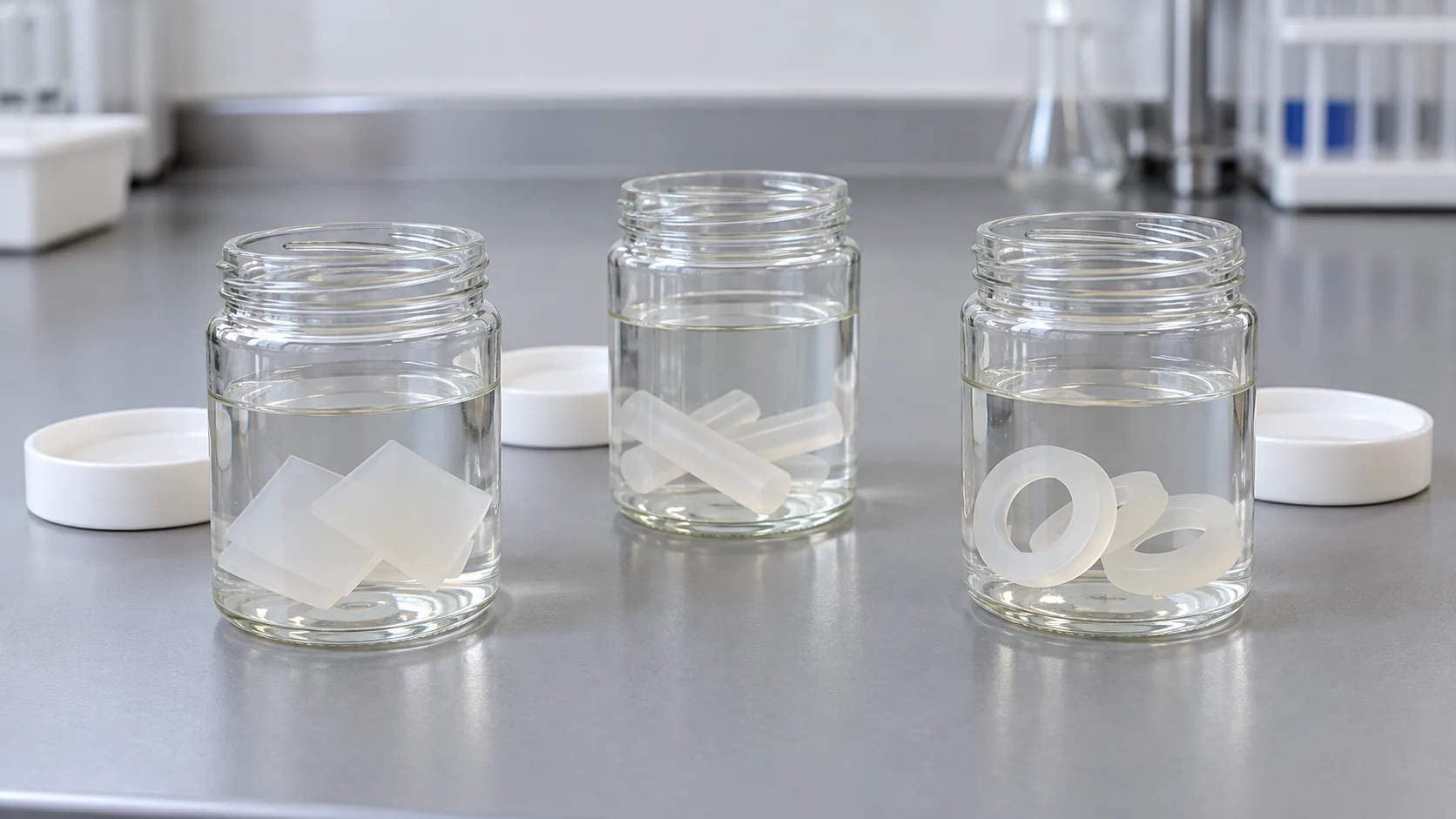
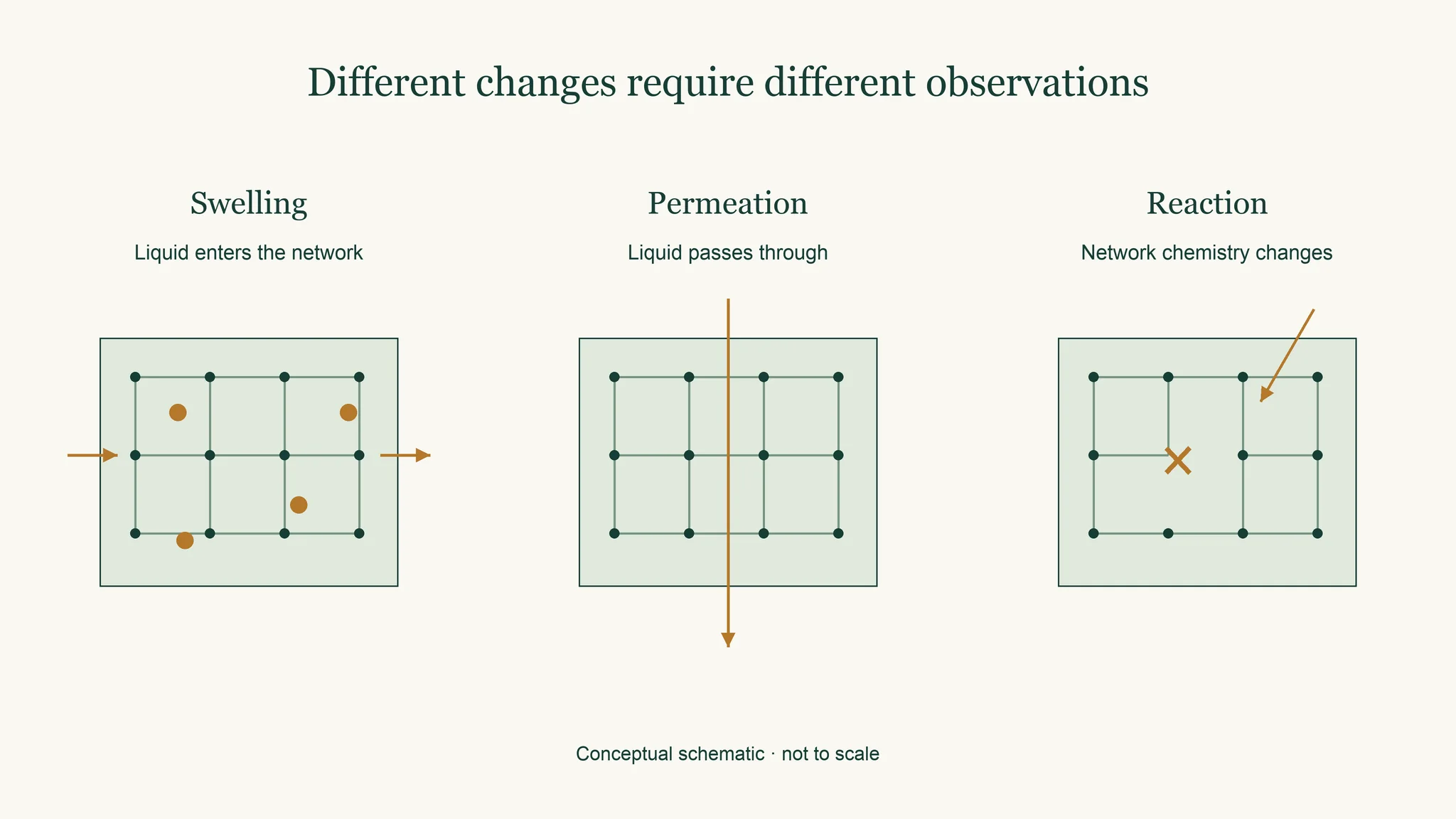
Swelling occurs when a network takes up liquid and expands; permeation concerns liquid moving through a material; chemical reaction changes the chains or network. Examine those behaviors separately when diagnosing an exposure. A surface can retain its broad shape while another property or an underlying interface still needs investigation.
| Behavior | What happens | What to check |
|---|---|---|
| Swelling | Liquid uptake changes the network’s dimensions or mass | Mass or size, appearance and hardness |
| Permeation | A medium moves through the material | Evidence for passage through the actual construction |
| Chemical reaction | Chemical changes affect chains or crosslinks | Changes in material properties and chemistry where relevant |
| Layer or bond change | The finished composite changes at an interface | The location and nature of any separation or appearance change |
The National Academies silicone-chemistry chapter, published in 1999, describes a particular lightly crosslinked gel containing physically held low-molecular-weight silicone fluid. It supplies a conceptual example of liquid being present in a network without being chemically attached to it; its medical material results are outside this decorative-surface comparison.
The chapter also discusses siloxane reactions and the importance of water reaching the relevant chemistry. Its account supports distinguishing a possible chemical reaction from physical uptake.
For a bonded sample, record changes in the exposed face and inspect the interfaces as separate observations. A clean-looking face answers an appearance question; evidence of passage through the construction answers a different one.
Why do silicone grades respond differently to the same liquid?
Silicone rubber, fluorosilicone rubber and modified silicone resins have different compositions, so the same liquid can receive different compatibility labels. Find the actual formulation category and cured surface before using the result. Even within a single chart, changing the rubber category can reverse which material receives the better rating.
The following paired examples stay within the same original hose-maker sheet:
| Medium and stated temperature | Silicone column | Fluorosilicone column |
|---|---|---|
| Toluene, 20°C | Poor | Good |
| Acetone, 56°C | Good | Poor |
Those opposite comparisons show why choosing the fluorosilicone column automatically would be a mistake. The chart remains a screening example with the missing test details noted above, rather than an acceptance specification for another finished product.
A resin maker’s selection guidance also describes modifying silicone with epoxy or polyester resins to change chemical resistance. That concerns modified resin choices, while the paired table concerns rubber columns. Keep each material category attached to its own evidence.
For a decorative face, identify which surface is actually exposed and its cured state. The silicone material explanation covers the broad polymer distinction; the compatibility decision needs the more specific formulation and exposure information described here.
How should you read a manufacturer compatibility chart?
Read the chart by identifying its product, understanding its legend, finding the exact medium and concentration, matching the temperature, and checking what test details are missing. Keep the original row with that context. A qualitative label becomes useful for screening only when you know what the chart’s author means by it.
Start with the product identity in the heading and any grade information. A chart for hose rubber should remain identified as hose-rubber guidance when shared with someone selecting a decorative face.
Next, read the legend. In the cited sheet, Fair means temporary exposure, while Good and Very Good are associated with permanent exposure under stress. Those phrases provide the author’s categories; the sheet gives no duration that converts the labels into an exposure limit for a panel.
Then locate the actual liquid, including any stated concentration. Read the temperature beside that row. The cooler and hotter ethanol examples in the introduction show why the temperature is part of the result, even when the liquid name stays the same.
Finally, look for the method, duration, observations and acceptance measurements. If they are absent, use the chart to identify the next evaluation question. Keep it distinct from a report on the actual finished surface and the conditions you intend to reproduce.
What exposure should a decorative surface evaluation reproduce?
Reproduce the actual liquid or mixture, concentration, temperature, contact time, repetition and wiping action that the decorative face will encounter. Identify the full sample construction and record appearance, dimensions or mass, hardness where relevant and layer changes. This connects the screening question with observations on the material you intend to use.
| Item | What to specify | Why it belongs in the evaluation |
|---|---|---|
| Surface and construction | The actual cured face and bonded assembly | Identifies the tested object |
| Medium | Exact chemical or supplied mixture and concentration | Matches the real exposure |
| Temperature | The exposure condition to reproduce | Keeps the result tied to its use |
| Contact and repetition | Duration and intended cycles | Captures short spills and repeated contact |
| Mechanical action | Wiping or other relevant action | Includes how the liquid reaches and leaves the face |
| Observations | Appearance, mass or size, feel and interface changes as relevant | Records what changed and where |
The table sets no universal concentration, duration or pass limit; it is a planning aid, not a standard method.
For a repeatedly cleaned wall, the disinfectant-resistant wall-covering guide covers the separate cleaning-system decision. Keep the actual product instructions and mixture identity with the sample evaluation.
Use the expected application to select observations. A face that changes gloss after wiping presents an appearance concern. A change at an adhesive interface calls for examining the full construction. The cabinet durability test guide explains how different performance questions require their own evidence.

What evidence is available for a silicone decorative film?
Puremorfilm makes decorative film with a silicone functional surface on a plastic film base for furniture and interior walls. We mainly supply rolls for PUR flat lamination, with laminated panels available on request. Use the actual medium and exposure conditions when arranging a sample evaluation for the intended face.
We use a No DOP formulation. The silicone surface is inherently flame-retardant, with higher grades up to UL 94 V-0 available on request. In the manufacturer’s laboratory tests, coffee, red wine and soy sauce left at 25°C for 24 hours wiped off with no obvious change.
In worked examples described in the patent application, surface energy was as low as about 21 mN/m and water contact angles were 100°–115°. These describe wetting, while solvent compatibility requires its own exposure evidence.
Our furniture decorative film is a paint-free material with a silicone functional face, distinct from PVC, melamine, PP and PETG decorative faces. Free samples are available.
How should you choose a chemically compatible surface?
Choose by writing the exposure conditions, identifying the actual surface formulation, reading the corresponding original data and evaluating a finished sample with the intended medium. Record changes in the face and bonded construction as distinct observations. Keep those observations with the material description so the selected surface and evidence refer to the same object.
| Expected contact | Evidence to examine | Next decision |
|---|---|---|
| Water and ordinary spills | Results for the actual face and contact conditions | Whether appearance and function remain acceptable |
| An alcohol-containing cleaner | The supplied mixture, concentration and repeated-use conditions | Whether the proposed cleaner and finish work together |
| Solvents or fuel-related media | Specific formulation data and the exact chemical row | Whether a more suitable material or an application-specific evaluation is needed |
| A bonded decorative panel | Face observations and interface condition | Whether the complete construction meets the intended requirement |
Use the chart to narrow the question, then use evidence for the actual face and exposure to make the material choice. Keep the evaluated cleaner or chemical identified so a later substitution triggers a fresh compatibility check.
For a decorative-film discussion, contact us with the medium and concentration, temperature, contact time, application area and proposed construction.
Frequently Asked Questions
What are the different grades of silicone?
The grades that matter in chemical-resistance data are formulation categories: standard silicone rubber, fluorosilicone rubber and silicone resins modified with epoxy or polyester. They can respond differently to the same liquid, so identify the specific cured face and grade behind any rating.
Does a silicone chemical resistance chart apply to every silicone product?
No, a chart describes the material categories and conditions supplied by its author. Keep the formulation, medium and temperature attached to each rating, and check the missing method and duration before using it for another product.
Can silicone swell in solvents?
Yes, liquid uptake can swell a silicone network without dissolving it. Check the exact formulation and solvent, then assess the changes relevant to the component. A network remaining intact does not by itself establish unchanged dimensions or function.
What factors influence chemical resistance?
Formulation, chemical identity, concentration, temperature and contact time influence the result. Mixtures, cycling and mechanical action can also matter. Identify the variables relevant to the actual surface exposure before comparing ratings.
How can I determine the chemical compatibility of a specific silicone?
The reliable route is original data for the actual formulation, matched to the medium and conditions, followed by a finished-sample evaluation under the intended exposure. Record the properties that matter to its function and inspect the bonded interfaces when the surface forms part of a panel.