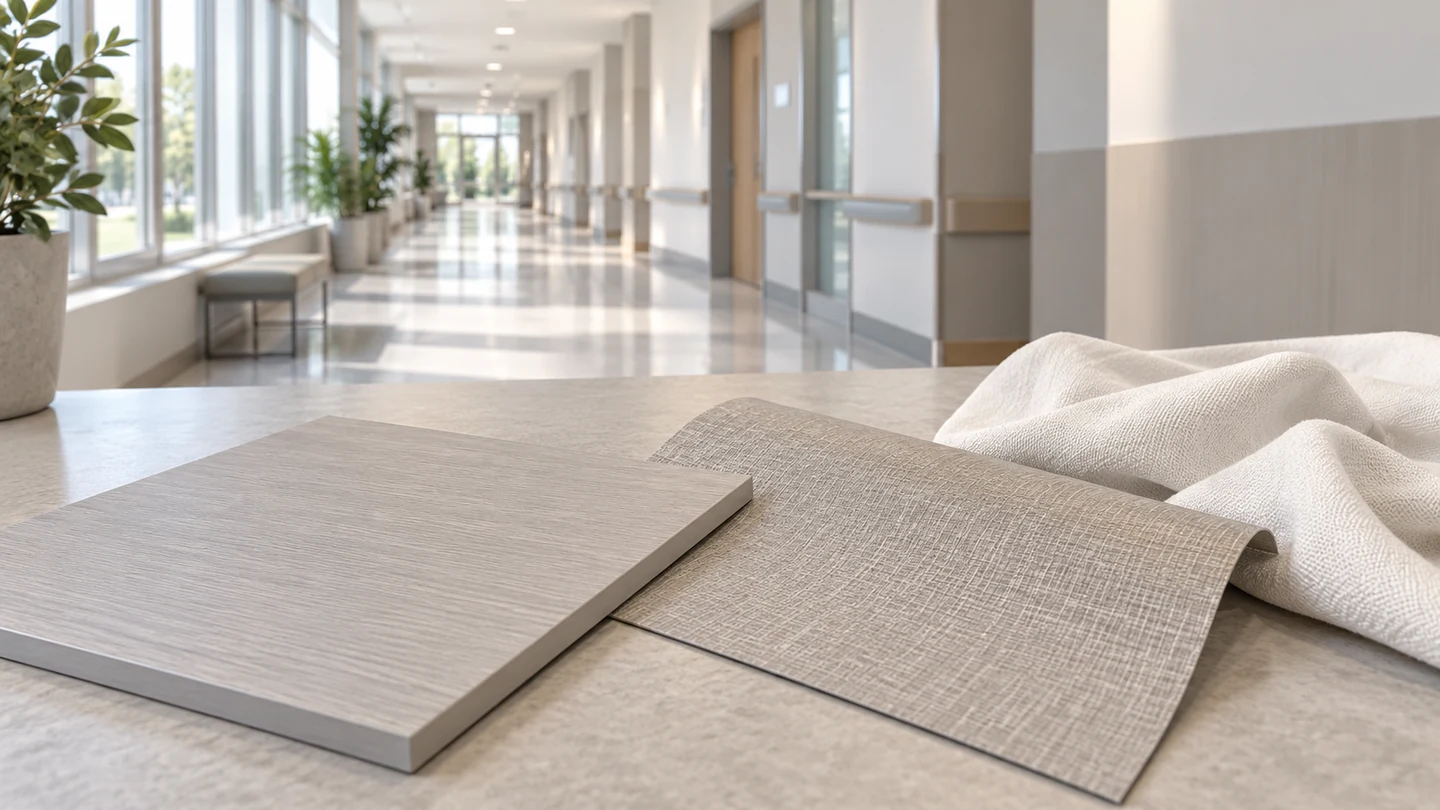
A disinfectant resistant wall covering keeps its color, gloss, surface and bond after repeated use of the specific disinfectant at its label concentration and wet contact time. Start with a nonporous panel or commercial vinyl wallcovering grade that publishes compatibility information, then check the joints and adhesive as well as the face.
So ask what your own cleaner will do to that particular finish after repeated use day after day. An antimicrobial additive, a washable label or a moisture-resistant core answers a different question. For a treatment room cleaned between uses, make the cleaning product part of the material selection from the start.
What makes a wall covering disinfectant resistant?
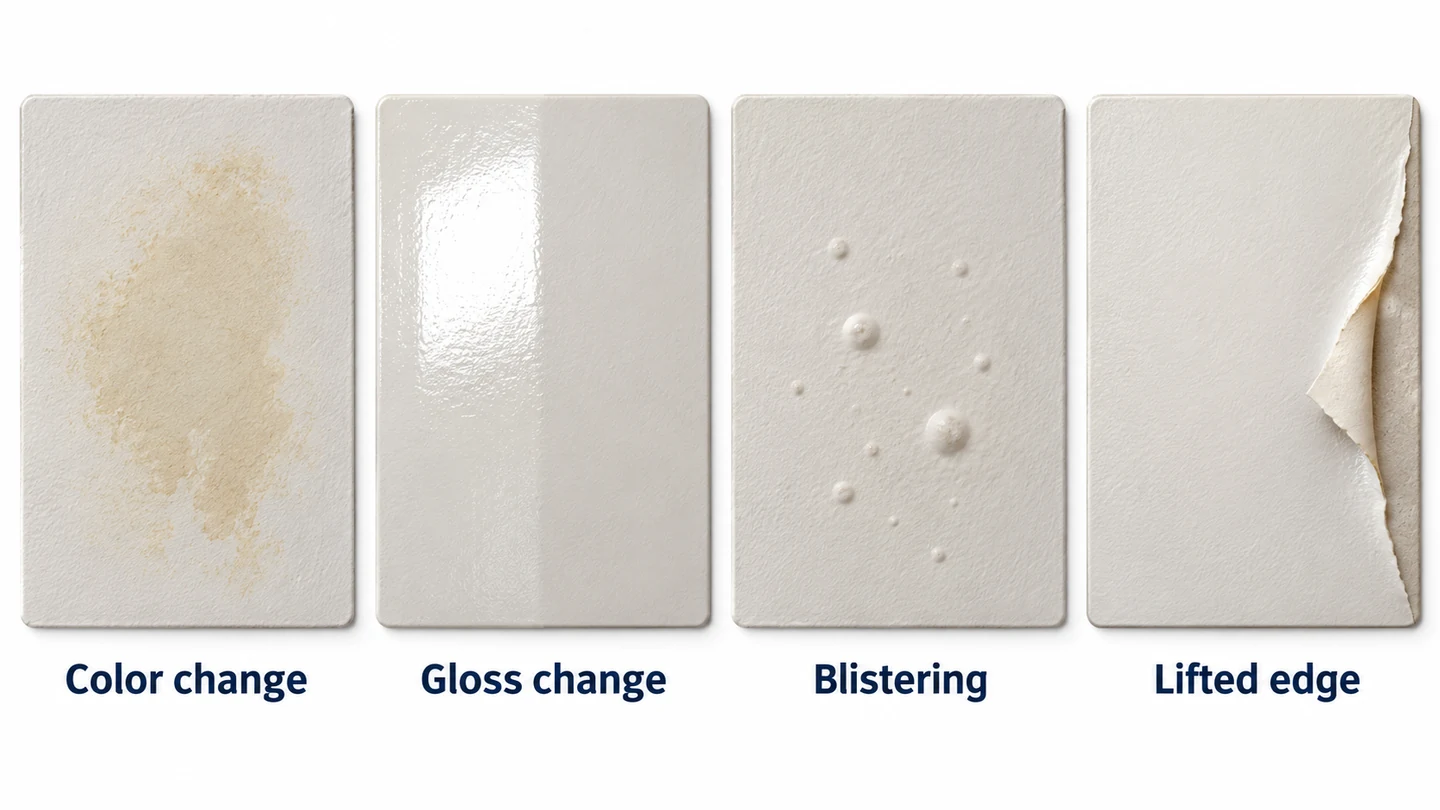
It retains its intended appearance and surface condition through the specified disinfectant exposure, including repeated wetting and wiping. Watch for color and gloss change, softening, tack, swelling, blisters or a loss of adhesion.
The public scope of ASTM D1308, reaffirmed in 2025, identifies several of these effects when evaluating finishes exposed to household chemicals. Those observations give you useful things to examine in a report or sample assessment. A coating can look intact from a distance yet become softer or lose gloss where staff wipe it most often.
In its guidance for healthcare facilities with limited resources, the CDC lists material compatibility and wet contact time as distinct considerations when selecting cleaning products. A disinfectant needs to work under its label conditions, while the surface needs to tolerate the resulting exposure.
For a corridor wall at hand height, compare the rubbed area with an unexposed area under the room’s light. Near a sink, examine the lower edges as well. The decorative wall surfaces overview covers the broader range of facings; chemical compatibility narrows that range to grades suited to the actual cleaning routine.
Are antimicrobial, mold and disinfectant resistance the same?
No. Antimicrobial claims concern the organisms and effect stated for the treatment; mold and moisture resistance concern a different exposure; disinfectant compatibility concerns the finish’s response to a cleaning chemical.
For a product relying on the EPA treated-article exemption, the pesticidal treatment protects the article itself. Public-health protection claims require a different regulatory basis. Read the actual claim before interpreting an antimicrobial wall as protection for people using the room.
Even the additive supplier’s wallcovering explanation describes regular cleaning as still necessary. A treated face can continue to collect visible dirt, and the facility’s cleaning procedure still has to be followed.
In a clinic, keep three questions on the specification: can the assembly tolerate moisture, what antimicrobial claim is actually supported, and which disinfectants can be used on it? A favorable answer to one leaves the other two to be assessed on their own evidence. The antimicrobial surfaces article explains the difference between protecting a material and routine cleaning.
Which wall coverings suit frequent disinfection?
Nonporous rigid panels and commercial vinyl wallcoverings with documented compatible cleaners are useful starting candidates. Choose among actual grades by the cleaning protocol they support, rather than ranking their polymer names as a chemical-resistance league table.
The Wallcoverings Association’s cleanability guidance, issued in the COVID period, reports that many List N disinfectants can be used on commercial vinyl wallcoverings and describes Type II commercial vinyl as durable. Its advice also sends users to the specific supplier’s instructions. The relevant combination is the wallcovering and cleaning product together.
| Wall finish | Why it enters the shortlist | What needs checking |
|---|---|---|
| PVC or GRP/FRP hygienic sheet system | Nonporous face and purpose-designed cleanable junctions | Exact disinfectant compatibility, trims, sealant and bonding system |
| Type II commercial vinyl wallcovering | Durable, wipeable grades with published care information | Tested cleaning products, seam detail and adhesive |
| Painted wall | Broad finish choices and local repair options | Coating grade, cure before cleaning and permitted chemicals |
| Paper-based wallcovering | Decorative choice for lower-exposure areas | Whether its actual face and care instructions permit wet treatment |
| Tiled wall | Hard cleanable tile face | Grout, sealant, wet-area construction and cleaning compatibility |
An ordinary classroom and a splash-prone clinical wall need different shortlists. A finish that looks good after occasional damp wiping may have little evidence for repeated disinfectant exposure. The wallcovering types guide and panel materials comparison explain those construction choices before you narrow them to a cleaning-compatible grade.
What are the best wall panels for hospital infection control?
The best wall panels for hospital infection control provide a smooth, nonporous surface, sealed joints and compatibility with the facility’s cleaning agents. Select the assembly for the room and protect it from carts and equipment. A cleanable panel supports environmental cleaning; an antimicrobial label does not establish infection prevention performance.
| Selection point | Evidence to request | Room decision |
|---|---|---|
| Cleanable face | Finish remains smooth and nonporous after the specified cleaning routine | Avoid inaccessible texture or absorbent exposed material in clinical cleaning zones. |
| Seams and penetrations | Installed joint, corner and service-opening details | Use sealed or welded joints where the clinical brief requires them. |
| Disinfectant compatibility | Named agent, concentration, contact time and repeated-exposure results | Match the facility protocol and disinfectant label. |
| Impact exposure | Panel-system evidence and separate guards at strike zones | Protect trolley routes so damaged edges do not become cleaning traps. |
International Health Facility Guidelines, Part D distinguishes clinical surface requirements. CDC environmental-cleaning recommendations require appropriate products and routines. Resolve joints and penetrations through the hygienic wall cladding installation guide. Select and document the required panel assembly with the facility team.
How do you match a wall covering to your disinfectant?
Match the exact disinfectant product to the wall finish’s compatibility information, then compare concentration, temperature, exposure method, wet time, repetitions and observed changes. The active ingredient alone leaves out solvents, additives and other formulation differences.
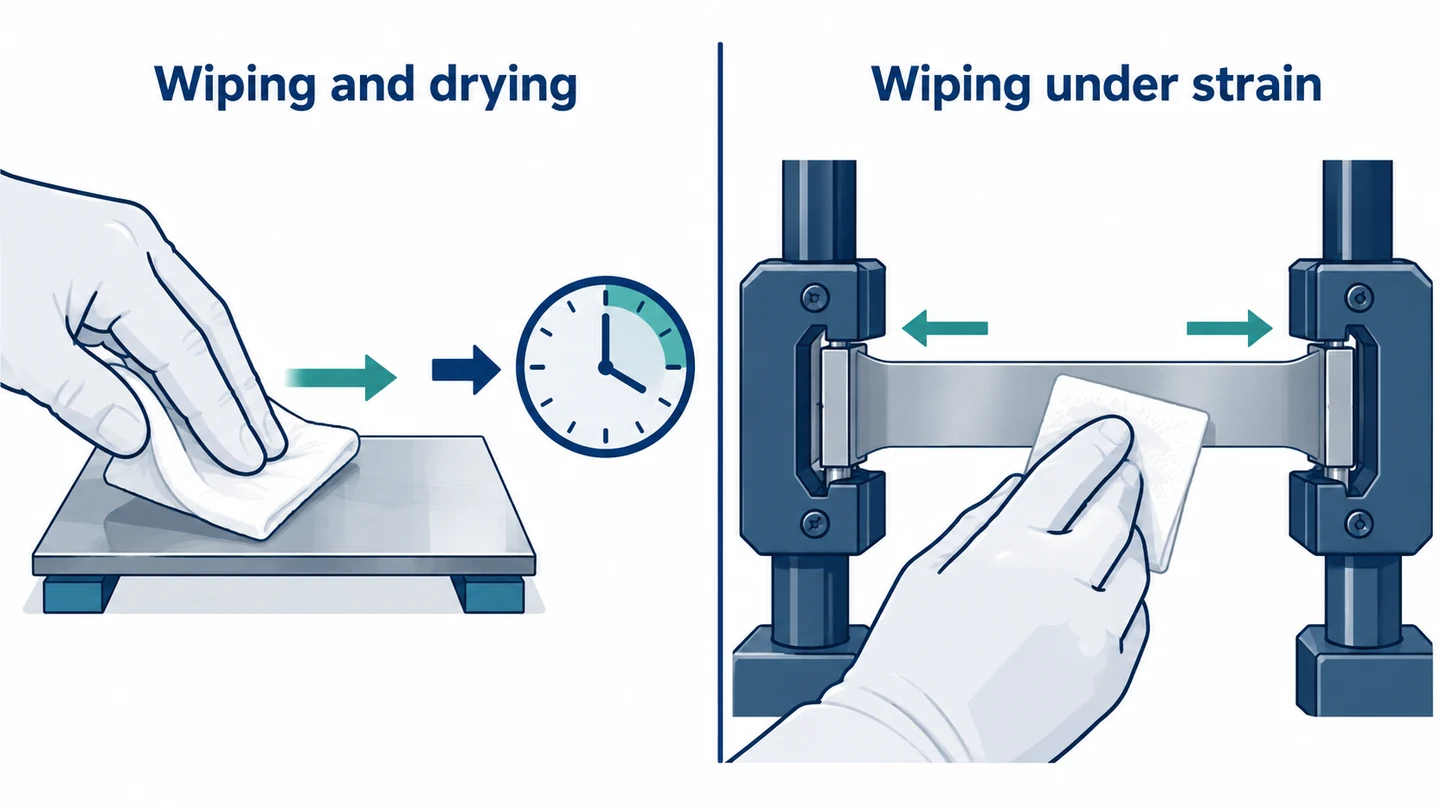
The PDI compatibility brochure, update 0126, gives a useful manufacturer example of how that evidence can be structured. Its methods include a wiping sequence of 120 wipes with a 30-minute drying interval, and a separate evaluation using the wiping sequence while the material is held at 1% constant strain.
It also describes a more sustained exposure: a specimen wrapped in a wipe and sealed, inspected three times weekly, with fresh wipes used to continue exposure. That paragraph does not give a total duration or temperature. Read these as different test configurations, each with a different way of stressing a material.
The same brochure identifies pH, inactive solvents or additives, cleaning frequency, environmental conditions and material differences as relevant. A chart headed simply “quaternary ammonium” or “alcohol” can therefore be too broad to settle a specific purchase.
For a room where staff already use a named wipe, put that exact product and intended surface grade side by side before approving the wall finish. If evidence is missing, a matched assessment of the proposed materials is more useful than borrowing a favorable row for a similar cleaner. This manufacturer’s method example supplies no universal acceptance threshold or conversion from wipes to years in service.
What does the disinfectant label require on a wall?
Use the product on the label’s permitted surface and site, preclean when directed or when the surface is visibly dirty, and keep the treated area wet for the entire stated contact time. The product’s actual directions determine the application.
The EPA’s one-page disinfectant guide makes the site, surface type and wet contact time part of correct use. A wipe passing across a wall is only the application step; the label may require the surface to remain visibly wet afterward.
Before specifying a wall in a treatment room, check that the planned routine can achieve that condition over the relevant area. A finish may tolerate a brief wipe yet show a change after longer wet contact. Conversely, an appearance test of a material says nothing about whether staff have followed the disinfectant’s use directions.
Keep the label available alongside the wall finish’s care document. When a facility changes products, review the new formulation against the installed material before extending the old compatibility conclusion to it. Follow any labeled drying or other after-treatment instructions without adding a homemade dilution or rinse procedure.
Why do seams, edges and adhesives need checking?
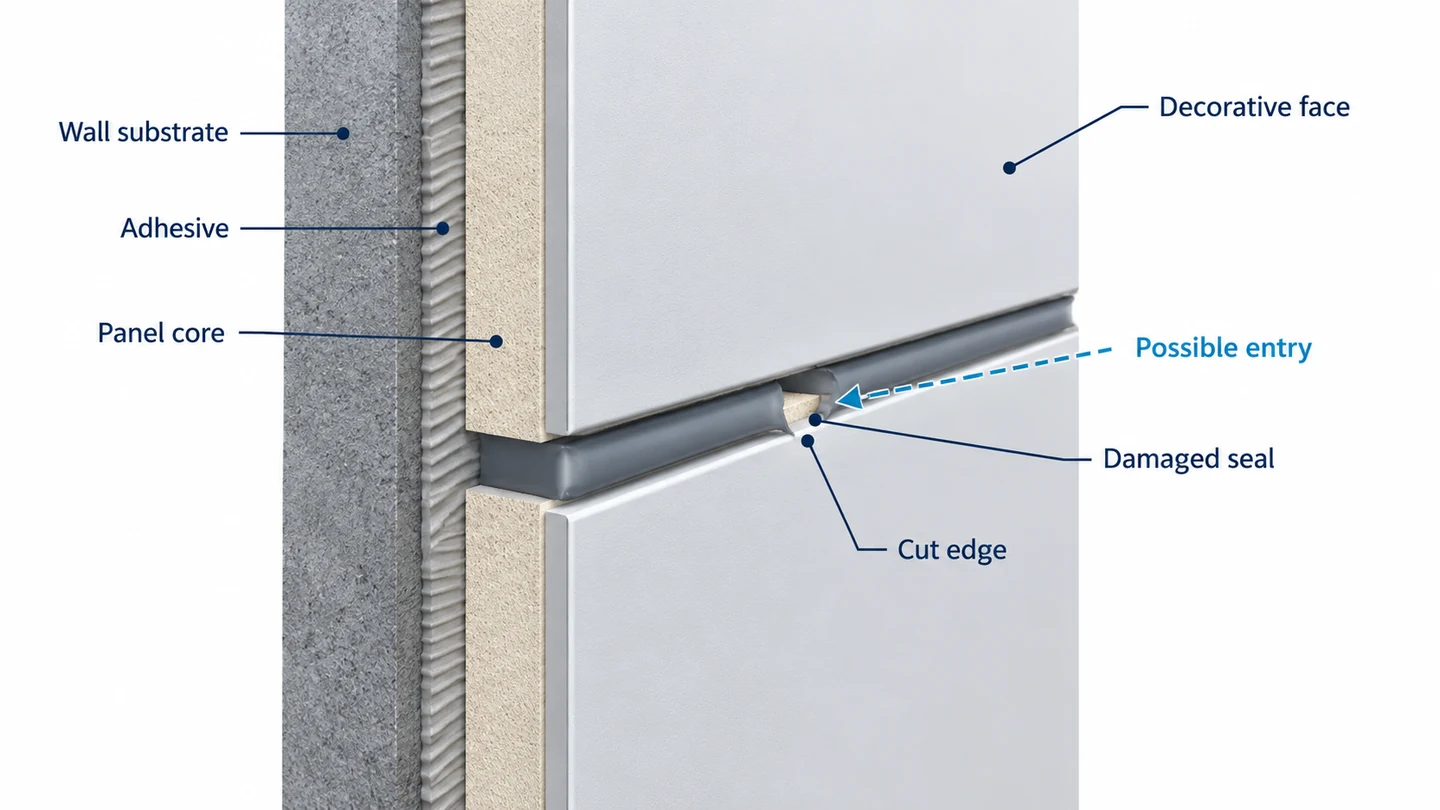
An unsealed or damaged junction can expose the cut edge or adhesive even when the broad face stays intact, so a test on a facing coupon tells you less than a finished wall would.
Liquid can collect at a failed seal beside a sink, or reach an exposed edge around a wall fitting. Examine those details in the proposed system and in the installed room. Well-designed intact joints should be assessed by their own specification, without assuming every joint leaks.
For food establishments, the 2026 FDA model code calls for installed wall coverings to remain easily cleanable. Section 6-201.13 also distinguishes coved and closed floor junctions for non-flushed floors from coved, sealed junctions with drained and graded floors where water flushing is used. Local adoption determines the applicable requirement.
At a preparation-room wall base, inspect the junction as a cleaning detail. At handrail height in a care facility, inspect fixings, cutouts and the repeatedly wiped face together. The material submission should show how the proposed edges, adhesive and sealant will encounter the same cleaner used on the face.
What works in bathrooms and wet rooms?
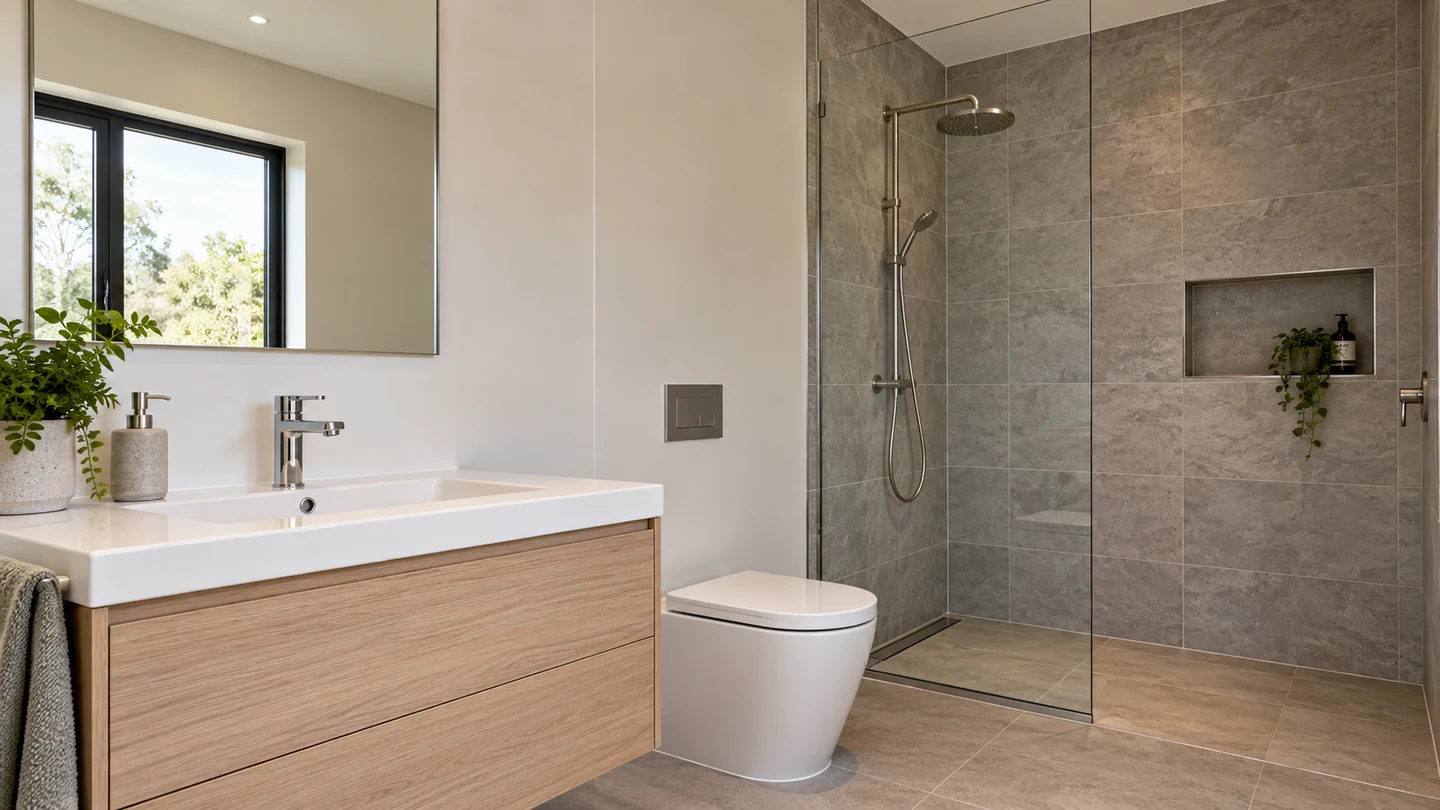
Nonporous panel systems and tile within a properly designed waterproof wall assembly are practical wet-area options. Mold-resistant materials can help, while moisture control, drying and cleaning remain necessary to keep the wall in good condition.
The mold cleanup guidance calls for fixing water problems, drying affected materials and cleaning mold before painting or caulking. Moldy porous material may need removal. That sequence matters when replacing damaged gypsum board: identify the leak or condensation problem before covering the area again.
In a shower, the face, backer, membrane where required, joints and penetrations must work together. The tile industry’s shower guidance distinguishes the finished tile from the waterproofing arrangement behind and around it. Grout or a bead of sealant alone leaves other assembly details unresolved.
For a bathroom vanity wall outside direct shower exposure, the cleaning routine may govern the surface choice. Inside the shower enclosure, start with a complete wet-area assembly and then assess cleaner compatibility for its visible face and joints. The bathroom wall panels and tiles comparison covers the maintenance implications of those two routes.
What should a compatibility report show?
It should identify the surface grade, disinfectant formulation, exposure schedule and observed result clearly enough to compare with your proposed use. Record the face material and construction so the evidence can follow the actual product being ordered.
| Report item | What to look for | Why it matters |
|---|---|---|
| Material identity | Product, grade, face and relevant construction | A result belongs to the specimen tested |
| Chemical identity | Exact disinfectant product and concentration | Formulations sharing an active ingredient can differ |
| Exposure | Temperature, wet time, repetitions and drying intervals | A brief spot differs from repeated wiping |
| Method | Wiping, strain, immersion or another stated setup | Mechanical stress and liquid contact change the exposure |
| Outcome | Color, gloss, softening, swelling, blisters and adhesion | A bare pass obscures the effect being judged |
| Test responsibility | Testing organization, date and applicable instructions | Supports traceable interpretation of the report |
Treat the table as a reading checklist, not a test procedure. If a report leaves a condition out, ask for it instead of filling it in yourself. A missing temperature unit or undefined wipe count needs clarification before comparing results.
The surface durability test guide explains related finish tests, while the supplier evaluation checklist helps tie supporting documents to the grade supplied. A busy facility needs evidence that its maintenance team can apply to the installed finish, not only a favorable headline.
Where does a silicone-faced wall film fit?
Puremorfilm makes decorative film with a silicone functional surface for factory-faced wall panels. Our main supply is rolls for PUR flat lamination, with film-faced panels available on request. The silicone surface is inherently flame-retardant, with higher grades up to UL 94 V-0 available on request.
In the manufacturer’s laboratory tests, coffee, red wine, ice cream, soy sauce and lipstick held at 25°C for 24 hours were wiped away with no obvious change. We use a No DOP formulation, and the wall film contains no PVC. It is made for wall and furniture panels, not floors, stovetop counters or shower floors. Our newer paint-free surface uses silicone functionality, distinct from PVC, melamine, PP and PETG facings.
We have no published compatibility results for a named disinfectant. The hygienic wall panel film page covers this facing route; assess proposed samples against the cleaning product and exposure planned for the room.
Which covering suits your cleaning routine?
Choose the grade that supports the room’s actual cleaning product and exposure, with junctions suited to its water conditions. Use appearance, repairability and installation constraints to decide among the compatible options.
| Room or location | Starting direction |
|---|---|
| Clinic or treatment room | Cleanable panel or commercial wallcovering with the named disinfectant documented |
| Frequently wiped handrail zone | Compatible face with protected cutouts and maintainable joints |
| Food preparation area | Cleanable, moisture-appropriate assembly with coordinated wall-base detail |
| Shower or other direct wet area | Complete wet-area system, then cleaner compatibility for the face and joints |
| Office or classroom | Finish suited to the actual cleaning frequency and products |
For a flat-laminated wall-panel facing, contact us with the disinfectant product, concentration, wiping frequency and wall location.
Frequently Asked Questions
What is the best mold-resistant wall material?
Nonporous panel systems and properly detailed tiled wet-area assemblies are useful choices when moisture is controlled. A mold-resistant finish still needs a dry, maintained wall and a cleaning routine; no face alone guarantees freedom from mold.
What are some durable wall covering options?
Rigid panels, Type II commercial vinyl, film-faced panels and tile are durable candidates for different room conditions. Their permitted cleaners and installation details determine which suits repeated disinfection.
What are antimicrobial wall coverings?
Antimicrobial wall coverings are finishes with a treatment intended to affect specified microorganisms under stated conditions. For products using the U.S. treated-article exemption, the claim concerns protection of the article itself.
Can commercial vinyl wallcoverings be disinfected?
Yes, many commercial grades have compatible disinfectants, including products discussed in industry List N guidance. Follow the specific wallcovering’s and disinfectant’s directions together.
Do antimicrobial wall coverings replace cleaning and disinfection?
No. The treatment leaves routine cleaning and the applicable disinfection procedure necessary. Its claimed effect and the face’s chemical compatibility need their own evidence.