
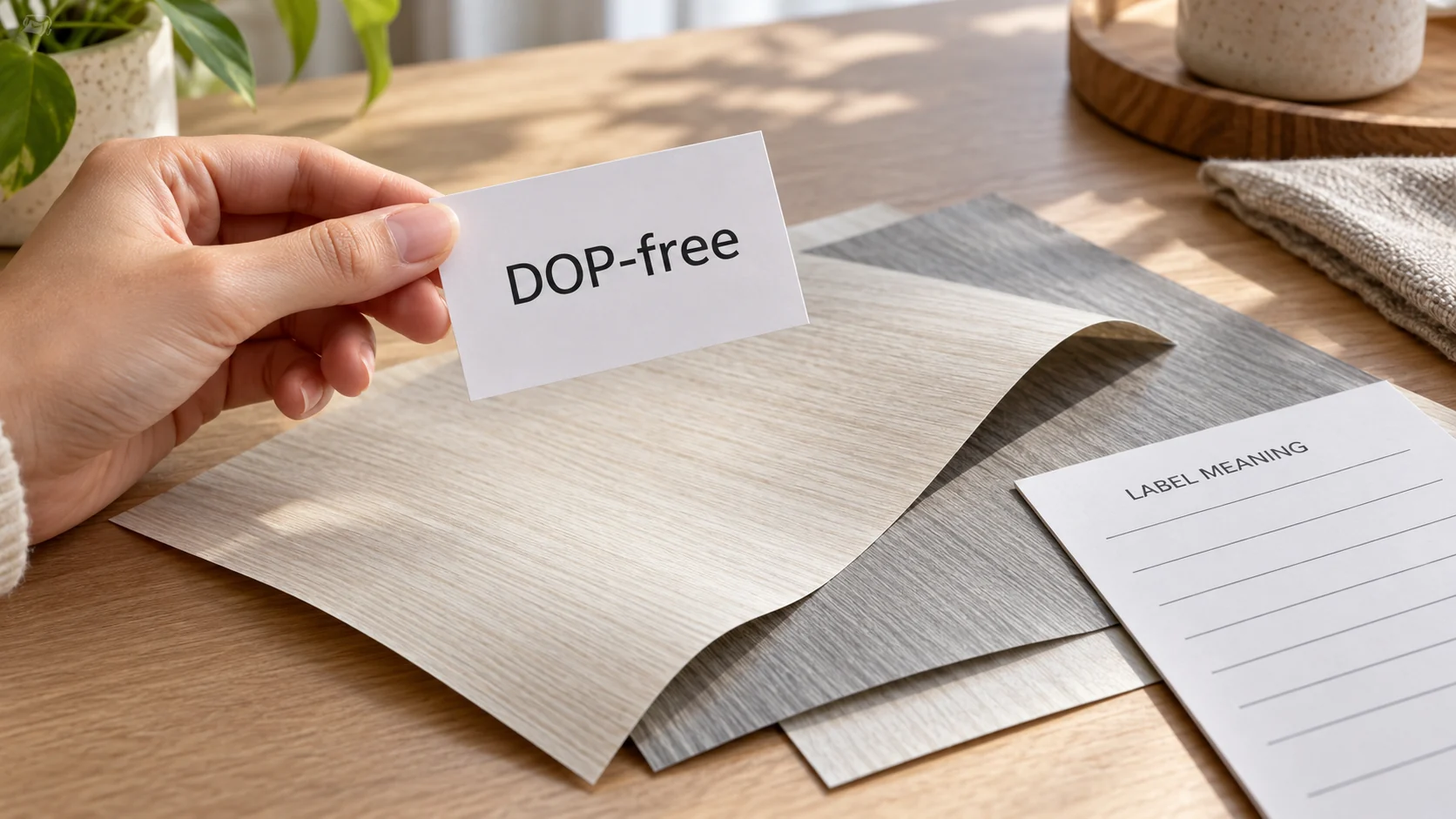
DOP-free means that a product is declared free of the plasticizer identified as DOP. For decorative film, check the chemical name and CAS number: the common DEHP identity is CAS 117-81-7. The DOP free meaning stops at that ingredient claim; it leaves the polymer, other additives and finished furniture to be assessed separately.
A film swatch may carry several labels that look interchangeable: DOP-free, phthalate-free, PVC-free and low-emitting. Each answers a different material question. Reading those labels correctly helps you compare surfaces without buying a broader promise than the evidence supports.
What does DOP free mean for decorative film?
DOP-free means the decorative film is declared to contain no DOP, a plasticizer commonly identified as DEHP. It concerns a named ingredient. To interpret the claim, match the chemical identity, the part of the product covered and the supporting evidence; other plasticizers, PVC content and finished-panel emissions require their own answers.
| Label | What it addresses | Evidence to look for |
|---|---|---|
| DOP-free or No DOP | Exclusion of the chemical identified as DOP | Chemical name, CAS number and declaration or analytical result for the named film |
| Phthalate-free | Exclusion of a stated group of phthalates | Named substances and the scope of the declaration or test panel |
| PVC-free | Exclusion of a particular polymer | Material composition covering the layers included in the claim |
| Low-emitting | Substances released under specified test conditions | Emissions report identifying the tested object and method |
An ingredient declaration and a laboratory result communicate different things. A declaration describes the stated composition. A result describes what an analysis found in its sample. A report marked “not detected” needs the reporting limit beside it before you can judge the finding.
For US environmental marketing, a free-of claim can sometimes include trace or background amounts under specific conditions, including no intentional addition and no associated harm at that level. That context-sensitive provision is set out in the FTC free-of guidance, section 260.9. It gives no universal numerical definition of “DOP-free.”
Is DOP the same chemical as DEHP?
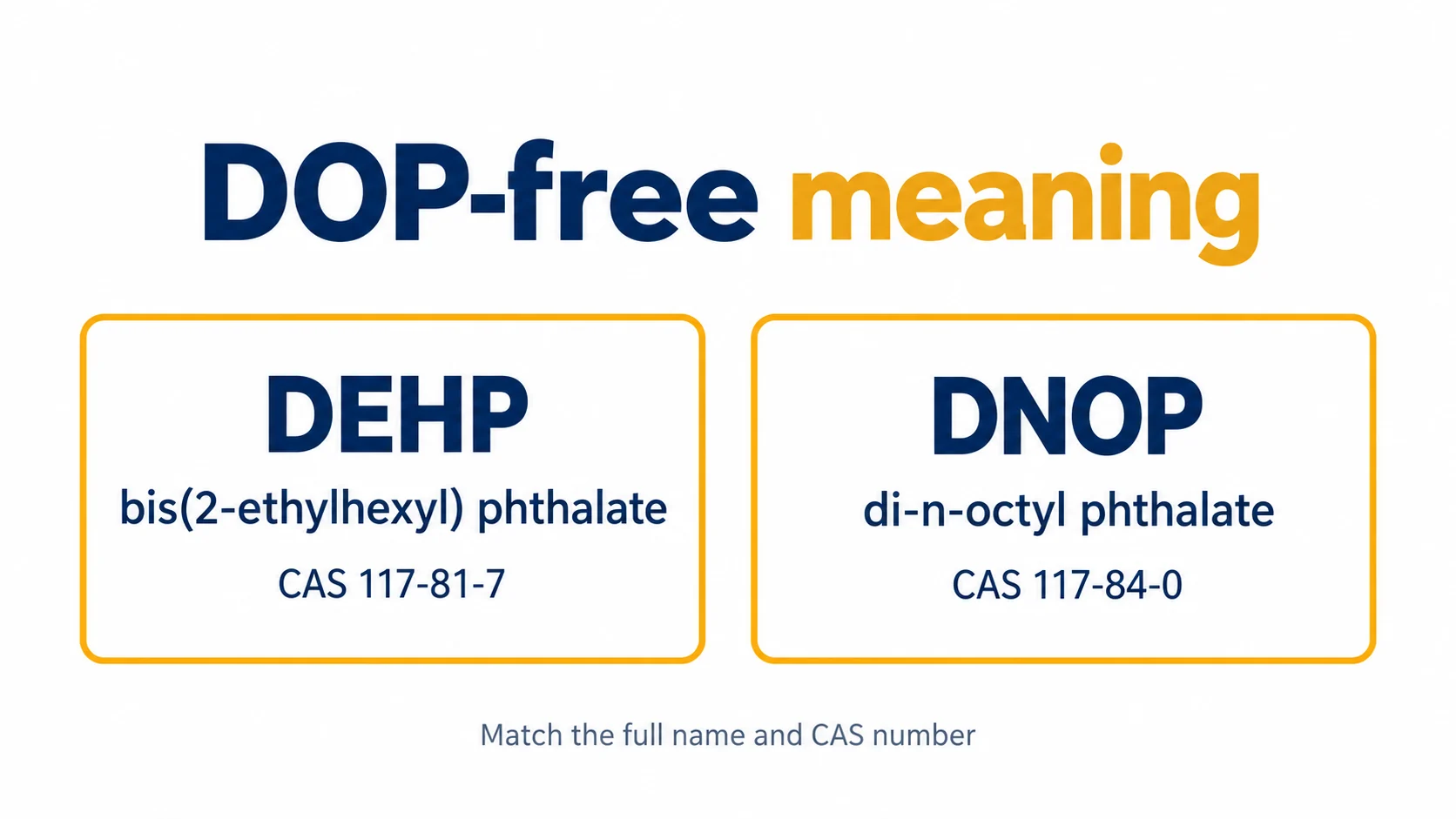
DOP often refers to DEHP, but the abbreviation can be ambiguous. DEHP is bis(2-ethylhexyl) phthalate, CAS 117-81-7. Di-n-octyl phthalate, usually abbreviated DNOP, has CAS 117-84-0. These are distinct chemical identities, so the full name and CAS number are more useful than the three-letter label.
The PubChem DEHP synonym record and DNOP synonym record show why shortened names can confuse a comparison. Similar names in a catalog do not make two substances interchangeable.
Suppose one specification says “No DOP” and another lists a DEHP result. You can compare them only after establishing that both refer to the same chemical. If a document names DNOP instead, the test answers a different identity question.
The same approach helps when a material description uses a broad word such as silicone. Our explanation of whether silicone is plastic covers the material category; the additive declaration still needs to describe the actual film. A familiar material name cannot replace its ingredient information.
Does DOP-free mean phthalate-free?
No. DOP-free excludes one identified substance; phthalate-free is a broader claim whose substance list needs to be defined. A DEHP result tells you about DEHP. A multi-substance report can answer a wider question, provided the substances you need are actually included.
For example, US rules for children’s toys and child care articles prohibit more than 0.1% of any of eight specified phthalates in an accessible plasticized component part. The list includes DEHP and several other substances. The CPSC phthalates business guidance explains that product scope. Ordinary furniture should not be assigned the children’s-product rule merely because it has a soft finish.
EU restrictions use another scope. Under Annex XVII, Entry 51, paragraph 3, articles placed on the EU market must not contain DEHP, DBP, BBP or DIBP, individually or in combination, at 0.1% or more by weight of the plasticised material, subject to the exceptions in paragraph 4. Unlike the US rule above, that paragraph is not limited to toys and childcare articles. See the current REACH text, Entry 51.
Those examples explain why the substance list, market and product category belong together. A document headed “phthalates” may cover a selected regulatory list rather than every chemical someone could understand that word to include. Read the analyte names before applying its conclusion to your specification.
Does DOP-free mean that a film contains no PVC?
No. PVC names a polymer; DOP names a plasticizer. Removing or replacing DOP can leave the polymer choice unchanged. A PVC-free requirement therefore needs its own composition statement, even when a decorative film already carries a No DOP label.
DEHP is commonly used as a plasticizer to make materials more flexible. EPA’s December 2025 DEHP risk evaluation states on page 11 that it is primarily used as a plasticizer for PVC, and also in adhesives, coatings, rubber products and non-PVC plastics. Our PVC vs vinyl explanation distinguishes the polymer name from formulation choices.
A soft feel is insufficient evidence for either claim. Different materials can produce a flexible or soft surface, and the decorative face may sit over another layer. If your requirement concerns the whole film, the stated scope should include the complete film rather than just its visible face.
For broader material selection, the PET vs PVC decorative film comparison covers layer roles and application differences. Here, the practical distinction is narrower: DOP-free describes an excluded ingredient, while PVC-free describes an excluded polymer. Decide which requirement you actually need before comparing labels.
What evidence should accompany a DOP-free claim?
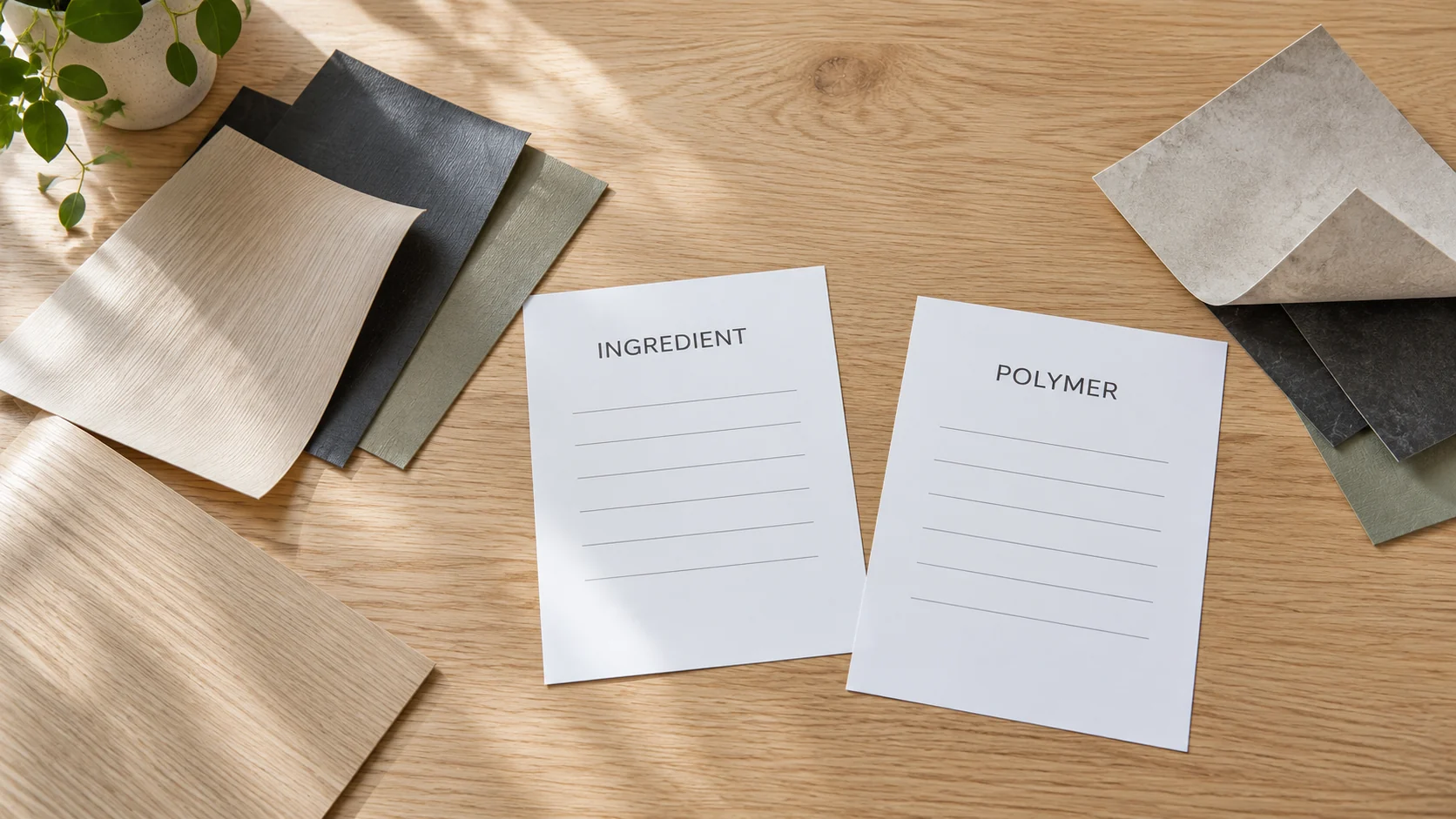
A useful DOP-free evidence set identifies the film, the chemical covered and the basis of the claim. When a laboratory report is provided, its sample description, analyte list, result units and reporting limit let you judge whether it answers your question.
| Item | What to specify or check | Why it helps |
|---|---|---|
| Product identity | Film designation and the layer or complete construction covered | Connects the statement to the material being considered |
| Chemical scope | Full substance name, CAS identity and other substances included | Distinguishes one chemical from a broader screening panel |
| Evidence type | Composition declaration, analytical report or both | Shows whether the statement concerns formulation or measured content |
| Analytical details | Method, result units and the laboratory’s reporting limit | Makes a numerical result or “not detected” finding interpretable |
| Sample description | Which material was submitted and whether layers were tested separately | Shows what object the result covers |
The currently linked US children’s-product method, CPSC-CH-C1001-09.4, identifies eight regulated phthalates and describes component-part samples. Its scope and definitions appear on page 1 of the January 2018 method. The version remains linked from the current official FAQ. It is an example of a defined analytical scope, not a method requirement for every decorative film.
A safety data sheet is useful for chemical identification and hazards, but it serves a different purpose. OSHA’s SDS requirements, Appendix D, section 3 specify ingredient disclosure rules for substances and mixtures, including applicable cutoffs and trade-secret provisions. An absent ingredient on an SDS is insufficient proof of a complete formulation claim.
A short, specific declaration can be more useful than a long, unrelated report. For a surface under consideration, a report naming a different material gives you little basis for comparison. The decorative-film supplier evaluation checklist covers the wider evidence review.
Does a DOP-free film test cover the finished panel or furniture?
No. A film test covers the submitted film sample and the analysis performed on it. A panel adds adhesive and a core; furniture can add further components. Evidence for the complete object needs to identify that object or explain which component results support the conclusion.
| Tested or declared object | What you can read from it | What remains outside that evidence |
|---|---|---|
| Decorative film | Composition statement or measured content for the identified film | Adhesive, core and other furniture components |
| Adhesive | Information for the identified adhesive sample | Film and core composition |
| Laminated panel | Information for the submitted panel construction and test scope | Different constructions or additional furniture components |
| Finished furniture | Findings for the identified item under the stated method | Untested variants or properties outside the analysis |
The component-part approach in the official method provides a useful reading principle: the sample definition travels with the result. A film sheet and a complete door are different specimens. Our laminated MDF explanation illustrates how a face, adhesive and core form a layered object; it does not establish compatibility for a particular film.
This also clarifies what “not detected” can tell you. It is a result for specified analytes in a specimen at the report’s stated sensitivity. It leaves chemicals outside the analytical list unmeasured. Converting that result into “nothing can migrate” or “the furniture has no emissions” would expand both the property and the object assessed.
For a material comparison, place the sample description next to the construction drawing or component description. You can then see whether two reports address comparable objects before comparing their findings. This avoids treating an isolated surface result as a whole-furniture answer.
Where does a silicone surface fit this choice?
Puremorfilm makes decorative film with an organosilicon functional surface. We use a No DOP formulation; that statement addresses DOP and does not imply the absence of every plasticizer, migration or odor. Our furniture decorative film is also PVC-free.
Our silicone surface is inherently flame-retardant; higher flame-retardant grades up to UL 94 V-0 are available on request. That describes the surface and the available grade option. In the manufacturer’s laboratory tests, coffee, red wine and soy sauce left at 25°C for 24 hours were wiped off with no obvious change.
We supply mainly rolls, with laminated panels available on request, using PUR flat lamination. The paint-free functional face uses organosilicon, offering a different surface approach from PVC, melamine, PP and PETG decorative faces.
The surface has a leather-like feel and some elasticity, so it is unsuitable for flooring, cooking worktops, shower floors or other walked-on areas. For a furniture finish, compare the defined composition claim with the appearance and performance evidence relevant to the intended part.
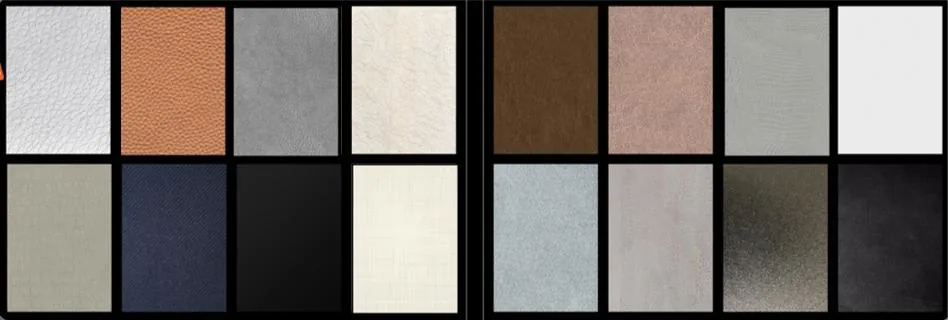
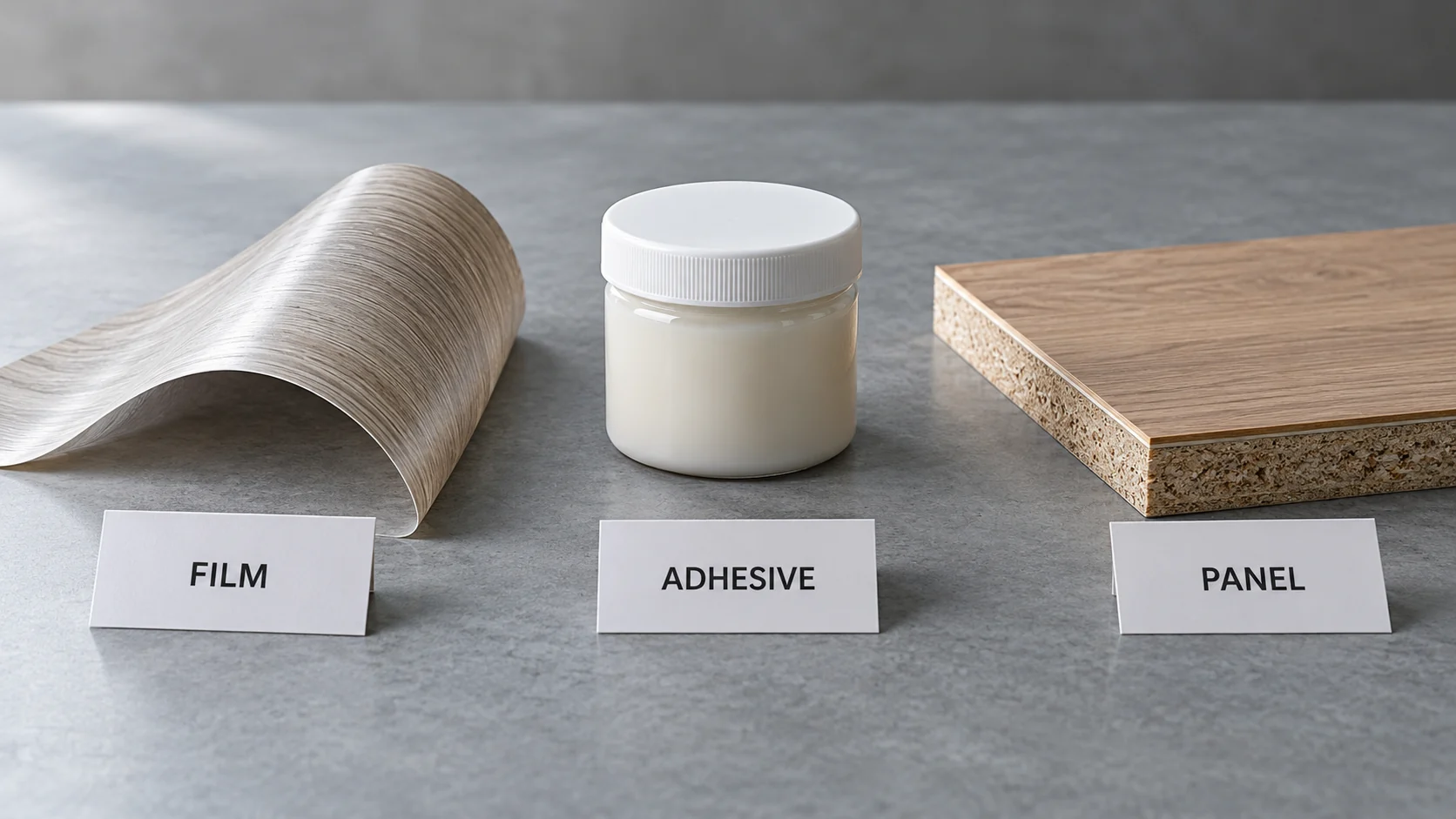
<figcaption>Decorative film swatches in different colors and textures.</figcaption>
Which claim should guide your material choice?
Choose the claim that matches the requirement you need to satisfy. DOP exclusion, phthalate screening, polymer selection and whole-product assessment call for different evidence. A DOP-free label is useful when DOP is the ingredient you intend to exclude.
| Your requirement | The useful starting point |
|---|---|
| Exclude DOP | Defined chemical identity and evidence for the named film |
| Exclude a specified phthalate list | A declaration or analysis covering that complete list |
| Avoid PVC | A PVC-free statement with a clear layer or whole-film scope |
| Assess a finished furniture item | Evidence identifying the construction and property assessed |
When comparing two swatches, resolve a missing chemical identity before comparing their claims. For a project that specifies a substance list, compare the complete list. A question about a cabinet or furniture item needs evidence for that construction.
To discuss a finish, contact us with the intended furniture part, the composition requirement and the evidence scope you need.
Frequently Asked Questions
What is the full form of the chemical DOP?
DOP commonly stands for dioctyl phthalate. In commercial plasticizer usage it often identifies DEHP, bis(2-ethylhexyl) phthalate. A full chemical name and CAS identity resolve the ambiguity with di-n-octyl phthalate.
What is DOP used for?
DOP is used as a plasticizer to make materials more flexible. DEHP has been used in plasticized PVC products. That function explains why its name appears in discussions of soft films and other flexible materials.
Is DOP banned?
No, DOP is not subject to a single worldwide ban covering every use. Restrictions vary with chemical identity, jurisdiction and product category. The US children’s-product rule and EU article restrictions address defined substances and scopes, so a market-specific assessment is needed.
Can a children’s toy or child care article use an alternative plasticizer or a phthalate that is not prohibited?
Yes, the US phthalates rule allows a plasticizer or phthalate outside the prohibited list. The product must still meet applicable safety requirements, so an ingredient substitution alone does not show that the toy or child care article is safe.
Why can a product fail a phthalate test if none was added intentionally?
Contamination can introduce a prohibited phthalate even when it was not intentionally added. The official US FAQ gives recycled plastics, poorly cleaned equipment and traces in alternative plasticizers as examples. An unexpected result calls for investigation of the actual materials and process.