
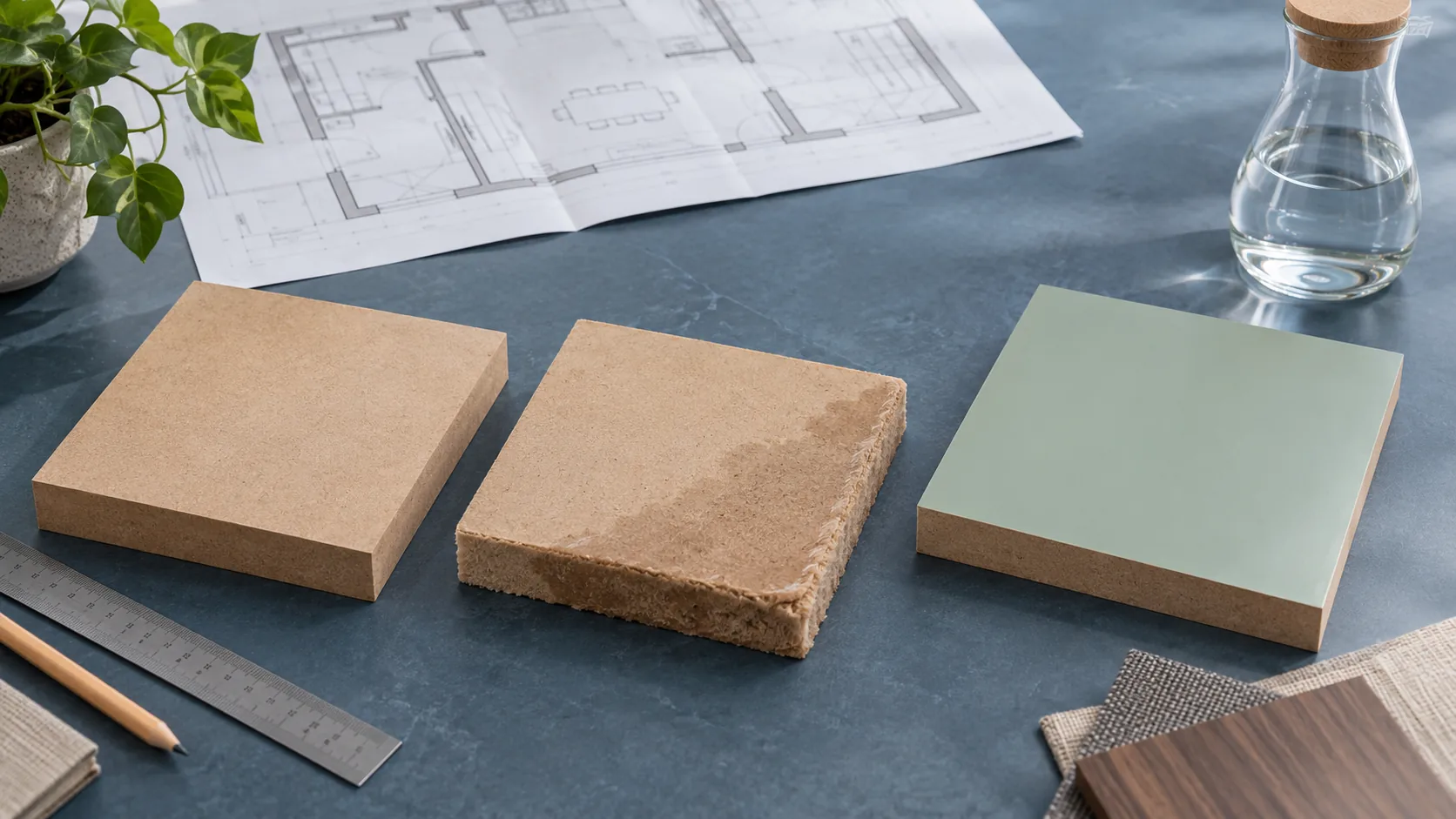
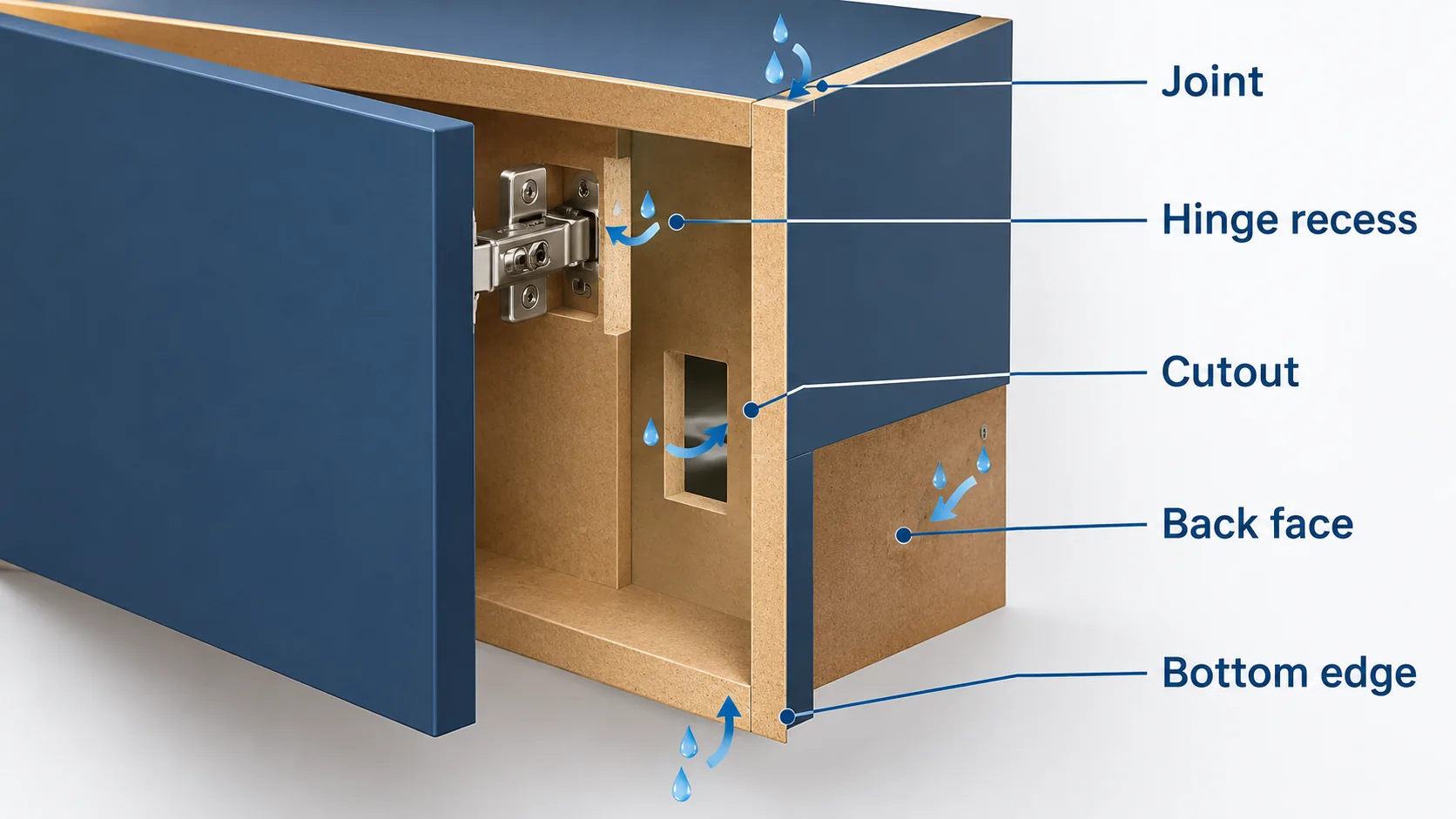
Ordinary MDF is not waterproof, and moisture-resistant MDF handles humid rooms, not standing water. In one manufacturer’s data for 18 mm boards, standard MDF swells by less than 14% in a 24-hour soak test and moisture-resistant MDF by less than 8%, so both still swell. In a cabinet or panel, the cut edges, back, openings and joints decide where water gets in; paint or a decorative face protects the core but does not make the assembly waterproof.
Is ordinary or moisture-resistant MDF waterproof?
Neither. Ordinary MDF suits dry interiors, a documented moisture-resistant grade suits humid interiors, and anything that gets wet directly needs a construction qualified for that. The letters MR name a grade; they promise nothing about waterproof furniture.
| Board choice | Intended decision | Water-exposure boundary |
|---|---|---|
| Ordinary MDF | Dry interior components with appropriate finishing | Protect against wetting during storage and use |
| Specified MR MDF | Humid interior furniture within the grade’s scope | Protect the assembly and avoid direct wetting |
| Specified exterior MDF | A separately designed external application | Use its required finish and exposure details |
The MEDITE MR FAQ lists that board as MDF.H1 under EN 622-5 for humid interior use and advises keeping it from getting wet. The green dye only identifies the product. Its core construction decides how it handles moisture, so ask for the grade record instead of trusting a green cross-section.
“MDF” covers more than one product, so put the exact grade on the order. Painting an ordinary board doesn’t change the core grade printed on its paperwork.
Our guide to what MDF is explains the fiber core. For a finished board, identify the facing too: laminated MDF describes a faced construction, and the name says nothing about the core’s moisture grade.
How much can MDF swell after water exposure?
Less with an MR grade, but every grade swells. In the same test and thickness class, the MR board below is allowed less thickness swelling than its ordinary counterpart, so compare figures only on those terms.
| Documented product | Thickness class | EN 317 thickness-swelling specification |
|---|---|---|
| MEDITE PREMIER, ordinary grade | Greater than 12 mm through 19 mm | Less than 14% after the 24-hour test |
| MEDITE MR | Greater than 12 mm through 19 mm | Less than 8% after the 24-hour test |
The limits come from page 5 of the current V13 PREMIER data sheet and MR data sheet, and an 18 mm board falls in that class. They are limits for one product pair in one test, so ask for the record of any other core and compare like with like.
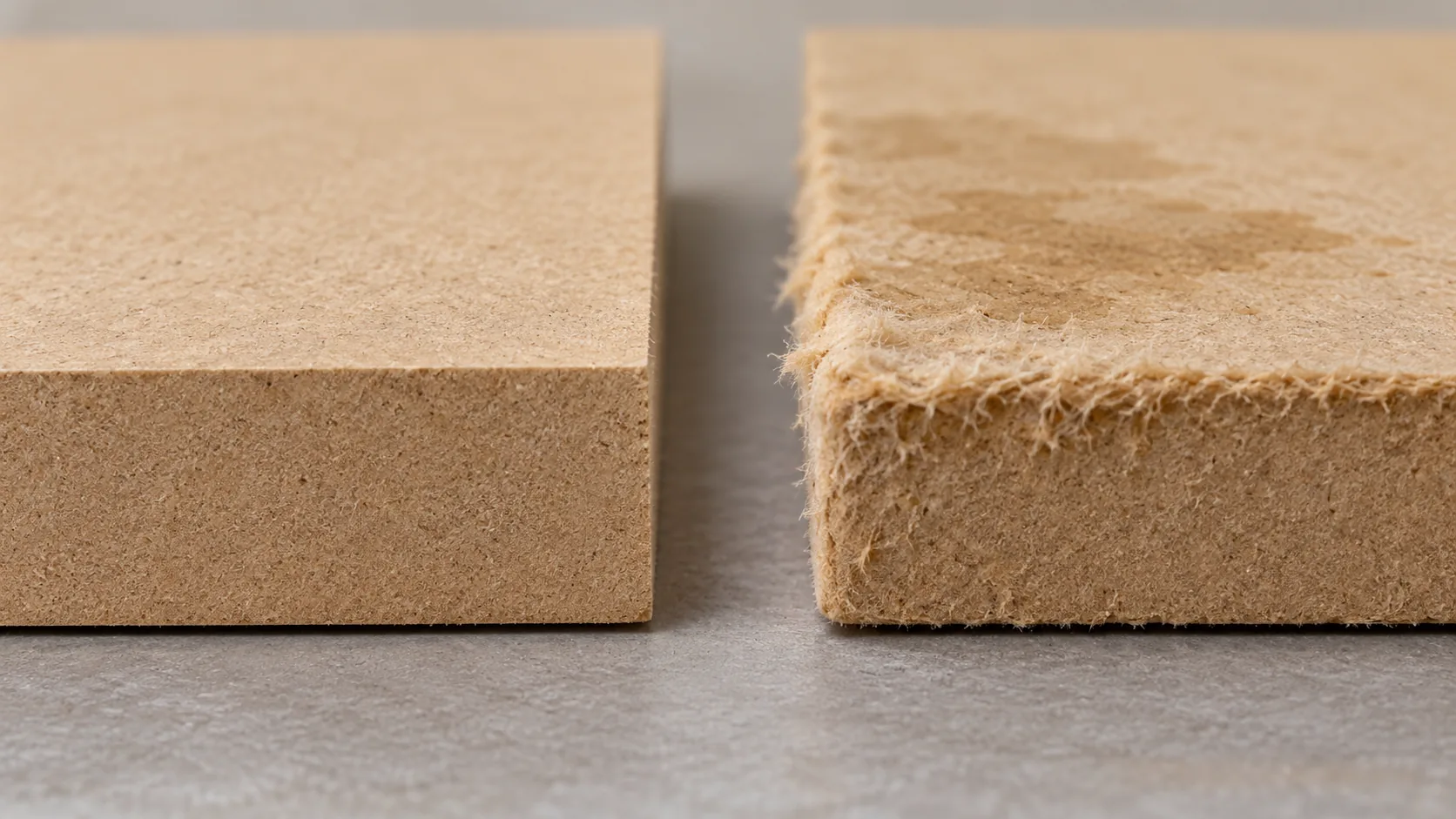
A cabinet can fail in more ways than core thickness: lifted facing, an opened joint, a hinge that no longer sits right. Check those along with the board.
After a leak, stop the water, take the part out and let it dry. Then measure thickness, flatness and hinge fit against the drawing, and replace any part still outside the acceptance limits.
Can paint, laminate or edge banding protect MDF?
Yes, if they cover the whole exposed construction: faces, cut areas, edges, joints and openings. A sealed front with a bare back or hinge recess still lets water into the core.
For humid-room use, the MR manufacturer’s guidance calls for full sealing and coating. Include the surfaces hidden behind hardware or neighboring parts, not just the visible decor.
Work in this order:
- Finish all cutting and routing that exposes the core.
- Repair damaged or rough areas so the finish has a sound base.
- Apply the protection system to faces, back, edges and openings.
- Check coverage again after hardware and assembly, including any new drill holes.
For an interior painted MDF cabinet, one documented example is Bulls Eye 1-2-3 primer-sealer followed by PermaWhite Interior Satin. Zinsser’s MDF guide pairs this primer with PermaWhite.
With the machined MDF clean and dry, prime exposed edges, hole walls and hinge recesses, then the back and front. Apply the topcoat over the same areas before fitting hardware. Restore the coating at any later cut or fixing hole before assembly.
Coats and recoat conditions
| Coating | Coats | Recoat condition in its TDS |
|---|---|---|
| Bulls Eye 1-2-3 primer-sealer | One full coat; porous areas may need two to seal | After 1 hour at 24°C and 50% relative humidity |
| PermaWhite Interior Satin | Two full coats | After 2 hours at 21°C |
For both stages, keep air and surface temperatures at 10–32°C and relative humidity below 80%. Cooler or more humid conditions extend the primer’s drying time. Both coatings exclude prolonged water contact, so this protection does not make the MDF core permanently waterproof.
For lamination, specify the adhesive, the balancing back and the edge treatment as part of the panel.
The MDF finishing guide covers prep and coating. The edge-banding guide deals with the perimeter, and the MDF lamination guide compares facing and bonding routes. A neat edge band can still hide an open joint, so check the workmanship behind it.
Where does MDF fit in a bathroom or kitchen?
In humid-room storage built from protected MR board. For repeated wetting, shower exposure or a leak-prone detail, choose another qualified material or assembly.
Where the part sits matters more than the room name. A tall cabinet of dry towels faces different exposure from a bare panel beside an overflowing basin, and a kitchen cabinet away from plumbing differs from a sink-base bottom with pipe cutouts. Write that into the spec before you pick the core.
Inspect the underside and back as well as the front: cutouts, feet or plinths, hardware recesses and joints where moisture collects. The MR board’s full-surface protection requirement applies in those hidden spots too.
In use, clean with a wrung-out cloth and dry spills promptly. Don’t leave a damp cloth hanging over a door edge. Fix a plumbing leak before you refinish a swollen part, or the new finish meets the same water.
Our laminate cabinet-cleaning guide covers surface dirt; a swollen or loose part needs a damage check before cleaning goes on. For a heavily wetted spot, ask for evidence on the assembled part, not on the decorative face alone.
Can MDF be used outdoors?
Only an actual exterior grade with its required finish. Ordinary MDF and the interior MR grade are unsuitable substitutes, and coating an interior board doesn’t make it an exterior one.
The MEDITE EXTERIOR product description sets out a separate route for external use. Start from that grade’s intended use, then work out the finish, exposed edges and installation. Exterior trim needs its weather exposure stated; ground contact and submerged service need qualification of their own.
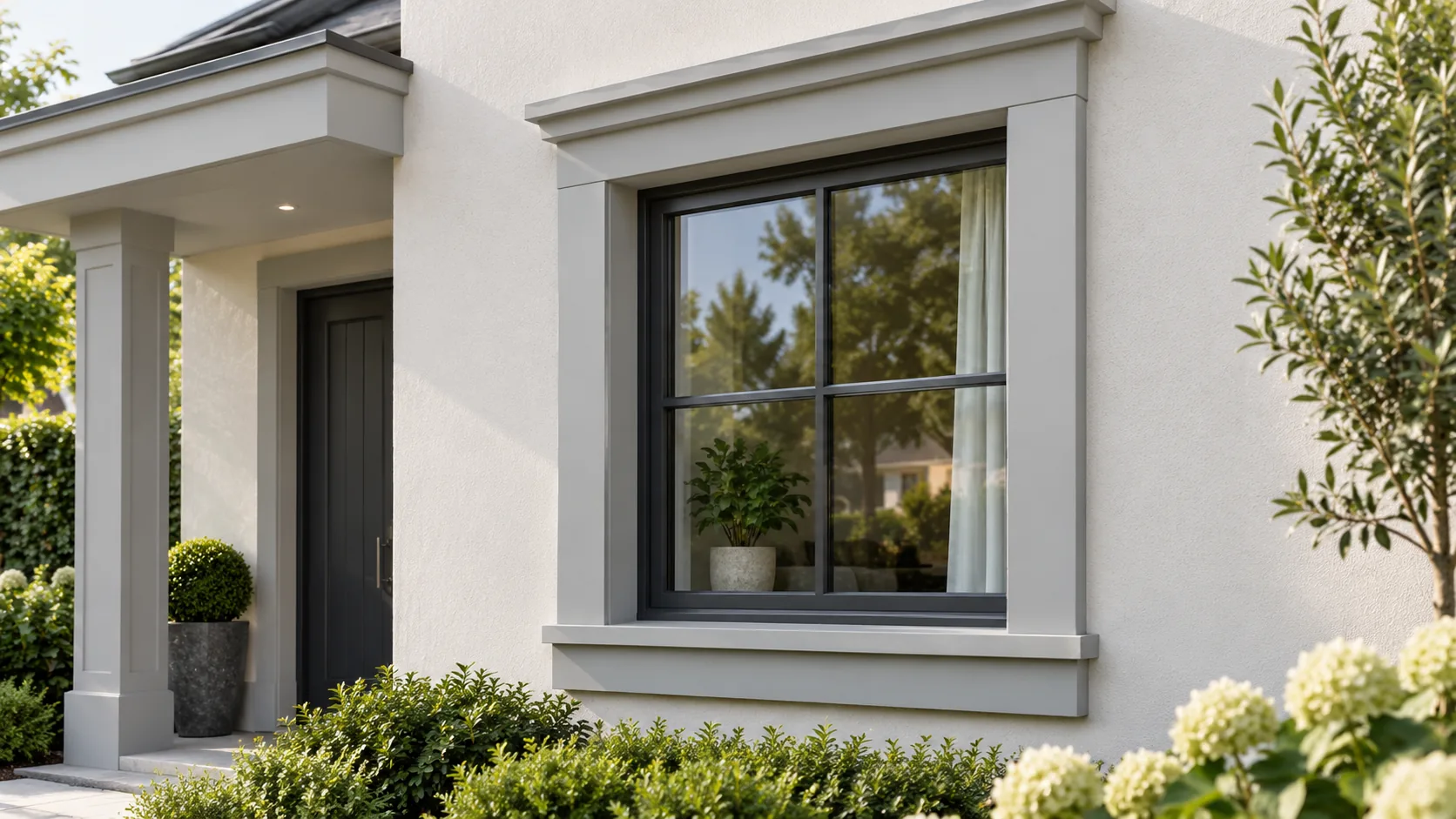
Sheltered spots still see condensation, rain driven behind a joint and water sitting on horizontal ledges. Put those conditions in the brief and make sure the protection covers site cuts and fixing holes.
For service life, check the grade’s warranty against your finish, installation and exposure. The exterior board’s life-expectancy FAQ gives no final-life guarantee, because processing and service conditions vary.
If an installed part has swelled or split, find the water source and the failed detail first. The same bare joint or poor drainage will fail again, even with a better core.
What should a moisture-sensitive order specify?
The exposure, the exact core grade, the full protection details and how finished parts will be accepted. That gives purchasing and production one basis for checking a cabinet.
| Item | What to specify | Why it matters |
|---|---|---|
| Exposure | Dry interior, humid interior, external use or direct wetting | Defines the actual service condition |
| Core | Product, grade, thickness and technical data | Links moisture claims to the board being ordered |
| Facing and back | Material, bonding route and balancing construction | Identifies all panel layers |
| Edges and openings | Protection after cutting, routing and drilling | Covers newly exposed core areas |
| Acceptance | Finished dimensions, flatness, edge condition and hardware fit | Provides a practical release decision |
| Handling | Dry storage, supported stacking and delivery protection | Helps prevent damage before installation |
Keep panels dry in storage too. Both the standard and MR data sheets advise against direct water contact (MR V13 storage section, page 3), so an MR core still needs covered, supported handling.
For each batch, file the core and facing records with the drawing revision. If a substitute board is offered, compare its intended exposure and data before you accept it, even when the color and thickness match.
Record workmanship checks, such as sealed edges and correct hinge fit, together with any performance reports. A waterproof claim needs evidence for the actual assembly and exposure; photos of neat parts aren’t that evidence.
What does a decorative film change on an MDF panel?
It changes the face and the bonding system; the core stays what it was. Pick the MDF moisture grade and deal with the water-entry points separately, after the room and the part are defined.
Puremorfilm makes decorative film with a silicone functional surface for flat MDF panels. The film protects the face, not the cut edges, so the core still needs a moisture-resistant grade and sealed edges wherever water can reach. In worked examples described in the patent application, the film construction showed no delamination or blistering after 12 hours in boiling water or 500 hours at 85°C and 85% relative humidity. The silicone surface is inherently flame-retardant, with higher grades up to UL 94 V-0 available on request, and the film uses a No DOP formulation.

For a humid-room cabinet, cleaning compatibility or a whole panel’s water resistance, you need evidence on the chosen material and the finished assembly. Keep the core, glue line, back and edge treatment in that review.
The furniture decorative-film page introduces this option. Send the part drawing, the core and the intended use when you ask about a project. The film is not for floors, cooktop countertops, shower floors or other walked-on areas, and the exterior-grade example above gives it no outdoor approval.
Which MDF construction should you choose?
Choose by exposure first, then define the core, facing and protection as one component:
- Dry interiors: compare ordinary MDF grades and the finish they need.
- Humid-interior furniture: compare documented MR cores with full surface and opening protection.
- External use: a separately qualified exterior grade and finish.
- Direct wetting or standing water: a material or assembly qualified for that exposure.
This keeps a nice coating or face from hiding an unsuitable core or an unfinished opening.
Our paint-free silicone face is a different surface from PVC, melamine, PP and PETG, but it does not make MDF waterproof. Contact us with the core grade, panel drawing and where water can reach it.
Frequently Asked Questions
Is green MDF waterproof?
No. Green dye usually marks moisture-resistant (MR) MDF, which copes better with humid rooms but still swells in standing water. Treat it as water-resistant and seal its edges.
Does painting MDF make it safe for standing water?
No. Paint slows water down, but any chip, cut edge or screw hole lets water in and the MDF swells. Where water stands, use a material made for wet use.
Can swollen MDF be sanded and reused?
No, usually not. Swollen fibers stay loosened after drying, so sanding a raised edge flat leaves a weak area that swells again. Replace the part if it holds hardware or has to stay flat.
What is the most water-resistant type of MDF?
Moisture-resistant MDF, often dyed green and classed MDF.H1 under EN 622-5 in Europe, is the usual choice for kitchens and bathrooms. Specialty exterior-grade MDF products also exist, but they still need a sealed finish.
How long can MDF last outside?
There is no single outdoor lifespan for MDF. It depends on the board grade, coating and edge sealing, installation, exposure, and maintenance. Ordinary and interior MR boards are unsuitable outdoors. For an exterior grade, follow the maker’s processing, coating, sealing, maintenance and repair guidance.