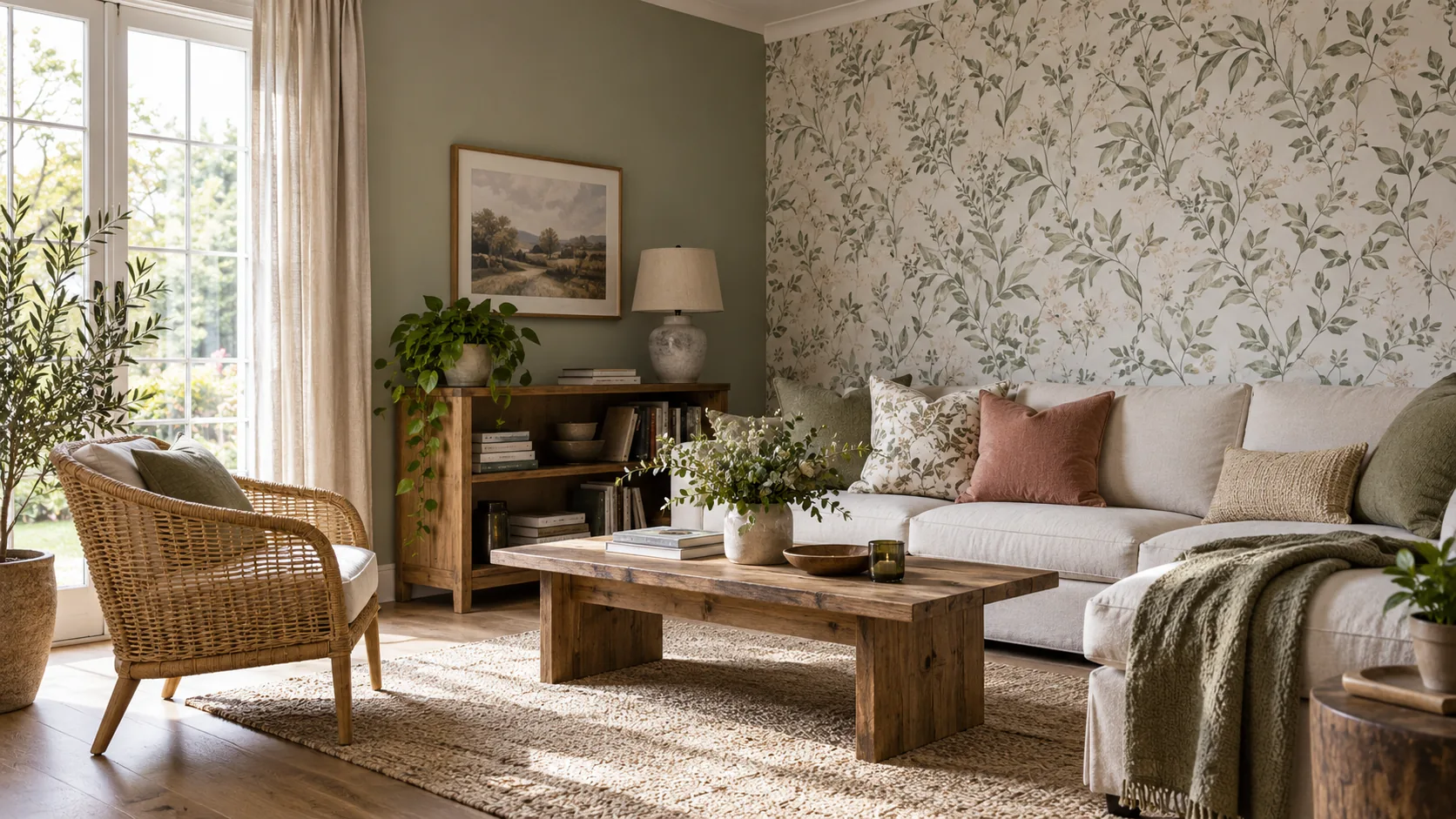
Paint is cheaper and easier to change; wallpaper costs more up front but lasts much longer. Angi’s July 2026 wallpaper vs paint comparison puts DIY paint materials at about $0.12 per square foot against $1–$5 for wallpaper materials, and expects traditional wallpaper to last around 15 years while painted walls need a fresh coat every three to five years. If you like changing colors, paint. If you’ve found a pattern or texture you want to live with, in a room that isn’t steamy, wallpaper.
What Is the Difference Between Wallpaper and Paint?
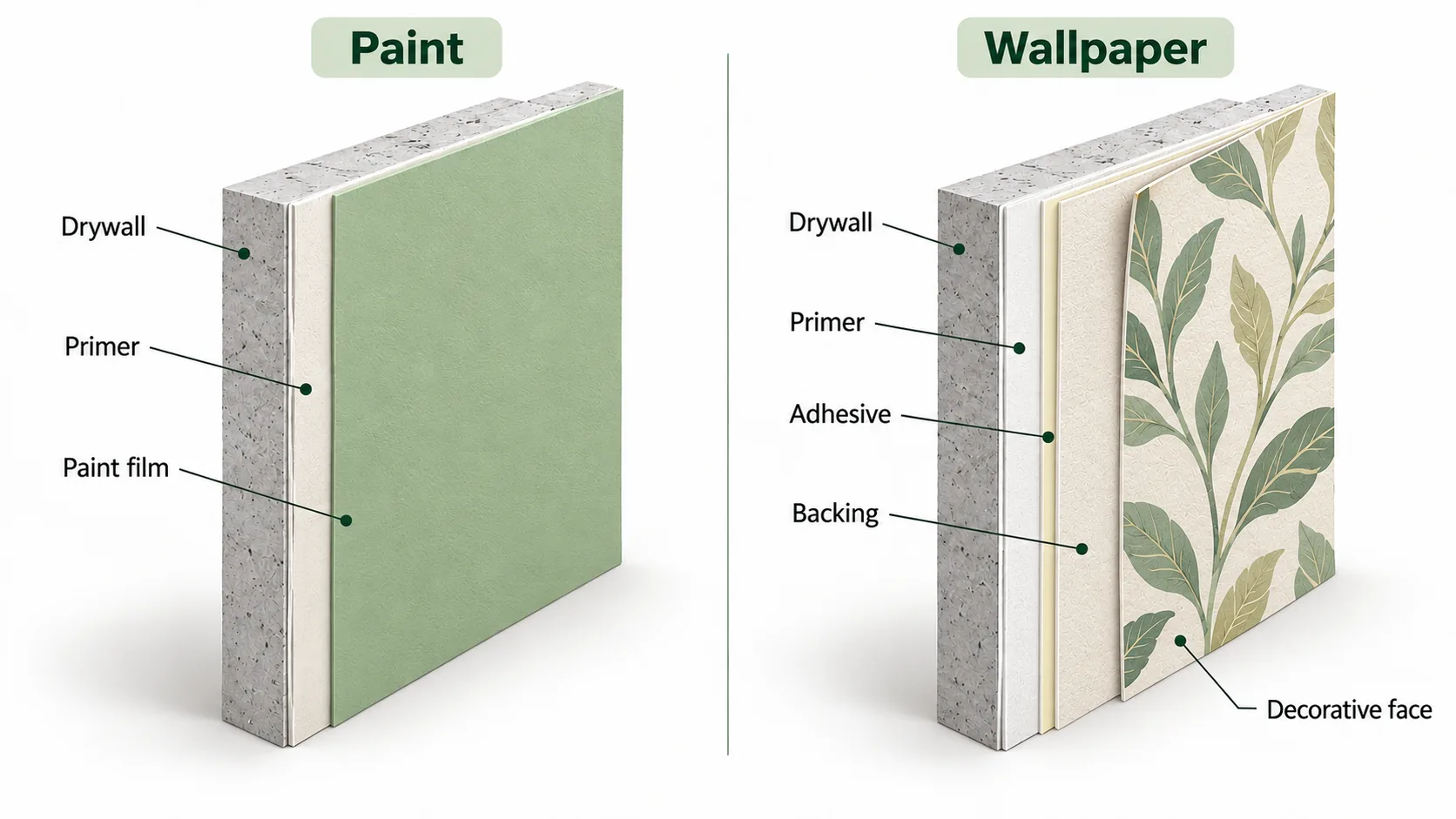
Paint is a liquid coating that dries on the wall. Wallpaper is a decorative sheet stuck to it, either with paste or with an adhesive backing. Traditional pasted, prepasted and peel-and-stick wallpaper go up and come down in very different ways. Here, “wallpaper” means the traditional pasted kind unless we say otherwise.
It isn’t always paper, either. The face can be paper, vinyl, textile or natural fiber. Benjamin Moore’s wallpaper removal guide describes every wallpaper as a surface layer over an adhesive layer, and lists grasscloth and bamboo among the surfaces. A printed vinyl you can wipe down and a grasscloth you can’t are both “wallpaper,” so care advice has to follow the actual product.
| Decision point | Paint | Traditional wallpaper | Peel-and-stick wallpaper |
|---|---|---|---|
| What covers the wall? | A dried liquid coating | Decorative covering bonded with paste | Decorative covering with an adhesive backing |
| DIY materials | About $0.12/sq ft in Angi’s example | $1–$5/sq ft in the same comparison | Product-specific; price the actual roll |
| Professional installation | Usually cheaper; scope affects the price | HomeGuide estimates $4–$10/sq ft installed | Simpler application, but preparation still adds labor |
| Typical refresh interval | Fresh coat after three to five years | About 10–15+ years with suitable care | Around five years in Angi’s estimate |
| Appearance | Solid colors; sheen changes the look | Repeating patterns, murals and textured faces | Printed patterns and removable accent walls |
| Humid rooms | A suitable bathroom paint is the easier default | Use a suitable washable product away from splash | Adhesive and wall compatibility need particular care |
| Cleaning | Finish-specific; matte paint can mark | Washable and scrubbable labels matter | Cleaning limits remain product-specific |
| DIY difficulty | Rolling and cutting in are manageable | Straight drops, matching and trimming take practice | Repositioning helps; stretching and poor contact cause problems |
| Later changes | Prepare and repaint | Strip, remove adhesive, repair and redecorate | Removal can be easier; wall damage remains possible |
| Selling the home | A neutral repaint is easy to update | A strong pattern may narrow buyer appeal | Remove a temporary accent if it clashes with the room |
The cost and lifespan figures come from Angi’s comparison and HomeGuide’s installation guide; use them for planning, not as quotes. If you’re also weighing finished panels instead of either, our wall panel materials comparison covers that option.
For panels, tile and the other options beyond wallpaper and paint, see the types of wall coverings.
Which Costs Less, Wallpaper or Paint?
Paint, almost always, whether you do it yourself or hire someone. Wallpaper adds the price of the rolls, the waste from matching a pattern across drops, and more skilled labor. And if old wallpaper has to come off first, that bill arrives before either finish goes on.
| Work being priced | Published US estimate | What the figure includes |
|---|---|---|
| DIY paint materials | About $50/gallon, or $0.12/sq ft | Angi’s July 31, 2026 comparison; application supplies and preparation can add costs |
| Wallpaper materials | $1–$5/sq ft | The ordinary material range in the same Angi comparison |
| Wallpaper installed | $4–$10/sq ft | HomeGuide, September 2, 2025: $1–$3 materials plus $3–$7 labor |
| Interior painting | $1–$3/sq ft | HomeGuide’s same-page comparison, including materials and labor |
| Wallpaper removal | $0.80–$3/sq ft | HomeGuide’s removal estimate; repairs add costs |
Hiring out raises both numbers but doesn’t change the order. The cost comparison puts professional painting at $2–$6 per square foot and wallpaper labor at up to $7 per square foot. Watch the units, though. The interior painting cost page, updated July 9, 2026, quotes $2–$6 with a $2.75 average per square foot of house floor area, and lists walls alone at $1–$2 per square foot. Don’t multiply a floor-area price by the wall area you measured for wallpaper.
To see the gap on a single job: for 400 square feet of wall, the comparison pegs paint at roughly one $50 gallon and wallpaper materials at $500–$2,000. Neither figure covers prep, extra coats, tools or pattern waste.
When you collect quotes, price both options on the same walls with the same repair work, and ask the installer to break out stripping, repairs, primer, hanging and materials. A cheap roll stops being cheap when a large pattern repeat wastes part of every drop, or the drywall underneath needs serious work.
Which Lasts Longer: Wallpaper or Paint?
Traditional wallpaper, by a wide margin. Hung well in a dry room, it lasts around 15 years in the comparison’s estimate. HomeGuide gives 10–15+ years with proper installation and care, and humidity and temperature swings shorten it. A painted wall usually needs a fresh coat every three to five years. The paint hasn’t failed by then; chips, scuffs and stains simply build up until the wall looks tired.
Peel-and-stick is the exception. The August 4, 2026 comparison of adhesive types expects about five years in most cases, with edges more prone to lifting. That’s fine for a rental accent wall and a poor buy for a dining room you want to leave alone for a decade, even when the print looks the same.
Traffic matters more than the calendar. An entry wall that takes bags, chair backs and children’s hands wears out either finish quickly; a guest bedroom barely ages. For a hard-working wall, check the product’s cleaning label and how you’d repair a damaged patch before paying extra for a longer life.
Which Is Easier to Install Yourself?
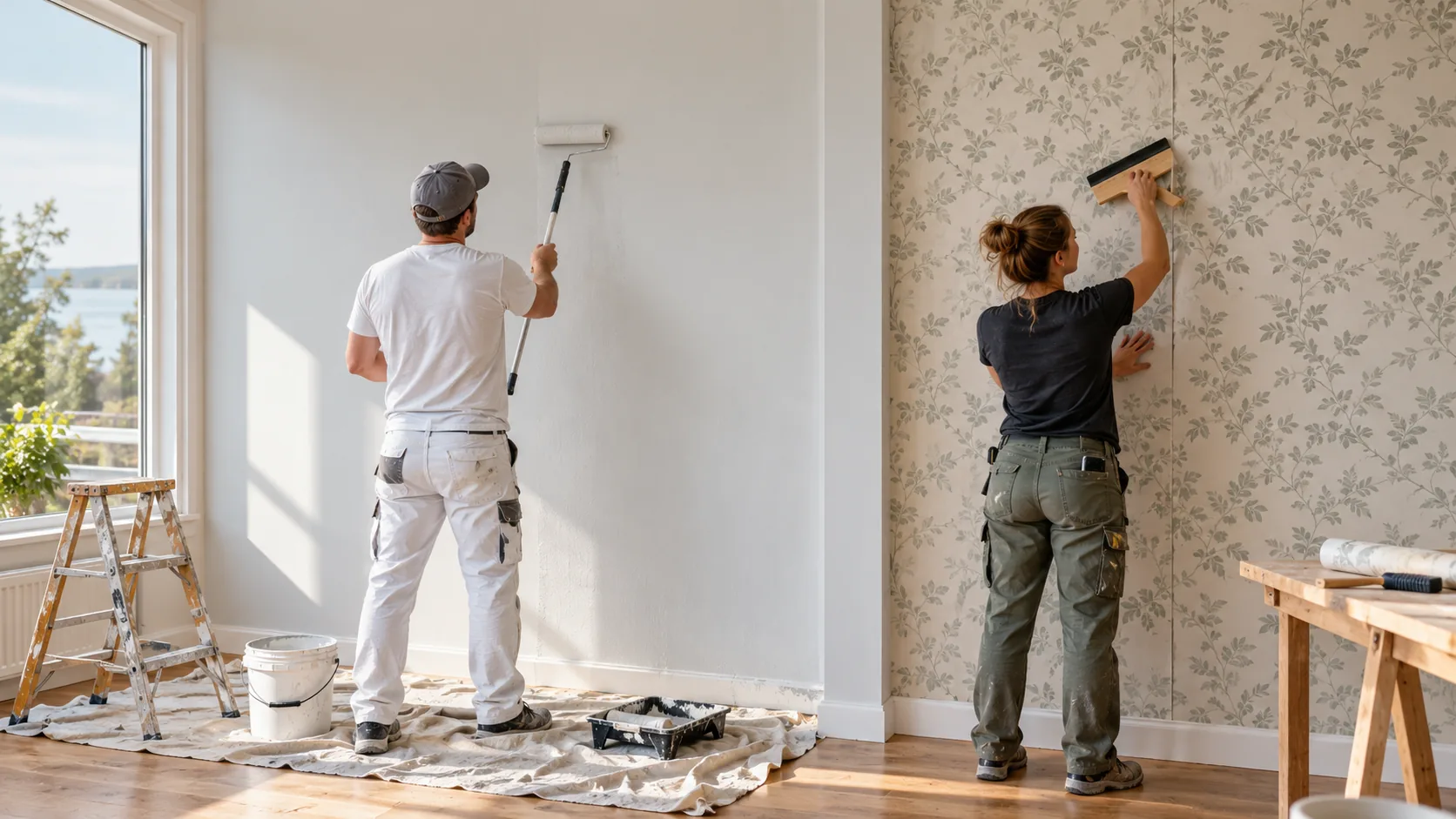
Paint. A room can often be painted in a weekend, according to Heiler Painting, and there’s no pattern to line up around door frames or into corners. Wallpaper is less forgiving: a crooked first drop or a mismatched seam shows from across the room. If you want to try hanging it, start the way Heiler suggests: one small accent wall, clean smooth walls, and peel-and-stick rather than paste.
For buying paint, The painting guide estimates one gallon per 300–400 square feet. Porous or patched walls and a second coat need more.
Preparation is where both jobs succeed or fail. The Wallcovering Installers Association’s preparation guidance calls for repairing wall defects, cleaning off sanding residue, grease and stains, and priming with a good-quality acrylic primer before hanging. Paint needs the same clean, dry, stable base, and glossy old coatings or fresh repairs may need a specific primer.
One tip from an installer quoted in the comparison: unpack the wallpaper and leave it in the room for at least 24 hours before hanging. Pasted and adhesive-backed products can have different instructions, so follow the ones on yours.
Which Works Better in Bathrooms and Kitchens?
Paint, in most cases. Where steam and splashes are a daily thing, use a paint made for bathrooms or kitchens, and save wallpaper for a ventilated wall away from direct water. Moisture-resistant vinyl wallpaper can work in the right spot, but its face doesn’t seal the seams or waterproof the wall behind it.
The underlying problem is simple: steam, condensation and leaks loosen wallpaper edges and can grow mold behind the covering. Paint won’t solve that either. It can’t dry a wet wall or keep water out of a joint.
If something does get wet, the EPA’s household mold guide recommends drying wet materials within 24–48 hours to help prevent mold. Fix the leak first, then decide which finish needs replacing. Behind a sink or around a shower, use a system built for that exposure instead of a bedroom-wall finish.
If you’re considering rigid cladding instead, our PVC wall panels pros and cons cover that category. With panels, the face, the joints and the wall behind all have to work together.
Which Is Easier to Clean and Repair?
Wallpaper is often easier to clean; paint is far easier to repair. A washable wallpaper wipes clean better than a delicate matte paint, but a chipped painted wall needs only a dab of paint. How hard you can clean either one depends on its label: scrub grasscloth the way you’d scrub vinyl and you’ll ruin it.
Those labels mean specific things. In the WIA dictionary, “washable” means you can sponge it with a prescribed detergent solution; “scrubbable” means it tolerates a brush and a prescribed cleaning solution. Start with the gentlest method allowed and keep water out of the seams. Don’t assume a wallpaper resists ink or grease just because it’s wallpaper; check the product.
Paint touch-ups need the same color, sheen and texture, and even then a patch can show. Benjamin Moore’s touch-up advice explains why, and why repainting the whole wall often looks better. Wallpaper repairs are harder: a punctured drop usually has to be replaced, and a roll from a later batch may not match.
Either way, keep the leftovers: the paint details, or a spare piece of the original wallpaper. If you’re comparing film-faced surfaces as well, our PET vs PVC decorative film comparison explains how those materials differ.
What Happens When You Want to Change It Later?
Paint is much quicker to change. Traditional wallpaper usually has to be stripped, the adhesive cleaned off and the wall repaired before anything new goes on. The wallpaper removal guide estimates one to two days to strip a 12-by-12-foot room, depending on the wallpaper and how it was hung. Add the removal costs from the table above and any wall repairs.
The guide covers taking off the covering and the adhesive. Sherwin-Williams’ repainting instructions pick up from there with cleaning, repairs and primer, and suggest letting washed walls dry for about 24 hours, longer when it’s humid. Painting over a damp wall or leftover glue is asking for trouble.
What about painting straight over the wallpaper? The removal guide advises against it: the seams can show through and the paper can come loose. It also makes eventual removal harder. Paintable wallpaper is the exception, since it’s made to be painted.
If you’re selling soon, The cost comparison says wallpaper can appeal to a smaller pool of buyers than paint. That’s a reason to favor a restrained paint scheme before listing, though no reliable source puts a dollar figure or percentage on it.
Can You Use Wallpaper and Paint in the Same Room?
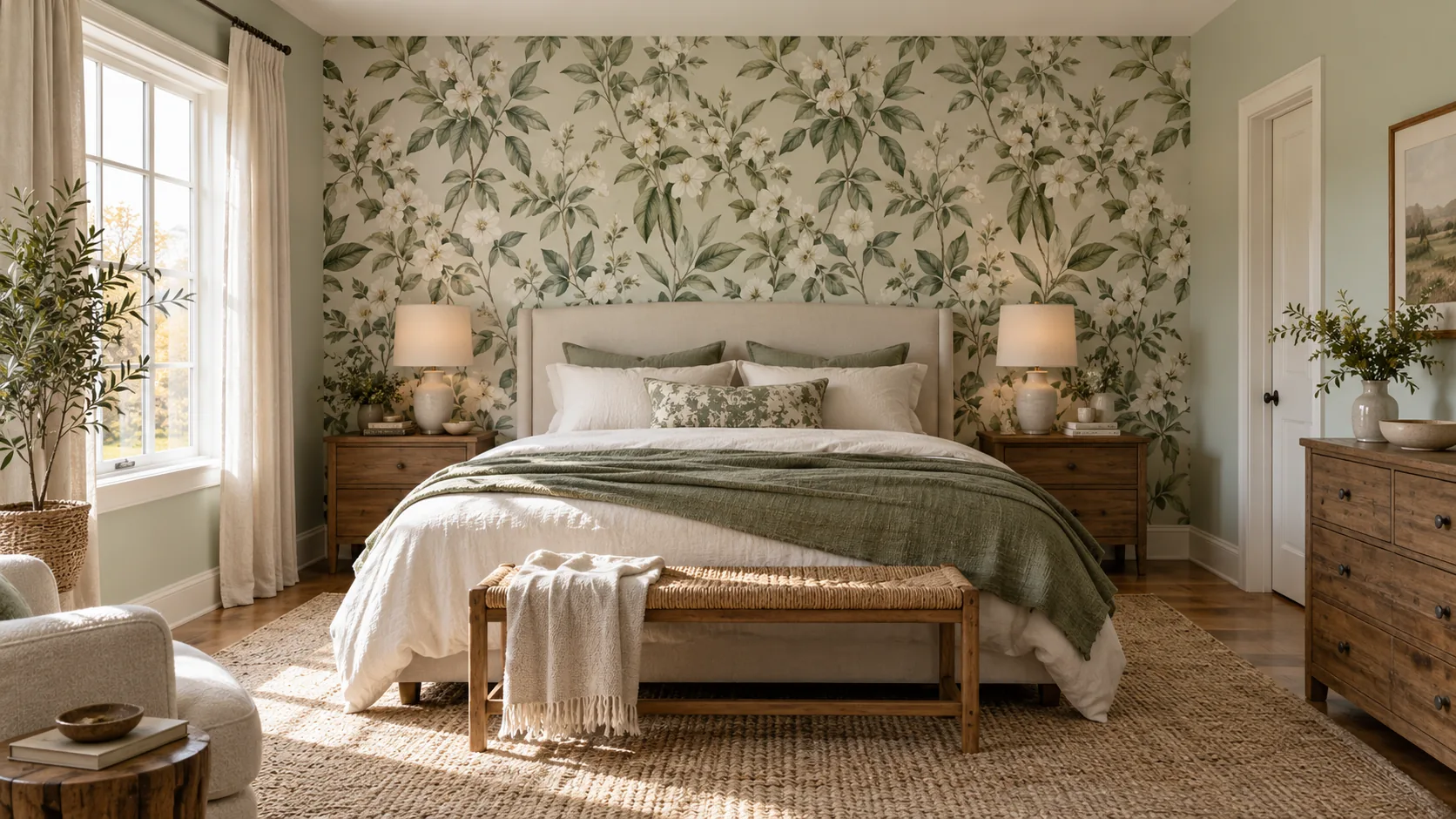
Yes, and it’s one of the best ways to use wallpaper: paper one accent wall and paint the rest. Astek Home suggests a mural behind the headboard or an adhesive-backed accent for renters. You get the pattern without the cost or commitment of a whole room.
To make it look intentional, pull the paint color from the wallpaper and end the paper at a corner or trim line. Look at the sample next to your floor and furniture in daylight and in the evening before you order. A large repeat that looks calm on a swatch can overwhelm a short wall.
Renters should check both the lease and the product’s list of compatible wall finishes. “Removable” describes the adhesive, not a promise that weak paint or damaged drywall will survive removal. And if you want a wood look rather than a pattern, our wood grain decorative film is another way to finish panels.
Where Does a Silicone-Faced Wall Film Fit?
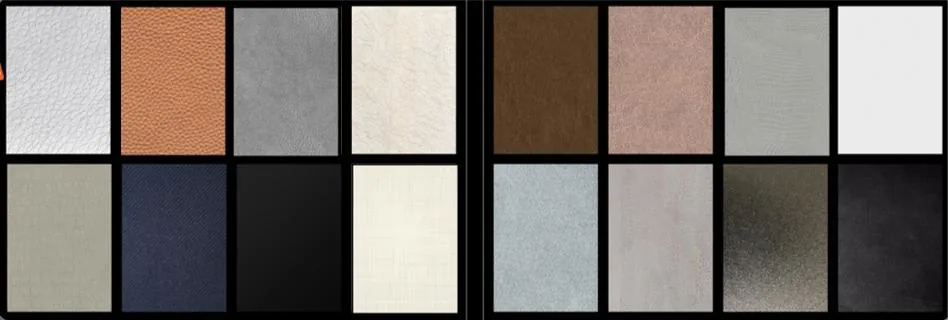
Factory-finished wall panels offer a third route if you prefer to install cladding instead of painting or papering the wall. Puremorfilm makes decorative wall film with a silicone functional surface, bonded flat onto panels with PUR adhesive. You install the finished panels as cladding instead of painting or papering the wall. We mainly supply rolls, with film-faced panels available on request.
Our silicone surface is inherently flame-retardant, with higher grades available on request up to UL 94 V-0. The film uses a No DOP formulation, is formaldehyde-free, and our wall film contains no PVC. In the manufacturer’s laboratory tests, coffee, red wine, soy sauce and lipstick left on the surface for 24 hours at 25°C wiped off without obvious change.
In an SGS test dated August 26, 2026, a Mitsubishi Uni 2H pencil at 500 gf and 45°, drawn in three lines longer than 20 mm, left no obvious scratch on the submitted film sample. Our decorative wall film is a paint-free finish with a silicone functional face, distinct from PVC, melamine, PP and PETG decorative faces. It’s made for interior walls, not floors, shower floors, cooktop countertops or anything walked on.
The wall panel materials guide covers the cladding options.
See the silicone-faced wall film page for this panel-facing route.
Should You Choose Wallpaper or Paint?
Choose paint for low cost now and easy changes later. Choose traditional wallpaper for a pattern or texture you’ll keep, in a room that stays dry. If you can’t decide, paper one accent wall and paint the rest.
| Your room or priority | Starting choice | What to check before buying |
|---|---|---|
| Tight budget or first DIY room | Paint | Preparation, coverage and number of coats |
| Pattern you intend to keep | Traditional wallpaper | Cleaning label, pattern repeat and installer scope |
| Rental or temporary accent | Peel-and-stick wallpaper | Permission, wall compatibility and removal instructions |
| Frequent steam or splashes | Suitable bathroom or kitchen paint | Ventilation and a separate wet-area system where needed |
| Sale planned in the next few years | A restrained paint finish | Condition and colors suited to the room |
- Price the measured walls, including stripping and repairs. Paint starts cheaper in every estimate above.
- Decide how long you want the look to last: pasted wallpaper for years, paint if you’ll change it.
- Check the room’s humidity and the product’s cleaning label before you buy. Keep ordinary wallpaper out of shower splash.
Thinking about a panel finish instead? Contact us with the room’s use, approximate wall dimensions, any moisture exposure, the pattern or texture you want, and whether you need film or finished panels.
Frequently Asked Questions
Which is more durable, wallpaper or paint?
Traditional wallpaper, in a dry and well-kept room. Angi estimates about 15 years, against a fresh coat of paint every three to five years. Washable vinyl, delicate grasscloth and peel-and-stick each wear differently, so check the product you’re buying.
What are the downsides of peel and stick wallpaper?
It doesn’t last as long, about five years in most cases by Angi’s estimate, and its edges lift more readily than pasted wallpaper. Rough walls, incompatible paint and steady humidity make adhesion harder, and pulling it off can damage a weak finish underneath.
Why don’t we use wallpaper anymore?
We do; wallpaper is still sold and hung. Paint became the default because it’s cheaper, easier to apply and easier to change. Wallpaper still earns its place for detailed patterns, murals and texture, especially on a single accent wall.
Do painters paint over wallpaper?
Yes, some do, but Benjamin Moore recommends removing ordinary wallpaper first, because the seams can show and the paper can come loose. Paintable wallpaper is the exception; it’s made to be painted.
Is peel and stick wallpaper better than paint?
No, not for a whole room you want to keep looking the same for years. It suits temporary accents and rentals where the wall and adhesive are compatible. Paint is easier to refresh, and traditional wallpaper lasts longer.