
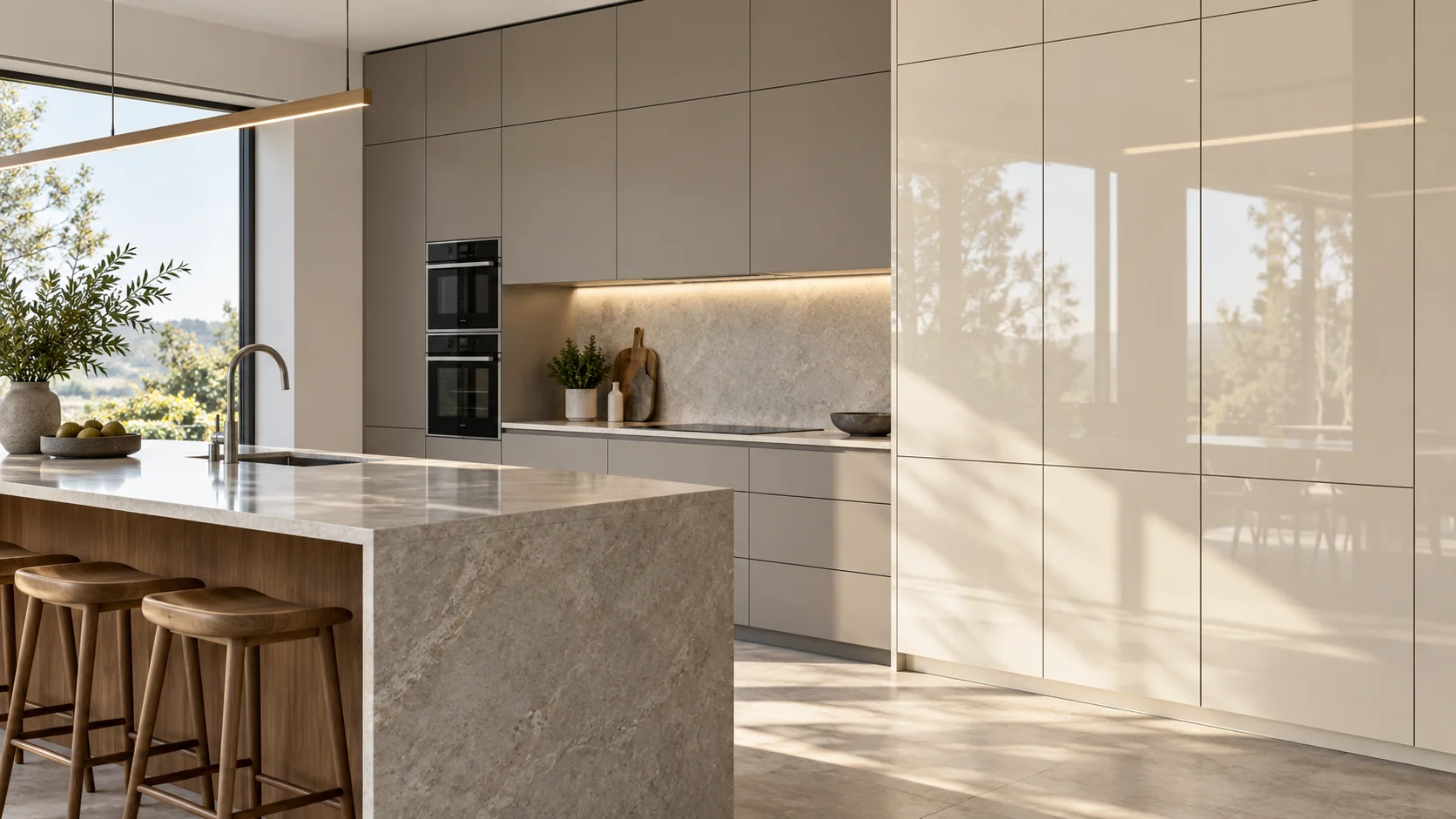
Choose an acrylic door for deep, mirror-like high gloss, and a coated PET door for low reflection or a soft matte feel; that is how PET vs acrylic kitchen cabinets are most often sold. When both are offered at a similar gloss, compare the finished doors side by side, with gloss readings taken at the same angle, starting at 60°.
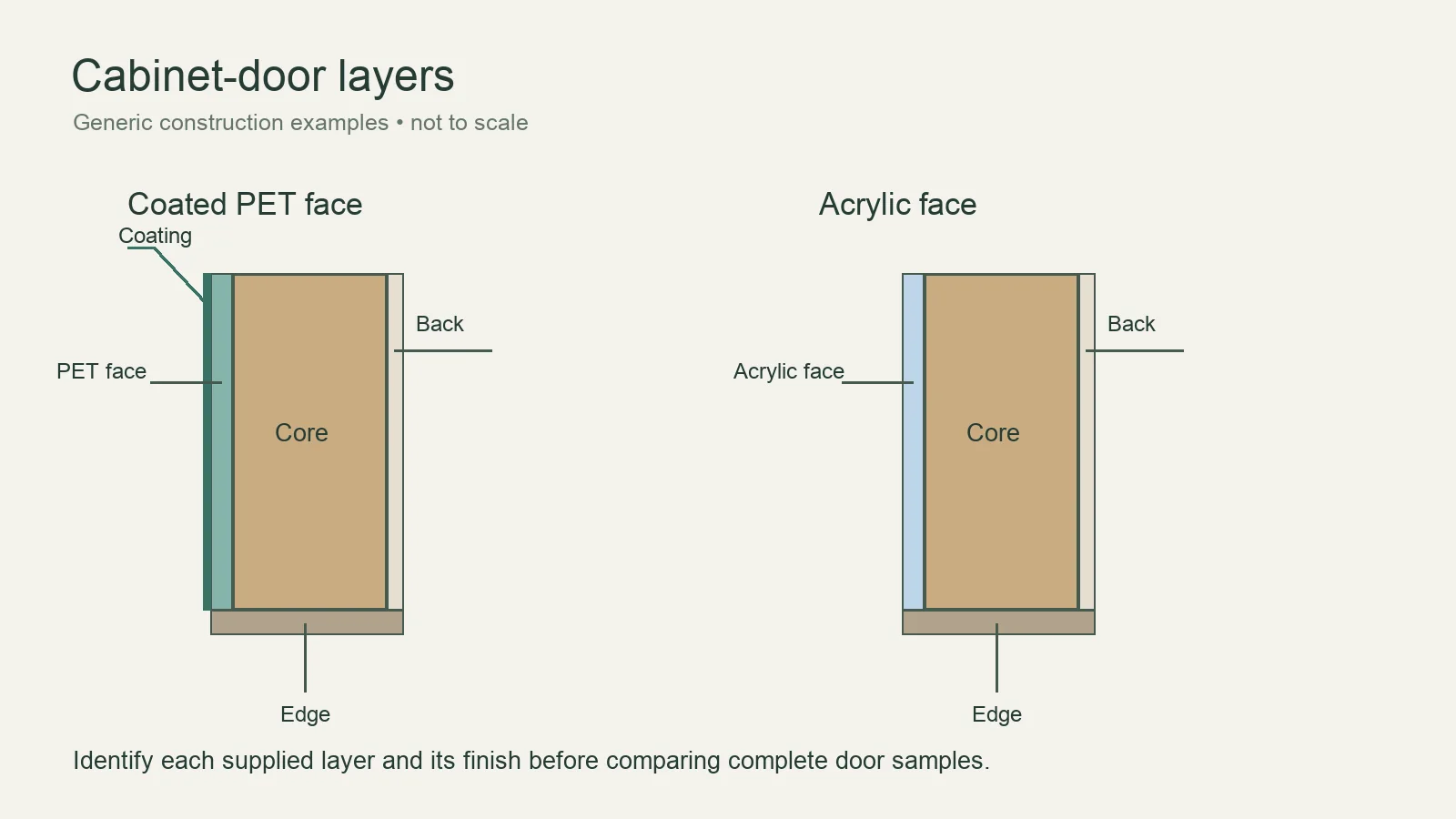
The face you see is only part of the purchase. A cabinet door also has a core, a back and an edge treatment. Those parts affect how the door handles a wet sink area, what happens after a scratch, and what is included in the quotation. Start with the appearance you want, then check the construction you will actually receive.
PET vs acrylic kitchen cabinets: which should you choose?
An acrylic-faced door is a useful starting point for a reflective statement kitchen; a coated PET door is a useful starting point for a muted, tactile finish. Once you find the appearance you want, compare the complete door constructions. List the face, its coating, the core and the finished edge as separate lines on the order.
| Item | Coated PET door | Acrylic-faced door |
|---|---|---|
| Common presentation | Low-reflection matte finishes are widely offered | Deep, high-gloss finishes are widely offered |
| Face construction | PET film, with the specified exposed coating | Acrylic face, with the specified surface treatment |
| Support and back | Identify the core and balancing back | Identify the core and back facing |
| Edge | Inspect the supplied edge treatment | Inspect the supplied edge treatment |
| Performance comparison | Use results for the actual coated construction | Use results for the actual faced construction |
| Cost comparison | Obtain a matching finished-door scope | Obtain the same scope; public cabinet budget context is below |
The Composite Panel Association’s description of 2D laminates includes polyester film, or PET, and explains that flat 2D faces typically use matching edge banding. A film-faced door therefore needs an edge plan as well as an attractive face.
A finished acrylic door can also be a composite. In one Kitchen Craft construction example, acrylic is flat laminated onto a ¾-inch engineered core, with a complementary melamine back. That figure is the maker’s core, not the thickness of the acrylic face.
For a flat kitchen front, put both candidates on the same drawing: exposed face, coating, core, back and edge. If a supplier changes the core or back between quotations, the comparison has changed too. The separate PET and PVC film comparison explains the film families and the difference between flat and formed routes.
Can a PET door match acrylic’s gloss or soft-touch feel?
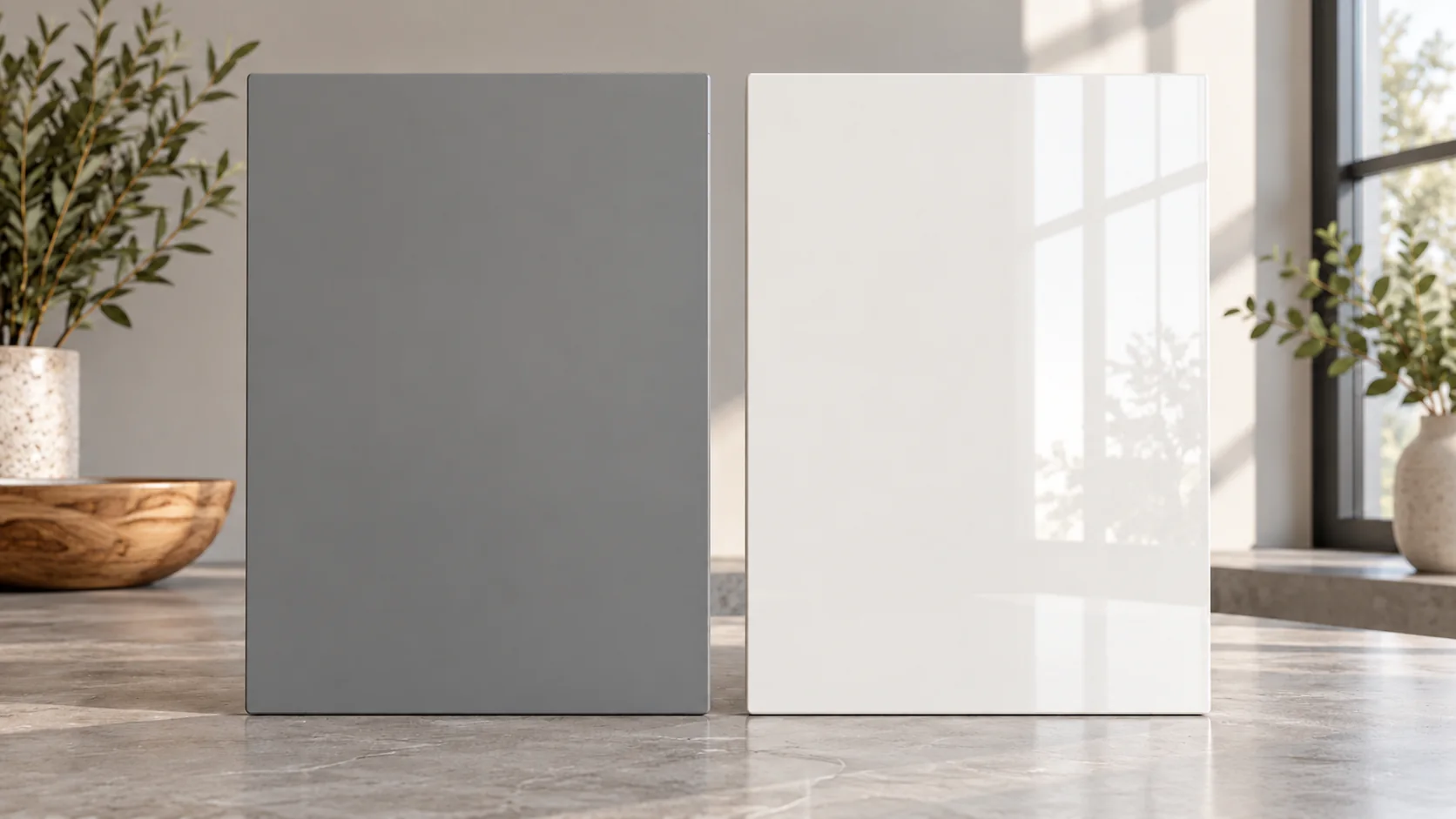
Sometimes, and only the sample can show it. A PET door’s gloss and feel come from its coating, not from the polymer name. For a mirror-like look, compare reflected detail on the acrylic and PET samples side by side. For a soft matte kitchen, judge low reflection and tactile feel as two separate requirements.
Coatings suppliers formulate those effects deliberately. For example, allnex’s low-gloss technology information names PET film among the substrates for a low-gloss coating resin. Its soft-touch formulation information describes a range of tactile effects. That is why two PET door samples can look and feel different.
Put the samples beside one another under the same kitchen lighting. Look at a reflected window frame or another straight line. Is its outline crisp, hazy or broken up by texture? Then turn the samples together to see whether the difference persists. Choose the sample that creates the reflection you want across an entire elevation, including the transition to nearby doors.
For instrument readings, ASTM D523-25 describes the measurement geometries and also identifies reflected-image clarity, haze and texture as contributors to appearance. The instrument maker Rhopoint recommends starting at 60°: below 10 GU, remeasure at 85°; above 70 GU, use 20°. Keep the geometry with the result when comparing samples.
Record touch separately: smooth, velvety, rubbery or more textured. A low gloss reading answers a reflection question. Your hand answers a different part of the finish brief. For more on that distinction, see the explanation of soft-touch and matte cabinet surfaces.
Which resists scratches better: PET or acrylic?
The better scratch choice is the finished door with stronger results under a comparable test, whether its face is PET or acrylic. Check what was tested and how it was supported before accepting a hardness ranking. Pencil hardness, abrasion loss and the visibility of fine wiping marks describe different aspects of the surface.
| Report item | What to compare | Why it affects the decision |
|---|---|---|
| Test type | Pencil, abrasion or appearance after wiping | Each addresses a different damage mechanism |
| Tested object | Coating specimen or complete faced door | The object should represent the proposed purchase |
| Support | Core and specimen support | A softer support can change a pencil result |
| Method details | Pencil and loading details, or wheel, load and cycles | Matching method names may still hide different conditions |
| Result criterion | Gouge, scratch, wear-through or visible appearance | The reported endpoint should match the concern |
The public significance section of ASTM D3363-22 warns that pencil makers and substrates can affect results. It also explains that tests on wood or other soft substrates may reflect substrate deformation. Ask for both candidates to be tested on the same support, ideally the core of the door you are buying.
Fine marks also have a visual component. A scratch interrupting a clear reflected line may be easier to notice than the same kind of mark within a diffuse reflection. That is an appearance inference, not evidence that every glossy acrylic face scratches more easily than every matte PET face.
Use the supplier’s approved care method on an evaluation sample and inspect the dried surface under the intended light. For the distinction between pencil grades and other damage, the cabinet surface durability test guide explains what each result can answer.
How do cleaning, repair, wet edges and heat affect the choice?
Choose a door whose care instructions fit your routine, with finished edges suited to its position near water and appliances. Clean gently and dry spills promptly. Establish whether an acrylic face has a coating before attempting polishing; at a sink or oven, assess the complete door and its surroundings, including edges, openings and appliance instructions.
A glossy finish can look excellent while needing careful wiping. For a named cabinet example, Showplace’s high-gloss acrylic guidance says never to dry-wipe the surface. Ask for the care sheet of the door you are buying, and give it to whoever cleans the kitchen.
Repair claims need the same care. NOVUS’s instructions advise against its abrasive No. 2 and No. 3 products on coated plastics because the coating can be damaged. A polishing method intended for an uncoated acrylic object may therefore be unsuitable for a coated cabinet face. The acrylic cabinet guide covers that repair distinction in more detail.
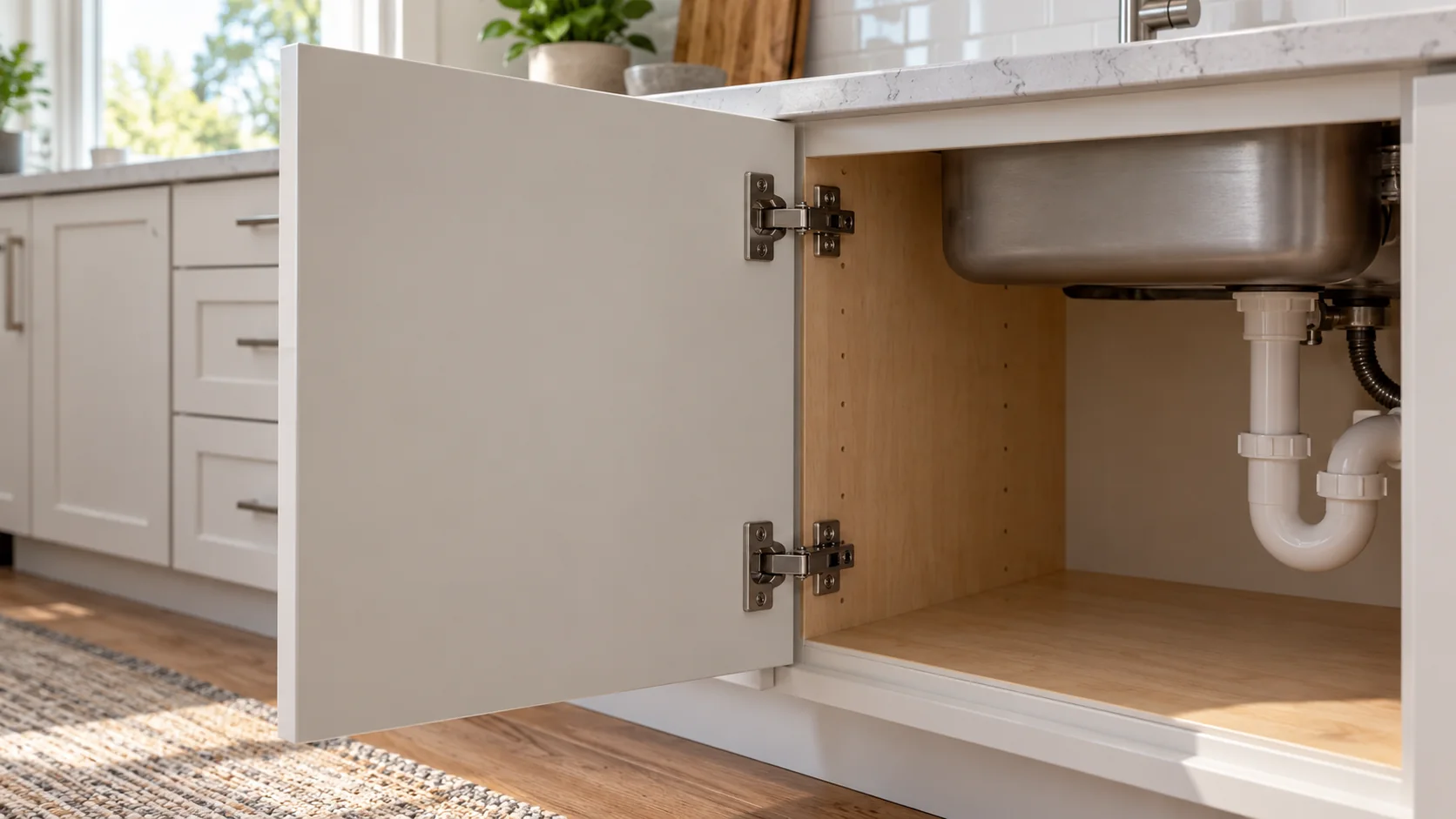
At the sink, look at the bottom edge, hinge holes and any other opening in the finished part. As one core-board example, MEDITE MR’s guidance describes a moisture-resistant board for humid interiors that requires complete sealing and is not waterproof. A water-tolerant face and a sealed door construction solve different parts of the exposure.
Heat also reaches more than the exposed polymer. MasterBrand’s care guidance warns that self-cleaning ovens produce unusually high heat that can damage surrounding cabinetry. Next to such an oven, follow the appliance and cabinet instructions for that position.
Is PET automatically greener than acrylic cabinetry?
No. PET names one layer of the door, while a green claim has to name its benefit and cover the door you are actually buying. Check the face, coating, adhesive and core, then identify the evidence for the benefit being offered. For a US project, regulated composite-wood components and finished goods also need the applicable emissions documentation.
Start with a specific question. Does the proposed change remove PVC from the face? Does a documented emissions result cover the supplied panel? Can a local processor accept the bonded door? Each question leads to a different piece of evidence and a different purchasing decision.
The FTC’s October 2012 Green Guides summary cautions against broad, unqualified environmental benefit claims and ties recyclability claims to the available recovery route. A collection system accepting PET bottles may have different acceptance rules for a door containing a film, glue and a wood-based core. Identify the route for the actual discarded item.
For emissions, the EPA’s consumer guidance, updated March 30, 2026, identifies hardwood plywood, MDF and particleboard within the US composite-wood rule’s scope. Applicable panels and finished goods manufactured or imported after March 22, 2019 require the relevant TSCA Title VI labeling. Keep the documents attached to the identified product construction.
If a supplier calls a door greener, ask which layer the claim covers and which document supports it. The guide to formaldehyde-free furniture labels explains how the face, core and finished product affect the scope of such statements.
How should you compare PET and acrylic cabinet costs?
Compare quotations for the same finished-door scope: dimensions, quantity, core, back, edge, finish and included services. Public cabinet budget figures can provide context, but the two material labels do not establish a dependable price difference. A film price, a faced-board price and a completed-cabinet price pay for different amounts of work.
Fixr’s new-cabinet cost guide, updated January 22, 2026, gives acrylic cabinets a US installation-budget range of $300–$800 per linear foot. Use it as budget context for an installed acrylic kitchen. Its laminate line covers a broader family and is no substitute for a PET price.
| Quotation item | Quote A | Quote B | Why match it? |
|---|---|---|---|
| Door dimensions and quantity | Record the schedule | Use the same schedule | Size and quantity define the supplied work |
| Core, back and edge | Identify all three | Identify all three | An apparent face saving can hide a changed construction |
| Face finish | State color, gloss and coating | State color, gloss and coating | Compare the finish you actually want |
| Machining and hardware | List included preparation | List the same preparation | A faced board and a ready-to-hang door differ |
| Delivery scope | Identify what arrives | Identify what arrives | Handling and subsequent fabrication affect the purchase |
For a door-only replacement, compare door-only offers. For a new kitchen, compare the complete cabinet scope, including the parts that remain invisible after installation.
Ask for an itemized difference when one offer costs more: a different face grade, coating, edge, core or included service. You can then decide whether that specific difference matters in your kitchen.
Where does a silicone functional surface fit?
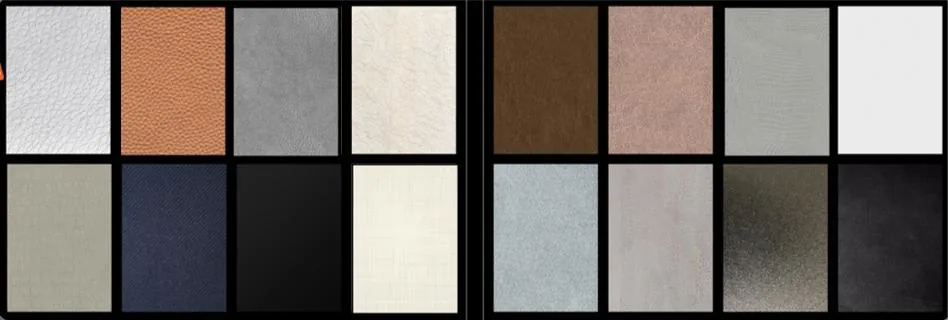
Puremorfilm makes decorative film with a silicone functional surface for flat cabinet doors and furniture panels. The current production carrier is PET, while the exposed silicone is a separate functional face. We can customize gloss for a project, so compare the requested finish with your chosen PET or acrylic door.
The silicone surface is inherently flame-retardant, with higher grades up to UL 94 V-0 available on request. In the manufacturer’s laboratory tests, coffee, red wine and soy sauce left at 25°C for 24 hours wiped off with no obvious change. We use a No DOP formulation; our furniture film is PVC-free.
Our new paint-free material uses a silicone functional face, distinct from PVC, melamine, PP and PETG decorative faces. We mainly supply furniture decorative film in rolls for PUR flat lamination, with laminated panels available on request. Film MOQ is 500 linear metres; 1220 × 2440 mm laminated panels have a 200-panel MOQ. Samples are free. This leather-like, slightly elastic surface is unsuitable for floors, hob worktops, shower floors or other walked-on areas.
Which door sample should you approve for your kitchen?
Approve the acrylic sample if its mirror-like reflection is the finish you want; approve the coated PET sample if its low reflection and feel suit the room better. Where both offer similar gloss, let comparable surface evidence, suitable care, finished edges and a matching quotation settle the choice between the actual door samples.
| Kitchen goal | Start with | Confirm on the sample |
|---|---|---|
| Deep, mirror-like statement fronts | Acrylic-faced door | Reflected detail and fine-mark visibility after approved wiping |
| Low reflection or a particular soft feel | Coated PET door | Gloss geometry, reflection and tactile feel |
| Similar appearance offered in both | The better-supported finished sample | Comparable scratch evidence, care, edge construction and quotation |
| Sink or appliance positions | Either, selected by the complete construction | Finished edges, openings and appliance instructions |
First, define the reflection and feel you want. Second, compare physical samples under the intended lighting and record the finish and construction you approved. Third, check that the quotation, care instructions and delivered door refer to that same choice. A showroom photo helps with color; a labeled sample is what you can hold the supplier to.
If you are weighing a flat-door film for the project, send your color, target gloss or feel, door sizes, quantities and whether you need film rolls or laminated panels, then contact us.
Frequently Asked Questions
Which is better PET or acrylic cabinets?
Acrylic is the usual starting point for mirror-like high gloss; coated PET is the usual starting point for low-reflection matte or a specified soft feel. When the appearance is similar, compare the complete samples and their supporting evidence.
Is PET more durable than acrylic for kitchen cabinets?
No. The material label does not establish an overall durability advantage. Compare the proposed surface constructions using the same test method, support and endpoint, then check whether the documented care suits the kitchen.
Do PET cabinets show fingerprints?
Yes. Handling can leave visible marks on PET-faced doors. Their visibility varies with the coating, color and gloss, so inspect a handled sample under the room’s lighting and use its approved cleaning method.
Do acrylic kitchen cabinets scratch easily?
No, not necessarily. The actual face and coating determine its response to a given scratch test, while gloss influences how visible fine marks become. A coated face also needs its own repair instructions before abrasive polishing.
Which costs more, PET or acrylic cabinets?
Neither has a reliable public price premium for the same door scope. Fixr’s January 2026 acrylic-cabinet budget is $300–$800 per linear foot; obtain matched finished-door quotations to decide between the proposed products.