
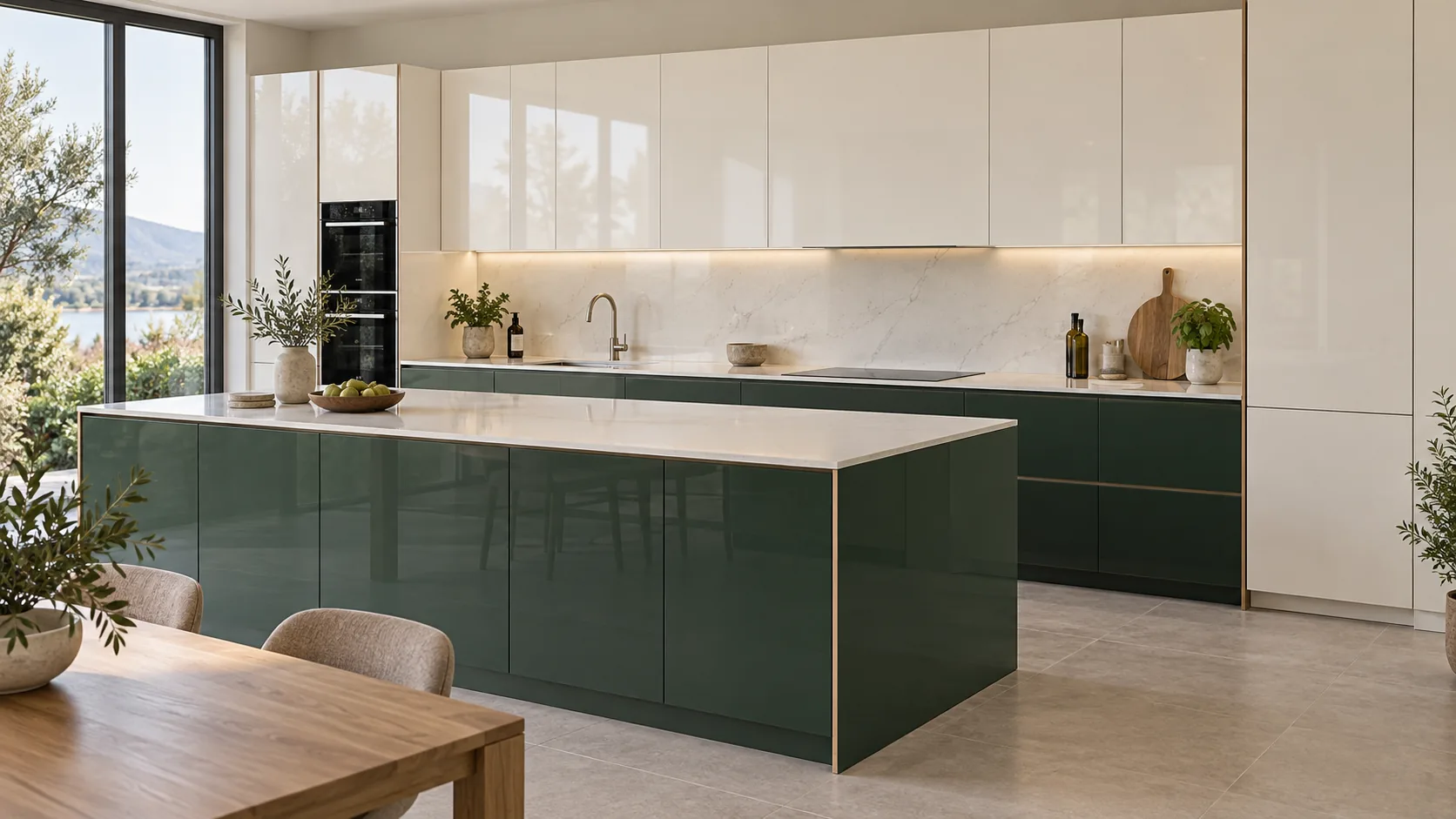
Acrylic kitchen cabinets pros and cons come down to a smooth, even door face that wipes clean easily, balanced against visible fingerprints, fine scratches on gloss, gentle cleaning and difficult repairs. They suit a modern kitchen when you like a flat, consistent finish and can live with regular wiping.
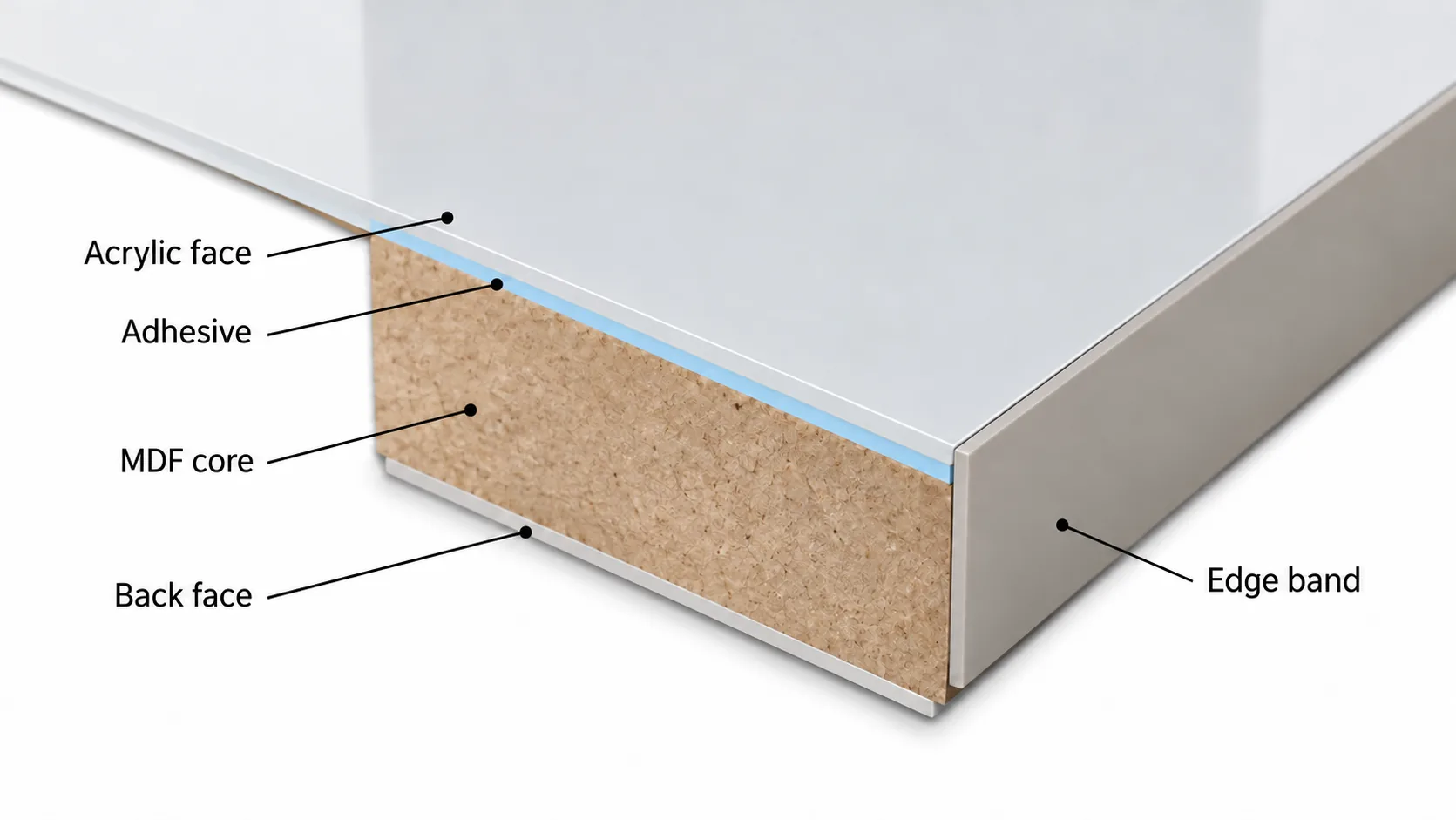
The construction underneath matters as much as the shine. One cabinet manufacturer’s design uses an acrylic face flat-laminated onto a ¾-inch engineered core, with separate edge banding. Water resistance and repairability depend on that whole door, including its back and edges.
What are acrylic kitchen cabinets?
Acrylic kitchen cabinets are usually cabinets with acrylic-faced doors over an engineered board; the boxes and most of each door are not acrylic. The face supplies the color and sheen; the core gives the door its thickness and holds the hinges.
Acrylic is commonly called PMMA, a plastic used here as a decorative sheet. In Kitchen Craft’s construction example, that sheet is flat-laminated onto a ¾-inch engineered core. The reverse has a complementary melamine surface and the edge band can contrast with the face. That measurement describes the core, not the thickness of the acrylic skin.
Picture the layers from the room inward: acrylic face, adhesive, core and back face, with a separate strip finishing the exposed edge. Our explanation of laminated MDF covers how a facing changes a board’s surface without changing its core material.
Solid acrylic doors also exist. A solid piece and a thin acrylic face bonded to MDF have different repair possibilities, even when their fronts look similar. When comparing samples, turn them over and look at the cut edge; the front alone will not tell you which one you are buying.
For the wider choice of cabinet cores and door faces, compare kitchen cabinet materials.
What are the main pros and cons of acrylic cabinets?
The main benefits are a smooth modern appearance, consistent color and easy surface wiping; the main drawbacks are visible marks, careful cleaning, difficult damage repair and a potentially higher replacement budget.
| Advantage | Corresponding drawback | What changes your experience |
|---|---|---|
| Flat, even color with a polished appearance | Gloss reveals fingerprints, water marks and fine scratches | Color, sheen, side lighting and where you grip the door |
| A smooth face that is easy to wipe | Abrasive wiping can spoil the finish | Cloth condition and the surface’s care instructions |
| A face that tolerates ordinary kitchen splashes | Water can still damage the core through edges or holes | Edge banding, joints and prompt drying |
| A consistent run of matching doors | A later replacement may look different beside older fronts | Color, gloss, light exposure and the replacement sample |
Acrylic is often sold as a premium alternative to basic laminate. For a US budgeting reference, Fixr’s cabinet-installation guide, updated January 22, 2026, lists acrylic cabinetry at $300–$800 per linear foot and laminate at $60–$250. Those are broad installed-cabinet categories, not prices for matching PVC and acrylic sheets or individual replacement doors.
The practical question is whether the finish adds enough to the kitchen you want. On a long, plain run of doors, an even color and reflection can be the main design feature. If your existing cabinet boxes are sound and only the fronts need changing, a full new-cabinet budget can distract from the smaller job you are considering.
For context on the other finish routes, see our kitchen cabinet finishes comparison.
How do acrylic doors look and feel?
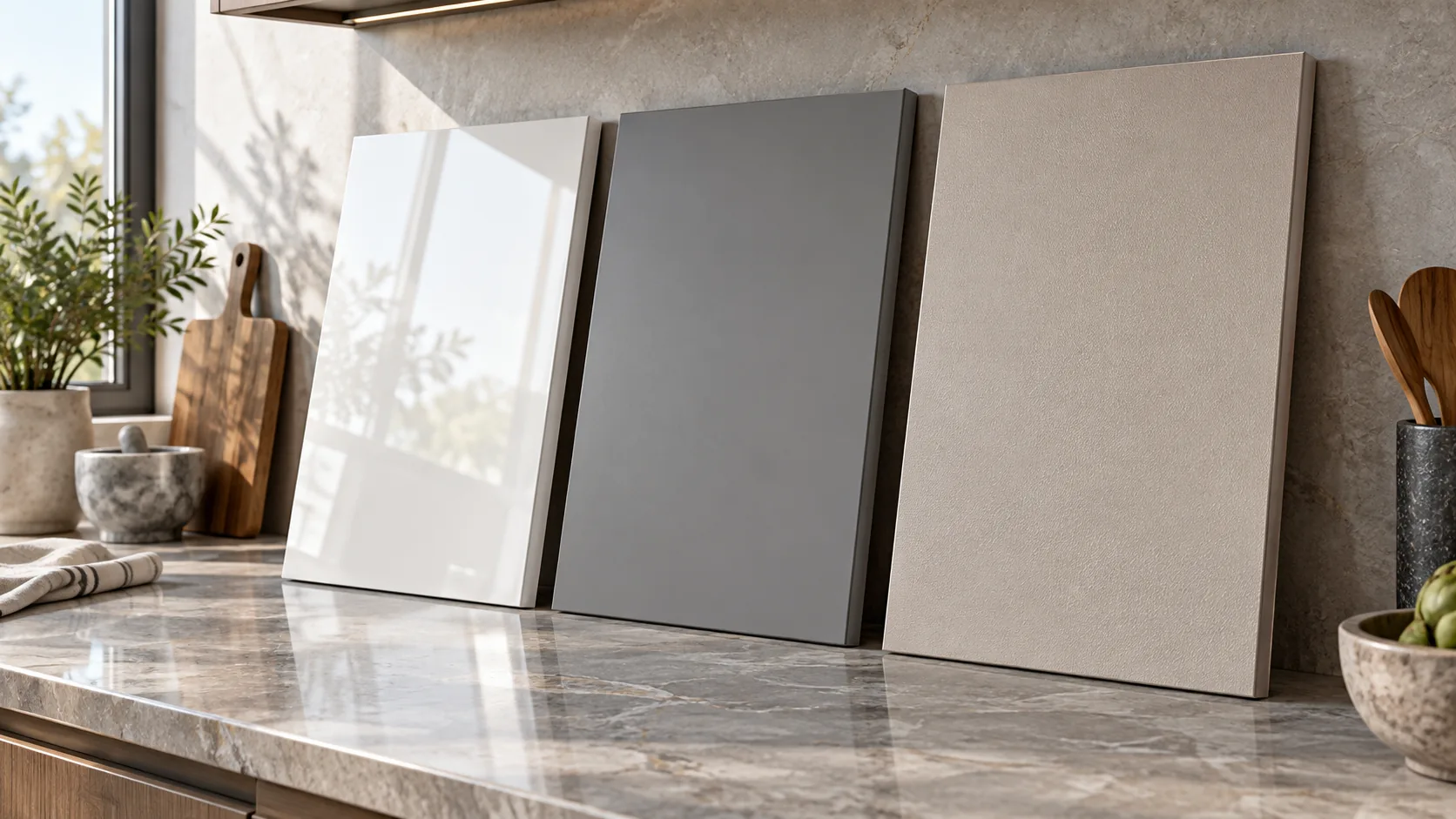
High gloss gives acrylic doors their familiar reflective look, while matte and textured versions provide a softer-looking surface. Solid colors and flat fronts suit a kitchen where the door finish carries most of the visual detail.
Gloss reflects windows, pendants and movement across a bank of cabinets. That can brighten the appearance of a small kitchen, but it also makes uneven lighting and everyday smudges conspicuous. A darker gloss door beside a sunny window asks more of your cleaning routine than a light-colored door away from strong side light.
Matte reduces glare; texture changes how the surface catches light and feels under your hand. Neither appearance establishes a scratch or fingerprint rating. Compare the actual samples if those qualities are central to your choice. Our matte versus gloss cabinet discussion explains the lighting and cleaning trade-offs in more detail.
Look at the sample upright, with the front, back and edge visible. An intentionally contrasting edge can be part of the design. A poorly matched or uneven edge can also become the feature you notice every time you open the dishwasher. Check a light sample in daylight and under your evening kitchen lights before choosing a whole run of it.
Do acrylic cabinets scratch or show fingerprints?
Yes, acrylic doors can show fingerprints and scratches, especially on a glossy surface in strong light. A mark becoming visible does not always mean the face has suffered deep damage.
Fingers leave oils around handles and along the edges of handleless doors. Water dries into spots. A gritty cloth can leave fine lines that become obvious when a window reflects across the face. Light colors and less reflective finishes can make these marks less conspicuous, while the same cleaning habits still matter.
Grit dragged across the face can leave fine lines, which is why cabinet makers’ care guides for acrylic rule out paper towels, brushes and scourers. Keep a clean cloth just for the fronts, not the dishcloth that has been wiping crumbs off the counter.
Handles can help you open doors without repeatedly touching the middle of the face. Around a busy preparation area, think about where hands, chair backs and utensils will meet the door. If scratches are your main concern, our scratch-resistant cabinet guide compares finish options for everyday wear.
How should you clean acrylic cabinet doors?
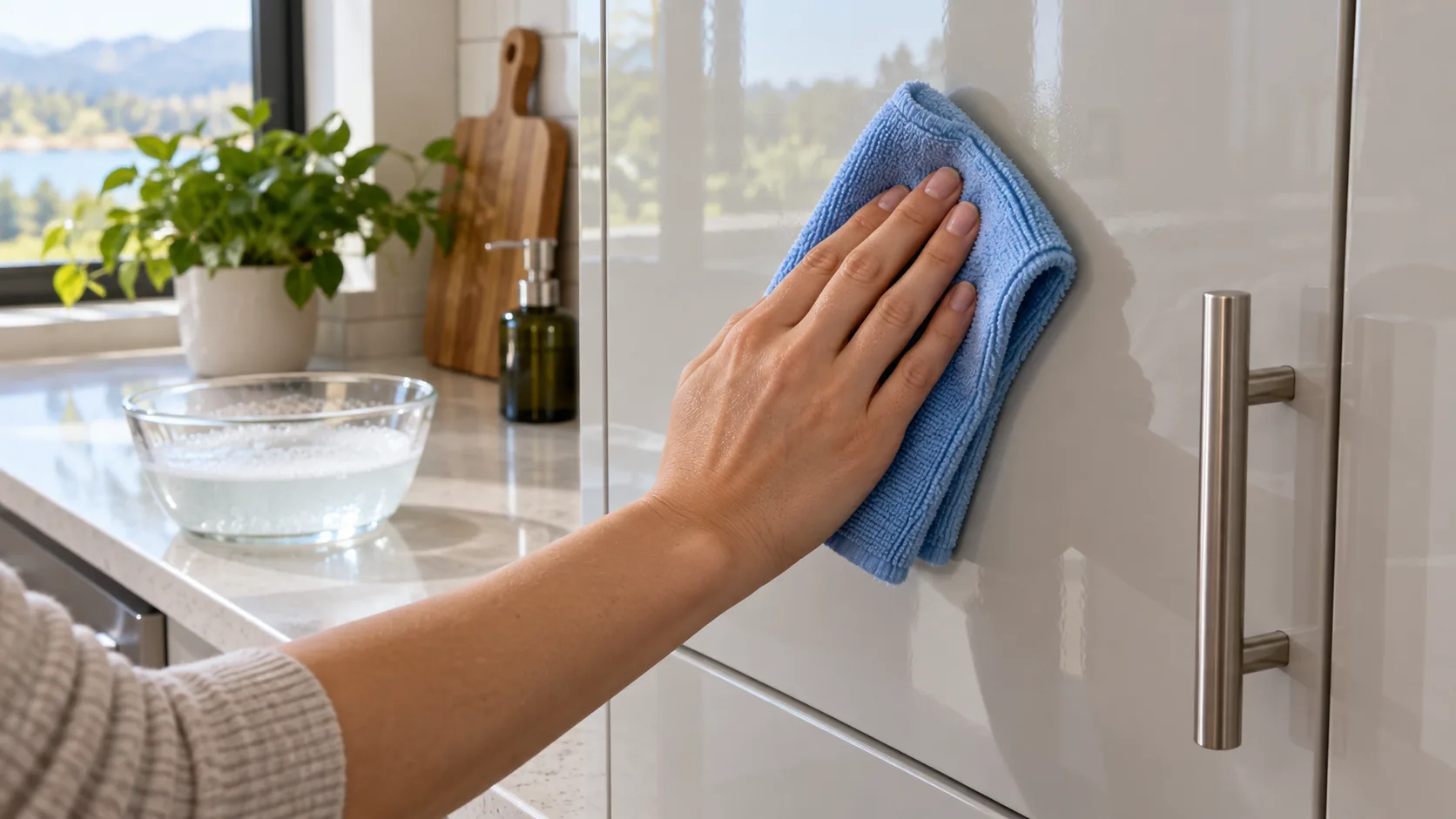
With a damp microfiber cloth or chamois and water or mild soap, never a dry cloth. Remove the soap with a fresh damp cloth and blot the edges dry.
Skip acetone and harsh household cleaners as well; acrylic cabinet care instructions rule them out along with abrasives. Start with plain water and move to mild soap only if the mark stays.
- Wet a clean, soft cloth and lift loose dirt gently. Shake out or replace a cloth that has picked up grit.
- For grease, use a mild soap-and-water solution suitable for the particular door finish. Wipe the affected area without scrubbing it repeatedly.
- Remove the soap with a fresh damp cloth, then blot the edge dry without rubbing the face.
After cooking, wipe grease spots while they are fresh, once the cooktop and oven door have cooled. Keep moisture out of joints and avoid soaking the bottom edge of a door.
The general kitchen cabinet cleaning guide helps when adjacent doors have wood, paint or another finish requiring different care.
Are acrylic cabinets water- and heat-resistant?
An acrylic face can handle ordinary splashes, but the complete door still needs protection from standing water and appliance heat. Its exposed edges, joints and openings are the vulnerable places to inspect.
A sound face keeps a splash away from the core. Water left against a damaged edge or entering an opening can reach the wood-based board underneath. Even moisture-resistant MDF is meant for humid interiors, not wetting, and still needs sealing or a coating.
At the sink, dry the edge as well as the front. Avoid hanging a wet towel over a cabinet door. If the edge has already lifted or the board has swollen, cleaning the face will leave the underlying damage in place. Our MDF edge banding guide explains why the edge deserves separate attention.
Heat protection concerns the installed cabinet, adhesive and edge as a system. MasterBrand’s care guide warns that self-cleaning oven heat is much greater than ordinary cooking heat and can damage nearby cabinetry. Keep steam-producing countertop appliances clear of the fronts and respect the appliance’s installation clearances.
Can damaged acrylic doors be repaired?
Some light surface marks may be repairable with a finish-approved treatment; deep gouges, broken edges and a swollen core usually point toward replacing the front. Identify the surface construction before attempting polishing.
An abrasive polish works by changing the surface. NOVUS’s guidance for coated plastics warns that a thin coating can be damaged by the abrasives in scratch-removal polish. A method suitable for solid, uncoated acrylic can therefore be wrong for a coated acrylic-faced door.
For a faint mark, begin with the approved cleaning method so you can distinguish residue from an actual scratch. If it remains, check whether the door maker authorizes a particular repair product. Sanding, strong solvent or heat can turn a small blemish into a larger patch with a different sheen.
Replacement introduces another consideration. A new door’s color and reflection may differ from the neighboring older doors, especially across a brightly lit bank of fronts. Place the replacement sample beside the installed kitchen before approving it. For several damaged doors, the choice may become a coordinated set of new fronts; our refacing versus replacement comparison explains when retaining the boxes still makes sense.
Acrylic vs PVC laminate: which door face is better?
Choose acrylic for the look of an even, deep solid-color face; choose a PVC decorative sheet when its printed pattern or texture better suits the kitchen. Compare the finished door samples, including their edges, without assuming either material wins every durability test.
Here, PVC laminate means a decorative PVC face bonded to a board. HPL is another laminate construction, and a solid PVC cabinet board is a different object again.
| Question | Acrylic-faced board | Flat PVC-faced board |
|---|---|---|
| What supplies the appearance? | An acrylic decorative sheet; gloss is a familiar option | A printed or colored film, often with embossed texture |
| How is the face attached? | Flat lamination to a board core | Flat lamination to a board core |
| What finishes the edge? | Separate edge treatment in this construction | Separate edge treatment in this construction |
| What guides cleaning? | Acrylic-face care, including any surface coating | The chosen film’s care instructions |
| What happens after damage? | Approved surface treatment or replacement, depending on the damage | Film or front replacement, depending on construction and damage |
| What needs protection? | Core, adhesive and edges near water or heat | Core, adhesive and edges near water or heat |
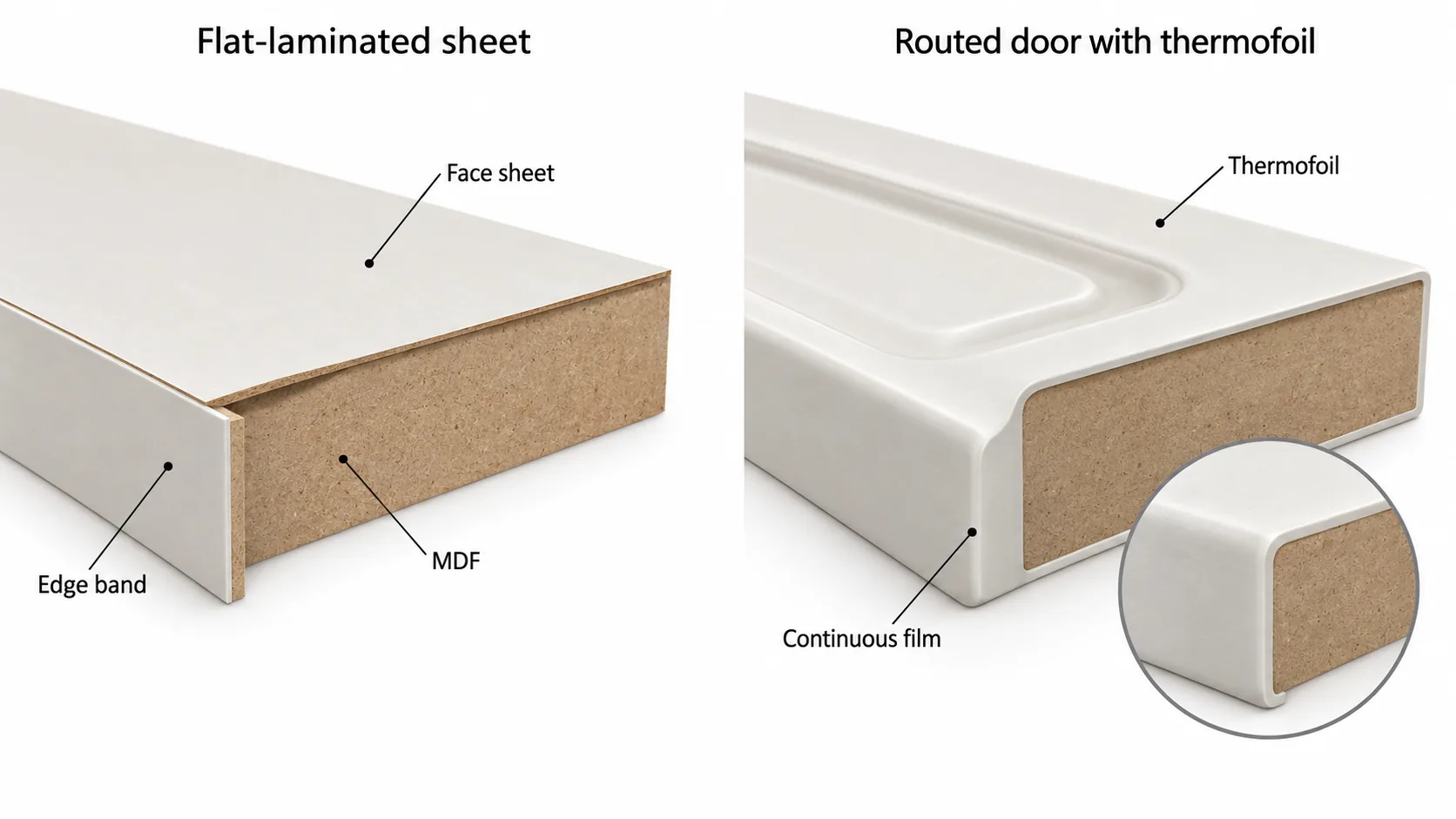
The Composite Panel Association’s 2D and 3D laminate explanation distinguishes flat film lamination with matching edge banding from membrane-pressed films that follow a shaped component. Vinyl is a common material in those film routes.
Thermofoil describes the formed route. Kitchen Craft’s material description explains PVC film formed over shaped MDF to cover its face and edges. For a routed door profile, that is a different construction from the flat-sheet doors in the table. The thermofoil versus laminate comparison goes further into that distinction.
A price comparison becomes useful when the core, door sizes, edge treatment and supplied work are comparable. An inexpensive film sheet and a finished acrylic door include different amounts of fabrication.
Where does a silicone-faced door film fit?
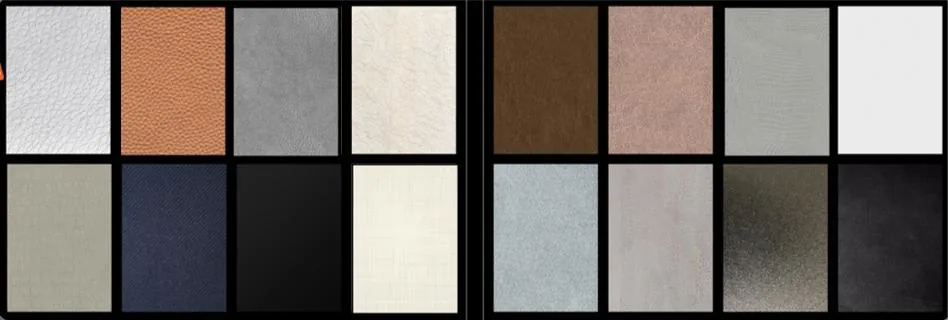
Puremorfilm makes decorative film with a silicone functional surface for flat furniture panels and cabinet doors, offering another face material for the factory lamination stage. Our new paint-free finish uses a silicone face, distinct from PVC, melamine, PP and PETG decorative faces.
The silicone surface is inherently flame-retardant, with higher grades up to UL 94 V-0 available on request. In the manufacturer’s laboratory tests, coffee, red wine and soy sauce left at 25°C for 24 hours wiped off with no obvious change. Our film uses a No DOP formulation and is PVC-free and formaldehyde-free.
In an SGS pencil test, the submitted sample showed no obvious scratches with a Mitsubishi Uni 2H pencil at 500 gf and 45°, across three lines at least 20 mm long. Gloss can be customized. We currently supply film rolls for door and panel makers to flat-laminate onto boards with PUR adhesive; technical guidance is available. See the furniture decorative film for this manufacturing route.
Are acrylic kitchen cabinets right for your kitchen?
Acrylic is a good fit when you want flat, modern doors and accept the cleaning and repair trade-offs. Choose the finish around the places you touch and clean most often.
| Your priority | A useful direction |
|---|---|
| Even solid color and a reflective flat face | Acrylic, with gentle cleaning and well-finished edges |
| A woodgrain or stone pattern with less conspicuous handling marks | Compare textured PVC or HPL samples with the acrylic sample |
| A routed or detailed door | A suitable formed film or painted wood construction |
| A finish you expect to sand and refinish later | Solid wood, with an appropriate finish |
| Replacing a few damaged fronts | Compare color, sheen, back and edge beside the existing kitchen |
Water near the sink and heat near the oven deserve attention whichever face you choose. Bring your door style, core material and color or gloss requirements when you contact us about a factory-laminated alternative.
Frequently Asked Questions
What are the disadvantages of acrylic kitchen cabinets?
Visible fingerprints and fine scratches, careful cleaning and difficult damage repair are the main drawbacks. A replacement front can also differ in color or gloss from the surrounding doors.
Which is better for a kitchen cabinet, acrylic or laminate?
Acrylic suits an even solid-color gloss; a patterned or textured laminate suits a woodgrain or stone look. Compare actual finished doors, because the laminate category includes several different materials and constructions.
Are acrylic cabinets a good choice for my kitchen?
Yes, if you want flat, consistent doors and are comfortable using gentle cleaning methods. Look especially closely at the edges on doors beside the sink and heat-producing appliances.
Which type of kitchen cabinet is better, acrylic or wood?
Solid wood is the better choice for a natural grain and later sanding or refinishing. Acrylic suits a smooth, even-colored face when you prefer that appearance to wood grain.
Are acrylic kitchen cabinets waterproof?
No. A splash-resistant face cannot protect an MDF core once water gets through a damaged edge, opening or joint.