
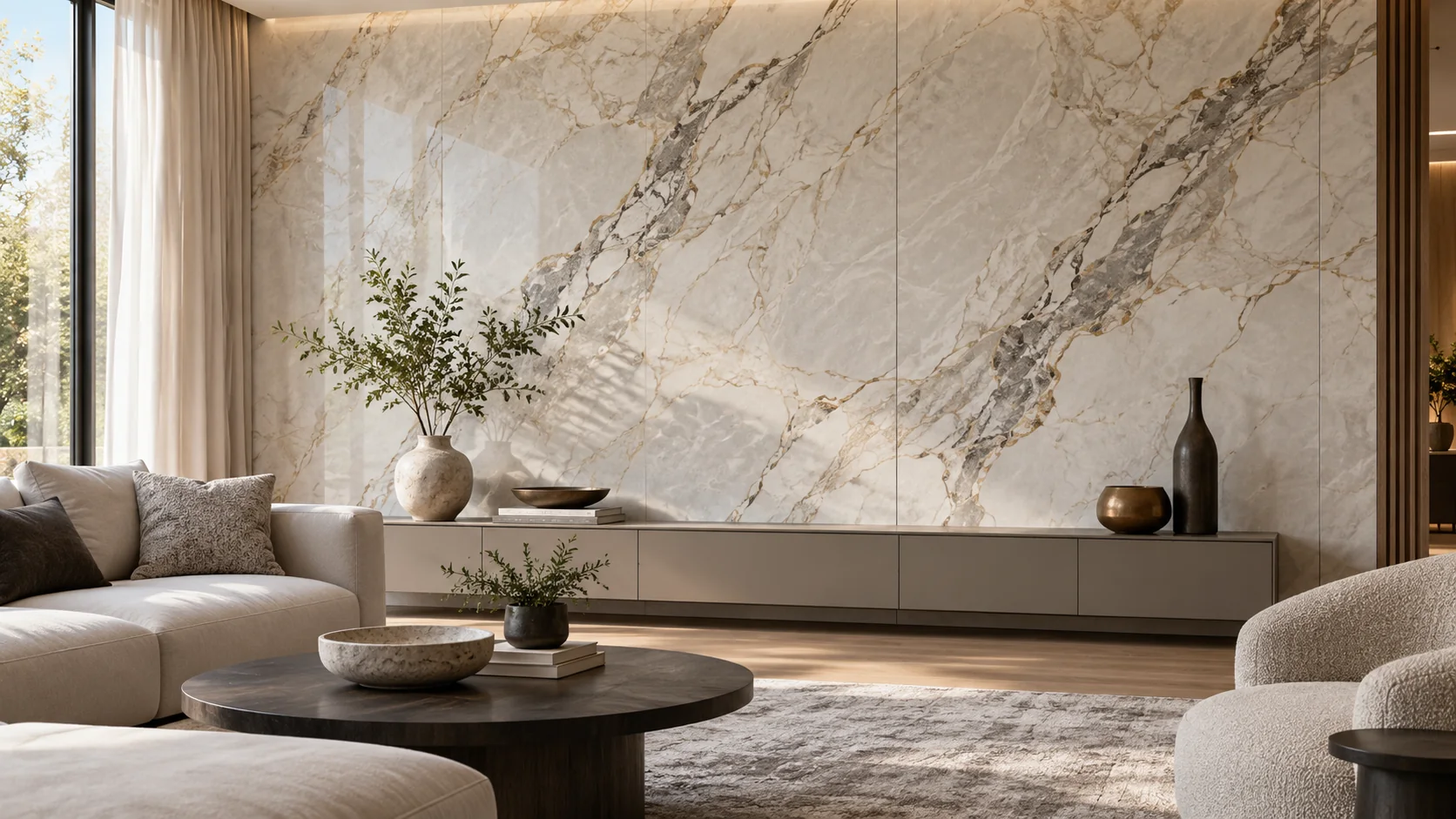
In a UV marble sheet vs PVC panel comparison, the names often overlap: many UV marble sheets have a PVC-based core, a marble-pattern decorative layer and a UV-cured top coat. Choose by the actual layers and the wall they will cover. A dry feature wall, a busy corridor, an unresolved damp wall and a sunlit window wall need different evidence.
Start with a cut sample and the proposed installation. Two differently named quotations may describe similar panels, while two matching marble patterns may hide different surfaces, joints and backing requirements.
Is a UV marble sheet a different material from a PVC panel?
Often no: a UV marble sheet can be a PVC-based panel with a marble pattern and a UV-cured surface. UV describes how the top coating is hardened; PVC identifies a polymer in the panel. Compare the core, decorative layer, exposed finish and installation before choosing between the names.
An Acemien production-line description identifies UV-coated synthetic marble sheets made primarily from PVC or similar composites.
| Item | “UV marble sheet” label | “PVC panel” label |
|---|---|---|
| What the name identifies | A marble effect and UV curing of the face | The PVC polymer family |
| Core | Often PVC or a similar composite; identify the supplied core | Identify whether it is hollow, compact, foamed or a separate faced board |
| Decorative layer | Identify how the marble pattern is carried | Identify the print, decorative film or other finish |
| Top surface | A UV-cured coating | Identify whether it is UV-coated, film-faced or another finish |
| Installation | Identify bonding or mechanical fixing, joints and backing | Identify bonding or mechanical fixing, joints and backing |
| Performance still to establish | Scratch, stain, wet-area and sunlight performance | Scratch, stain, wet-area and sunlight performance |
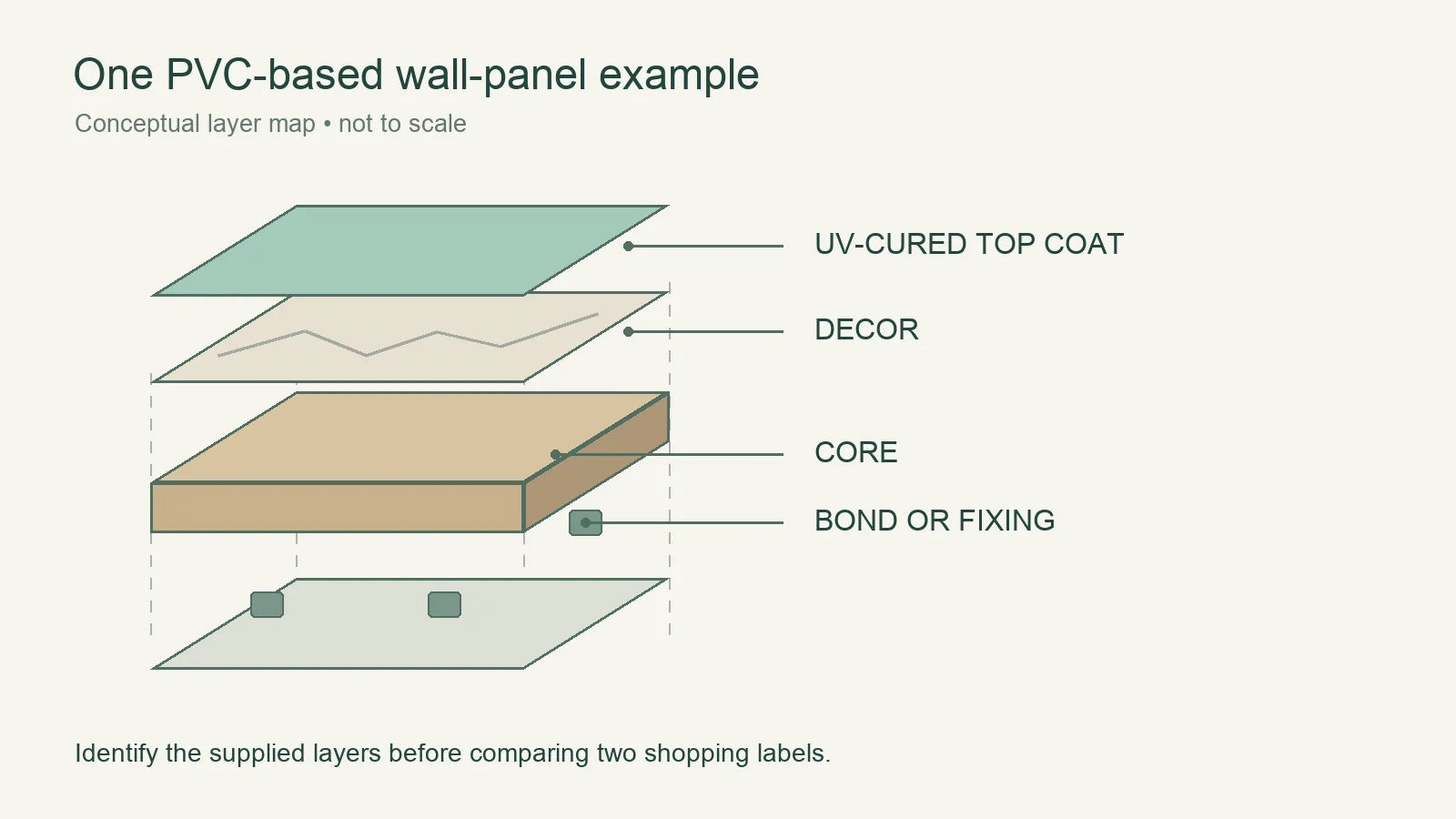
Put both quotations into this format. If each specifies a PVC-based board, the same decorative construction and a UV coating, compare those products on finish, dimensions, evidence and installed cost.
For a TV backdrop, view joined samples across the intended wall width. The repeat in the marble pattern and the appearance of an edge can matter more than a small sample’s shine. Our PVC wall panels pros and cons covers the broader differences between hollow profiles, solid sheets and faced boards.
How does a UV-cured coating differ from a laminated film surface?
A UV-cured coating starts as a liquid applied to the face and hardened with ultraviolet energy. Lamination attaches a film that already exists to the panel. Identify the exposed layer in each sample, then match its evidence to that layer; the manufacturing route alone gives neither surface a durability advantage.
RadTech’s curing explanation describes light initiating polymerization of coating ingredients on a substrate. The resulting properties depend on the formulation and how it is processed, so ask what the finished face is, not just what it is called.
EANS describes the two production routes directly: its coating line applies liquid varnish and cures it on PVC marble sheet, while lamination applies a pre-made film.
For a reception wall, make the sample reference part of the order. Record the visible finish and whether the report tests that finish on the proposed panel or on a separate specimen.
Also look at the exposed edge. A drawing that names the core, pattern and outer finish makes a later substitution easier to spot. The wall panel materials guide explains how the decorative face and panel body do different jobs.
Which surface resists scratches and stains better?
Choose the supplied surface with the better results under matching tests for your wall’s exposure. Pencil scratching, repeated abrasion and impact assess different damage. A quiet feature wall needs a convincing sample; a corridor or hotel luggage area also needs evidence for repeated rubbing and knocks, alongside the cleaning routine.
ASTM D4060-25, updated February 14, 2025, evaluates abrasion resistance of coatings applied to a plane, rigid surface. Its public guidance also explains why fillers and friction can affect comparisons. Read the method and specimen description before comparing the result.
| Wall location | Evidence to compare | Fields to read |
|---|---|---|
| Dry feature or TV wall | Joined appearance sample | Color, gloss, pattern repeat and joint appearance |
| Corridor, reception or hotel luggage zone | Abrasion and panel impact results | Abrasive wheel, load, cycles and endpoint; impact method and specimen support |
| Kitchen wall away from the cooktop | Stain and cleaning results | Substances, temperature, contact time, cleaner and visible change |
| Any location | Identification of the supplied surface | Sample reference, outer finish and tested construction |
For abrasion, compare the same wheel, load and endpoint. A result expressed as mass loss answers a different question from the number of cycles until the decorative layer is exposed. Our laminate abrasion test explanation develops those distinctions.
For stains, start with what will reach the wall. Coffee around a reception counter and food splashes beside a dining area call for relevant substances and stated dwell times. For regular cleaning, the report should identify the cleaner and exposure used. The easy-clean surfaces guide connects the face, joints and cleaning access.
In a hotel corridor, ask for the abrasion and impact pages, not only a pencil grade.
Will either panel solve a damp or moldy wall?
No. Fix the water source and dry the affected area before covering a damp or moldy wall. A new decorative face may conceal stains while moisture remains behind it. Once the wall is sound, choose a panel system whose intended location and joint details cover the exposure it will receive.
The EPA’s household mold guide recommends drying water-damaged materials within 24–48 hours to help prevent mold growth. It also explains that mold can return when the water problem remains. That drying advice concerns water damage, not adhesive curing or a panel installation schedule.
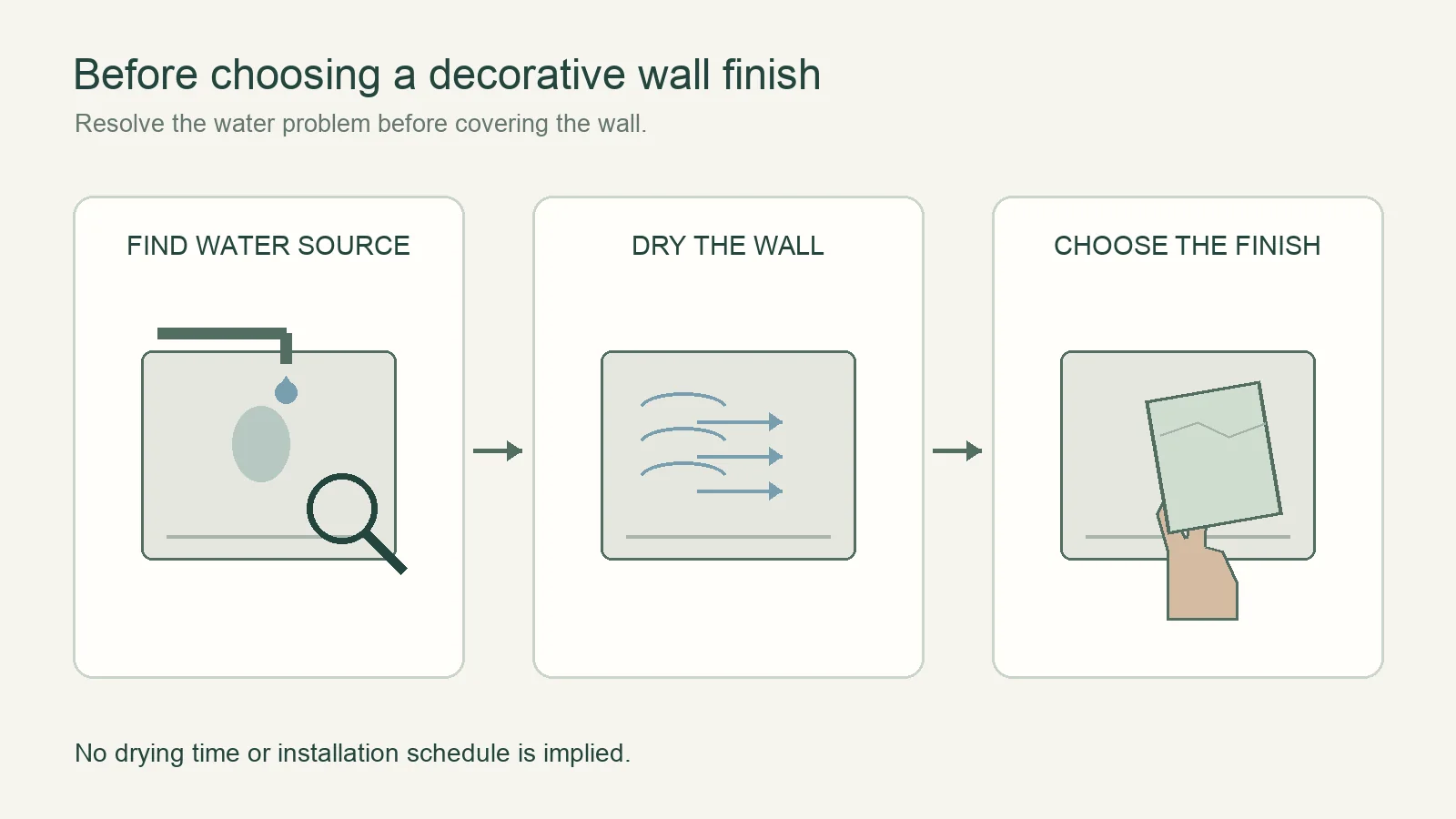
A stain below a leaking pipe and condensation beside a cold window need different repairs. Find the cause before ordering a finish to hide the mark. If hidden mold is suspected, the same guidance recommends caution when investigating behind wallpaper or paneling.
Bathroom placement then becomes a separate choice. A dry vanity wall, a splash area and a shower enclosure expose the edges and joints differently. Use the proposed system’s instructions to establish the covered location and how its corners, base and openings are handled. Our bathroom wall panels versus tiles comparison covers that wider choice.
For a decorative marble backdrop outside a wet zone, finish and joint appearance can lead the selection. Where persistent water reaches the wall, settle the complete wall system before choosing its pattern.
Does UV curing make a panel resistant to sunlight or outdoor use?
No. UV curing describes a factory process; sunlight resistance concerns how the finished panel behaves during use. For a strongly sunlit wall, choose a product with exposure evidence covering that setting. Read the light source, duration, temperature or moisture conditions, and the appearance or adhesion changes measured after testing.
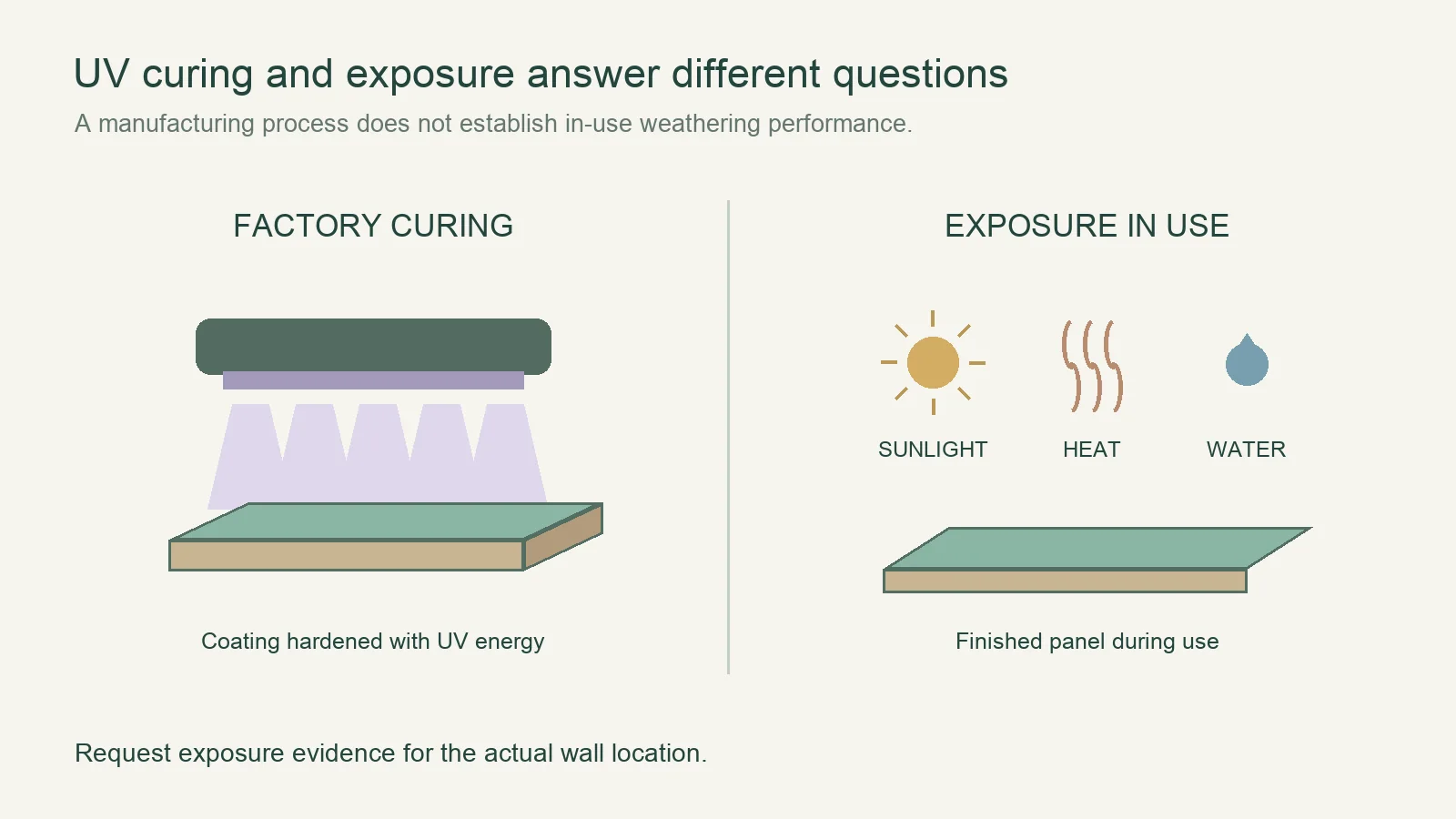
Q-Lab’s introduction to weathering, updated in 2023, describes sunlight, heat and water acting on a material during use. Light-stability assessment also serves interior products exposed to light and heat, such as a panel beside a window.
Place the planned wall on the room drawing. A shaded TV backdrop and a west-facing wall beside glazing may carry the same marble pattern but receive very different exposure. For the latter, a light-stability report is more relevant than a description of the UV lamp used during production.
Examine what changed after exposure: color, gloss, cracking, adhesion or another stated property. Match the tested face and decorative layer to the sample you are buying, since a pattern change may also change the materials exposed to light.
Accelerated test hours do not convert into years by a fixed factor: Q-Lab ties any service-life prediction to the material, the test, the failure mode and outdoor data. Use the report to judge the changes at your wall’s exposure.
How should you compare UV marble sheet and PVC panel costs?
Compare the total for the same covered area, panel thickness, surface construction and installation work. Convert sheet prices into an area price first, then add the work needed to finish the wall. A useful quotation identifies preparation, adhesive or fixings, trims, joints, labor and disposal alongside the supplied panels.
Angi’s wall-paneling cost guide, updated March 18, 2026, lists PVC panels at $7–$20 per square foot in its US residential installed-paneling context. Use that published estimate as background when checking an installed quote; it is not a film price and shows no fixed premium for UV coating.
The “8×4 price” search needs one calculation. A sheet measuring 8 × 4 ft covers 32 sq ft before cutting. Divide its quoted price by that area for the material-only rate. Then allow for the actual panel layout, cutouts and pattern matching before adding installation items.
An affordable sheet can produce an expensive finished wall when the layout wastes much of the pattern or the existing backing needs repair. Conversely, a higher panel price may include trims or fabrication omitted elsewhere. Put those inclusions beside the price so you can see what each installer is supplying.
Keep film prices and finished-panel prices on separate lines. Turning a film into a faced board adds the board and a lamination step, so compare quotations at the same stage of supply.
Where does a silicone-faced decorative wall film fit?
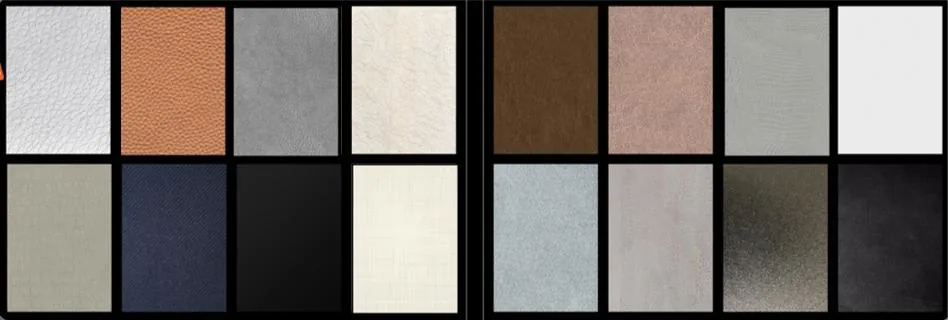
Puremorfilm makes decorative wall film with a silicone functional surface on a plastic film base for interior walls and furniture. Our wall film is PVC-free and uses a No DOP formulation. It offers another functional face to sample when selecting an indoor panel finish with documented stain performance.
The silicone surface is inherently flame-retardant, with higher grades up to UL 94 V-0 available on request. In the manufacturer’s laboratory tests, coffee, red wine and soy sauce left at 25°C for 24 hours wiped off with no obvious change.
We mainly supply rolls for PUR flat lamination onto boards; standard film has no back adhesive, with back adhesive available on request. Film MOQ is 500 linear metres. Laminated panels are available on request in 1220 × 2440 mm, with a separate MOQ of 200 panels. Samples are free.
Our paint-free wall film uses a silicone functional face, distinct from PVC, melamine, PP and PETG decorative faces. Because of its leather-like feel and some elasticity, it is not for floors, cooktop countertops, shower floors or other walked-on areas, and it should not cover a damp wall that has not been repaired.
Which wall finish should you choose for your project?
Choose by location first: a dry marble-effect feature wall can suit a UV-coated PVC sheet selected for its appearance, while busy contact areas need surface-wear and panel-impact evidence. A sunlit position needs exposure results. Resolve damp before covering it, and sample a silicone-faced option when a PVC-free functional face fits the project.
| Wall situation | Starting choice | Confirm before ordering |
|---|---|---|
| Dry feature or TV wall | UV-coated PVC marble sheet with the desired finish | Joined sample, pattern layout, edges and gloss |
| Corridor, reception or hotel luggage zone | A finish and panel with relevant wear and impact evidence | Matching test conditions and the proposed construction |
| Kitchen wall away from the cooktop | A face tested for the stains and cleaning it will receive | Substances, dwell time and permitted cleaning routine |
| Bathroom zone named in the system’s instructions | A panel system specified for that location | Backing, joints, corners and openings |
| Sunlit window wall | A product with relevant light-exposure evidence | Tested surface, exposure conditions and observed changes |
| Damp wall with an unknown cause | Repair and dry the wall first | Cause addressed and backing condition established |
For a hotel project, use the wall-panel planning guide to separate guest-room decoration from luggage-contact and service areas. Then work through four steps:
- Write down the wall location and its strongest exposure.
- Put each quotation’s core, decorative layer, face and installation into the same comparison.
- Match the sample to the appearance, wear, stain or light-exposure evidence that location needs.
- Compare prices for the same supply and installation scope, then approve the sample.
For an indoor panel-facing sample, contact us with the wall location, area, desired pattern and gloss, and whether you need film or laminated panels.
Frequently Asked Questions
How durable are PVC panels?
PVC panels have no single lifespan. Durability varies with the hollow, compact or foamed construction, the exposed finish and the installation location. Compare the actual panel’s relevant surface and impact results, care instructions and replacement method instead of applying a category-wide number of years.
What kind of PVC wall panels look like marble?
PVC marble sheets are PVC-based panels carrying a marble-pattern decorative layer. Many receive a UV-cured top coating and are sold as UV marble sheets. The pattern, core and outer coating together describe the product more clearly than either shopping label alone.
Is UV marble sheet good for damp walls?
No, not while the cause of damp remains unresolved. Fix the water source and dry the affected area before covering it. A moisture-tolerant face can conceal a problem in the backing, so choose the decorative finish after the wall’s condition has been addressed.
Is UV marble sheet good for a bathroom?
Yes, in a bathroom location covered by the specific panel system’s instructions, including its backing and joint requirements. Choose a documented wet-area system for direct water exposure. A decorative sheet’s appearance or UV coating alone does not establish its suitability as a shower lining.
What are the disadvantages of UV marble sheets?
Sunlight performance needs separate evidence; concentrated heat needs a lining specified for that location; scratches through the printed pattern may require panel replacement; and an uneven backing can spoil a glossy appearance.