
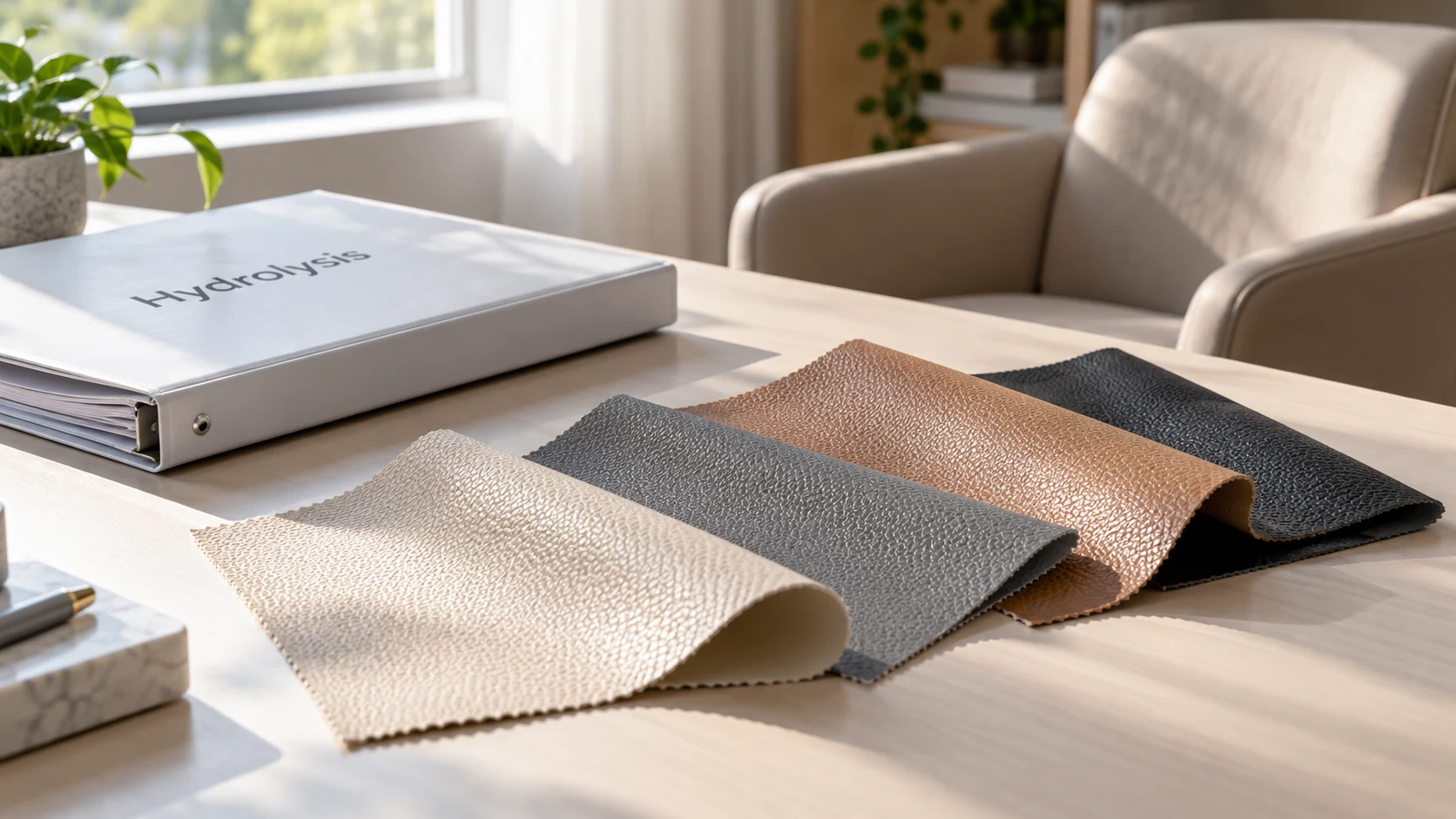
For silicone leather hydrolysis claims, the complete construction matters more than the material name. The upholstery industry’s hydrolysis guidance focuses on polyurethane-coated fabrics, while products sold as silicone leather can contain PU layers or blends. A useful result identifies the exact construction and states its ISO 1419 Method C exposure in weeks; it does not turn those weeks into a sofa’s service life.
Hydrolysis is polymer breakdown involving water. In upholstery, prolonged heat and humidity can accelerate deterioration in vulnerable PU coatings. A purchasing decision therefore needs the layer description, the accelerated-aging result and the intended cleaning conditions together.
Is silicone leather resistant to hydrolysis?
A silicone-only coating falls outside the PU chemistry targeted by the upholstery hydrolysis guidance; a construction labeled silicone but containing PU needs evidence for the complete material. The label cannot establish the resistance of every layer beneath the face.
The Association for Contract Textiles’ August 2022 hydrolysis explanation describes how PU-coated fabrics can be vulnerable to humidity and heat, including body heat transferred during use. It also explains that blending PU with other materials, including silicone, can affect hydrolysis resistance.
The same guidance distinguishes PVC-based fabrics, which are unaffected by this hydrolysis mechanism. It still needs evidence for every other exposure in service.
For a furniture maker, that leaves a concrete distinction to resolve before comparing samples. Is the offered face a silicone coating throughout, or is the product a layered or blended construction containing PU? The supplier’s material description should answer that question, and the test report should identify the same construction.
The broader choice between silicone leather and PU leather includes touch, application and cost. Here, the narrower decision is whether the available aging evidence supports the coated fabric being offered for your seats.
What is hydrolysis, and what does a failure look like?
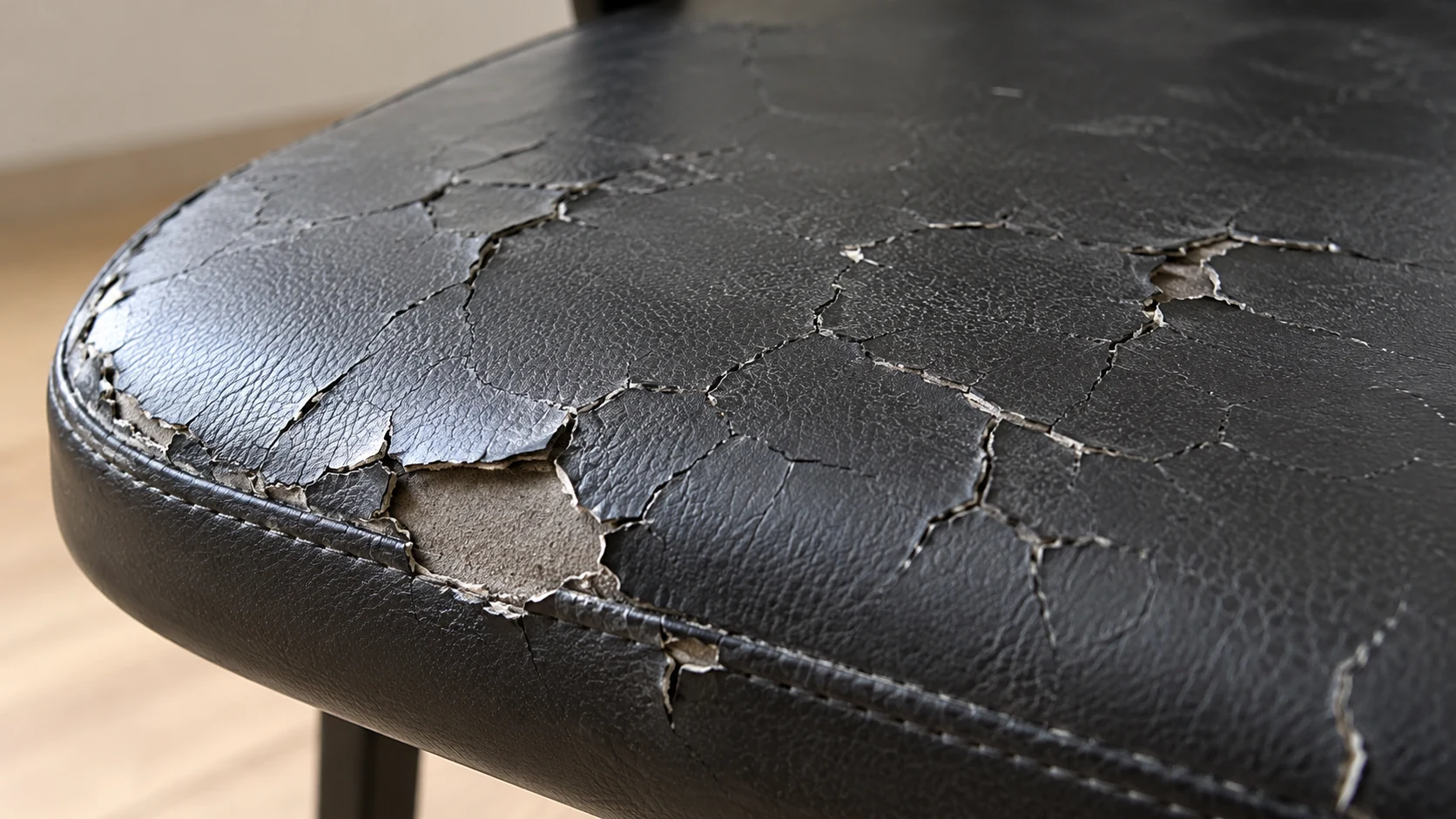
Hydrolysis breaks susceptible polymer chains through their interaction with water, and an affected upholstery coating can crack, peel or separate from underlying layers. Heat and humidity drive it, so a damaged face is not always a wear problem.
The industry explanation, pages 1–3 describes hydrolysis failures as tending to be widespread: seating in the same location can be affected in a similar way. That pattern is useful when reviewing a problem across a hotel lounge or waiting area, although the appearance still needs investigation.
A local cut on one armrest and a similar breakdown across many seat surfaces suggest different questions. In the first case, inspect the local damage and how that area is used. In the second, examine the material identity, environmental exposure and cleaning records across the affected furniture. These are investigation routes, not diagnoses based on a photograph.
Keep photographs and the product identification with the claim. They help the supplier or laboratory relate the observed condition to the tested construction.
Why does the construction matter more than the material name?
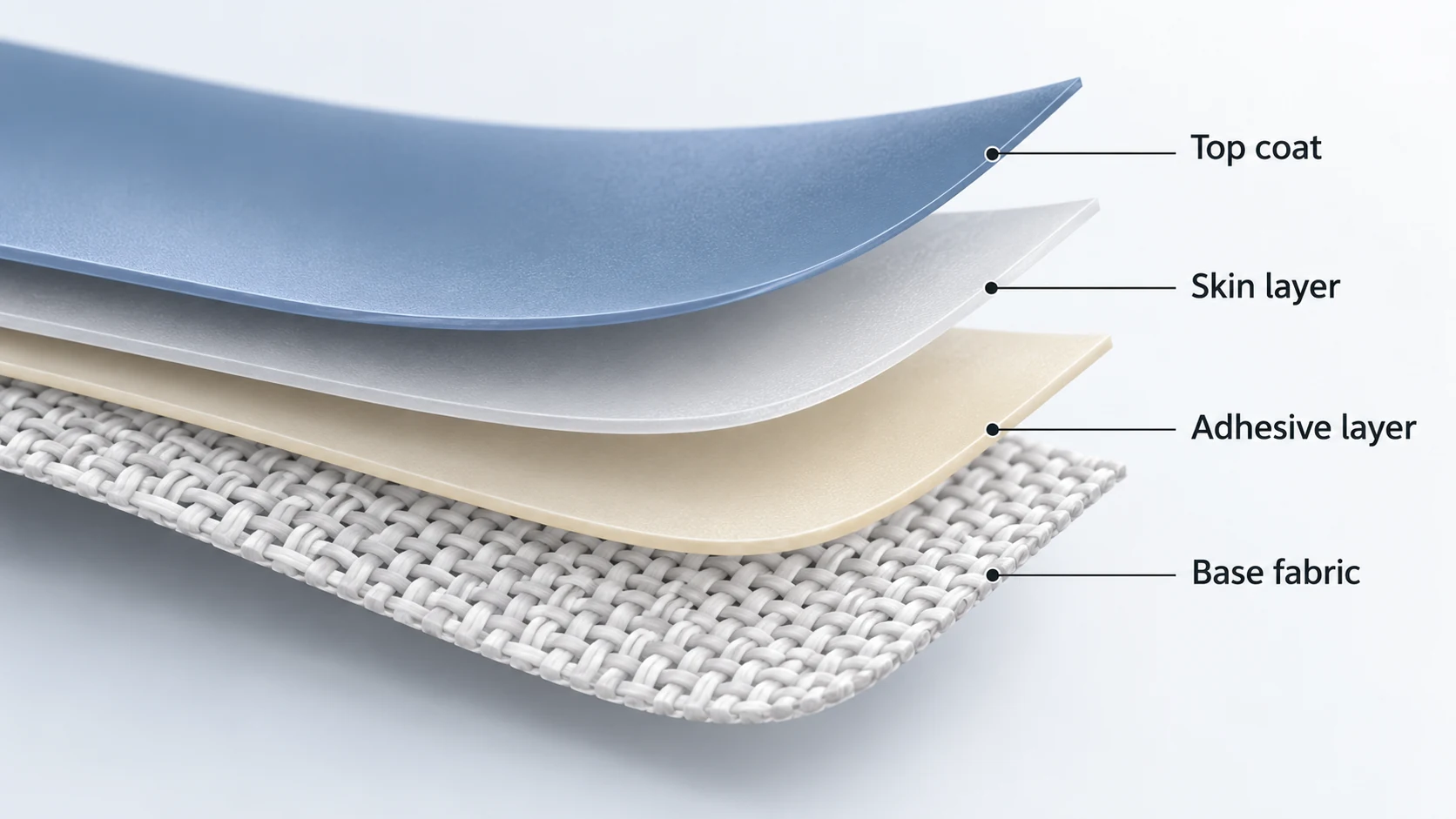
The topcoat, skin, adhesive layer and base fabric can differ, so a single material label leaves much of the construction unspecified. The formulation and manufacturing process also affect the final coated fabric’s hydrolysis resistance.
PU itself includes different resin families. The 2022 association document, page 2 sets out the following general ordering. PU upholstery formulations commonly blend resins, so the tested finished material remains the relevant purchasing evidence.
| PU resin family | Relative resistance to heat and humidity in the guidance | Relative cost in the guidance |
|---|---|---|
| Polycarbonate | Highest | Highest |
| Polyether | Good | Moderate |
| Polyester | Lowest | Lowest |
This is a resin-family comparison, not a price quotation or a ranking of every coated fabric. A formulation’s complete make-up and processing affect the offered product, which is why a named resin cannot replace its test result.
If a silicone-faced material has a PU-containing layer beneath its surface, retain that information in the approved sample description. A change to a hidden layer can matter even when the face color and grain look the same. The silicone material explanation covers the underlying terminology; the procurement record should describe the actual layers used in the upholstery fabric.
How is hydrolysis resistance tested?
The recommended accelerated procedure exposes the material to controlled heat and humidity, then checks it at weekly intervals for cracking, peeling and delamination. The industry explanation identifies ISO 1419 Tropical Test Method C for this purpose.
The August 2022 document, page 4 describes an exposure of 70°C (158°F) and at least 95% relative humidity, with air circulating around both sides of the specimen. Samples are removed for weekly visual examination, and the result is stated as the weeks passed under those conditions. The procedure is also commonly called the jungle test.
Those conditions belong together. A report giving a temperature without the humidity, or a duration without a named method and assessment, gives an incomplete account of the exposure. For purchasing purposes, ask for the test’s actual conditions and the recorded condition of the specimen after aging.
The laboratory’s specimen description matters as much as the chamber settings. The tested swatch should be identifiable as the same coating-and-backing construction offered for production. A report on a different development sample may still be informative, but the supplier needs to explain its relationship to the material being quoted.
How many weeks of hydrolysis resistance should you specify?
The ACT recommendation for general indoor contract upholstery is a minimum of 5 weeks for PU-coated fabrics. Hot, humid settings or frequent cleaning and disinfection can justify seeking greater resistance, together with evidence for those other exposures.
The same guidance names sunrooms and indoor pools as examples of demanding heat-and-humidity environments. It also identifies frequent exposure to cleaning, sanitizing and disinfecting chemicals as relevant to selection. It does not assign one higher duration to every such project.
For a silicone-coated product containing PU, use the PU-related guidance with the complete layer description. For a silicone-only construction, asking for a clearly described result can support comparison under matched conditions; do not turn the PU recommendation into a compulsory threshold for silicone.
A seat near an indoor pool may face different conditions from one in a climate-controlled meeting room. Set the requested evidence around that actual placement instead of selecting a marketing duration first and finding an application for it afterward. For projects involving senior living interior finishes, include the planned cleaning frequency in that discussion as well as the expected environment.

Do hydrolysis test weeks equal years of service?
No. Accelerated test weeks have no direct correlation with years of service in a finished sofa. Treat the chamber duration as a test result with its method and conditions, not as a calendar life or warranty.
The association explanation, page 4 addresses the source of the confusion: results were conventionally expressed in years even though the exposure is measured in weeks. It recommends using weeks so the wording does not imply a warranty.
When a specification says “year hydrolysis resistance,” request the underlying method and actual exposure duration. Record those details in the material comparison, and keep any commercial warranty terms in their own identified document. The laboratory result and the supplier’s contractual promise answer different questions.
In a furniture program, that keeps a test label from turning into a replacement forecast. Cleaning chemistry, use, construction and environment still shape service life; the chamber result covers one controlled aging exposure.
Could peeling be caused by cleaners instead of hydrolysis?
Yes. Excessive or unsuitable cleaning and disinfection can produce cracking and peeling that resemble hydrolysis failure. Investigate the actual chemical exposure alongside the aging result.
The 2022 explanation, page 3 calls out this similarity and points to ACT Test Method 1-2020 for evaluating compatibility with cleaning and disinfection chemicals. For a project buyer, the useful evidence identifies the particular material and the chemicals intended for the site.
Ask the operator or housekeeping team for the actual product names and intended use conditions. A statement such as “disinfectant resistant” is difficult to assess without that information. The same evidence problem arises when selecting a disinfectant resistant wall covering, although wall and seating materials need their own compatibility assessment.
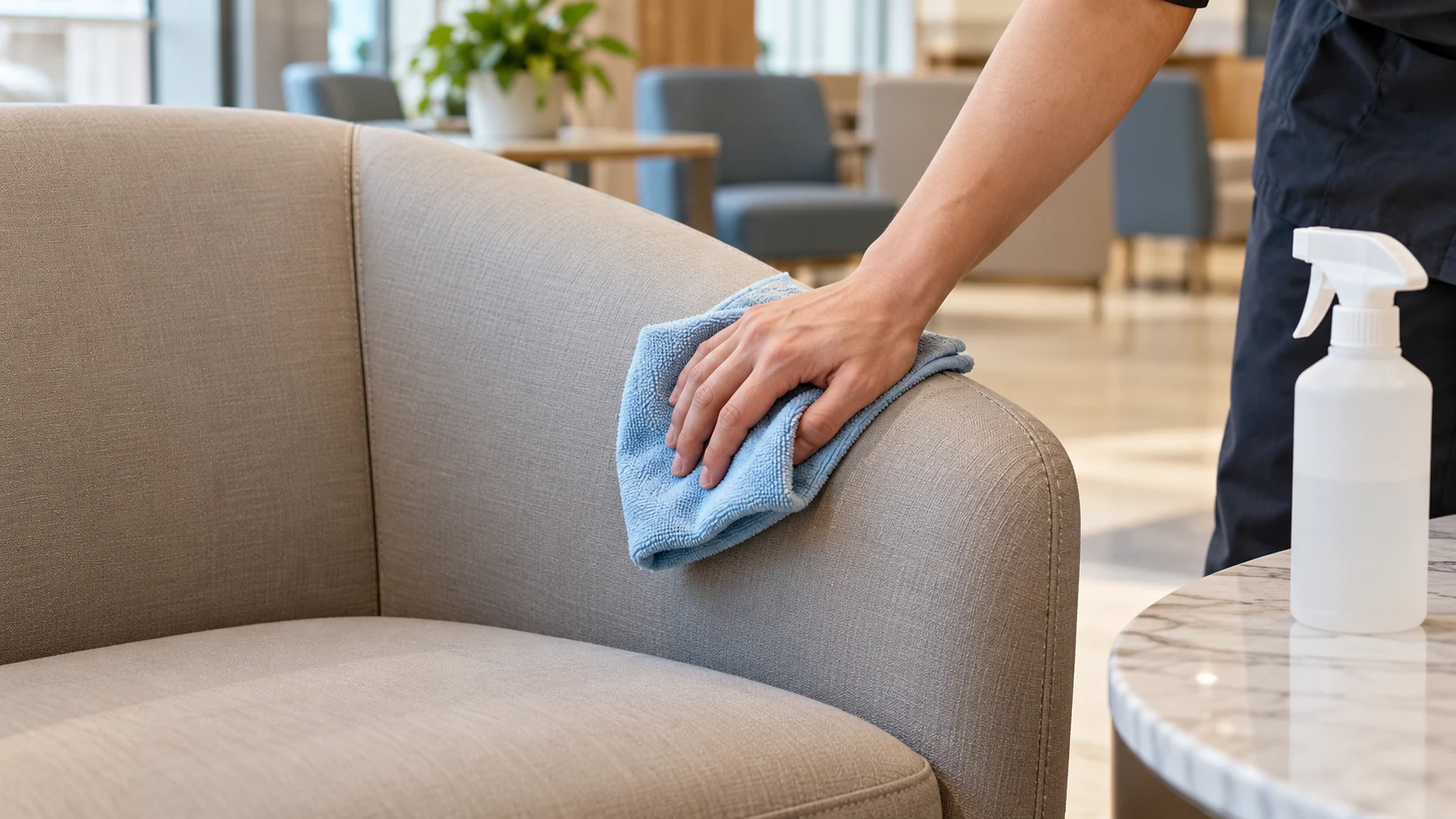
Day to day, follow the material’s approved care instructions and the chemical maker’s directions. Everyday maintenance and existing damage are covered in how to care for faux leather furniture.
What should a hydrolysis report show before you approve a material?
The report should identify the exact material construction, the aging procedure and the observed result. Use the following checklist to connect the laboratory evidence to the fabric being offered; these are purchasing recommendations derived from the guidance.
| Item | What to specify or record | Why it helps |
|---|---|---|
| Product identity | Accurate material code, color and specimen description | Links the report to the approved sample |
| Layer construction | Topcoat, skin, adhesive and base fabric, including PU-containing layers | Makes hidden construction changes visible |
| Method | Full ISO 1419 Method C designation and the edition used | Identifies the aging procedure |
| Exposure | Temperature, relative humidity, duration and specimen exposure arrangement | Preserves the conditions behind the result |
| Assessment | Weekly observations and the stated criteria for cracking, peeling and delamination | Explains what counted as an acceptable condition |
| Result | Actual exposure in weeks and the recorded condition of the specimen | Avoids an unsupported service-year interpretation |
| Cleaning compatibility | Evidence for the project’s intended cleaners and disinfectants | Addresses a separate source of similar damage |
| Document identity | Laboratory, date and report reference | Makes the evidence traceable to its source |
Retain the report with the approved construction and revisit it when a relevant layer or supplier changes. The seat’s seams, adhesive joints and foam also need assessment for the finished application; a coated-fabric aging result covers the submitted specimen.
Puremorfilm is preparing an upcoming silicone leather line for upholstery applications. We welcome buyers who want to learn about progress, discuss the environment and cleaning conditions of an upcoming project, or register interest in future samples. Share the construction and aging evidence your project needs so that those requirements can guide the discussion. Once samples are available, the table above shows which reports to ask for on that exact material.
How should you use hydrolysis results when choosing upholstery?
Use the result to assess the stated construction under a stated accelerated exposure, then check the intended environment and cleaning program alongside it.
| Situation | Purchasing action |
|---|---|
| General indoor contract use with a PU-containing construction | Use the cited minimum recommendation of 5 weeks as the starting point for the aging requirement |
| Hot, humid placement or frequent disinfection | Seek stronger aging evidence appropriate to the project and chemical-compatibility information |
| A claim expressed as years | Request the method and the actual test duration in weeks |
| A specification saying only “silicone leather” | Obtain the layer construction and evidence for that exact material |
A shortlist becomes easier to judge when each entry describes the same kind of evidence. Keep the result attached to the sample identity, and make any material change a reason to check whether the supporting report still applies.
For an upcoming upholstery project, contact us with the intended environment, cleaning and disinfection products, and proposed material construction.
Frequently Asked Questions
Why does faux leather disintegrate?
PU coatings can break down through hydrolysis in prolonged heat and humidity, while unsuitable cleaning exposure can cause similar-looking damage. The cause needs investigation against the material and its use conditions.
How to fix disintegrating fake leather?
Replacing the damaged covering or reupholstering is the practical remedy once its coating has broken down. A surface care treatment cannot rebuild the original coating; small cosmetic repairs address a different, limited problem.
Can faux leather furniture fabric be treated to resist hydrolysis?
No, an after-purchase care treatment is not a substitute for selecting a resistant formulation and checking the coated fabric’s aging evidence. Resin selection, blending and manufacture affect resistance before the furniture reaches the site.
What does a hydrolysis test measure?
A hydrolysis test measures the material’s resistance to deterioration during a specified hot, humid exposure. The upholstery procedure discussed here records weeks and examines the coating for cracking, peeling and delamination.