
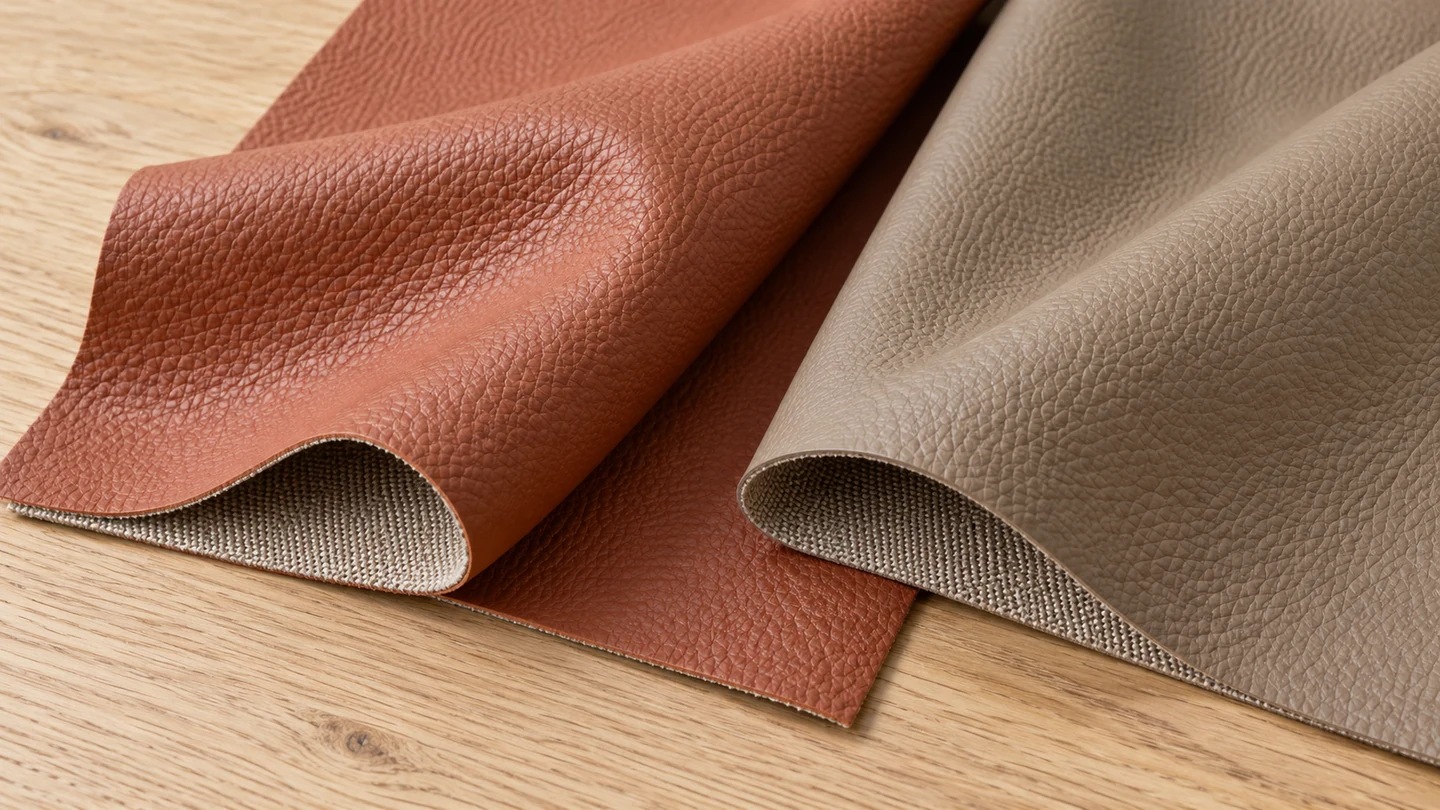
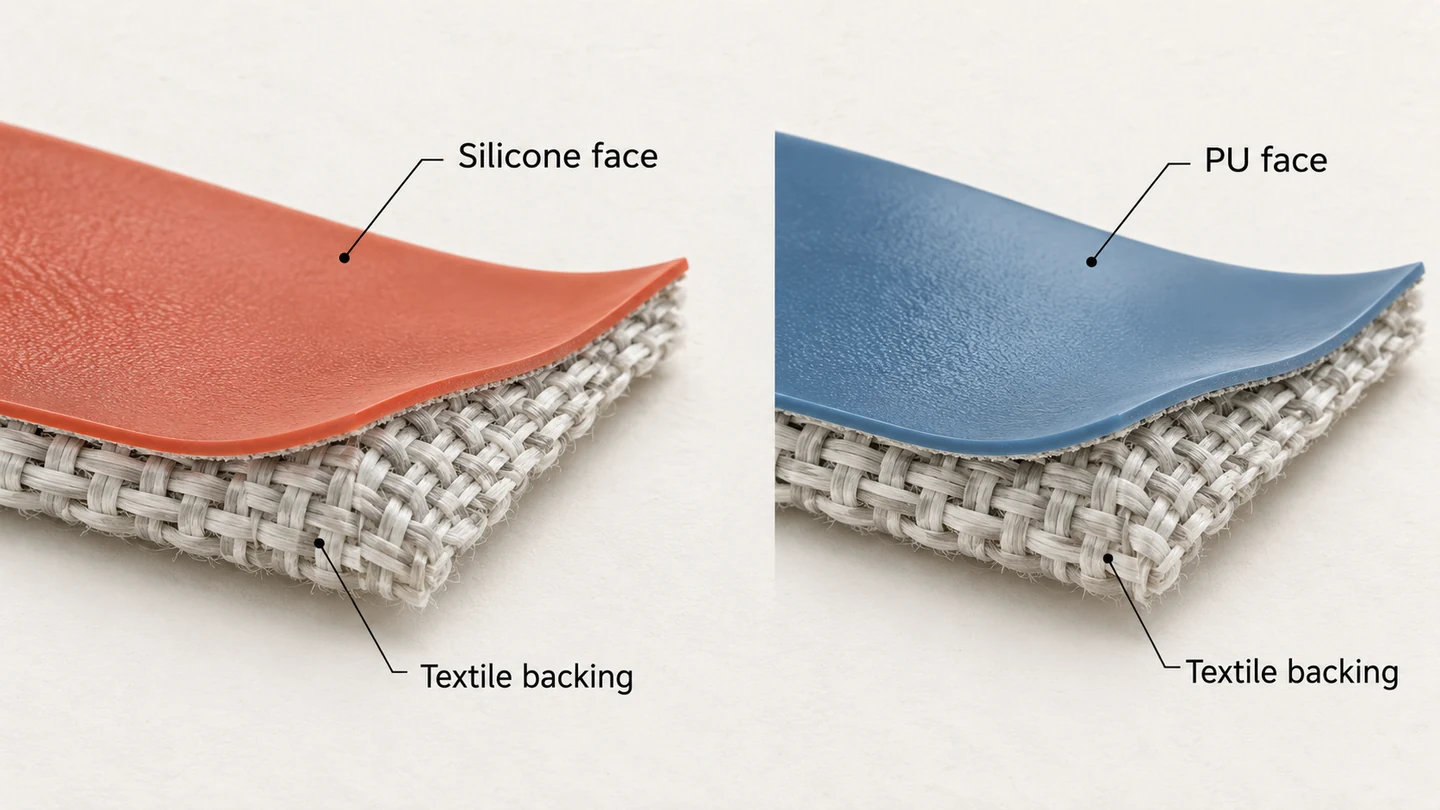
Silicone leather vs PU leather comes down to the coating: a silicone elastomer or polyurethane face over a textile backing. Silicone usually costs more. Two 54-inch-wide U.S. retail listings observed on 18 October 2026 were $52.50 per linear yard for a silicone-faced fabric and $24.95 per yard for a PU-faced fabric. Those are two individual listings, not a market price range.
In most silicone leather vs PU leather decisions, PU wins on leather-like feel and price, while silicone is the face suppliers sell for sun, frequent wiping and outdoor seating. The grade you actually buy still matters more than the polymer name, so judge a real sample and its test results for the sofa, seat or shoe you have in mind.
Silicone leather vs PU leather: what is the difference?
Both are coated fabrics, and the difference sits in the face polymer: silicone elastomer on one, polyurethane on the other. “Leather” in either name describes the look; neither is an animal hide.
The Association for Contract Textiles describes coated fabrics as a polymer coating on a textile or similar support. The backing takes the pulling, sewing and handling. As a result, a knitted, woven or nonwoven support can make two similar-looking faces feel and behave differently on the same chair.
| What you are comparing | Silicone leather | PU leather |
|---|---|---|
| Decorative face | Silicone elastomer | Polyurethane |
| Typical backing | Textile, often knitted polyester | Textile, often polyester |
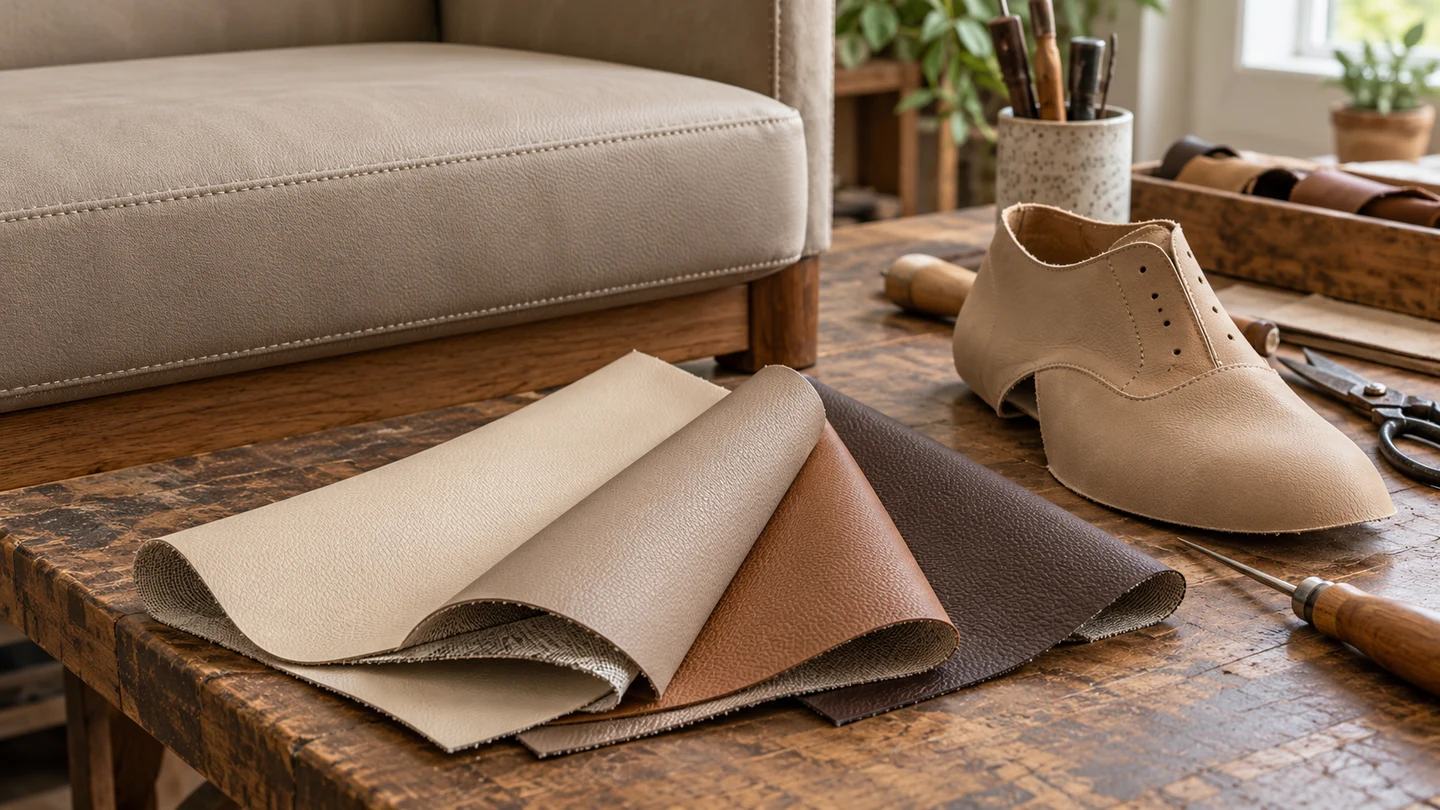
| Feel | Smooth, slightly rubbery and elastic | Softer, with leather-like grain and creasing |
| What sellers usually emphasise | Sun, heat and stain resistance; wipe-clean face | Leather-like look at a lower price |
| Known weak point | Higher price | Hydrolysis: cracking or flaking in heat and humidity |
| Results to ask for | Light exposure, abrasion and cleaner compatibility for that grade | Hydrolysis weeks, abrasion and cleaner compatibility for that grade |
Silicone-coated textile construction pairs the elastomer with a chosen support and process, and PU covers a whole family of formulations and finishes. A thin fashion PU and a contract upholstery PU are different purchases even when both carry the same name.
Which feels closer to real leather: silicone leather vs PU leather?
PU, usually. A textured PU face reproduces leather grain and creasing more convincingly, while silicone feels smoother and slightly rubbery, with quick elastic recovery.
Judge the swatch itself, whatever the label says. Bend it and press it lightly: watch how the grain opens around a curve, how fast the face recovers, and whether the backing makes the piece stiff. However, a sample that feels pleasant flat can behave differently once it is stretched over foam.
For a sofa arm, try the fabric over the padding and curve you plan to use. For a bag or shoe, check it with the lining and reinforcement the finished item will have.
The same question comes up when you want a leather look on a cabinet or desk, where rigid panels use a different family of facings. The decorative laminate overview explains those furniture-surface families, and the PET and PVC film comparison covers decorative films, not sewn upholstery.
Silicone leather vs PU leather: which lasts longer?
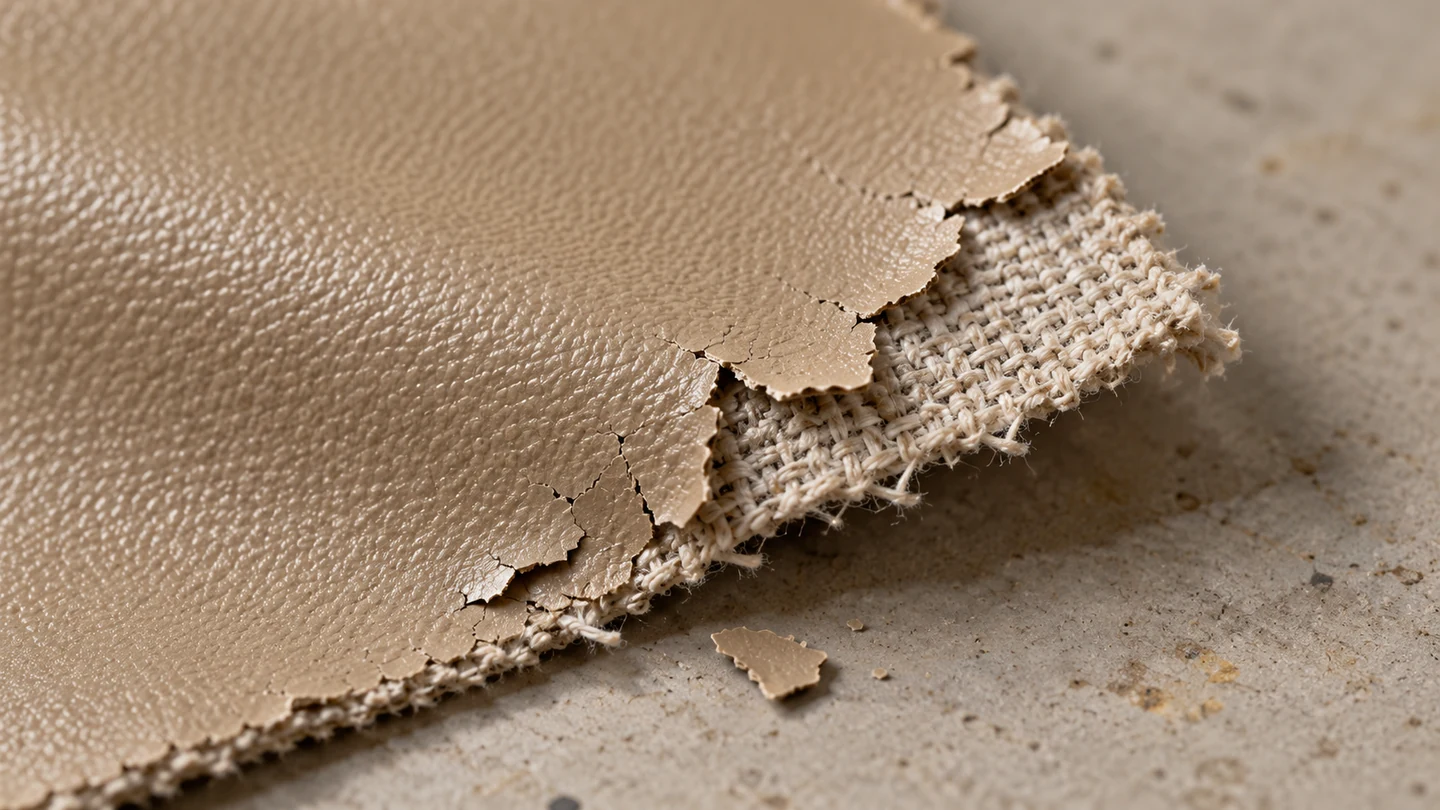
Silicone is the face suppliers sell as longer-lasting, and PU’s known weak point is hydrolysis: heat and humidity can make the coating crack, flake or delaminate. Compare hydrolysis and abrasion results measured the same way for the grade you are buying.
PU resistance depends on the resin. The ACT hydrolysis guidance ranks polycarbonate PU highest, polyether in the middle and polyester lowest, and counts body heat from sitting as part of the exposure. For general indoor contract upholstery, it recommends ISO 1419 Tropical Test Method C at 70°C and at least 95% relative humidity, with five weeks as the minimum. Weeks in that oven do not translate into years on a sofa.
For a sunroom chair, a seat beside an indoor pool or furniture in a humid climate, ask for a grade with more than the minimum hydrolysis result. Those are the rooms where PU coatings meet the most heat and moisture.
Abrasion is a separate test. ASTM D3389-21 covers rotary-platform abrasion of rubber- or plastic-coated fabrics, reported as mass loss or cycles to wear through to the backing. The abrasive, load, specimen restraint and endpoint all move the number, so only compare results run the same way.
For example, a dining chair wiped after every meal needs more evidence than a cushion used now and then. The surface durability test guide applies the same like-with-like rule to cabinet panel tests.
How do sunlight, heat and outdoor use change the choice?
For outdoor seating, strong sun or heat, start with a silicone-faced grade; for an ordinary indoor sofa, either face works. Silicone suppliers commonly position their fabrics for outdoor, marine and high-sun use, while PU is mostly sold for indoor upholstery, fashion and footwear.
Still, positioning is a starting point, not proof. Ask for the light-exposure results of the exact grade, because sunlight acts on the coating, pigments and backing together.
For a seat beside a large window, look for colour and surface change after light exposure. For an outdoor cushion, also check the backing, seams, drainage and care instructions: a wipeable face does not stop water entering through a seam or drying out of the foam.
In a vehicle, use upholstery qualified for that vehicle application.
Which is easier to clean and disinfect?
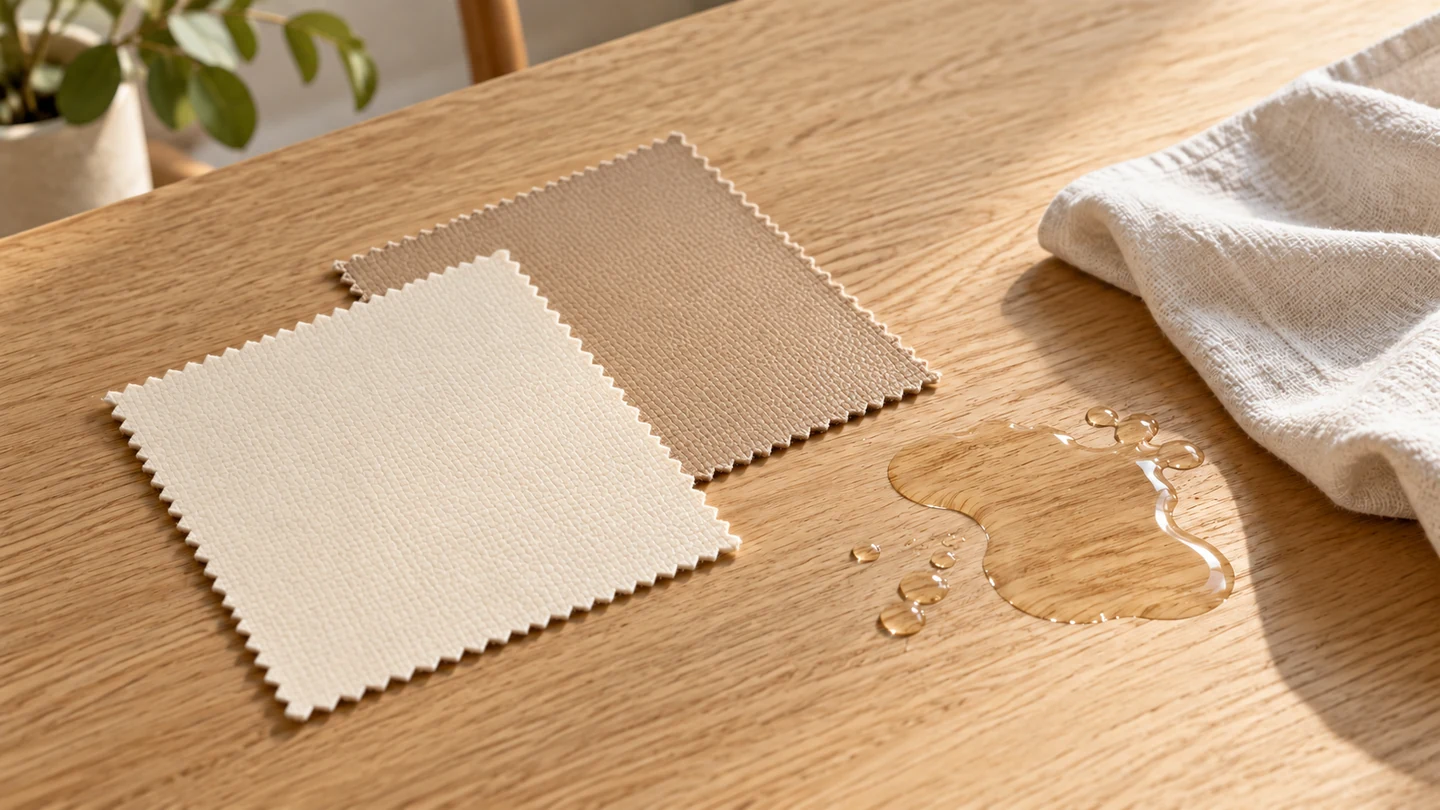
Silicone, usually. Sellers present it as stain-resistant and easy to wipe with soap and water, while PU is generally less tolerant of solvents and alcohol. Which cleaners a particular fabric accepts still comes from its own care instructions.
The two retail examples show why the care tag matters. The silicone listing allows mild soap and water for common stains; the PU listing gives a water-based cleaning code. Use alcohol or bleach only where that fabric’s instructions allow it, because the wrong cleaner can crack or flake a PU coating in a way that looks like hydrolysis failure.
Remove loose dirt first, wipe with the approved method and dry the surface as directed. However, an old greasy mark or ink stain may need a different treatment from a fresh food splash. Stop if wiping changes the colour, gloss or feel; harder scrubbing can turn a small mark into a damaged patch.
For a family sofa that meets juice, crayons and muddy paws, the wipe-clean face is the main reason buyers pay more for silicone. In a clinic waiting room or a café where seats are disinfected daily, check your disinfectant against the fabric’s compatibility list before you order. An antimicrobial surface claim answers a different question from cleaner compatibility.
Which is better for the environment and indoor air?
Neither is biodegradable, so the real difference is in the formulation: a silicone face does not need the plasticizers PVC relies on, and PU can be made by a waterborne route as well as a solvent one. Judge the actual product’s emissions and composition statements.
Waterborne polyurethane coatings are used for leather-like synthetic surfaces, so PU does not automatically mean a solvent-based process. Likewise, a silicone face says nothing about the backing, adhesives or other layers. Also check any PVC-free or restricted-substance statement against the layers it covers.
For an indoor sofa, the foam, adhesive and frame matter as much as the face. Our furniture off-gassing guide covers those other components. When a specification says vinyl, the PVC and vinyl explanation separates the material terms from a finished-product claim.
Silicone leather vs PU leather: which costs more?
Roughly double in the retail examples we found.
| U.S. retail example, observed 18 October 2026 | Stated construction and width | Listed material price |
|---|---|---|
| Perfect Fit SKU SIL-PEB-CAR | Silicone face, polyester backing; 54 inches wide | $52.50 per linear yard |
| Decorative Fabrics Direct SKU 7126511 | PU face, polyester backing; 54 inches wide | $24.95 per yard |
These are material prices only, before tax, freight, fabrication or installation. The two fabrics also differ in construction, so the gap cannot be put down to face chemistry alone. Check current price and availability before you budget.
For a finished chair, add cutting yield, upholstery labour, foam and the cost of replacing a poor match. A cheaper PU suits an occasional chair; a dearer silicone still needs cleaning and durability evidence for your room.
Which one should you use for sofas, car seats and shoes?
For an indoor sofa either works, so choose on feel and care; outdoor, sun-exposed or car seating favors a suitable silicone grade; for shoes and fashion accessories, PU is the common and cheaper choice. Busy or humid seating needs hydrolysis and wear results whichever face you pick.
| Use | Sensible choice |
|---|---|
| Indoor sofa or occasional chair | Either; pick on hand, backing and the approved cleaning routine |
| Busy or humid indoor seating | Either, with hydrolysis and wear results for the grade and your cleaners |
| Outdoor or strongly sunlit seating | A silicone-faced grade sold for that exposure; check the whole cushion build |
| Vehicle seat | Lean toward silicone for heat and sun, using material qualified for that vehicle |
| Shoe or fashion accessory | PU in most cases; judge the finished upper for bending and feel |
For dining chairs and kitchen benches that collect food spills, easier wiping often justifies the silicone price; for a bedroom headboard that is rarely touched, PU usually wins on cost. Next, handle a useful-size sample before choosing a full covering. Then fold it around the intended shape and look at the grain under the room’s light. That shows a stiff backing, a conspicuous crease or an unwanted sheen that a small online image hides.
One piece of furniture can need both kinds of surface. A flexible seat covering and a rigid cabinet side need different constructions, so keep them apart when you compare samples or brief a fabricator.
Where does a silicone surface on furniture panels fit?
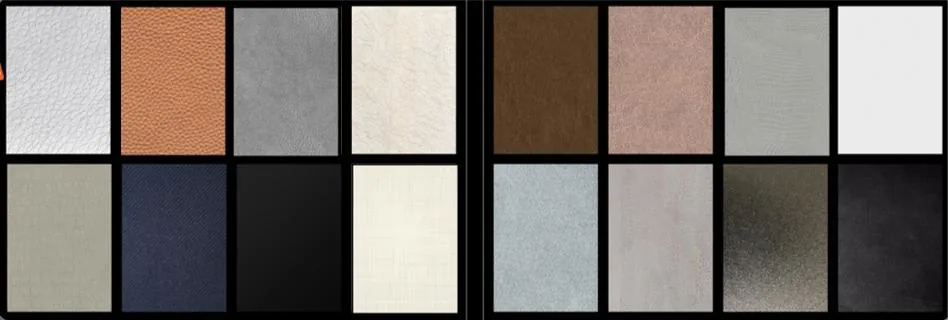
Puremorfilm makes decorative film with a silicone functional face for rigid furniture panels; it is laminated flat to boards instead of being sewn like upholstery. The film has a slight leather-like give, so we do not recommend it for floors, stovetop countertops or shower floors.
Our silicone surface is inherently flame-retardant; higher grades up to UL 94 V-0 are available on request. In the manufacturer’s laboratory tests, coffee, red wine and other stated stains held at 25°C for 24 hours were wiped away with no obvious change. We use a No DOP formulation.
We supply mainly rolls, with film-faced panels available on request for PUR flat lamination. Our newer paint-free surface uses silicone functionality, distinct from PVC, melamine, PP and PETG decorative faces. See the furniture decorative film route for panel applications.
Silicone leather vs PU leather: which should you choose?
For silicone leather vs PU leather, choose PU for a leather-like hand on a budget, and silicone where sun, heat or frequent wiping are part of the job. For any heavy-use seat, compare results run by the same method before you decide.
| Your priority | Decision rule |
|---|---|
| Budget and leather-like hand | PU; compare real samples |
| Sun, heat or outdoor exposure | A silicone grade sold for that exposure |
| Frequent cleaning or disinfecting | Usually silicone, confirmed against the fabric’s cleaner compatibility |
| Heavy daily use | Either, with hydrolysis and abrasion results for the grade |
| Rigid panel instead of upholstery | A laminated decorative surface on a board |
For a flat furniture-panel finish, contact us with the application, the cleaning routine it must survive and the samples or panels you need.
Frequently Asked Questions
Should I avoid PU leather?
No. A good PU grade suits indoor upholstery and accessories. For humid or frequently cleaned seats, choose one with hydrolysis and wear results.
Does PU mean fake leather?
Yes. PU leather is a polyurethane-coated fabric, a synthetic alternative to animal hide.
What is silicone leather?
Silicone leather is a coated fabric with a silicone elastomer face over a textile backing. It is sold mainly for upholstery, outdoor seating and accessories, and differs from silicone-faced film laminated to a rigid board.
Which is better, PU or artificial leather?
PU leather is already a type of artificial leather. Instead, the real choice is between PU, PVC and silicone faces for the job.
How do silicone leather and PU leather differ in cost?
Silicone leather usually costs more, roughly double in the two retail listings above. Width, backing, performance additives and fabrication change the gap.