
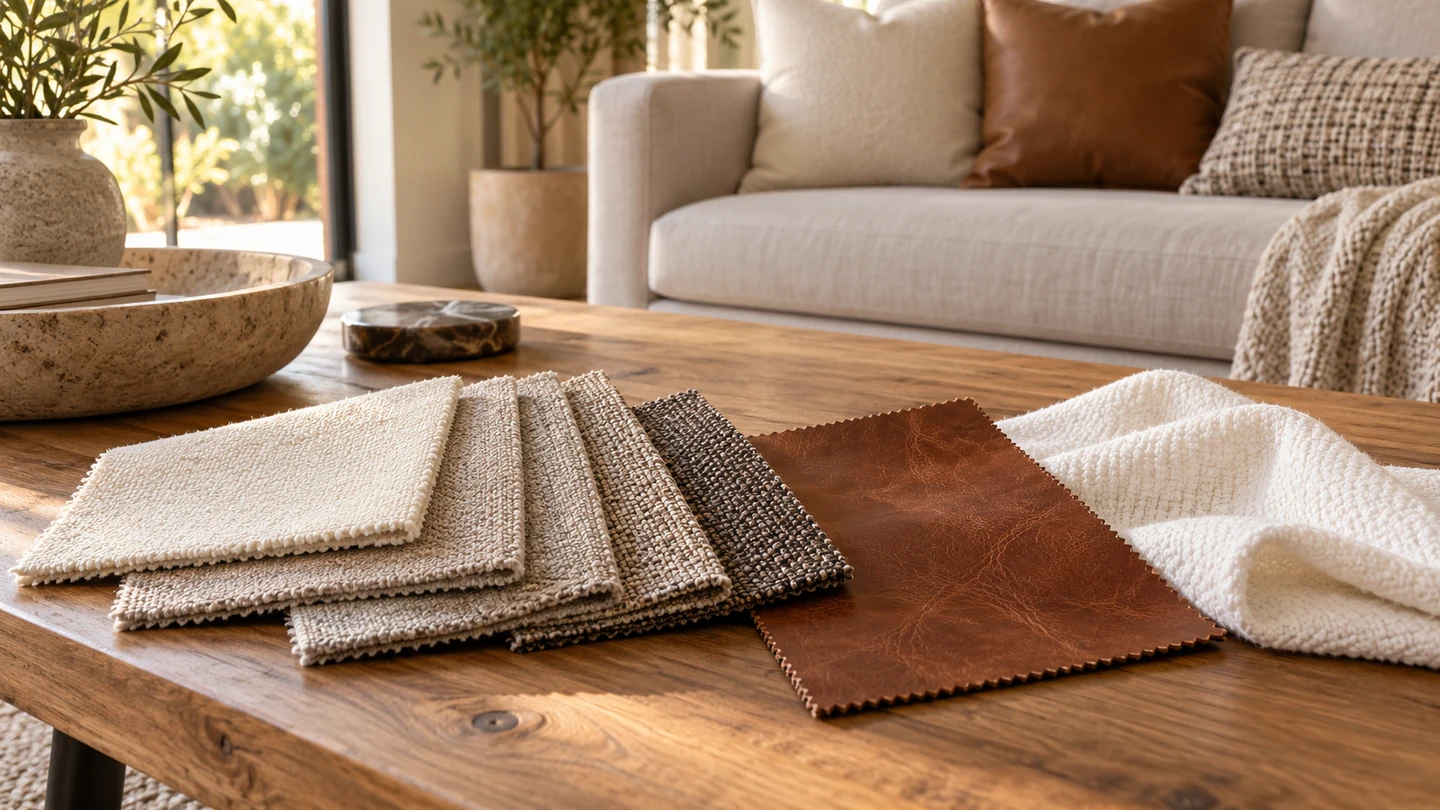
The most stain resistant furniture surfaces are usually tightly woven synthetic upholstery such as microfiber, polyester blends and olefin, performance fabrics with stain protection added at the mill, and protected leather or faux leather that you can wipe before a spill soaks in. Cotton, linen and open aniline leather take up spills more readily. Even the best options still need a spill blotted quickly and cleaned by the method on the furniture’s care tag, where one of four codes (W, S, W-S or X) tells you whether water, solvent, either or neither is allowed.
Start with the fiber name, then examine the finish and care information. A fresh drink, cooking oil and dye rubbed off jeans behave differently on the same sofa, and the care code decides how you can deal with each.
Which furniture fabrics resist stains best?
Tightly woven synthetics and performance fabrics usually resist everyday spills best, with protected leather close behind for anything you can wipe up quickly. Natural fibers such as cotton and linen absorb spills more easily unless they have been treated.
The Association for Contract Textiles explains stain-repellent finishes as part of a finished textile system: fiber, weave, finish, soil and cleaning all shape the result. A liquid that beads for a moment can still work through a fabric, and resisting a water-based spill says little about an oily mark.
| Candidate | Why it resists stains | Where it fits | What to verify |
|---|---|---|---|
| Microfiber | Fine, tightly woven fibers that resist liquid penetration | A soft everyday family sofa | Actual composition, oil-soil behavior and cleaning code |
| Polyester or a blend | Synthetic fiber that soaks up less than cotton | Family seating or office upholstery | The complete fabric and its permitted cleaners |
| Olefin | Polypropylene fiber that absorbs very little liquid | Busy, casual seating | Finish, backing and care requirements |
| Performance fabric | A built-in repellent or cleanability system | Frequent food or drink exposure | Which stains and cleaning methods the claim covers |
| Protected leather or coated fabric | A smooth finished face that wipes clean | Dining seats or sofas that see quick spills | Leather or coating type and compatible care |
| Cotton or linen | Natural fibers that absorb spills unless treated | Rooms where that texture is the priority | Absorbency, protective treatment and cleaning practicalities |
For a sofa that lives beside snacks and drinks, ask for the exact color and grade you plan to order, with its care code attached. A washable-looking texture may still be an S-coded, solvent-only fabric.
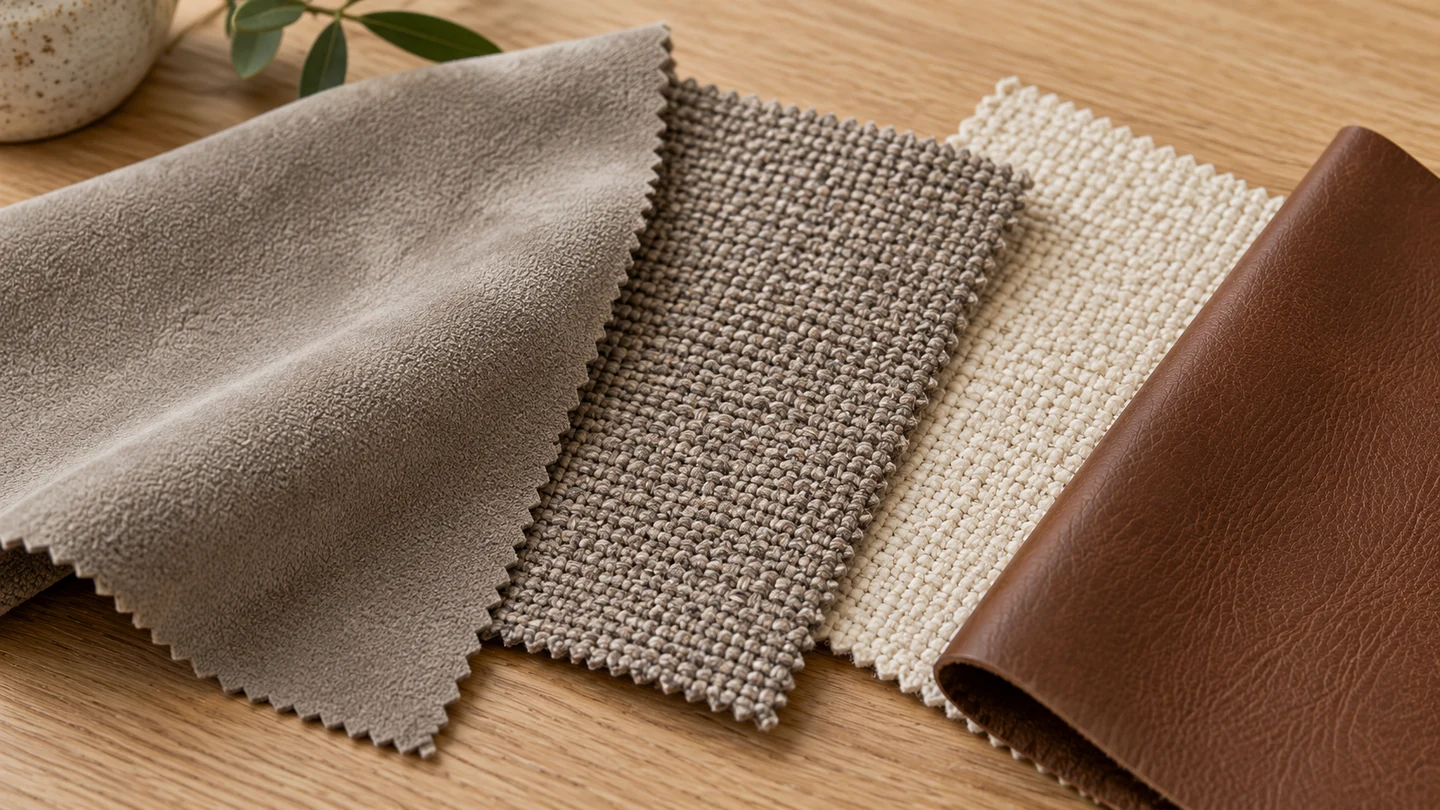
What makes an upholstery fabric stain resistant?
Three things: a tight weave that slows liquid down, fibers that absorb little of it, and a stain-repellent finish that makes it bead and release. Each affects whether a spill wets, enters or marks the surface.
Repellency, stain resistance and a moisture barrier are different jobs. A repellent finish makes liquid bead on the face. A moisture barrier stops it passing through. Stain resistance is about the mark left after the stated exposure and cleaning.
So a quick water-beading demo is not enough. A sticky sauce can leave residue, an oily spill behaves differently from a drink, and seams, tufting and piping are harder to clean than a flat sample.
On a family chair, look at how the cover wraps the cushion and how easily you can reach a spill. If liquid gets into the foam, cleaning the face alone can leave a second problem underneath. Hard panels are a different construction, covered by stain tests for cabinet surfaces.
Is built-in stain protection better than a spray-on treatment?
Usually, yes. Protection built into the fabric at the mill needs no follow-up treatment, while a spray-on protector wears with use and cleaning and has to be reapplied. Check what “built-in” actually means on the fabric you are buying, though.
The textile association’s guidance separates finishes applied during manufacture from treatments added afterward, and a factory application can still be a surface finish. Solution dyeing puts color through the fiber; color retention and stain protection describe different properties.
One performance-fabric maker’s explanation makes the same distinction, noting that many performance fabrics are regular fabrics with a protective surface finish, while its own fibers are solution-dyed. That describes one system; it does not mean every solution-dyed fabric shrugs off every spill.
For a new sofa, a documented easy-clean fabric spares you an extra treatment straight after delivery, and adding another product on top of a suitable finish may be unnecessary. Read the care instructions and warranty before you change it.
An antimicrobial surface claim is a separate question. Neither that label nor a stain-protection label tells you which cleaner the fabric tolerates after a spilled meal.
Which fabric suits kids, cats and dogs?
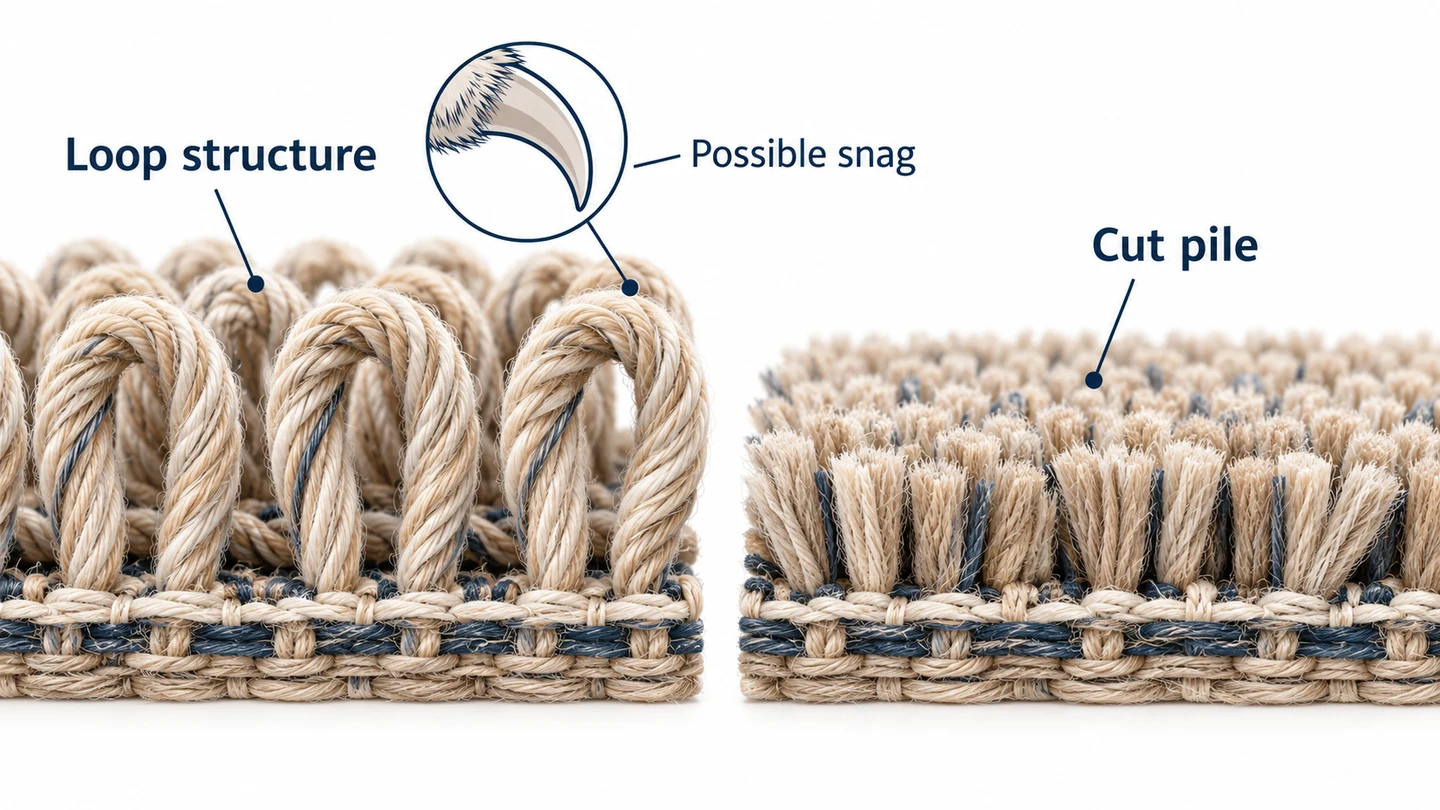
For kids, a tightly woven performance fabric or microfiber that you can spot-clean; a cut-pile fabric such as velvet suits cats better than a looped weave; for dogs, velvet or a tight, heavier weave. Easy-to-clean fabric can still snag, wear or hold hair, so match the fabric to the animal as well as the spills.
A family-sofa guide from a furniture maker recommends low-maintenance coverings, including protected leather, and loose cushions you can rotate or flip to spread wear. A removable cover still needs its own washing instructions before it goes near a machine.
For cats, a fabric retailer’s selection advice favors cut pile because there are no loops for claws to hook into, and suggests a tight, heavier weave such as denim or canvas if you dislike velvet; both hold up better than linen or chenille. This selection advice reduces snag opportunities while leaving claws capable of damaging the surface.
For dogs, the same retailer puts velvet and tight weaves first. Smooth leather wipes clean easily but scratches more readily, which matters with claws. For children eating on the sofa, a care routine you will actually follow beats a beautiful fabric that needs a specialist after every mark.
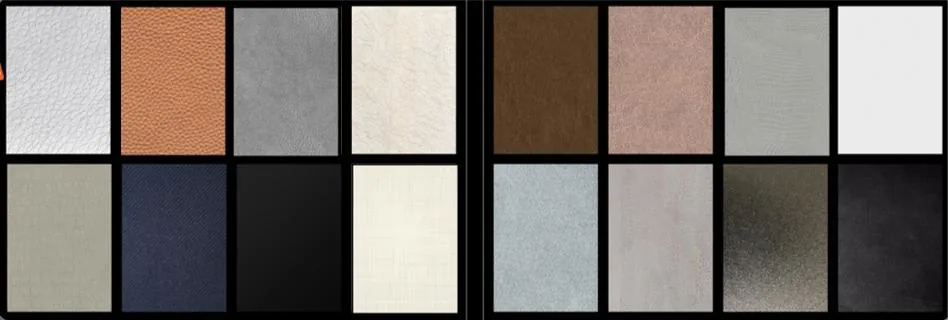
Lay a swatch big enough to show the texture next to the cushion you are considering. A busy pattern hides small marks; a pale smooth face shows them.
What fabric works best on dining chair seats?
Protected leather, faux leather or a tightly woven performance fabric, because dining seats take more sauce and drink than any other seat in the house. Pick the one whose cleaning method you can use straight after a meal.
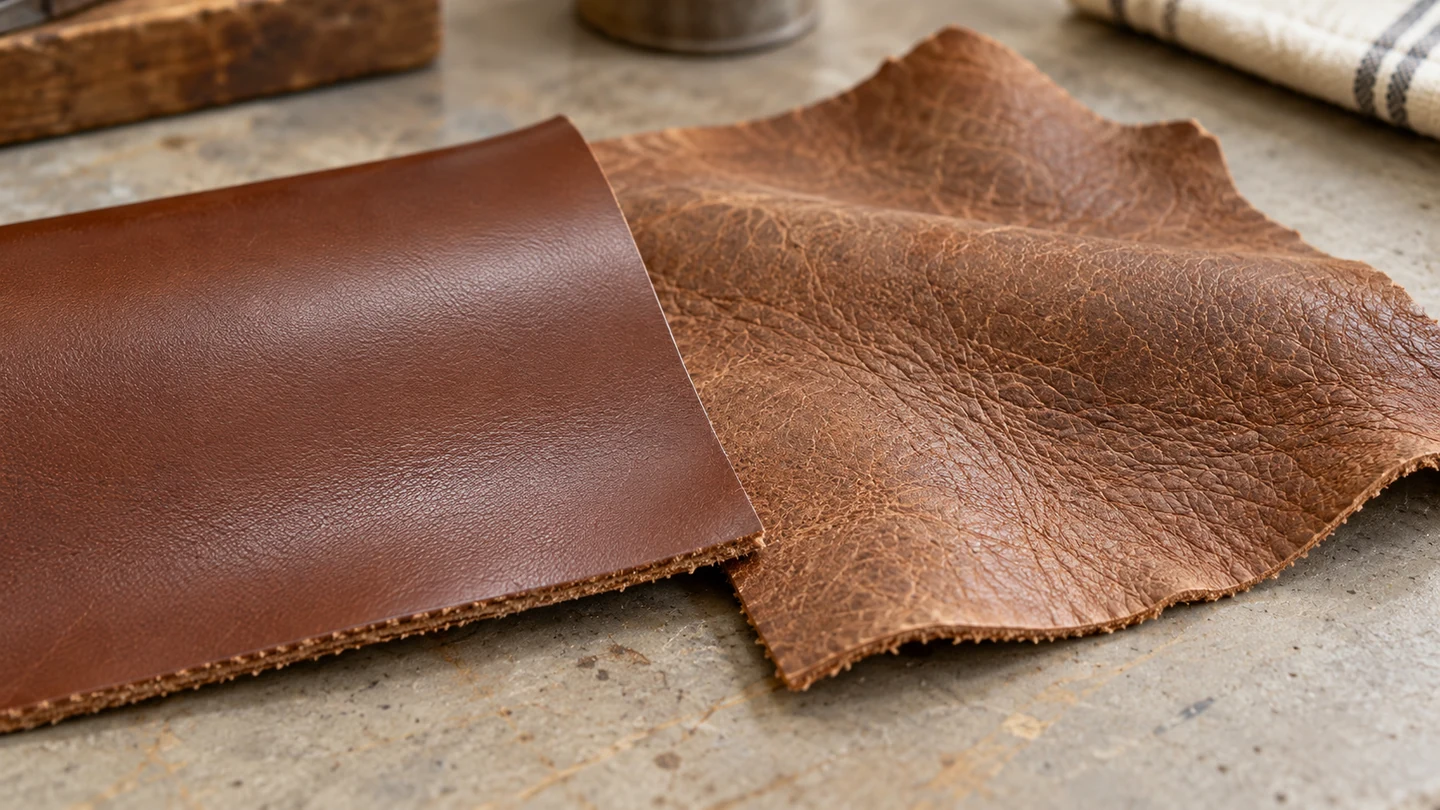
The leather type matters as much as the word “leather”: a lightly finished natural leather absorbs liquid differently from a pigmented, protected face. For woven seats, look at the actual stain and care information, because spills can still reach the gaps between smooth synthetic fibers.
With children at the table, check the seams and the joint between cover and frame. Sauce collects there even when the seat face wipes clean, so a plain, flat seat is easier to keep clean than a deeply tufted one with the same fabric.
Feel the sample too. You may want a softer fabric for long dinners or a smoother face for constant wiping. Adding a protective spray later is a separate decision that needs its own compatibility check.
Are leather and faux leather really stain resistant?
Protected (pigmented) leather and most faux leather wipe clean before most spills soak in, but aniline and nubuck leather absorb liquids more readily, and none of them is stain-proof. The surface type decides how you care for it.
The Leather Naturally care guide separates these types: pigmented leather carries a protective color finish, while natural-looking aniline has none and takes up water more readily. Knowing the grade stops you buying a delicate surface for a seat that sees constant food spills.
For genuine leather, use the care routine written for that leather type, including how often to condition it. A cleaner or conditioner that suits one finish can mark another.
Faux leather needs the care instructions for its own coating and backing. Do not borrow an animal-leather conditioner or a harsh household cleaner just because both look like leather, and watch for any change in color, gloss or feel during a hidden-spot test.
On a busy dining chair, a protected wipeable face suits the routine. On a lounge chair chosen for its patina, accepting marks is part of the deal; decide that while you look at the actual sample.
How do you clean a stain-resistant sofa without damaging it?
Blot a fresh spill without rubbing, read the care code and use only the cleaning route it allows. Routine vacuuming and spill removal are different jobs, and neither stain protection nor a zipped cover means the fabric can go in a washing machine.
The upholstery-care instructions from La-Z-Boy explain the common codes below. The label and instructions on your own piece take priority.
| Code | General cleaning route described | Practical limit |
|---|---|---|
| W | Water-based spot cleaning | Does not automatically allow machine washing or soaking |
| S | Water-free solvent spot cleaning | Avoid substituting a water-based household recipe |
| W-S | Either permitted water-based or solvent spot method | Use a compatible product and controlled local treatment |
| X | Vacuuming or light brushing | Wet and solvent spot treatments are outside this route |
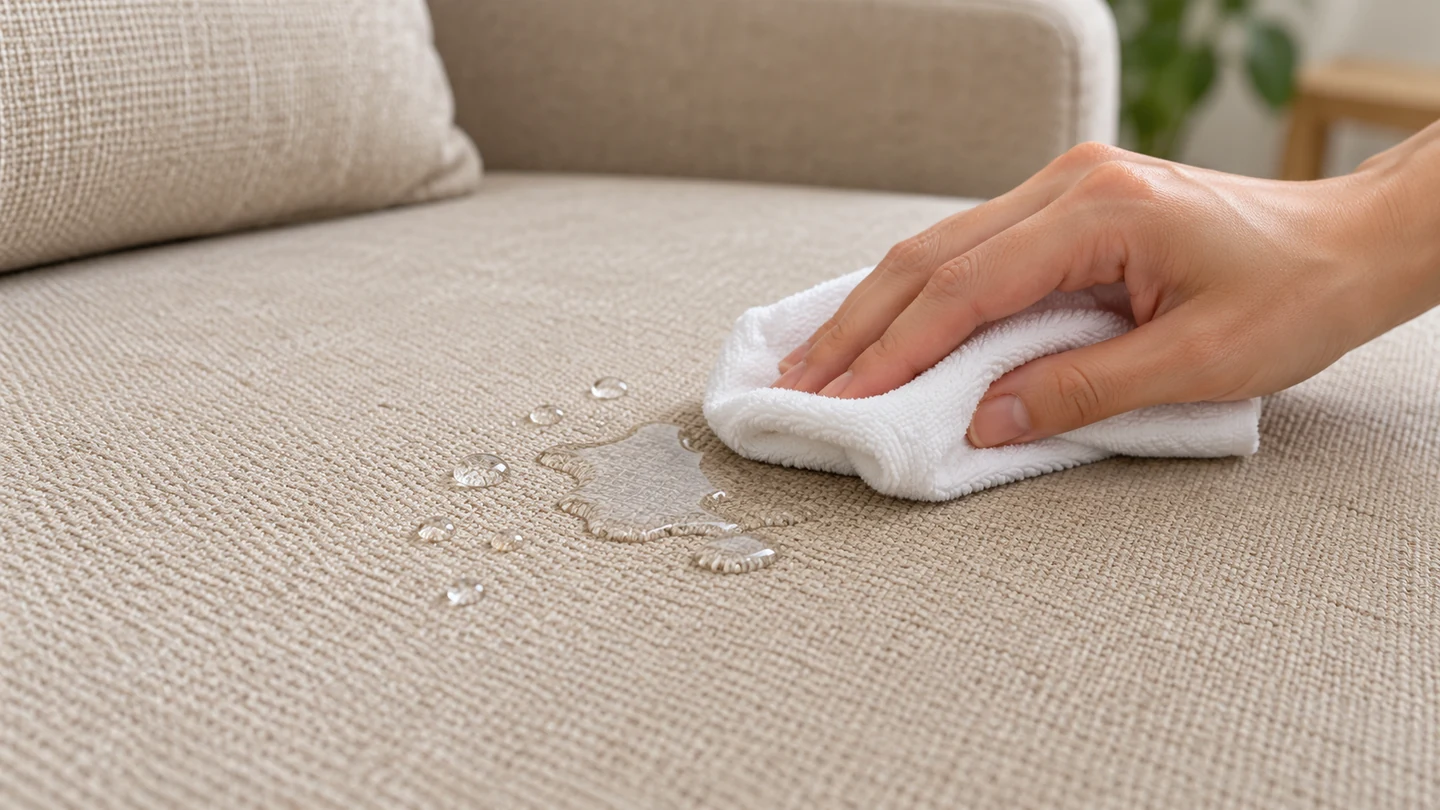
For a fresh spill, lift any solids, then blot the liquid without spreading it. Check the label, try the permitted method on a hidden spot, work from the outside in, and do not soak the cushion or backing. Let it dry as directed before you judge the result.
For an old or stubborn mark, work out what caused it if you can. Ink, grease and a dried drink need different treatment, and repeated hard rubbing makes a bigger patch. If the label rules out the treatment you need, or the mark stays, call a professional upholstery cleaner instead of working through stronger household chemicals.
Between spills, vacuum or brush off loose dirt before it is ground in, and rotate or flip cushions only where the piece is designed for it.
Can you make existing furniture more stain resistant?
Yes. A compatible fabric protector or a washable cover can help an existing piece, as long as the material and care code allow it. Find out first whether the fabric already has a finish, so you do not add an unnecessary or unsuitable treatment.
A fabric-protector manufacturer’s instructions show why the label matters. That product must not be used on X-coded fabric, leather or suede, asks for a colorfastness test on a hidden area, and tells you to reapply after every cleaning or once a year because protection fades with wear. Read the full label of whichever protector you choose.
A spray treats only the face. Seams, worn coatings and padding underneath keep their own care needs.
A fitted cover suits a hard-working family sofa when its size, fit and washing instructions match the piece; a loose throw protects only the area it covers. Either one makes spills easier to manage without changing the fabric underneath.
Indoors, follow the product’s ventilation instructions. The furniture off-gassing guide explains how the cover and other components shape indoor-air choices; a stain-protection claim does not describe the emissions of the whole sofa.
What about hard furniture surfaces like cabinet doors and tables?
Hard panels resist stains through their facing, not a fabric. Puremorfilm supplies decorative film with a silicone functional surface for flat furniture and wall panels such as cabinet doors and side panels; it is not used for sofa or chair upholstery. In the manufacturer’s laboratory tests, coffee, red wine, soy sauce and lipstick left for 24 hours at 25°C were wiped off with no obvious change.
The silicone surface is inherently flame-retardant, with higher grades up to UL 94 V-0 available on request. We use a No DOP formulation. Our main supply is rolls for PUR flat lamination, with film-faced panels available on request. This newer paint-free finish uses silicone surface functionality, distinct from PVC, melamine, PP and PETG decorative faces.
The furniture decorative film page covers that panel route. For everyday care and wear on rigid faces, see cleaning kitchen cabinets and scratch-resistant cabinet finishes. The film is not suitable for floors, stovetop counters or shower floors.
Which stain-resistant surface should you choose?
For most busy homes, a tightly woven performance fabric or microfiber sofa, protected leather for dining seats, and cut-pile or tight heavy weaves where cats and dogs climb on. Then check the care code, comfort and texture on the actual sample.
| Main household need | A useful direction |
|---|---|
| Children and frequent drinks | Tightly woven microfiber or a performance fabric, or a protected wipeable face |
| Cats | Cut-pile velvet, or a tight, heavier weave such as denim or canvas |
| Dogs | Velvet or a tight, substantial weave; smooth leather scratches more easily |
| Dining seats | Protected leather, faux leather or a tightly woven performance fabric |
| Natural texture or patina | Treated cotton or linen, or aniline leather, with its care demands accepted |
| Rigid cabinet or wall panel | Evaluate the decorative facing and panel care separately from upholstery |
For a hard furniture-panel project, contact us with the panel use, preferred finish and the spills or cleaners it will face.
Frequently Asked Questions
Which sofa is the best for stain resistance?
A sofa in a tightly woven performance fabric, microfiber or olefin is usually the most stain-resistant, with protected leather a strong choice for spills you wipe up quickly. Ask for the care code before you buy.
How to make furniture stain-resistant?
Apply a compatible fabric protector or fit a washable cover, and blot spills straight away. Sprays wear off with cleaning and need reapplying, and they are not for X-coded fabric or leather.
What type of fabric is best for dining chair seats?
Protected leather, faux leather or a tightly woven performance fabric. All three wipe clean after a meal; avoid deep tufting where sauce collects.
How to remove tough stains from furniture?
Start by blotting, then spot-clean with the method the care code allows, testing it on a hidden spot and working from the outside in. If the code rules out the cleaner you need or the mark stays, call a professional upholstery cleaner.
Does stain-resistant upholstery still need cleaning?
Yes. Dirt, body oils and spills still build up on protected fabric, so regular vacuuming and prompt spot cleaning keep it looking right.