
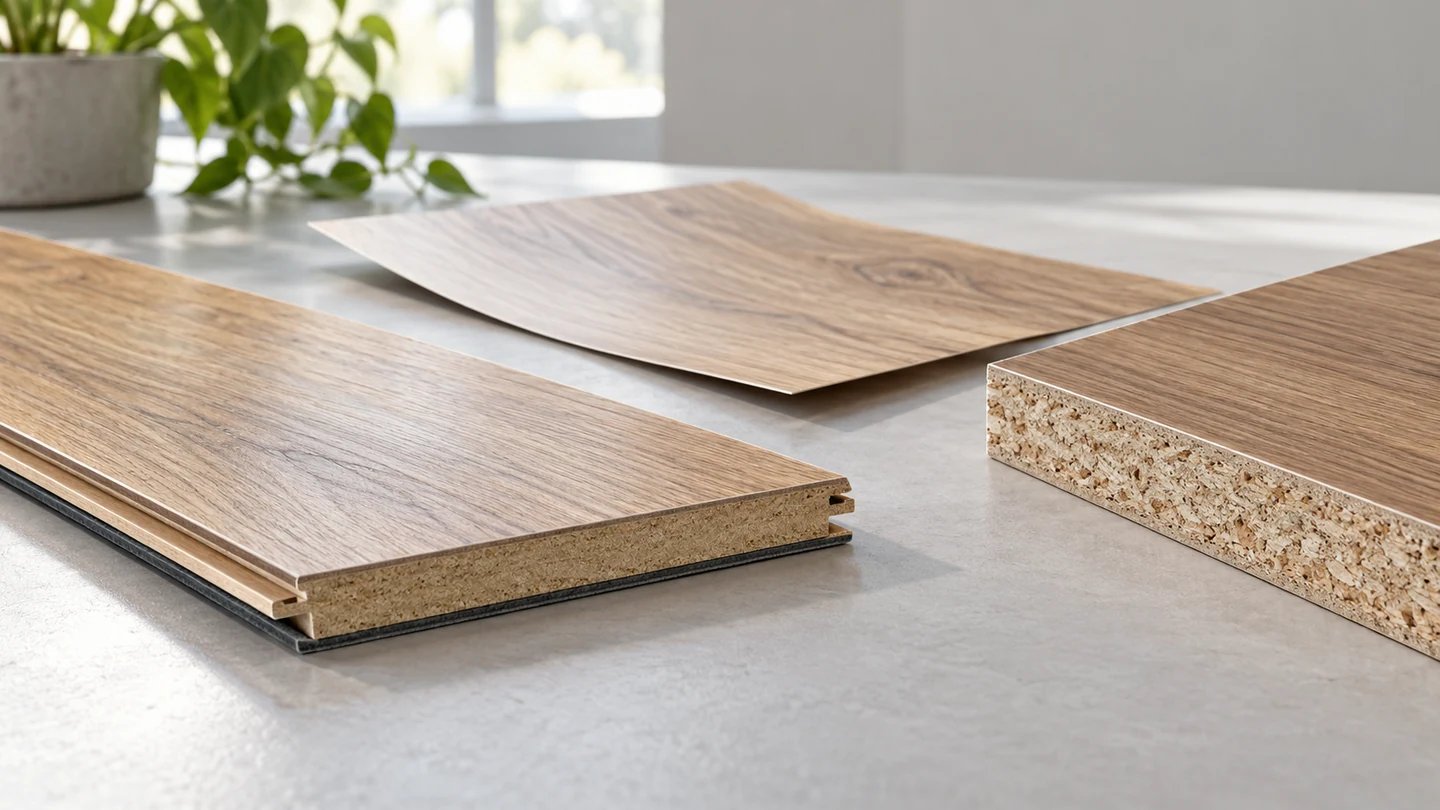
Laminate is a product made by bonding layers together; a typical laminate floor has four main layers: a clear protective face, a printed decoration, a compressed wood-fiber core and a backing. Together they give the look of wood or stone without a solid-wood wear surface. The same word also describes decorative sheets and faced boards used for cabinets, furniture and countertops.
That shared name can make a flooring brochure and a kitchen-cabinet quote sound as though they describe the same thing. Start by identifying the product: a finished floor plank, a decorative sheet or a faced furniture board. Their layers, uses and repair options differ.
What does laminate mean?
Laminate means a layered material whose parts are bonded together into one product. Around the home, the word commonly refers to laminate flooring or to a decorative surface used on furniture and worktops.
For a floor, the layers make a plank that forms part of a flooring system. For a cabinet, a decorative face is combined with the board that makes the door, shelf or cabinet body. Most familiar laminates are made with heat and pressure, but the materials and production routes still differ from one product to another.
| Product | Main construction | Typical use | Refinishing question |
|---|---|---|---|
| Laminate flooring | Protective layer, printed decoration, wood-fiber core and backing | A finished floor covering | The printed face cannot be sanded like wood |
| Thermally fused laminate, or TFL | Resin-impregnated decor paper fused directly to a board | Cabinet and furniture panels | Assess repair or replacement of the faced part |
| High-pressure laminate, or HPL | A separately made decorative sheet bonded to a support | Furniture and suitable worktops | Repair depends on the sheet, bond and damage |
The decorative laminate overview focuses on the furniture-surface family. If you are choosing a floor, keep reading the plank’s flooring information instead of borrowing a cabinet-surface claim.
What is laminate flooring made of?
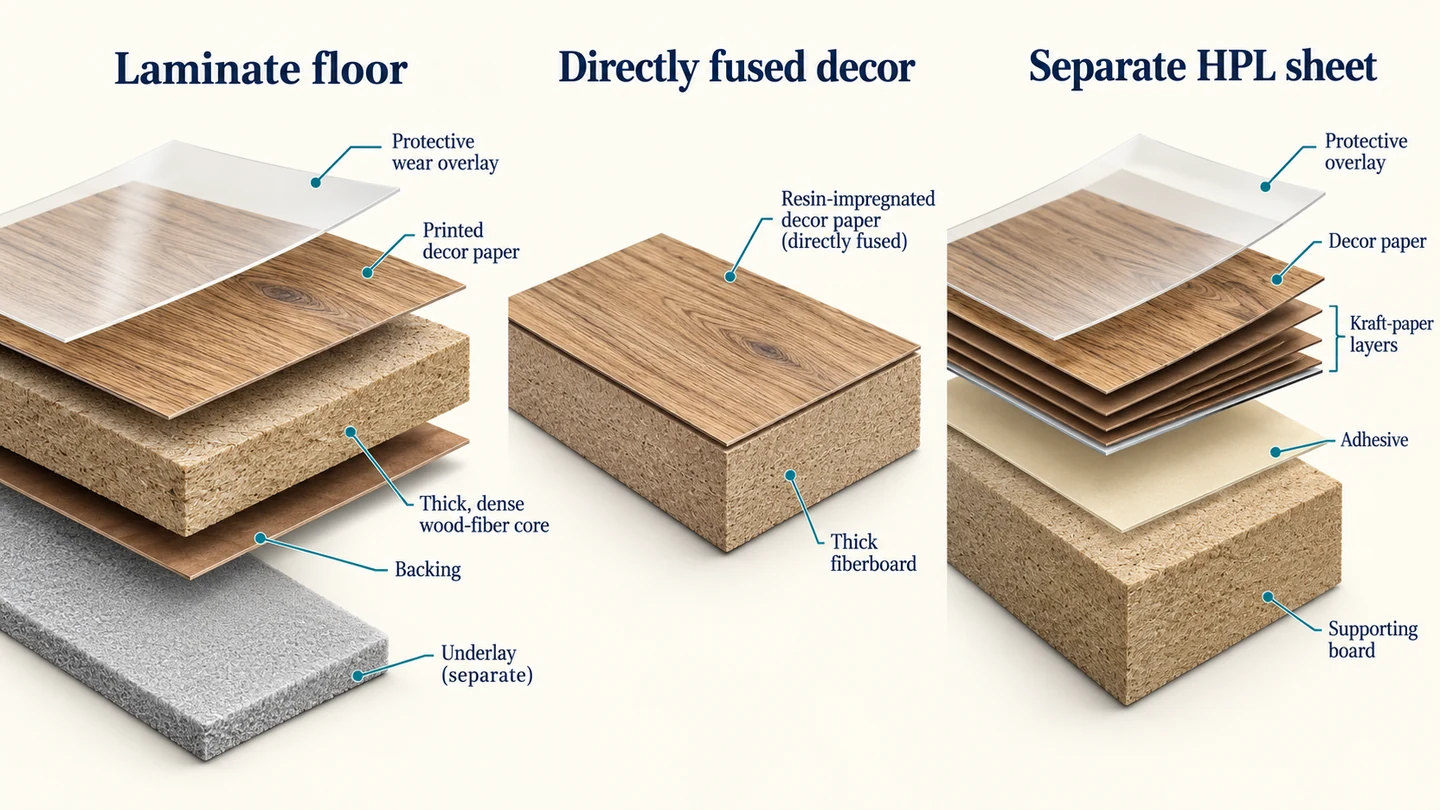
It is typically made of a clear wear layer, a printed decorative layer, a compressed wood-fiber core and a backing, with the appropriate underlay beneath the flooring system. Each layer has a different job.
The North American Laminate Flooring Association’s explanation describes that layered construction. The clear face protects the visible decoration. The printed layer creates the wood or stone image. The wood-based core provides most of the plank’s body, while the backing helps balance and protect the construction.
Brochures may use terms such as high-density fiberboard for the core. The useful distinction is that the body contains compressed wood fibers, while the visible grain is a print. A cut edge can reveal a wood-colored core without revealing a real timber surface you could later sand.
Underlay contributes to the installed floor’s feel and sound behavior. It may be preattached or supplied separately according to the particular system. Check that arrangement before adding another layer: a plank with an attached pad may have different installation instructions from one designed for separate underlay.
The laminated MDF explanation covers the related idea of a decorative face and a wood-based support in furniture. It helps explain the construction principle without treating a furniture panel as a floor plank.
Is laminate just plastic?
No. Typical laminate flooring includes a substantial wood-fiber core and a resin-based decorative and protective surface; decorative furniture laminates commonly combine paper and resin on or with a supporting board. Describing the whole product as a plastic sheet misses most of its construction.
The resin provides useful surface properties, which is why some descriptions call the visible layer plastic. At the same time, the wood-based floor core can still respond badly to prolonged water exposure. Its surface appearance and its internal moisture response come from different parts of the product.
Vinyl flooring belongs to another product family based on PVC, but even that family contains varied constructions. The 2025 industry declaration for an SPC vinyl group includes mineral filler as well as PVC and other constituents. It is a concrete reason to read the actual product description instead of calling every vinyl floor all plastic.
For a homeowner, the practical step is to identify the layers and the system’s intended use. The PVC and vinyl explanation covers those terms. A label naming one polymer does less work than the flooring construction and installation information beside it.
Is laminate real wood?
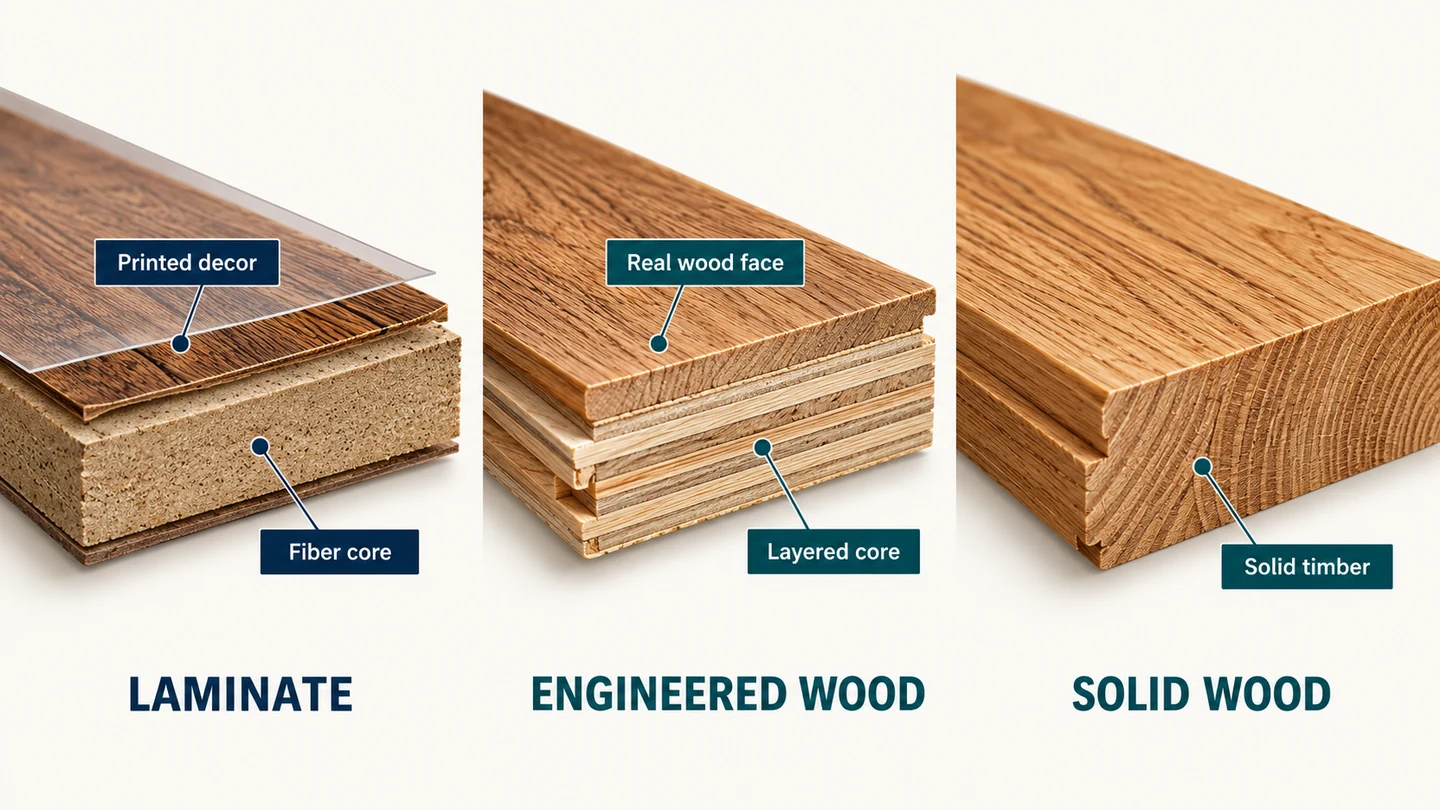
No, its visible wood grain is a printed image, not a real-wood wear face, although the core of a typical laminate floor contains wood fibers. Engineered wood has a genuine wood surface layer, and solid wood is timber through the part.
The wood-flooring industry’s engineered-floor description identifies a real wood wear layer over supporting layers. That makes engineered wood and laminate different purchases even though both can be layered products with a wood look.
Sanding a laminate floor removes the protective face and printed decoration. Sanding a wood floor works on real timber, with the available wear-layer thickness and condition governing what can be done. The wood-floor refinishing guidance explains why professional assessment matters before assuming a wood floor can be sanded again.
For an old house where future refinishing is a priority, that distinction can decide the shortlist. For a room where the desired grain is mainly a visual choice, a printed floor may still be entirely suitable. On furniture, the wood veneer versus laminate comparison makes the same face-material distinction: a wood leaf and a printed wood image are different surfaces.
What are the downsides of laminate?
Prolonged water exposure can damage a wood-based core, and the printed face cannot be renewed by sanding. A small surface mark may be repairable, while severe damage or a swollen plank can require replacement.
Water that reaches a vulnerable core through joints or edges can cause swelling that remains after drying. A product marketed as water-resistant or waterproof needs to be read with its actual installation, joint and warranty conditions. Clear spills promptly and use the prescribed care method instead of treating the claim as permission to leave standing water.
The EPLF repair and reuse bulletin, November 2024, distinguishes local repair from replacing a damaged plank. Matching repair systems can address some small scratches or indentations. More extensive damage needs a different decision because a printed layer has limited scope for material removal.
For a hallway, consider everyday wear and the possibility of local repair. Near an entrance where wet shoes are common, examine the specific water-related conditions as carefully as the wear information. In a room exposed to persistent leaks or flooding, address that exposure before choosing among flooring claims.
Feel and sound also depend on the plank, underlay and supporting floor. Handle samples and check the intended installation instead of assuming every laminate feels and sounds the same underfoot.
How does laminate compare with vinyl and hardwood?
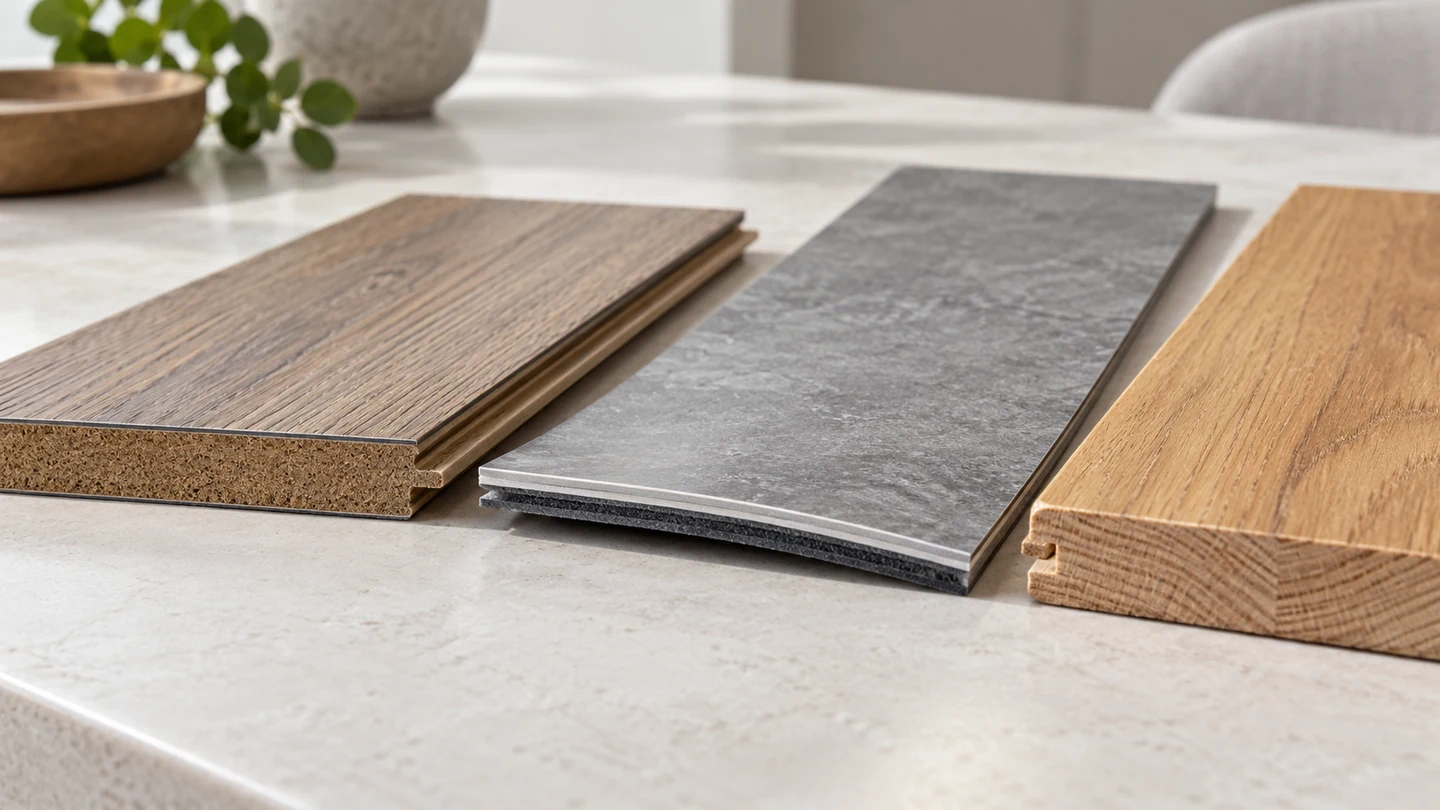
Choose laminate for a printed wood or stone appearance in a suitable flooring system, vinyl where its particular construction better suits the intended water exposure, and wood where a genuine timber face matters. Refinishing priorities favor a suitable wood floor with enough remaining wear layer.
| Floor family | Visible face | Water-exposure question | Sanding and renewal |
|---|---|---|---|
| Laminate | Protected printed decoration | Check the exact plank, joints and permitted exposure | Local repair or plank replacement; no sanding of the print |
| Vinyl | PVC-based flooring family with varied layers | Check the specific system, substrate and wet-area directions | Care and replacement follow that construction |
| Solid wood | Timber | Moisture and dimensional movement need attention | Can be refinished where thickness and condition permit |
| Engineered wood | Real wood wear layer over supporting layers | Assess the actual wood flooring and installation | Refinishing depends on the wear layer and condition |
The material face and a complete waterproof floor assembly are different things. A vinyl face may suit water exposure while the installation still needs appropriate joints, edge details and a sound substrate. Likewise, a water-related claim on one laminate grade does not transfer to every product using that name.
For a living room, appearance, underfoot feel and maintenance may decide between suitable options. For a bathroom or below-grade room, start with the exact product’s permitted use and installation before choosing the pattern. Choose a floor for the room and check the precise moisture conditions behind its label.
How is laminate floor wear resistance rated?
AC classes describe resistance to a defined wear-through assessment, not the floor’s lifetime or resistance to every scratch. Read the class with the named standard, edition and the room application.
The EPLF’s 2016 technical account explains AC1–AC6 using the Initial Point of visible decorative wear under EN 13329:2016. The current BSI catalog entry identifies EN 13329:2023. The historical explanation and current edition status are different pieces of evidence.
For a bedroom, entrance or shop, the intended traffic and other flooring properties should guide the choice. An abrasion class helps compare one kind of wear; water resistance, joints, impact and visible scratches each concern something else. In particular, pet claws and dragged grit need more consideration than a wear-through class alone provides.
Keep the result attached to its floor product. A cabinet laminate sheet and a coating on furniture can have abrasion data from other methods, so their cycle counts cannot be read directly as floor AC classes.
What is laminate on cabinets and countertops?
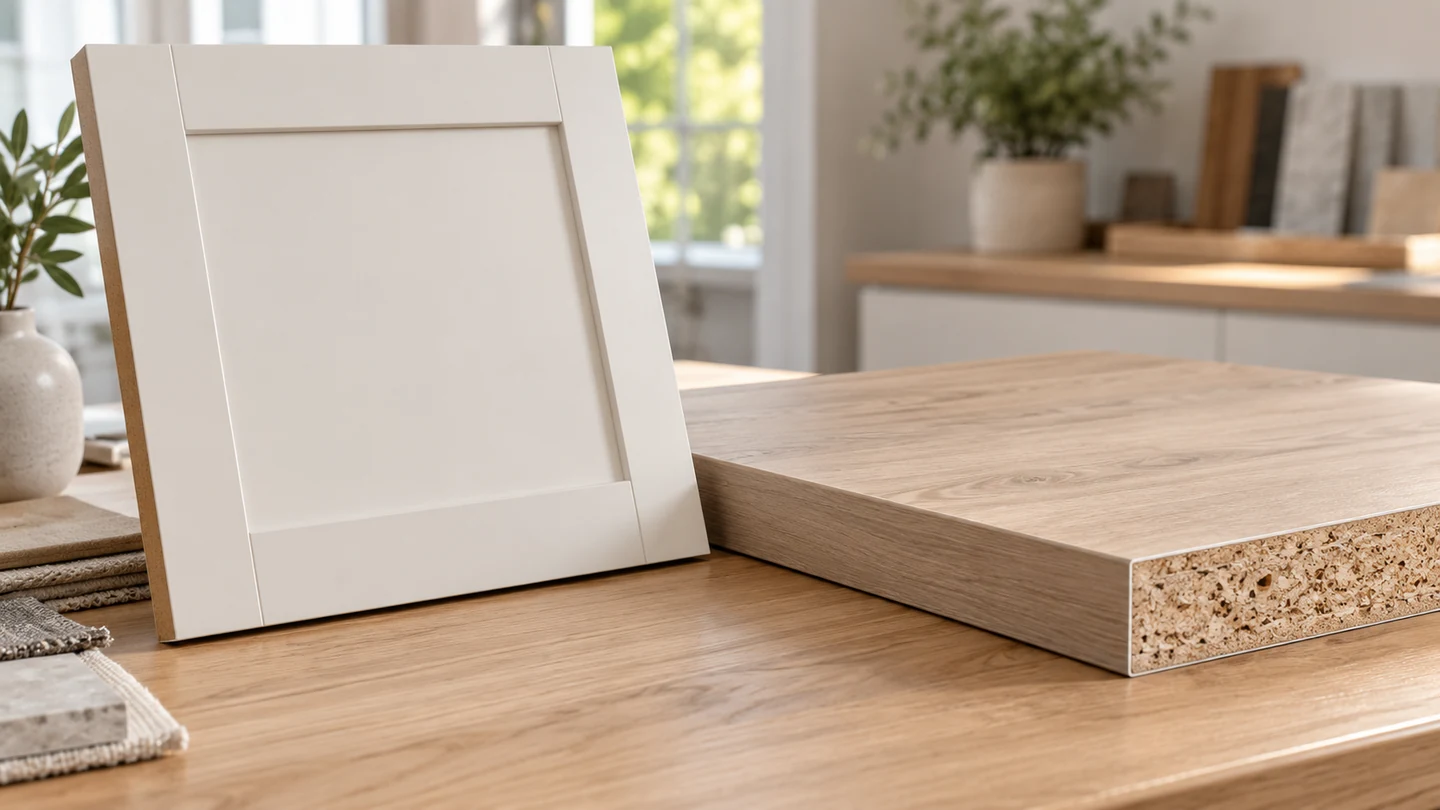
It is usually a decorative resin-based face on a supporting board: TFL fuses impregnated decor paper directly to the board, while HPL is made as a separate layered sheet and then bonded to a substrate. Both differ from a finished floor plank.
The TFL construction description explains the direct-fused route. The HPL description explains a separately pressed sheet using decorative and kraft-paper layers. The board, bond and edge detail complete the furniture part.
For a cabinet door, choose the face for appearance, cleaning and expected handling, then assess the edges and core. For a worktop, choose a grade and construction intended for that surface, with suitable junctions around sinks and other openings. The word laminate alone leaves those choices open.
The melamine versus laminate article goes further into these two routes, and the kitchen cabinet finishes comparison places them beside other faces. A wood-grain picture on the surface can be useful and attractive while remaining a printed decoration.
Where does a silicone-faced decorative film fit?
Puremorfilm makes decorative film with a silicone functional face for furniture and wall panels, a facing option alongside other decorative panel surfaces. We supply mainly rolls for PUR flat lamination, with film-faced panels available on request. The silicone surface is inherently flame-retardant; higher grades up to UL 94 V-0 are available on request.
In the manufacturer’s laboratory tests, stated stains held at 25°C for 24 hours wiped off with no obvious change. We use a No DOP formulation. Our newer paint-free facing uses silicone functionality, distinct from PVC, melamine, PP and PETG faces. The film is not suitable for floors, stovetop counters or shower floors because it has a leather-like feel and some give.
The furniture decorative film page covers the flat-panel application.
Is laminate the right choice for you?
It can be a practical printed-look flooring choice or a decorative furniture face, provided you choose the right product for that use. Start with the job, then compare its construction, care and repair route.
| Your priority | Starting direction |
|---|---|
| A printed wood or stone floor | Suitable laminate flooring with the required room and traffic properties |
| Significant water exposure | A specifically suitable flooring assembly, checked against its wet-area directions |
| A genuine wood face and future refinishing | Suitable solid or engineered wood with adequate remaining wear layer |
| Cabinet or furniture faces | TFL, HPL, veneer, coating or another appropriate decorative facing |
| A decorative worktop | A grade and complete construction intended for worktop use |
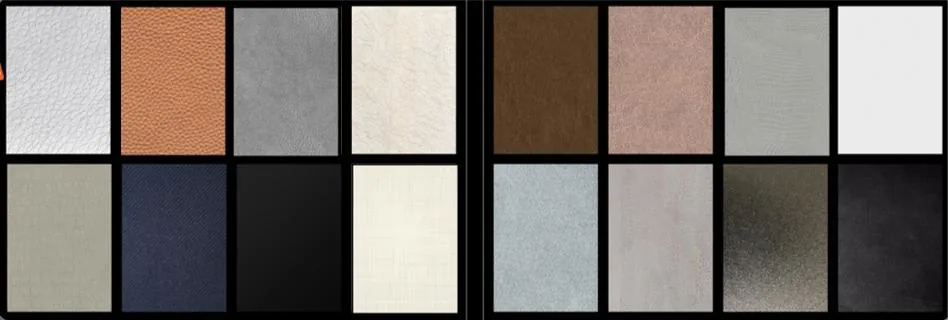
For a furniture or wall-panel facing, contact us with the panel’s use and the color or texture you want.
Frequently Asked Questions
What is the downside of laminate?
Prolonged wetting can swell a wood-based floor core, and a printed surface cannot be sanded back like wood. Small marks may have a local repair route, while major damage can require a replacement plank.
Is laminate just plastic?
No. A typical laminate floor combines wood fibers with resin-based protective and decorative layers. Decorative cabinet laminates also contain paper or other layers and are used with a supporting board.
What does laminate mean?
Laminate is a product formed by bonding layers together. Flooring and decorative furniture sheets are two common examples with different constructions and intended uses.
Is laminate real wood?
No. Its visible wood grain is a print rather than a real wood wear layer, although a typical floor core contains wood fibers. Engineered wood and solid wood have genuine timber at the surface.
Is laminate flooring waterproof?
No, not every product is. Read the specific floor’s water-resistance or waterproof claim together with its installation and care conditions, and remove spills promptly.