

Knowing how to choose healthy interior materials means matching the whole finish construction to the room. For a cabinet beside a sink, compare the face, adhesive and core for that damp location, then check ingredient, emissions and life-cycle evidence separately.
Start with materials that suit the job, including wood-based products, mineral finishes, textiles and coated surfaces. Narrow the choice using documents for the actual products and the way they will be installed. A useful comparison keeps appearance, indoor emissions, environmental impact and maintenance visible throughout the decision.
Which healthy materials suit interior design projects?
Healthy material choices start with low-emitting, documented products that suit the room’s moisture, cleaning and wear demands. Compare the installed finish, adhesive and core, and read ingredient disclosures separately from emissions reports and life-cycle declarations. Natural, recycled or low-VOC labels alone do not answer all of those questions.
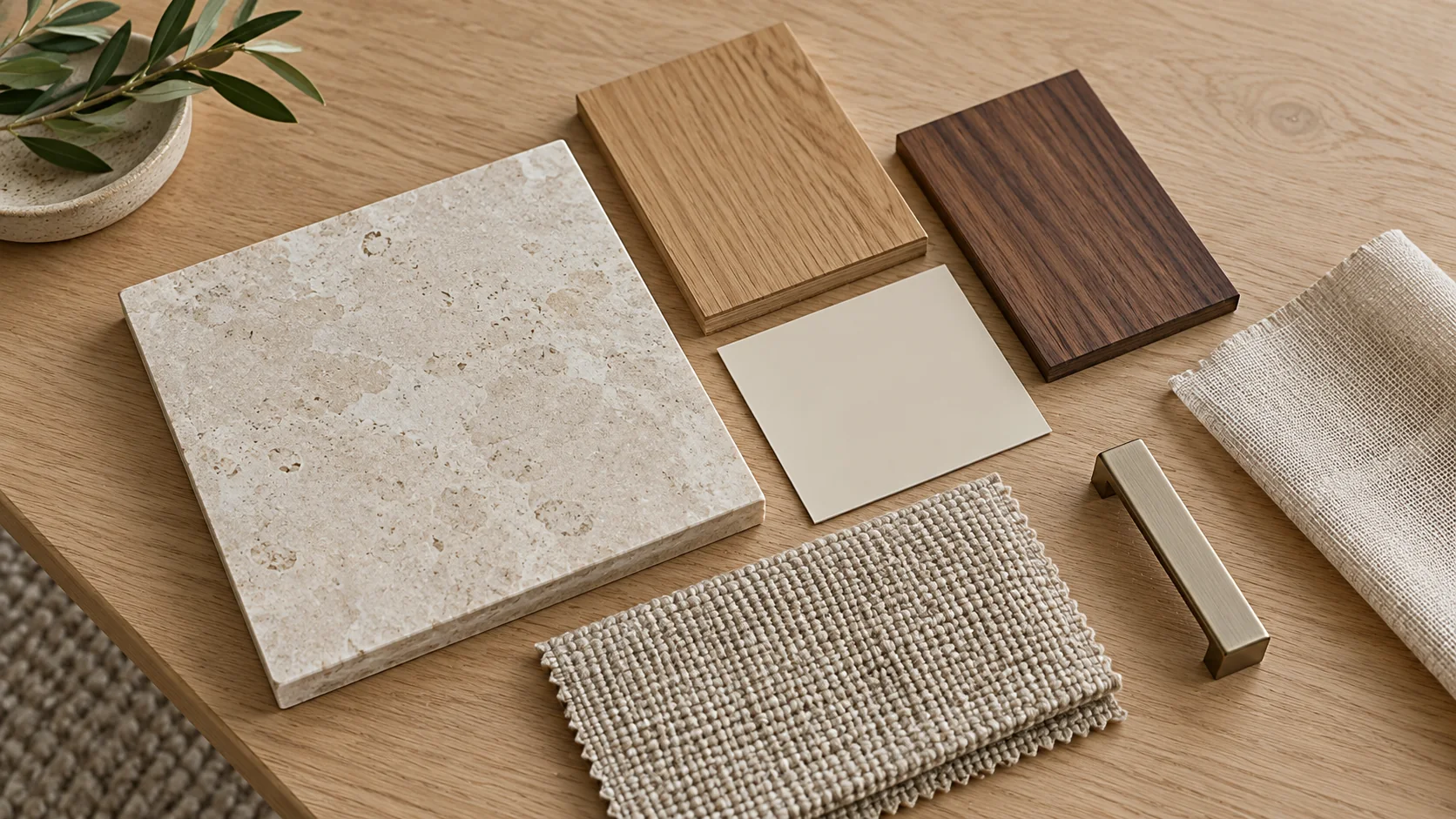
The Harvard Healthy Buildings foundations recommend materials with low chemical emissions alongside ventilation and moisture control. A room can contain several material families, each serving a different purpose.
| Material family | Possible room or component | Evidence to compare |
|---|---|---|
| Wood and wood-based products | Furniture, cabinetry and dry interior paneling | Identified core, facing, finish and relevant emissions evidence |
| Mineral or ceramic finishes | A specified wall or floor application | Exact product, setting materials, sealers and installation scope |
| Textiles and soft finishes | Upholstery, curtains or an acoustic construction | Fabric, backing, treatment and cleaning information |
| Paints and adhesives | Site-applied coating or a bonded finish | VOC claim type, application details and emissions scope |
| Films and laminated faces | Decorative surfaces on identified components | Face construction, bonding system and evidence for the supplied object |
Use these as candidates, then compare actual products. The wall panel materials overview helps separate a decorative face from the construction behind it. A material name on a mood board gives you the starting family; the product designation connects that choice to usable evidence.
How should the room change your material shortlist?
Choose a construction that suits the room’s moisture, contact and cleaning demands before comparing its environmental documents. The same visual effect can require a different construction beside a sink, on a bedroom cabinet or along a frequently cleaned reception counter.
For dry furniture, identify whether the desired wood appearance comes from solid wood, veneer or a printed face. That changes the component you specify and the renewal options to investigate. The wood veneer and laminate comparison explains those distinctions.
Beside water, trace where splashes can reach joints, cut edges and the supporting wall or cabinet. Include those details in the proposed construction. A decorative surface sample shows only part of that arrangement.
On a frequently touched surface, review the cleaning product and method alongside the finish. Also plan how a damaged section could be accessed and replaced. If regular care requires a treatment the finish instructions exclude, choose a compatible finish or change the care method before ordering.
Describe these conditions in the same terms for both candidates. Comparing one product for a dry bedroom with another for a busy washroom would leave the choice unresolved.
What does low VOC tell you about indoor emissions?
A low-VOC label tells you about the VOC measure defined by that label, which may concern product content or emissions into air. Read that definition before using the label to compare two finishes.
For a wet-applied paint or adhesive, a content statement concerns substances in the product. An indoor emissions report concerns chemicals released under its test conditions. Those documents describe different measurements, even when both use the letters VOC.
The EPA technical overview of VOCs explains that outdoor VOC regulation focuses on photochemical smog, while indoor air assessment has a broader concern. A label based on the outdoor definition can omit compounds relevant indoors. The page specifically identifies this potential confusion for low- or zero-VOC wet products.
For a cabinet or wall finish, look for the test method, named chemicals and tested product. Compare a coating with a coating, or a submitted panel construction with the same construction. Keep application and curing details with a site-applied material.
A room also receives emissions from furnishings and activities. Our furniture off-gassing guide covers that wider setting. Here, the useful purchasing step is to identify exactly which claim each product document supports before putting the two products side by side.
How do HPDs, EPDs and emissions reports differ?
An HPD describes product contents and associated health information; an emissions report describes a tested release; an EPD reports life-cycle environmental impacts. Use each document for the question it addresses.
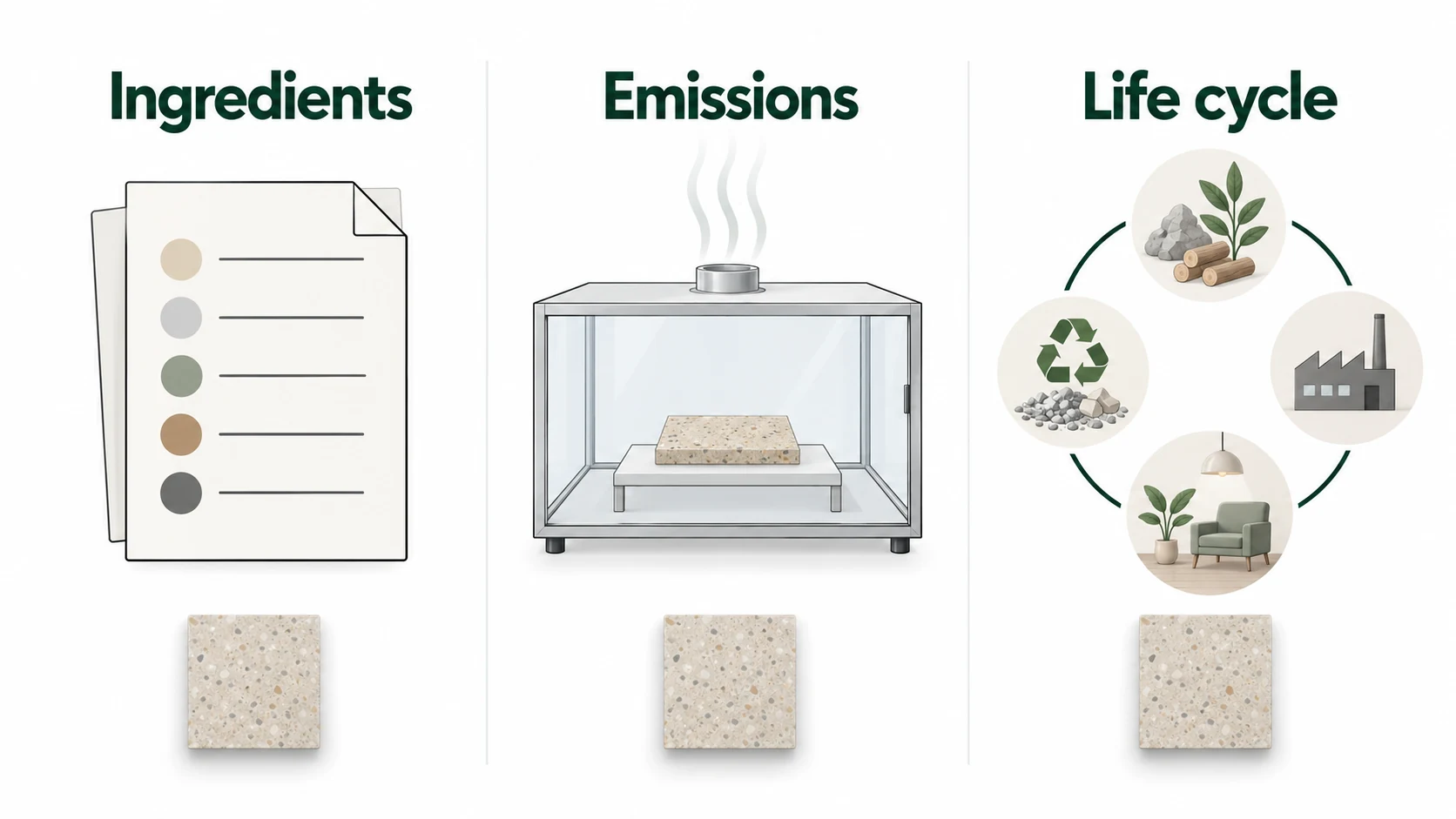
| Document | Main question it helps answer | What to read first |
|---|---|---|
| Health Product Declaration, or HPD | What contents and associated health information are disclosed? | Product identity, reporting scope, disclosure details and verification status |
| Indoor emissions report or certificate | What did the identified product release under the stated assessment? | Sample, method, measured substances, conditions and applicable result |
| Environmental Product Declaration, or EPD | What are the reported life-cycle environmental impacts? | Product, product category rules, declared basis and life-cycle stages |
The HPD Collaborative’s current standard description identifies HPD Open Standard v3.0. Its third-party verification guidance describes a review of the declaration and supporting documents. Verifiers check reporting against the standard; they do not conduct laboratory contents or performance tests as part of that desk audit.
An EPD uses life-cycle assessment and applicable Product Category Rules, as the EPD programme’s explanation sets out. It supports an environmental comparison with a stated basis. Ingredient hazards and measured indoor releases still need their own evidence.
For two wall finishes, place these documents in separate columns. A missing emissions column becomes an identifiable gap, even when the environmental declaration is detailed.
How can you check a low-emissions report before choosing?
Match the report to the product, method and installed use in that order. These checks turn a certificate cover page into a comparison you can use.
- Match the product designation to the proposed finish, including the relevant variant or construction.
- Read the method and version, then the tested sample and conditions.
- Check whether the evidence covers the face, a finished panel, a site-applied product or another object.
- Compare the report and certificate dates with the project’s stated requirements.
- Record any product substitution against those same fields before accepting it.
| Report field | What to compare | Why it changes the decision |
|---|---|---|
| Product identity | Proposed designation and variants covered | Connects the result to the ordered material |
| Test method and version | Exact method named by the report and project | Keeps the assessment basis visible |
| Sample and use | Layers, application and installation scope | Shows which construction the result covers |
| Dates and status | Test date and any certificate validity information | Separates an older test from the present documentation |
| Result scope | Substances and criteria assessed | Identifies the questions the assessment answers |
Version control is a live issue. The current CDPH VOC page lists Standard Method v1.3, June 2026, superseding v1.2 from 2017. Its v1.3 method and addendum identify January 1, 2027 as the effective date for specified updated emissions criteria.
Keep the method version and the project’s requirements together when reviewing a certificate. That date does not by itself determine the status of every existing certificate or project. For a replacement finish, record the actual assessment basis instead of carrying the earlier product’s paperwork across unchanged.
What changes when adhesives, cores and finishes are added?
Each added layer expands the construction whose evidence you need to compare. A finished face, an adhesive and a core can arrive with different documents and different tested samples.
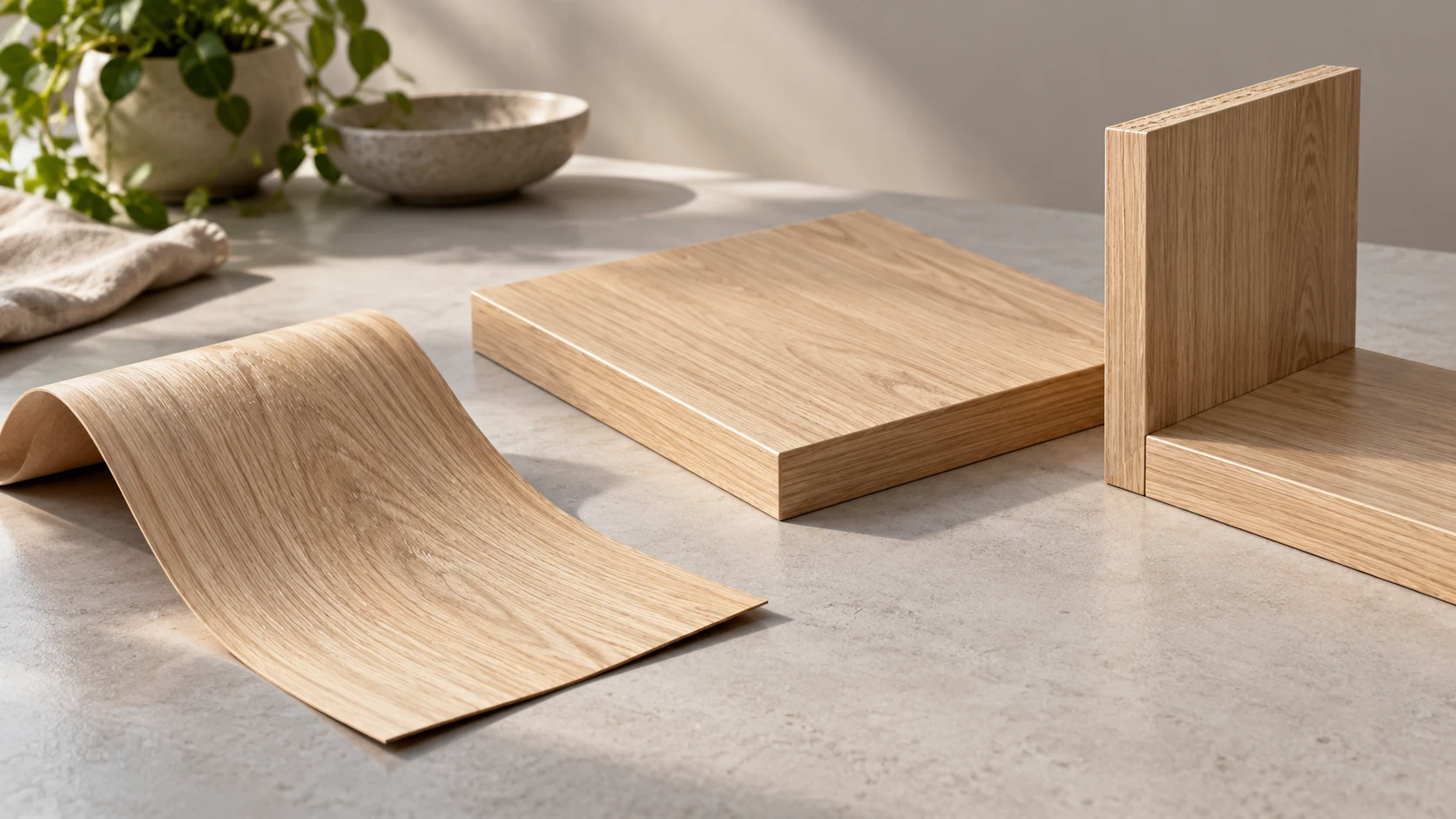
Consider a cabinet door with a decorative facing bonded to a wood-based core. Start with the face designation, then identify the adhesive and the core. Next, mark which submitted object each report describes. This is a comparison method, not a reported test result for a particular door.
If the document concerns a complete faced panel, compare its described construction with the proposed one. If you have separate component documents, retain their individual scopes. Where the project calls for evidence on the finished object, resolve how the proposed construction meets that requirement.
Changing the adhesive or adding a site-applied coating creates a new comparison question. Update the construction description before reviewing the evidence again. The laminated MDF explanation illustrates the separate face, adhesive and core roles in one familiar panel type.
A small component sketch helps here. Label the exposed face, bonding layer, core and any back treatment, then place the relevant document beside each. An unlabelled layer is easier to spot on that sketch than in a folder of unrelated certificates.
How do cleaning, moisture and repair affect the choice?
Choose a finish you can maintain under the room’s actual conditions, and solve moisture problems in the construction before covering it. Appearance samples and product documents need a practical care plan beside them.
For a sink-side cabinet, inspect the proposed joints and exposed edges as well as the face. For a corridor panel, identify the cleaning method and how an individual damaged piece would come out. These are different maintenance tasks, so they can lead to different selections.
The 9 Foundations moisture guidance calls for identifying and addressing the source of moisture. Its air-quality and ventilation guidance also treats materials as part of the occupied building. A new finish belongs within that wider maintenance work.
Keep scratch and wear evidence with its stated test conditions. The cabinet surface durability test guide explains why surface tests and the completed component need distinct checks. A plan to clean or replace a part should suit the actual finish and assembly you select.
Where does a silicone-surface film fit this choice?
Puremorfilm makes decorative film with an organosilicon functional surface for furniture and interior wall finishes. Our furniture decorative film and decorative wall film offer a surface choice to compare for the intended component.

We use a No DOP formulation, and the film is formaldehyde-free. The silicone surface is inherently flame-retardant, with higher grades up to UL 94 V-0 available on request. In the manufacturer’s laboratory tests, coffee, red wine and soy sauce left at 25°C for 24 hours wiped off with no obvious change.
We supply mainly rolls for PUR flat lamination, with laminated panels available on request. Our paint-free material uses an organosilicon functional face, distinct from PVC, melamine, PP and PETG decorative faces. Evaluate these material statements alongside the evidence required for the complete project construction.
What belongs in the material specification?
Write down the room, exact construction, evidence basis and maintenance requirements so the selected product can be identified again. An appearance name such as “oak effect” leaves too much of the proposed component undefined.
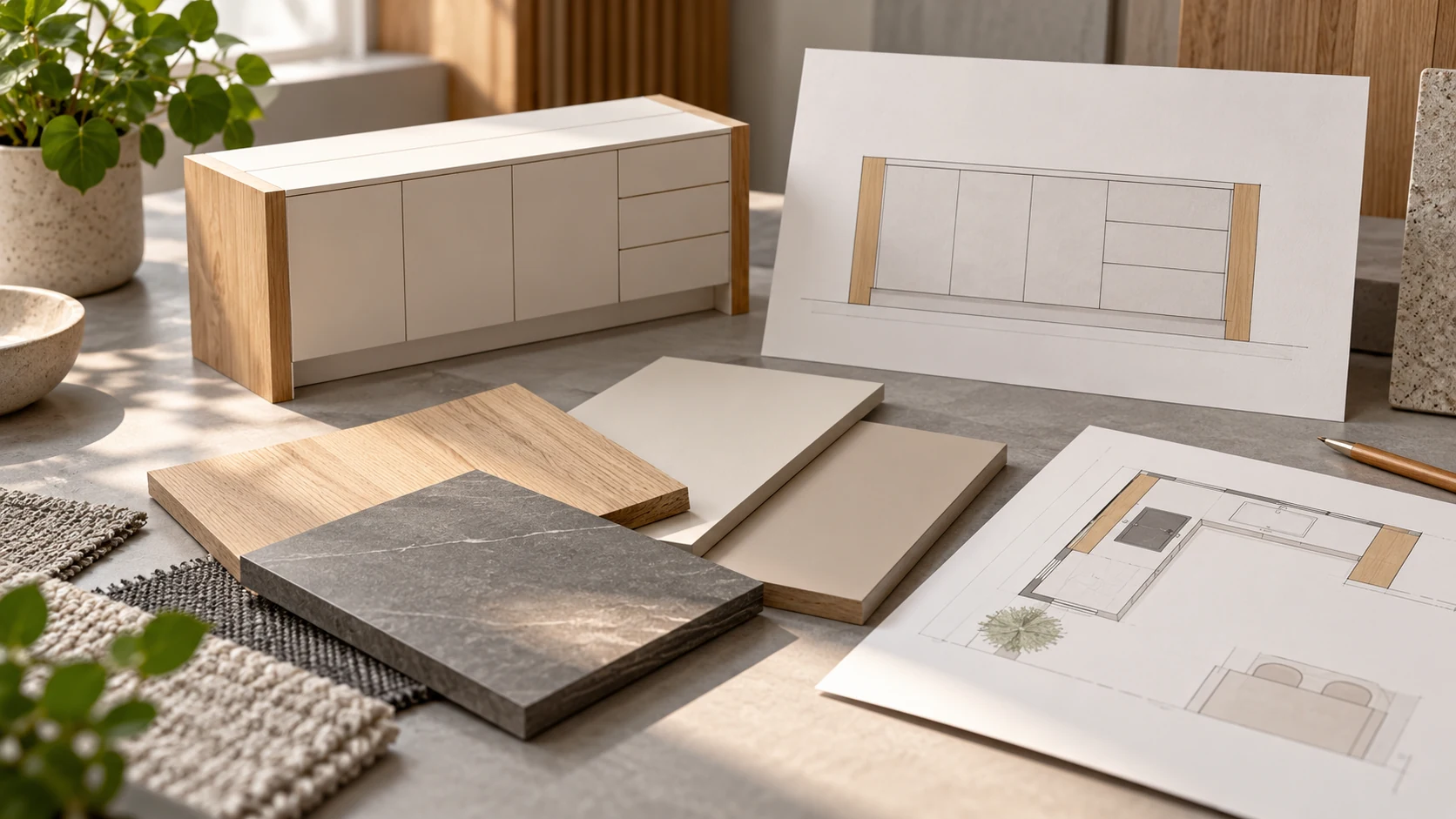
The AIA Healthier Materials Protocol connects project goals and criteria with selection, tracking and specification. Apply that sequence to a short material record.
| Item | What to specify | Why |
|---|---|---|
| Room and part | Location, contact, moisture and cleaning conditions | Defines the intended use |
| Product and appearance | Designation, finish, color and approved sample | Connects the visual choice to a product |
| Construction | Face, adhesive, core and relevant back treatment | Identifies the layers being selected |
| Evidence basis | Required declaration or report, method and version | Makes document review repeatable |
| Maintenance and replacement | Approved care method and component access | Keeps the choice usable after installation |
For a wood-look cabinet beside a sink, the record should identify the finished door construction and its edge treatment, not merely the decorative face. Keep the sample and documents with that description. The supplier evaluation checklist provides a wider purchasing review once the material choice is clear.
How should you compare two materials before specifying?
Shortlist the product whose construction, evidence and maintenance fit the stated room, then resolve any missing information that affects that choice. Use the same comparison fields for both candidates.
- For dry furniture, compare the desired face and core with the product-specific emissions evidence and intended care.
- In damp locations, include joints, edges and the supporting construction in the selection.
- For frequently cleaned surfaces, match the finish to the actual care method and replacement plan.
Keep the ingredient, emissions and life-cycle documents beside the selected construction. That gives a later substitution a clear comparison point while leaving the visual sample available for color and texture approval.
For a sample or project quotation, share the room, component, desired appearance and proposed construction when you contact us.
Frequently Asked Questions
What makes a material sustainable?
Material sustainability concerns its sourcing, life-cycle impacts and useful service in the intended application. Indoor emissions need a separate assessment of the actual product. A renewable or recycled ingredient can be relevant to the first question while leaving the second to a defined report.
What are the best materials for sustainable interiors?
Wood-based products can suit dry furniture, mineral or ceramic finishes can suit specified hard-surface applications, and textiles can suit upholstery or soft finishes. Compare products within the required use, including coatings, adhesives and supporting layers. The evidence for each construction should guide the final choice.
What is low-VOC and why does it matter?
Low-VOC describes a reduced VOC measure under the definition used by a label or programme. That can concern content or emissions. For indoor materials, read the measurement method and product scope so you can judge whether two labels describe comparable evidence.
Do sustainable materials last as long as conventional ones?
No, sustainability labels do not guarantee equal service life. The product, installed construction, exposure and maintenance determine whether it suits the intended use. Compare the relevant durability information and repair route for the particular finishes instead of assigning a lifespan to the label.
How can you incorporate sustainable materials into your home decor?
Start with a specific room and the part you plan to replace. Set the appearance and use requirements, compare products and their emissions evidence, then retain the construction and care information. Include adhesives, coatings and backings in that choice alongside the visible material.