

Red List Free wall panels need product-specific evidence. Within Declare, that status requires disclosure of all ingredients present at or above 100 ppm (0.01%) by weight. It also requires the product to contain no Red List chemicals. A PVC-free description alone does not establish that status.
For a school or healthcare wall, also check the installed construction: facing, adhesive, board and trims. Chemistry, emissions, cleaning and impact resistance answer different parts of the selection.
What does Red List Free mean for a wall panel?
Red List Free is a product-specific Declare status. So identify the exact product and configuration covered.
Living Future’s Declare definitions, checked on October 19, 2026, distinguish three statuses:
| Status | Ingredient disclosure | Red List result |
|---|---|---|
| LBC Red List Free | All ingredients at the program threshold | No Red List chemicals |
| LBC Red List Approved | At least 99% of final-product ingredients | Meets requirements through approved exceptions |
| Declared | All final-product ingredients | Contains a Red List chemical without an approved exception |
The label license lasts 12 months after publication and can be renewed. Therefore, check its current database entry. Living Future’s July 2026 update left the Red List itself unchanged and identified Priority List groups scheduled to advance in March 2027. For that reason, apply the version and exceptions required for the project.
Also identify the scope of the supplied evidence for commercial interior applications, including any separately supplied components.
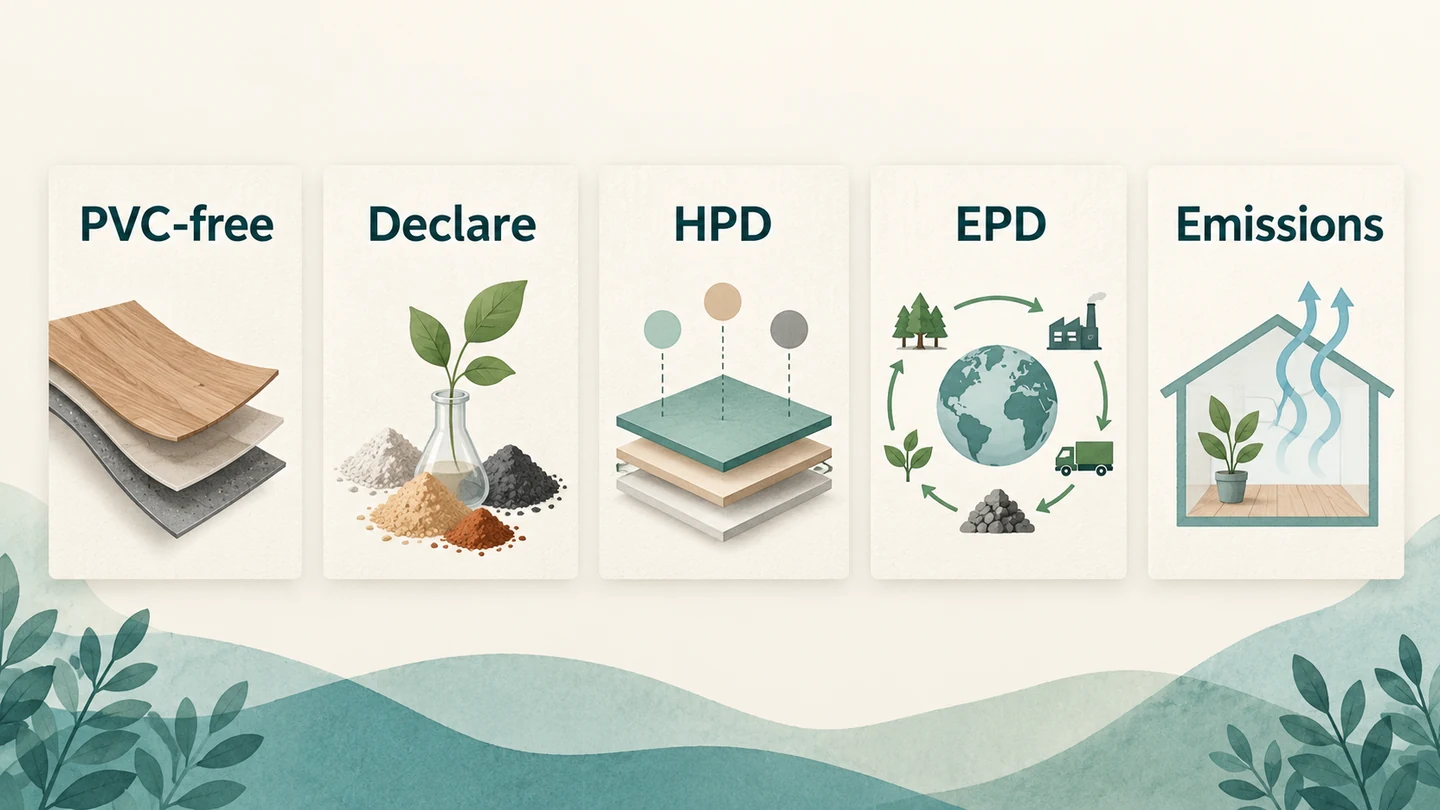
Why do projects exclude PVC?
Some projects exclude PVC because their material policy restricts chlorinated polymers or specifically names PVC. Establish the project’s actual policy before treating an environmental document as approval.
The current Living Building Challenge Red List includes chlorinated polymers, including PVC. A project using that list may therefore reject a PVC-containing candidate even when other environmental information is available. So read the policy and permitted exceptions together.
Living Future cites the US HHS classification of vinyl chloride monomer as a known human carcinogen and identifies PVC as a source material for persistent organic pollutants. Its rationale also notes ingredients PVC can contain, including phthalates. It further notes possible dioxin formation during chlorinated-polymer manufacture and disposal. These policy reasons concern production, additives and end-of-life handling. However, the monomer’s hazard should not be attributed to every finished wall surface in normal use.
The PVC and vinyl explanation helps interpret those names in supplier descriptions. First, ask what the candidate actually contains and which supplied parts the statement covers. A textile face, polymer coating, backing and trim can have different compositions, even where the sales name describes only the visible layer.
Is a PVC-free panel automatically Red List Free?
No, removing PVC does not establish the composition of the rest of the product. For example, a backing, coating, adhesive or supporting board can introduce other substances that matter to the project’s policy.
Other Red List categories also include added formaldehyde, halogenated flame retardants and PFAS. So check every layer’s actual composition against those categories.
Knauf’s February 14, 2024 mineral-wool report listed its unfaced rock mineral wool range as Red List Free and its RainScreen Slab with Black Glass Veil as Red List Approved. These related products carried different statuses. Therefore, the status attaches to each named product. The report covers the named products at that time; check current labels before attributing the difference to a particular ingredient.
Even with an HPD and EPD, examine the candidate’s contents and the project’s exclusion. The original wall-protection question involved a product with both documents that contained PVC and therefore failed that project’s policy. The documents helped identify the issue. However, they did not waive the exclusion. Retain the accepted product description with the evidence so that a later substitution can be assessed against the same requirement.
What do HPDs, EPDs and Declare labels each tell you?
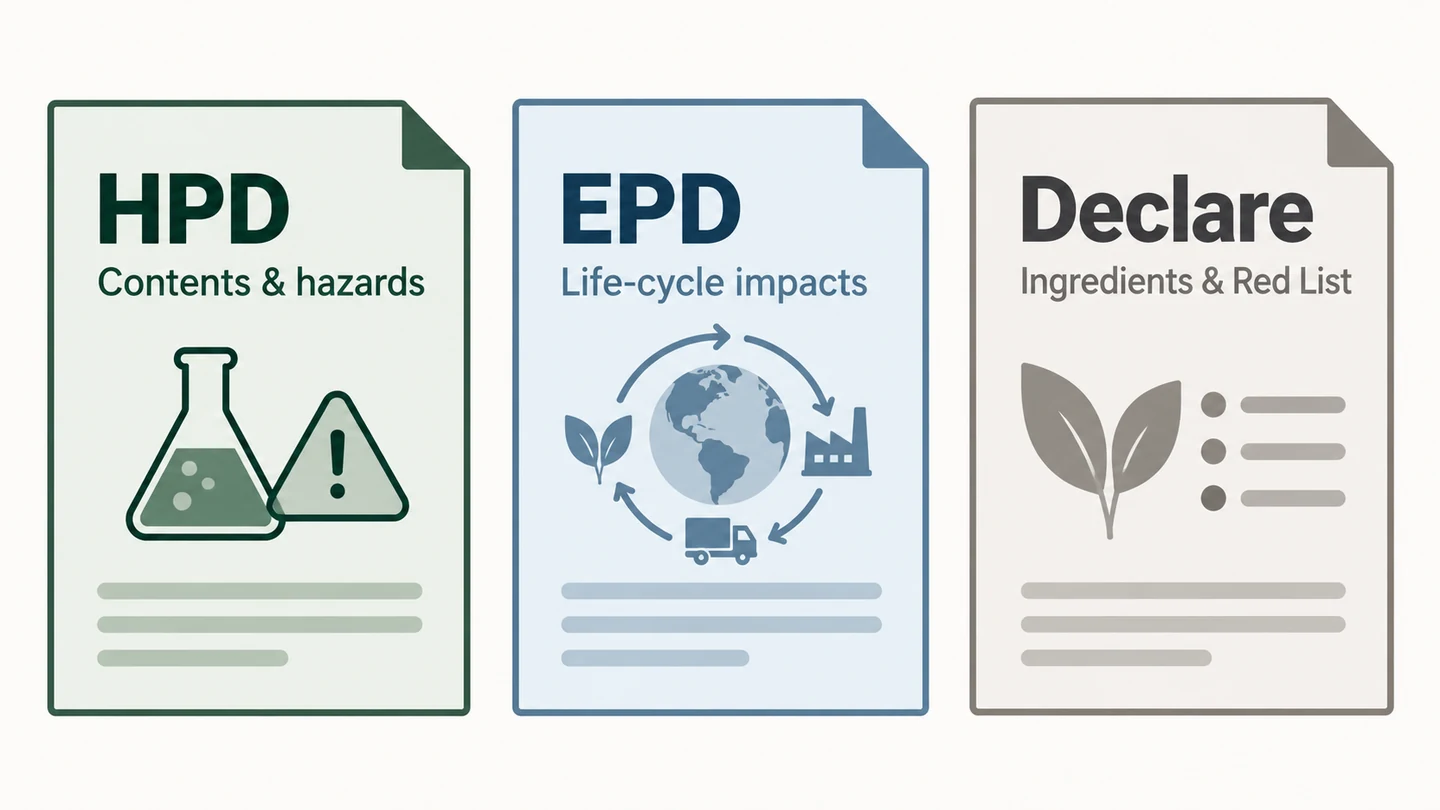
An HPD reports contents and associated hazards, an EPD reports life-cycle environmental impacts, and Declare screens disclosed ingredients against the Red List. Therefore, read each for its stated purpose and scope.
The Health Product Declaration Collaborative states that its label is not certification or endorsement. So check the actual HPD’s reporting threshold, disclosure completeness and screening scope. A published declaration can even contain information that leads a project to reject the product.
The International EPD System describes EPDs as third-party-verified environmental information. However, that verification does not turn life-cycle data into blanket approval on ingredient hazards.
| Document | Read first | Compare carefully |
|---|---|---|
| HPD | Product identity, report date, threshold and content disclosure | The project’s prohibited substances and required disclosure level |
| EPD | Product, applicable product category rules and reference unit | Function, system boundary and included life-cycle stages |
| Declare | Exact product, status, date and verification pathway | The project’s Red List version and exceptions |
Declare’s program description says the program is developed in alignment with ISO 14021:2016 for self-declared claims and also offers a third-party verification pathway. It also lists VOC content and emissions among its program-alignment requirements. Separately, its incorporated standards include CDPH Standard Method v1.2 (2017). Therefore, check which pathway and emissions scope the actual label covers.
WoodWorks’ EPD guidance explains why isolated EPD comparisons can be inappropriate. For example, comparing different functions or assessment boundaries can mislead even when both declarations are valid. Before comparing, ask the design team which document and comparison method the project requires.
Which PVC-free material routes are worth investigating?
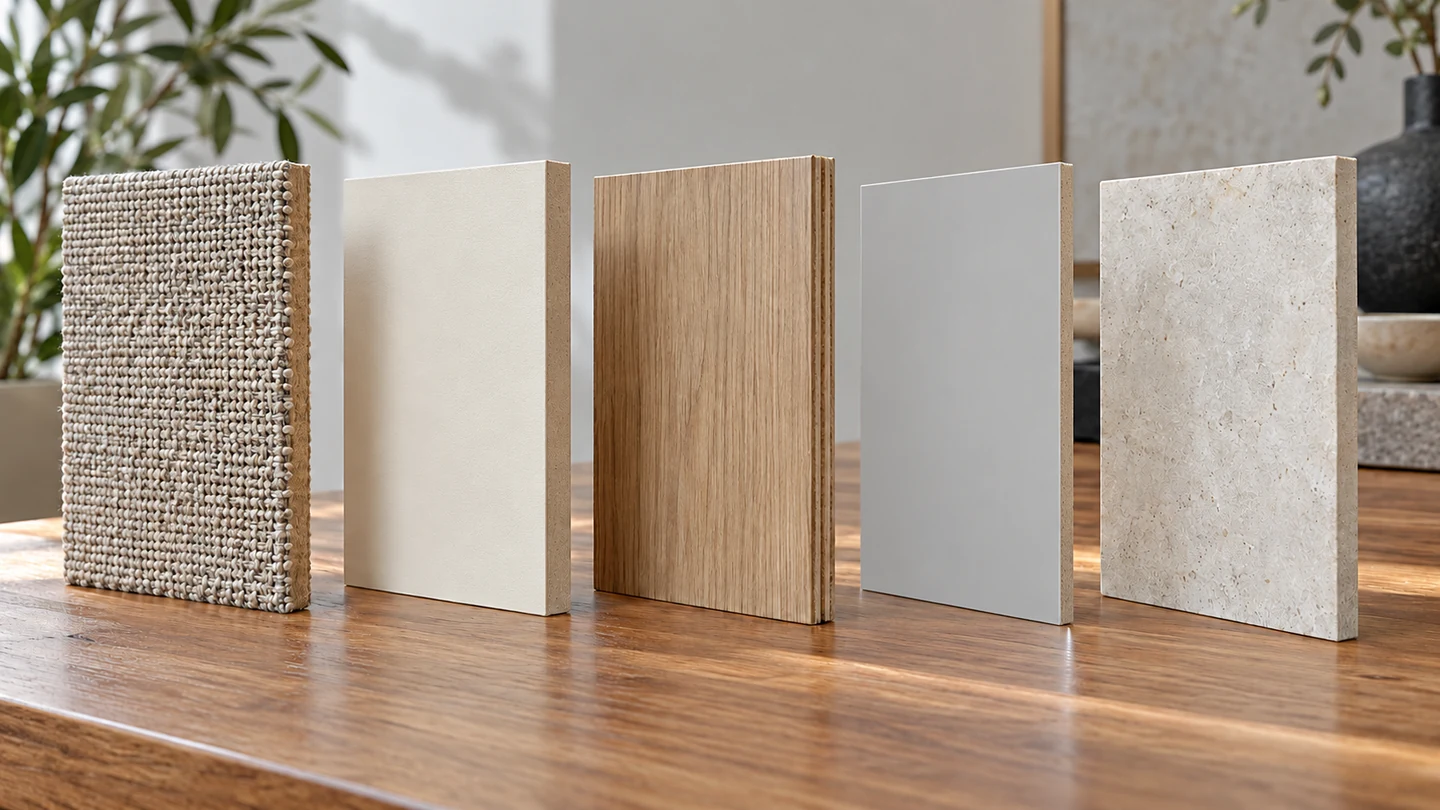
Investigate several constructions, then verify the exact candidate against its location and contacts. The categories below are starting points for product-specific checks.
The Wallcoverings Association’s product overview describes polyolefin or synthetic textile coverings, acoustic products and natural or organic coverings among its product categories. It says many synthetic-textile products use olefin yarns made from propylene polymers or copolymers. These products are generally installed with an acrylic or paper backing. However, the backing and finish still need their own identification.
| Route | What it offers as a category | Evidence needed for the location |
|---|---|---|
| Polyolefin or synthetic textile | A non-vinyl textile construction | Complete composition, cleaning and traffic-related performance |
| Acoustic covering | A sound-related function | Acoustic scope plus cleaning and physical-contact evidence |
| Natural or organic covering | A different fiber or surface choice | Backing, coating, fire and maintenance evidence |
| Bare or painted board | A board with an optional coating system | Core, coating, emissions, edges and cleanability |
| HPL or TFL-faced board | A separate bonded laminate or directly fused decorative paper | The proposed grade, core, adhesive where used, and edges |
| Film-faced board | A supplied film bonded to a core | Face, adhesive, core and trim documentation |
| Inorganic panel | A separate mineral-based candidate | Exact formulation and tested performance |
The wall-panel materials comparison and wall-covering types guide explain the broader routes. Shortlist by the actual task. For example, a decorative finish, an acoustic treatment and protection against moving equipment can require different evidence.
Which performance checks matter alongside chemistry?
Check physical contact, cleaning, fire behavior and emissions alongside the chemical-policy requirement. Passing one part of the selection does not resolve the others.
The Wallcoverings Association’s standards overview describes W-101 for polymer-coated fabric, including vinyl alternatives, and W-102 for broader constructions. It lists attributes such as weight, physical strength, tear, flammability, UV fade resistance, stain resistance and scrubbability. Then match those measures to the proposed construction and use.
For a healthcare location, compare the surface with the facility’s actual cleaning and disinfection program. The CDC’s core environmental-cleaning guidance covers product selection, procedures and monitoring. In addition, the CDC’s separate cleaning-supplies guidance calls for material compatibility with healthcare surfaces and equipment. Therefore, check the actual cleaning chemicals and their use instructions alongside the candidate surface. See the separate disinfectant-resistant wall-covering guide for that comparison.
Where carts, chairs or equipment can hit the wall, ask for relevant physical-performance evidence. The panel impact guide explains why specimen and contact matter. Fire evidence must also match the installed construction. For example, a flame-retardant face alone gives insufficient information about a complete wall assembly.
Can a PVC-free route cost less than MDF wainscot?
It can for a particular project, but no saved evidence shows a PVC-free system priced below MDF wainscot in general. Instead, compare complete quotations for the same area, details and required performance.
In the November 2021 school-project question, the lower-cost alternative proposed in place of the usual MDF wainscot contained PVC despite having an HPD and EPD. The request was for a cheaper PVC-free replacement. However, the saved discussion established no comparable price for one.
Include the face or panel, supporting board, adhesive, corners, trims and wall preparation. Also add installation labor, handling, expected repairs and replacement access. For example, a low sheet price can lead to a higher total if it requires more substrate work or elaborate trims.
Next, ask each bidder to identify what is included. Also compare equivalent impact protection, cleaning exposure, fire requirements and chemical-policy evidence. A decorative covering and a protection panel can be different scopes even when both cover the same wall area.
No common installed rate covers school and healthcare systems here. Residential paneling estimates and an individual forum project’s saving would be poor substitutes for quotations covering this specification. Where cost is the barrier, simplify the layout or review which zones need physical protection, then price those defined options with the project team.
What should the adhesive, core and trims document?
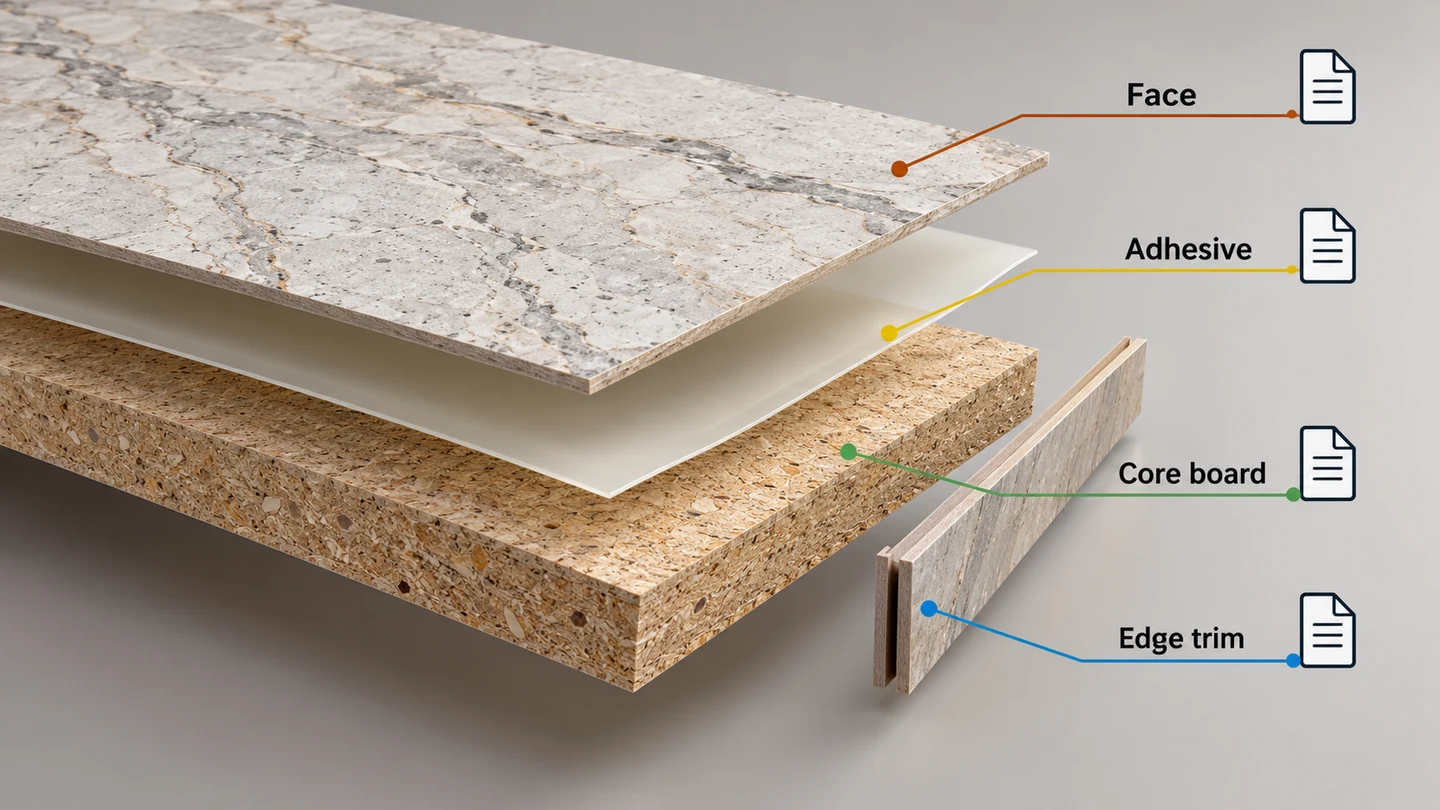
Match the documents to every component supplied for the wall, and identify the scope of any system-level report. By contrast, a face-only document leaves questions about the supporting construction.
The EPA’s school indoor-air guidance identifies coatings, adhesives and wood-based materials among potential sources. It also recommends low-emitting, moisture-resistant materials and specifying installation sequence and ventilation. Then set those requirements for the actual products and project.
Record the facing’s exact product name and formulation scope. Also identify the adhesive, core grade, edge treatment and trims. If the Declare label covers a finished panel, verify that the quoted configuration matches it. If it covers only a facing, obtain the remaining evidence required by the project.
For covered US composite wood, such as MDF, particleboard and regulated hardwood plywood, obtain the applicable TSCA Title VI documentation. EPA explains that after the March 22, 2019 transition, covered products must carry TSCA Title VI compliant labeling. Check the applicable scope and exclusions; the facing’s declaration leaves the core and finished-good evidence to be addressed. Also keep the installation details associated with the fire and performance assessment. Include any changes to adhesive, backing or trims.
Where does a PVC-free decorative film fit?
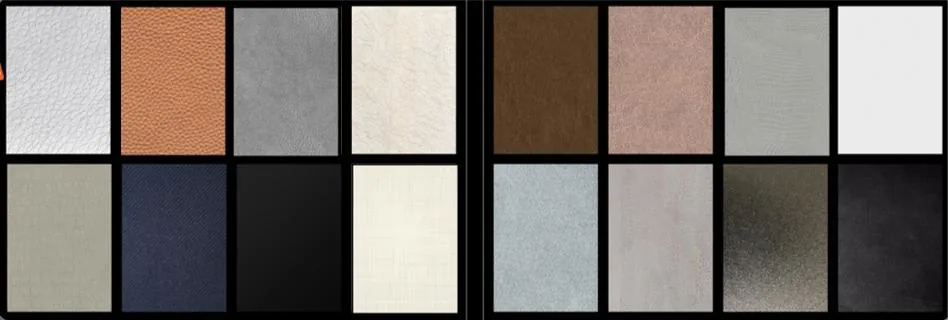
Puremorfilm makes decorative wall film with a silicone functional surface. The wall film contains no PVC. It is used for PUR flat lamination onto board. Supply is mainly in rolls, with laminated panels available on request. Our silicone surface is inherently flame-retardant, with higher grades up to UL 94 V-0 available on request. In the manufacturer’s laboratory tests, coffee, red wine and soy sauce held at 25°C for 24 hours wiped off with no obvious change. We use a No DOP formulation.
This is a paint-free facing with a silicone functional surface, distinct from PVC, melamine, PP and PETG decorative faces. The decorative wall film page describes that facing. Request the available product evidence and evaluate the remaining board, adhesive and trims against the specification. These material facts do not claim Declare, HPD or EPD status, or a complete wall fire rating.
How should you specify a PVC-free wall panel?
Write the required chemical policy and performance evidence into the same product description. Then approve the exact configuration and keep its documents together.
| Decision | Record before approval | Why it matters |
|---|---|---|
| Chemical policy | Prohibited substances, disclosure threshold and permitted exceptions | Applies the project’s own exclusions and exceptions |
| Product identity | Face, board, adhesive, trims and configuration covered | Ties each document to the configuration actually supplied |
| Environmental documents | Required Declare status, HPD scope, EPD reference unit and life-cycle stages | Keeps ingredient, hazard and life-cycle questions separate |
| US composite wood | Applicable TSCA Title VI information for covered components | Identifies which components the applicable TSCA requirements cover |
| Installed performance | Applicable fire, impact and cleaning evidence | Matches the evidence to the installed construction and its use |
| Commercial scope | Equivalent installed area, preparation, details and maintenance | Lets quotations be compared on the same scope |
For a decorative-facing enquiry, contact us with the project policy, wall location, proposed board and adhesive, and the documents required by the design team.
Frequently Asked Questions
What chemicals are on the Red List?
The current Living Building Challenge Red List includes chemical classes such as chlorinated polymers, including PVC. Check all applicable categories and thresholds in the current list.
What does Red List Free mean?
Within Declare, Red List Free identifies a product meeting the disclosure threshold and containing no Red List chemicals.
What is the difference between Declare, an EPD, and an HPD?
Declare addresses ingredients and Red List status; an EPD reports life-cycle impacts; an HPD reports contents and hazards. A project may need several documents.
Is the HPD label a certification?
No, the HPD label is not HPDC certification or endorsement. Publishing an HPD supplies information to assess; the project still determines whether the product meets its criteria.
What are chemicals of concern?
Chemicals of concern are substances identified for potential human-health or environmental hazards under the relevant assessment or policy. The list and project criteria determine which substances and thresholds apply.