
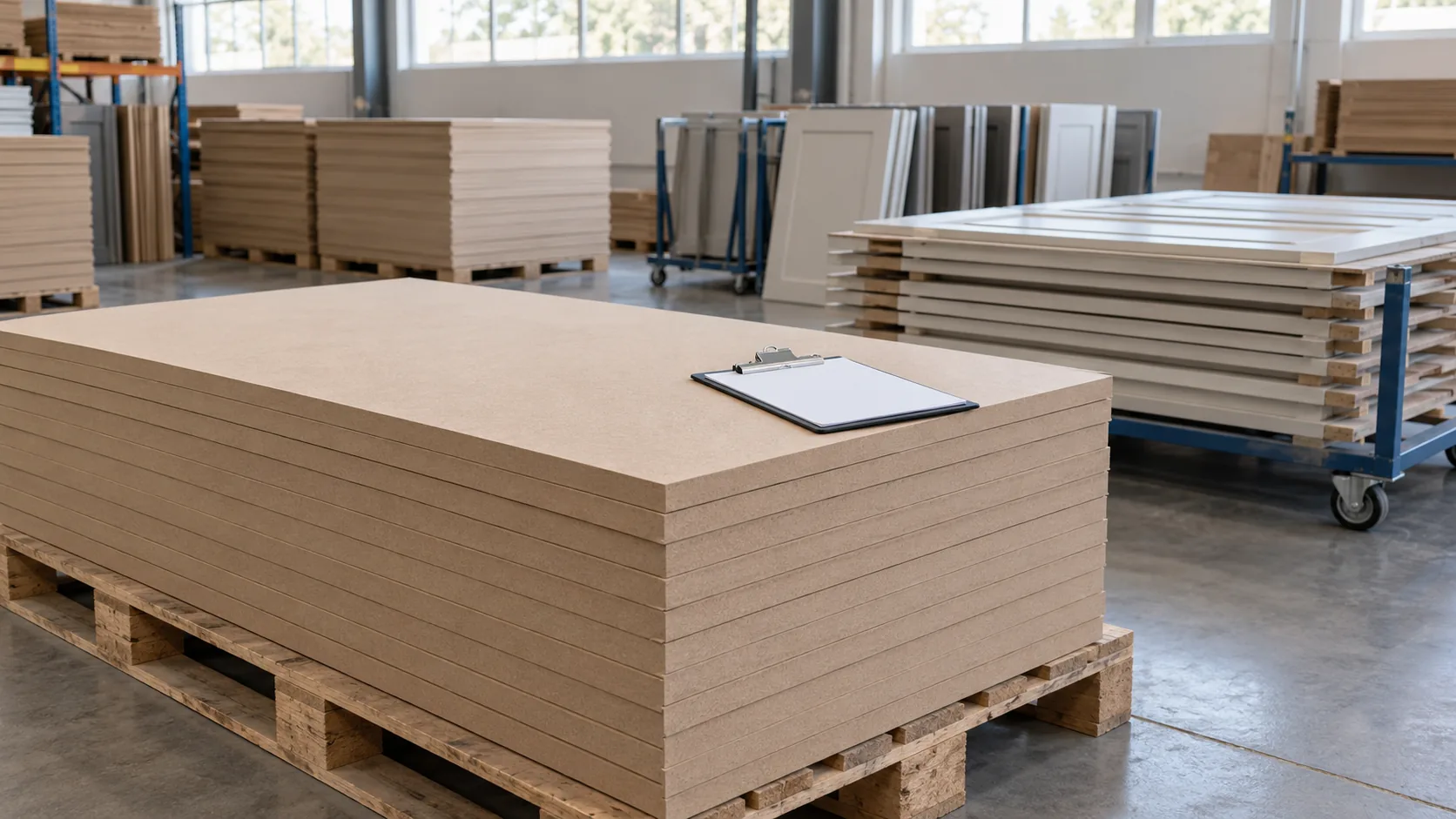
TSCA Title VI compliance means the hardwood plywood, MDF and particleboard in a product were certified by an EPA-recognized third-party certifier, or qualify for a documented exemption, and every business after the mill keeps labels and records that tie the goods back to those panels. Federal transaction records must be kept for three years, against two years under California’s rule. Since March 22, 2019, CARB Phase 2 certification alone has no longer satisfied the federal program.
For a panel or cabinet-door order, the work is to connect three things: the mill, the processor and the goods on your dock.
Does CARB Phase 2 compliance still count under TSCA Title VI?
Not on its own. Covered products manufactured or imported after March 22, 2019 need Title VI certification and labeling; the stakeholder guidance on the ended reciprocity provision covers that switch.
| Issue | California CARB Phase 2 | Federal TSCA Title VI |
|---|---|---|
| Certifier approval | CARB-approved third-party certifier | EPA-recognized third-party certifier |
| Market scope | California | United States |
| Panel label | Producer name, lot or batch number, compliance level, CARB certifier number | Producer name, lot number, compliance level, EPA certifier number |
| Downstream transaction records | At least 2 years | At least 3 years |
| Import certification | No CARB entry filing; the federal one still applies | Section 13 certification for regulated imports |
| Selling in California | Meet the California rule | Meet both programs; the stricter provision applies where they differ |
The emission limits are the same, which is why California accepts Title VI-labeled panels and finished goods as meeting its emission standards. The January 2024 CARB comparison lists the differences that remain. The federal rule does not replace the state one, so a California seller answers to both.
In practice: a carton of imported cabinet doors made after that date and labeled only with a CARB Phase 2 statement does not meet the federal rule. For the panel basics behind that label, see laminate cabinets vs wood cabinets and kitchen cabinet materials.
Emission records cover the composite panel; for the surface tests that sit beside them in a cabinet specification, see cabinet surface durability testing.
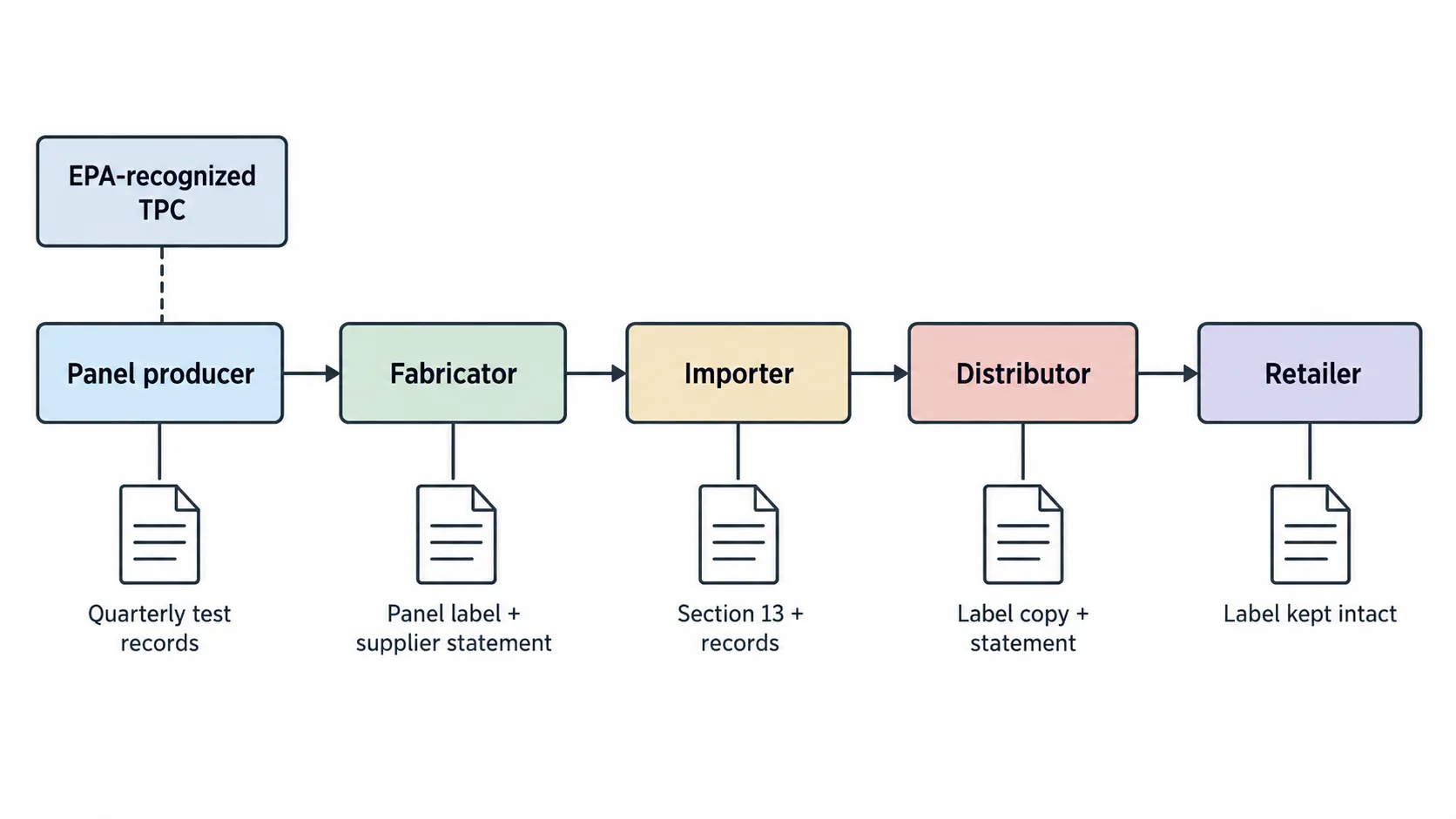
Which supply-chain role does each company in your order play?
Assign roles by what each business does with the goods, not by its name, and expect one company to hold more than one. A plant that imports MDF, cuts it into cabinet doors and sells the doors is both an importer and a fabricator.
| Role | Activity | Evidence it should be able to show |
|---|---|---|
| Panel producer | Manufactures covered composite wood panels | Certification, testing records and panel identification |
| Fabricator | Incorporates composite wood into parts or finished goods | Supplier statement, purchasing records and finished-good labels |
| Importer | Acts as the duty-liable entity or its authorized agent | Import certification and the required supplier and producer records |
| Distributor | Buys and resupplies goods within the chain | Supplier identification, compliance records and labels kept intact |
| Retailer | Sells goods to the end user | Supplier records and labels kept intact |
The definitions in 40 CFR 770.3 reserve “laminated product” for wood or woody-grass veneer on a covered core. A factory that turns covered panels into film-faced door parts fits the fabricator definition instead. The 2016 final rule’s discussion, page 89686, says products faced with plastic, vinyl or film are not laminated products.
Paper- and HPL-faced parts follow the same test: look at the definitions and what the plant actually does. The guides to what is laminated MDF and wood veneer vs laminate cover the everyday material terms. An online store or drop-shipper takes on the role its activity matches, usually retailer or distributor.
What panel-producer records should back up your purchase?
If you buy directly from the panel producer, you can obtain its quarterly emissions-testing records: certifier, date, product type, the lot the test represents, test method and result. Section 770.40(a) gives direct purchasers that access, and the producer cannot withhold those records as confidential business information. Routine quality-control records are not included.
Buy through a dealer and that statutory right does not reach you. Your evidence then comes through the supplier statement and the panel labels.
Check the certifier against the recognized and suspended-or-revoked lists. The panel label should match the producer, lot, certifier number and compliance statement to the shipment. The HDF vs MDF fiberboard guide for furniture parts helps you confirm which board type the record should name.
A suspension generally lasts 90 days. Under section 770.7(f)(2), a producer whose certifier drops out has 90 days to engage a new one and can request a 90-day extension, unless the problem involves fraud or a violation by that producer. A producer implicated in fraud may not sell covered products until another certifier recertifies them. So read the listing reason and dates before deciding what it means for your order.
How do you trace a panel label to the goods you receive?
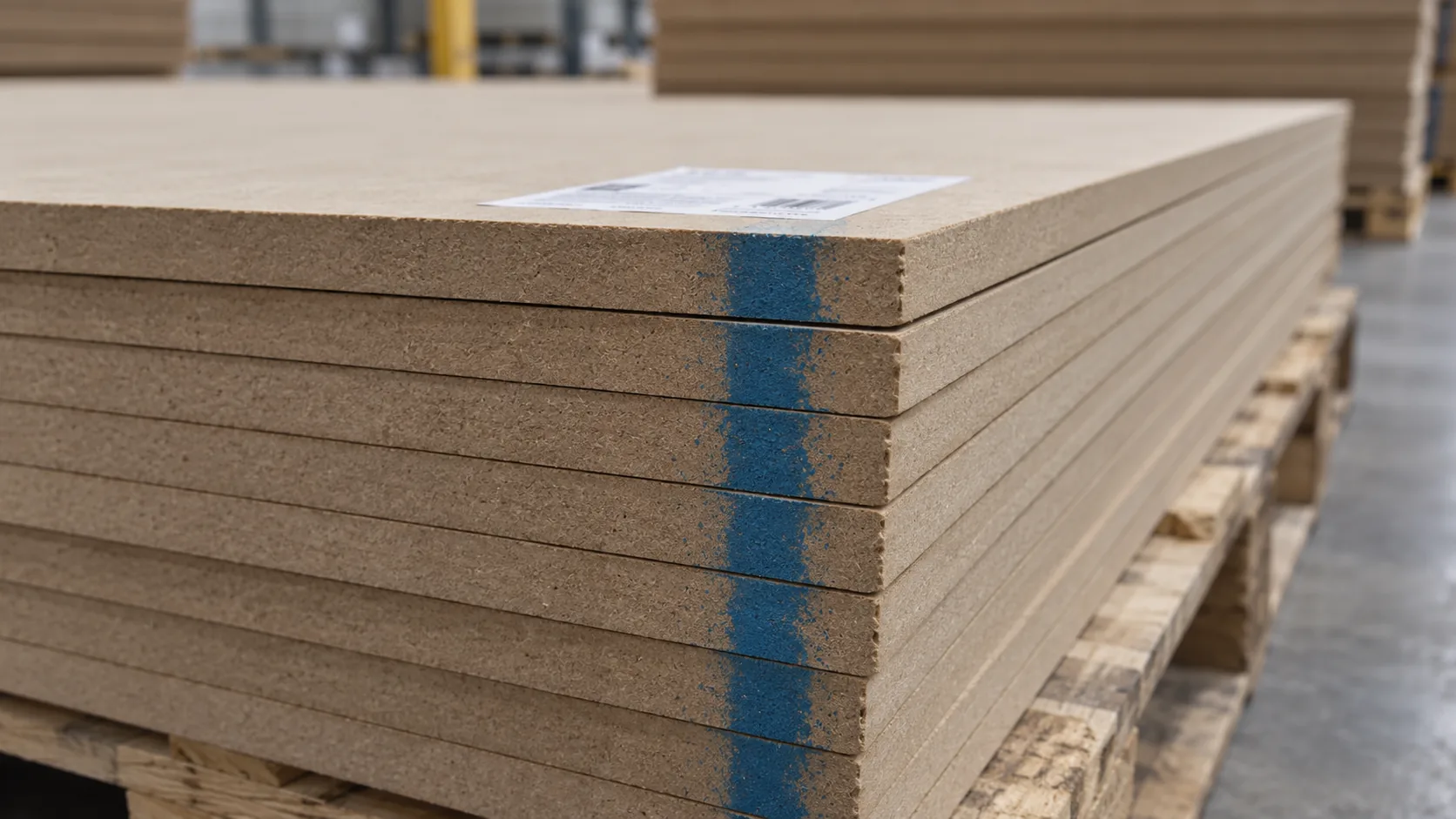
Follow the lot number, or a mark linked to it, from the panel bundle through cutting and shipment. Panels can carry one label per bundle; when individual boards are unlabeled, the business handling them needs a method such as an edge-color code that identifies the supplier and retrieves the label information on request.
Section 770.45 lets fabricators label each finished good or its box or bundle. The label shows the fabricator’s name, the production month and year, and a compliance statement. A finished good made overseas shows its overseas production date.
A label name that differs from the factory name is not automatically a red flag. A fabricator may put a downstream company’s name on the label once it has that company’s written consent on file, so ask for that arrangement before drawing a conclusion.
Components sold to another fabricator can ship without labels, but the supplier’s written compliance statement still belongs in the records. A replacement cabinet door sold straight to a homeowner is a finished good and needs a label. That split matters for thermofoil cabinets sold both as parts and as replacement doors.
Small goods escape labeling at 144 square inches: add up the largest face of each covered composite-wood piece in the product. The exception does not cover products designed to combine into larger surfaces, and emission and record duties still apply.
Which supplier statements belong in invoices and shipping papers?
One written compliance statement on one invoice, bill of lading or comparable document is enough for the products it covers. It must be true for those products, kept for three years and produced if the regulator asks.
The recordkeeping questions confirm the statement need not appear on every document or every line. Packing lists, delivery receipts and electronic records that can be exported in an invoice-like format all qualify as comparable documents.
The statement says the goods are Title VI compliant, or that they were produced before June 1, 2018 and you hold historical-stock records to prove it. For imported goods, the import date controls, so an old foreign production date alone does not qualify.
On a mixed shipment, ask the supplier to mark which lines the statement covers. The rule does not require this, but it saves a reviewer from guessing later. Panel producers also record which direct customer bought each bundle.
Labels must be in legible English. Part 770 does not set a language for invoices, but customs rules require import invoices in English or with an accurate translation, so prepare the file for both.
What extra certification does a U.S. importer need?
The importer, or its authorized agent, files a positive TSCA Section 13 import certification for covered articles entering the United States. This has applied since March 22, 2019. It is the importer’s own declaration and is separate from the panel certification and the supplier statement.
The official import-certification guidance allows the certification to be filed electronically or in writing with customs. Electronic filings go through ACE. A customs broker can file it when the importer has authorized the broker.
Under section 770.30, the importer keeps the supplier documents for three years and must give EPA specified records within 30 calendar days of a request. Those records name the panel producer and production date, plus the supplier and purchase date if different.
Thirty days is short if the mill is overseas, so collect the upstream records before the container ships. Covered panels and finished goods, or their boxes or bundles, must also be labeled before import.
A file that holds only the supplier’s declaration still lacks the importer certification. Give the entry agent the product details and keep the link between the entry, the supplier documents and the labeled goods.

How long must each business keep its compliance records?
At least three years for federal downstream records, counted from the import date or the purchase or shipment date. The January 2024 state-to-federal comparison gives California two years, so a two-year purge policy leaves a federal gap.
| Record | Who keeps it | Minimum period | Rule basis |
|---|---|---|---|
| Supplier and transaction documents | Importer, fabricator, distributor and retailer | 3 years from the import, purchase or shipment date | 770.40(d) |
| Panel production and testing records | Panel producer | 3 years, apart from the eligibility records below | 770.40(a) |
| Initial NAF/ULEF qualification records | Producer using reduced testing or an exemption | For as long as it produces under that status | 770.40(a) |
| Exempt laminated-product qualification records | Producer relying on that exemption | At least 3 years | 770.40(c) |
The recordkeeping section sets each category. Set retention by record type, because one deletion date for every file would destroy the exemption records too early.
Keep the supplier statement, the transaction and the product identification retrievable together. When a processor splits one board bundle across several door orders, store that mapping with the orders. A colleague should be able to pull the file without rebuilding the history from memory.
What should you check when labels and documents don’t match?
Find the broken link first, then decide whether a document can repair it or the shipment should be held. These checks apply the existing rules to a receiving review:
- Label name differs from the factory: ask for the written downstream-name consent.
- Goods made after the 2019 transition carry only a CARB statement: get federal certification and label evidence before accepting them.
- Certifier number is missing or listed as suspended: check its status, dates and reason, then ask for evidence covering this producer and these goods.
- Cut parts no longer connect to a panel lot: ask for the internal mapping or identifying marks.
- Transaction statement has unclear coverage: get a corrected document tied to the affected goods.
The labeling provisions govern name substitution and label scope. A suspension listing calls for an order-by-order check of the transition conditions; it does not by default condemn everything that producer ever made.
Since March 22, 2024, nonexempt wood-veneer laminated products need hardwood-plywood certification. Veneer bonded with PF or NAF resin can qualify for the exemption, but only on compliant cores and with records; the resin choice alone does not qualify a product. That legal veneer category is different from the film-facing process in how to laminate MDF.

Where does a film-faced panel fit in TSCA Title VI paperwork?
Facing a panel with film leaves the core’s duties unchanged: the core is still covered composite wood, and the plant that laminates and cuts it keeps the panel labels and supplier records as a fabricator. Puremorfilm makes furniture decorative film with a silicone functional surface. The film is not composite wood and is itself formaldehyde-free and PVC-free, so a film-faced panel’s compliance still rests on its core and the supply-chain records.
The silicone surface is inherently flame-retardant, and higher grades up to UL 94 V-0 are available on request. In the manufacturer’s laboratory tests, coffee, red wine and soy sauce left on the surface for 24 hours at 25°C wiped off with no obvious change. The film uses a No DOP formulation.
We supply film rolls for panel and door makers to flat-laminate with PUR adhesive, and we provide technical guidance when you start. The panel lamination adhesive guide covers the bonding side.
Our film is a new paint-free finish with a silicone functional face, distinct from PVC, melamine, PP and PETG decorative faces.
How do you build a compliance file that holds up?
Build it role by role and tie every document to the actual order. Put the evidence you need into the purchase order before the goods move to the next stage.
| Role or item | What to specify in the purchase order or contract | Keep on file |
|---|---|---|
| Direct panel purchaser | Quarterly testing evidence and certifier check | Test report, panel identification and status check |
| Fabricator | Supplier statement, lot mapping and finished-good labeling | Purchase record, processing link and label record |
| Importer | Entry certification, upstream records and labels before entry | Certification and retrievable producer and supplier records |
| Distributor or retailer | Labels kept intact and identifiable compliant supply | Supplier documents and label copies |
| California sale | Compliance with both programs | Evidence for any stricter California provision |
Release the order when the roles, product identification and evidence agree. If one item is open, hold it with a named owner and a specific missing document, and record the decision once it closes.
For a film-facing project, contact us with the core type, where the panels are made and who certifies them, plus the film color and gloss you need.
Frequently Asked Questions
What does phase 2 compliant for formaldehyde mean?
Phase 2 compliant means the composite wood meets the second, stricter stage of California’s formaldehyde limits: 0.05 ppm for hardwood plywood, 0.09 ppm for particleboard, 0.11 ppm for MDF and 0.13 ppm for thin MDF, verified by a CARB-approved certifier. California has allowed only Phase 2 products since January 2014; federal sales also need Title VI compliance.
What does EPA TSCA Title VI compliant mean?
It means the composite wood meets the federal formaldehyde emission limits through EPA-recognized third-party certification or a documented exemption, and the product carries the required label and supply records.
Who should fill out the TSCA form?
The importer, or an authorized agent such as a customs broker, files the Section 13 certification at entry. The supplier statement and the mill’s third-party certification are separate documents.
What authority does the EPA have under the Toxic Substances Control Act (TSCA)?
TSCA lets EPA require reporting, record-keeping and testing for chemical substances and mixtures, and restrict them. The 2010 Formaldehyde Standards for Composite Wood Products Act added Title VI, which directed EPA to regulate formaldehyde emissions from composite wood.
Is TSCA Title VI compliant safe?
No, it is not a general safety rating. It covers formaldehyde emissions from the composite wood inside the product, not other chemicals, coatings or the finished product as a whole.