
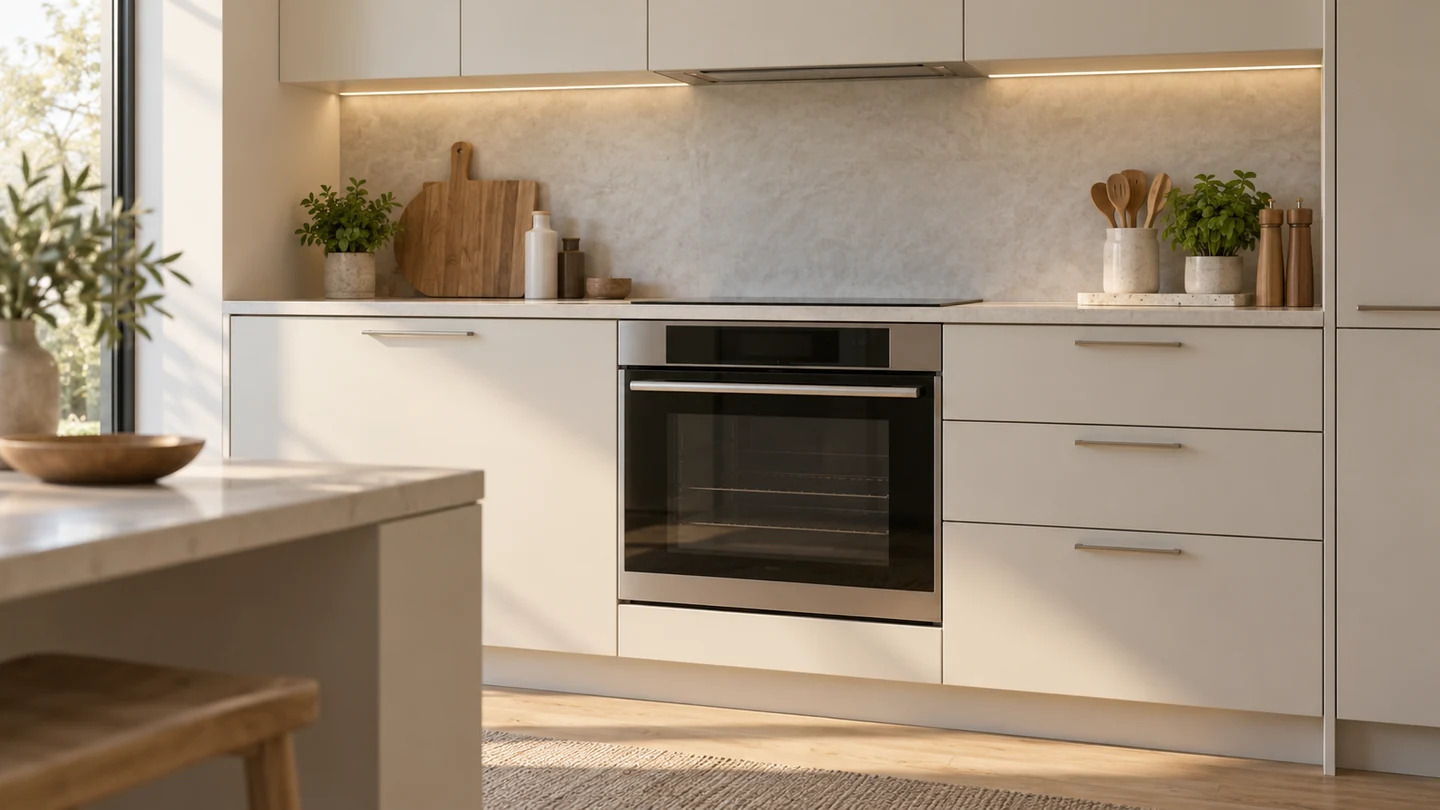
Thermofoil heat resistance depends on the complete door: the vinyl face, adhesive and wood-based core. Protect nearby doors by following the appliance’s clearances, venting instructions and specified cabinet protection. For example, Breville’s BOV845 USCM 2020 manual requires 4 inches at each side and 6 inches above during use. Those distances belong to that model.
Check the installed layout as well as the door specification. An oven temperature setting tells you little about the exposure at a neighboring drawer edge. A cabinet warranty and an appliance installation manual answer different questions.
What does thermofoil heat resistance depend on?
The face, bond and core all matter. A finish name alone cannot tell you how a particular door will behave beside a hot appliance.
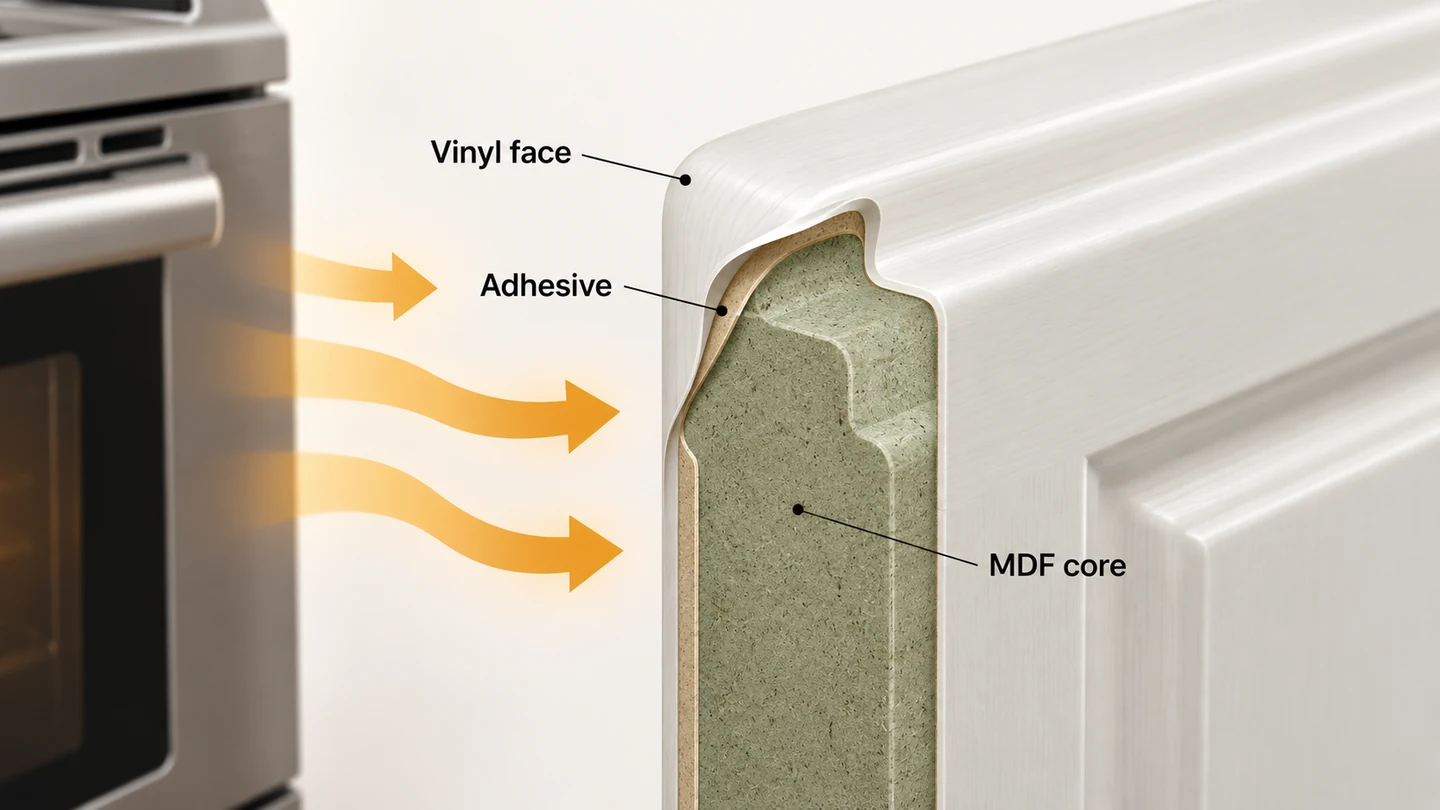
Thermofoil typically has a vinyl face formed over an MDF core. Our thermofoil cabinet guide explains that construction. The adhesive holds the face in place, including around the door’s shaped details and edges.
In its June 2017 technical article, H.B. Fuller says high temperatures can pull vinyl away from an MDF core and that its two-component waterborne polyurethane membrane-press adhesive improves heat resistance compared with other membrane-pressing adhesives. That is an adhesive maker’s claim about its own system for PVC-faced doors, but it shows why the bond belongs in the assessment alongside the facing.
The article identifies self-cleaning ovens, gas cooktops, toaster ovens, slow cookers, fryers and steam-producing appliances as potential sources. Exposure depends on where each appliance sends heat or steam. A kettle under an upper cabinet and a built-in oven beside a drawer present different situations.
Compare the cabinet core, door and finish choices separately. The cabinet finish comparison covers the wider face selection. When ordering doors, describe the neighboring appliance and the door’s position. That gives the supplier a specific installation question to answer.
How much clearance do appliance manuals require?
Use the manual for the actual appliance and installation. Side clearance, overhead clearance and surrounding-material requirements refer to different parts of the layout.
The following excerpts show why a single distance cannot cover every kitchen; each points to a page that holds the complete requirement.
| Appliance and manual | Requirement to check | Location and meaning |
|---|---|---|
| GE JS760SPSS support-linked instructions, 31-2000911 Rev. 2, May 2026, page 2 | 0-inch clearance at the back wall and cabinet side walls; surrounding materials must withstand heat up to 200°F | Range-body placement and the heat tolerance of nearby walls, counters, flooring and cabinets |
| Same GE instructions | At least 30 inches below an unprotected wood or metal cabinet; 24 inches only with the full protective construction specified in the manual | Distance above the cooktop; the reduced distance has material and construction conditions |
| Breville BOV845, USCM 2020, page 3 | At least 4 inches (10 cm) at each side and 6 inches (15 cm) above during operation | Space around this countertop oven, including beneath an upper cabinet |
Page 2 of the GE installation document allows the 24-inch figure only when the cabinet bottom is protected by at least 1/4-inch flame-retardant millboard covered with one of the listed sheet metals. The same page recommends 6-inch spacing to adjacent surfaces less than 15 inches above the cooktop to reduce steam, grease and heat exposure, and limits cabinets above the cooktop to 16 inches deep.
For a countertop appliance, consult its own instructions. The Breville manual illustrates this point: putting an oven under a cabinet still leaves an overhead-clearance requirement. Adding a narrow strip beside the unit does little to answer that overhead question.
The GE temperature is a requirement for surrounding materials, rather than a measurement of your cabinet front. Keep material requirements and layout dimensions on separate lines in the installation check.
What do door warranties say about heat and fillers?
A warranty limit defines the seller’s coverage. Apply it alongside the appliance instructions when deciding where to install a door.
The Cabinet Door Store’s RTF door care and warranty terms, checked on October 19, 2026, exclude exposure above 85°C (185°F). Its care section recommends a filler between a door or drawer front and a self-cleaning oven. It also advises opening nearby doors and drawer fronts during self-cleaning.
These are that seller’s terms for its RTF products. They do not provide a temperature rating for all thermofoil doors. Nor does the temperature tell you how far heat travels from a particular oven.
A filler changes the separation and position of the fronts. Its width and location must fit the appliance opening and cabinet details. A filler also needs a defined material and attachment detail; an attractive trim drawing alone gives little information about its thermal role.
Ask the door supplier to review the proposed arrangement against its written conditions. Give the installer both the door terms and the appliance installation drawing. Resolve any conflict before ordering, especially where an oven opening leaves little room to move a drawer front.
Our thermofoil and laminate comparison covers the broader finish choice. Whichever face you select, retain the applicable warranty and the agreed installation detail with the order.
When should you fit the cabinet maker’s heat shield?
Fit the specified accessory when the cabinet maker or appliance instructions require it, and follow the maker’s recommendation for the proposed layout. Check what the accessory protects and where it attaches.
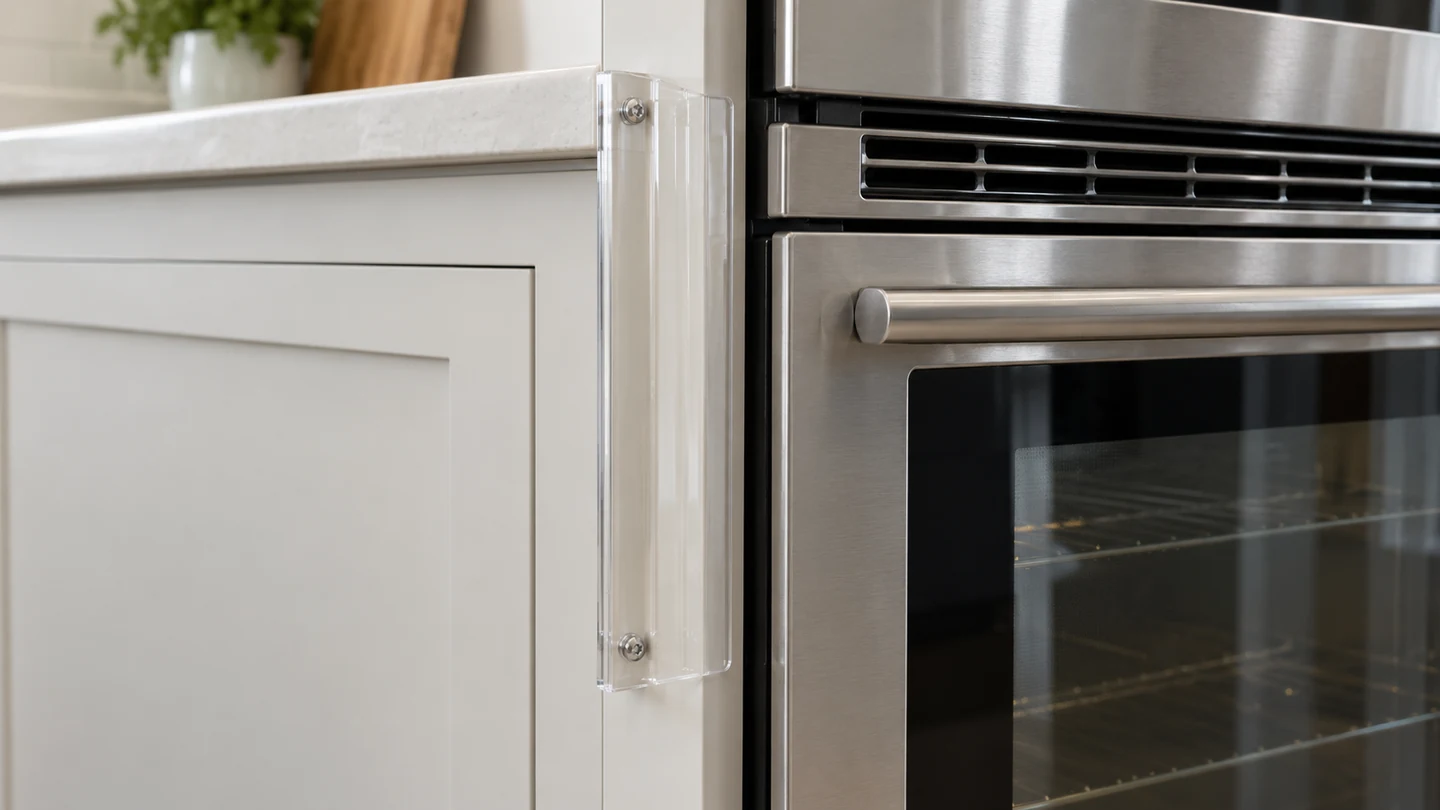
KraftMaid’s cabinet-care guide, hosted in August 2020 and applying to cabinets made after April 2014, discusses the intense heat of self-cleaning cycles. It notes that appliance seals can be damaged during installation or deteriorate with age. For its thermofoil or laminate styles, it recommends a heat shield on adjacent cabinets. It also recommends removing doors or drawers beside or directly above the appliance during cleaning.
The maker’s current heat-shield page, checked on October 19, 2026, describes a clear acrylic accessory beside or above ovens and ranges. A set contains two 1/16-inch-thick shields and screws. That dimension describes the accessory’s thickness. The page makes the shield a warranty requirement for its laminate-style doors; keep that wording distinct from the care guide’s broader recommendation.
An accessory should have a specified position and purpose. Keep vents open and preserve the appliance’s required spaces. Obtain the correct fitting detail before drilling into a cabinet. Household foil or an arbitrary plastic sheet supplies none of the installation evidence associated with the designated part.
How should you manage oven heat and dishwasher steam?
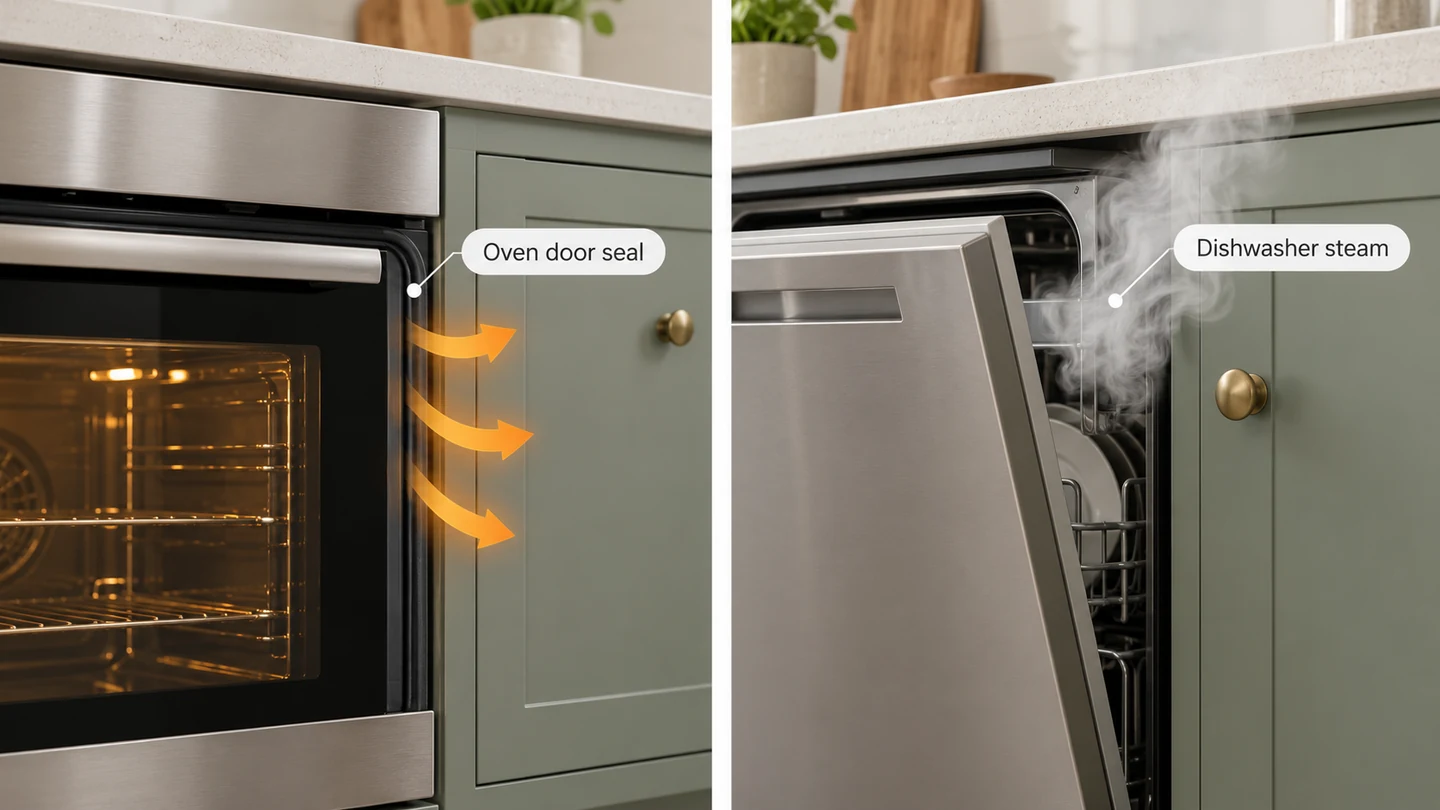
Follow the relevant model’s material, door-seal and operating instructions. Hot air and escaping steam can affect cabinet fronts even where the appliance fits its opening.
The Bosch CSG636B.3 UK/European manual, document 9001680406_B (021010), separates two requirements on page 40: fitted units must tolerate 95°C, and adjacent unit fronts 70°C. It also prohibits installation behind a decorative or cabinet door. These requirements concern different parts around that oven.
Page 5 explains that a very dirty seal can stop the door closing properly and damage adjacent fronts. It directs users to keep the seal clean and avoid operating with a damaged or missing seal. After high-temperature cooking, it says to let the appliance cool with its door closed; repeated open-door cooling can damage neighboring fronts.
For dishwasher steam, the Bosch SHV9PCM3N manual, document 9001635113_C, page 7, warns that escaping water vapor can damage cabinetry. It instructs users to let the machine cool slightly after the program before opening it manually. It gives no waiting period in minutes. A model designed to open automatically needs its own operating and installation instructions.
Assess these instructions as complete model-specific sets. The UK oven’s material requirements and the US dishwasher’s steam guidance serve different installations. Where moisture reaches a wood-based core through edges or joints, the MDF moisture guide explains the resulting swelling risk.
What can local damage tell you about the heat source?
Damage location can guide the inspection, but appearance alone cannot identify the failed component. Map the affected front against the appliance door, vent and surrounding cabinetry.
An edge beside an oven, an upper door over a countertop appliance and a side panel beside a dishwasher deserve different checks. Record where the change starts and whether nearby fronts remain sound. Include an overall layout photo and a close view; a cropped picture of peeling film loses the relationship to the appliance.
The May 2018 Hometalk discussion about peeling beside an oven contains a useful example. A contributor reported damage to a neighboring drawer after an oven door had been refitted incompletely on one side. Another suggested checking the oven seal. These are individual experiences; they suggest what to inspect but cannot diagnose another kitchen from a photograph.
Check the appliance model and the installation records before replacing the front. Have an appropriate appliance technician investigate door seating, seals or unexpected leakage. Cabinet alterations, moving built-in appliances and changing ventilation belong with a qualified installer following the applicable instructions.
For an already damaged door, the separate thermofoil peeling guide covers repair and replacement choices. Establish the heat or steam exposure first so the replacement decision addresses the location as well as the appearance.
Where does a silicone-faced decorative film fit?
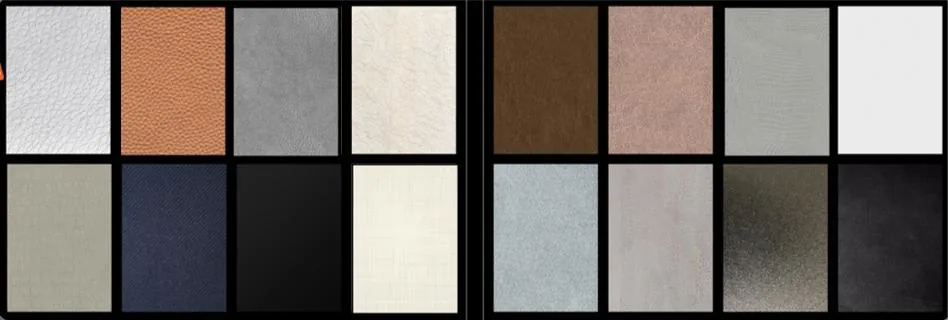
Puremorfilm makes decorative film with a silicone functional surface for PUR flat lamination onto boards. We mainly supply rolls; laminated panels are available on request. Our process serves flat faces, while thermofoil-shaped doors use a different forming route.
The silicone surface is inherently flame-retardant, with higher grades up to UL 94 V-0 available on request. This describes the surface material rather than an appliance heat shield or a cabinet fire rating. In the manufacturer’s laboratory tests, coffee, red wine and soy sauce left at 25°C for 24 hours wiped off with no obvious change. We use a No DOP formulation.
Our paint-free silicone functional face differs from PVC, melamine, PP and PETG decorative faces. The material has a leather-like feel and some elasticity; we do not recommend it for stovetop counters or flooring. Assess a flat furniture-film face with its supporting board and the appliance layout.
What should you check before placing doors near appliances?
Start with the appliance model, then reconcile the layout with the door supplier’s requirements. Record the accepted arrangement before installation or replacement.
| Check | Information to keep | Decision it supports |
|---|---|---|
| Appliance identity | Exact model, market and manual revision | Which installation and operating instructions apply |
| Placement | Opening drawing, nearby fronts, overhead surfaces and vents | Whether the planned layout meets the stated spaces |
| Door construction | Face, bond, core and supplier’s written conditions | Whether the proposed door suits that location |
| Protection | Specified shield or filler and its fitting detail | Which accessory or cabinet detail the installer should use |
| Use and service | Self-cleaning, seal care and dishwasher opening instructions | How to manage the heat and steam sources in use |
| Existing damage | Layout photos, damaged areas and inspection findings | Whether the source needs attention before replacing fronts |
Keep those records together. A door-material substitution should trigger a review of the location and supplier terms, just as an appliance change should trigger a new manual check. For a flat decorative-facing enquiry, contact us with the door construction, its position and the neighboring appliance model.
Frequently Asked Questions
What are the downsides of thermofoil cabinets?
Thermofoil fronts can be vulnerable to concentrated heat and steam, and damaged areas may be difficult to touch up invisibly. Near appliances, evaluate the door construction and installation before choosing the finish. A cleanable face still needs suitable edges and protection from the actual exposure.
What are heat shields?
Heat shields are protective components placed between a heat source and a surface that needs protection. Cabinet accessories have defined materials, locations and fitting details. Select the part intended for the cabinet and appliance arrangement; appearance alone does not identify it.
What is the best heat shield to use for cabinets?
The best choice is the accessory specified for your cabinet and appliance arrangement. Confirm the part and fitting drawing with the relevant supplier. A loose sheet sold as a general heat barrier may leave unresolved questions about attachment, ventilation and the surfaces it protects.
How can I protect my cabinets from heat from the oven?
Match the appliance installation to its manual, then follow the door supplier’s protection and care conditions. Investigate unexpected heat leakage before replacing a damaged front. A shield or filler should form part of that verified arrangement, with access for appliance servicing retained.
How close can an oven be to a cabinet?
There is no single distance for all ovens and cabinets. The GE range example above allows its body to sit flush at cabinet side walls, while its overhead requirements are different. Find the dimension for the exact surface and position in your model’s drawing; a side-clearance figure cannot answer an overhead-clearance question.