
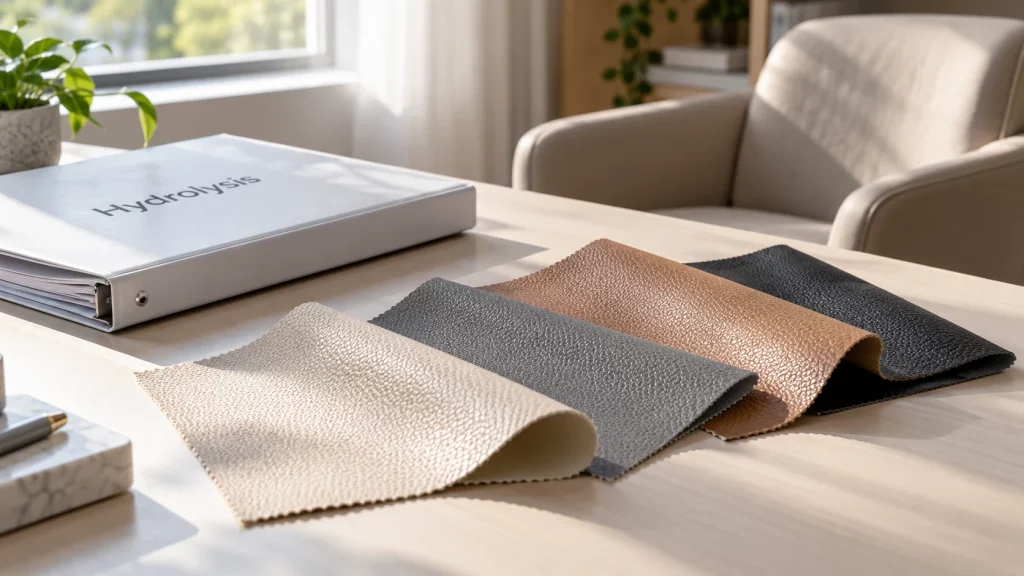
Silicone Leather Hydrolysis: Construction, Test Weeks and Real Risks
A procurement-focused explanation of hydrolysis evidence, PU-containing constructions, test weeks and cleaning-related failure that can look similar.
Read article
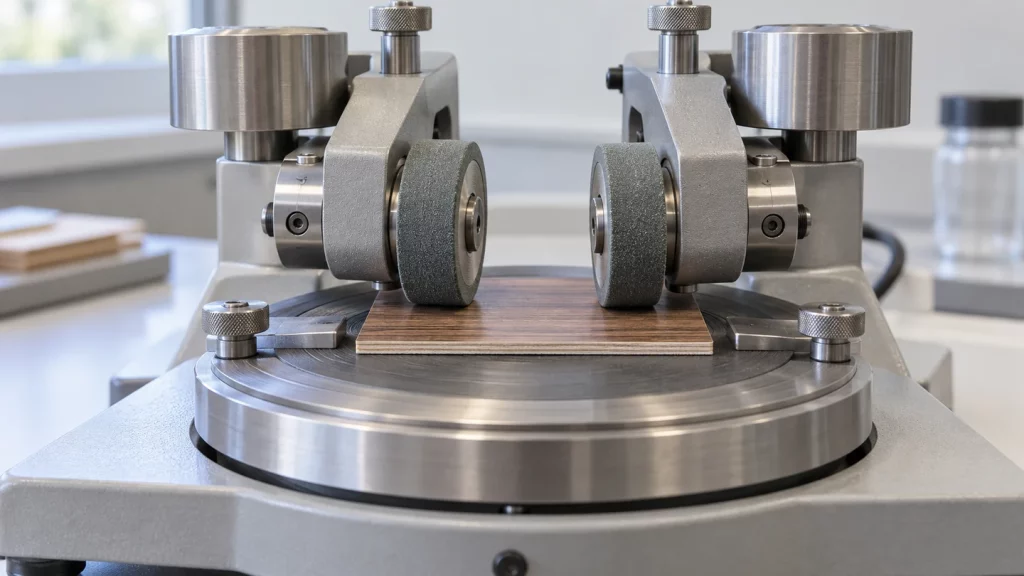
A surface test report is useful when the specimen, method and result answer the question in your specification. These guides help you read scratch, pencil hardness, abrasion and other surface evidence alongside the finished panel construction. Start with the cabinet durability overview, then follow the individual test and compliance questions below. The group also covers furniture off gassing, antimicrobial claims, fire classification and supplier evaluation. Keep film results separate from tests on a complete board, door or wall assembly, and check which material or product a document actually covers before using it in an approval file. Start here: Cabinet Surface Durability Test: How to Read the Results Surface performance Pencil Hardness Test: How to Read Scratch and Gouge Grades Scratch-Resistant Kitchen Cabinets: Which Finish Is Best for You? Antimicrobial Surfaces: Why You Still Need to Clean Them Emissions, fire and supplier checks Furniture Off Gassing: How to Reduce New Furniture Odors TSCA Title VI Compliance: How to Check Labels and Records ASTM E84 Class A: How to Read Your Fire Test Report Supplier Evaluation Checklist: How to Spot Red Flags
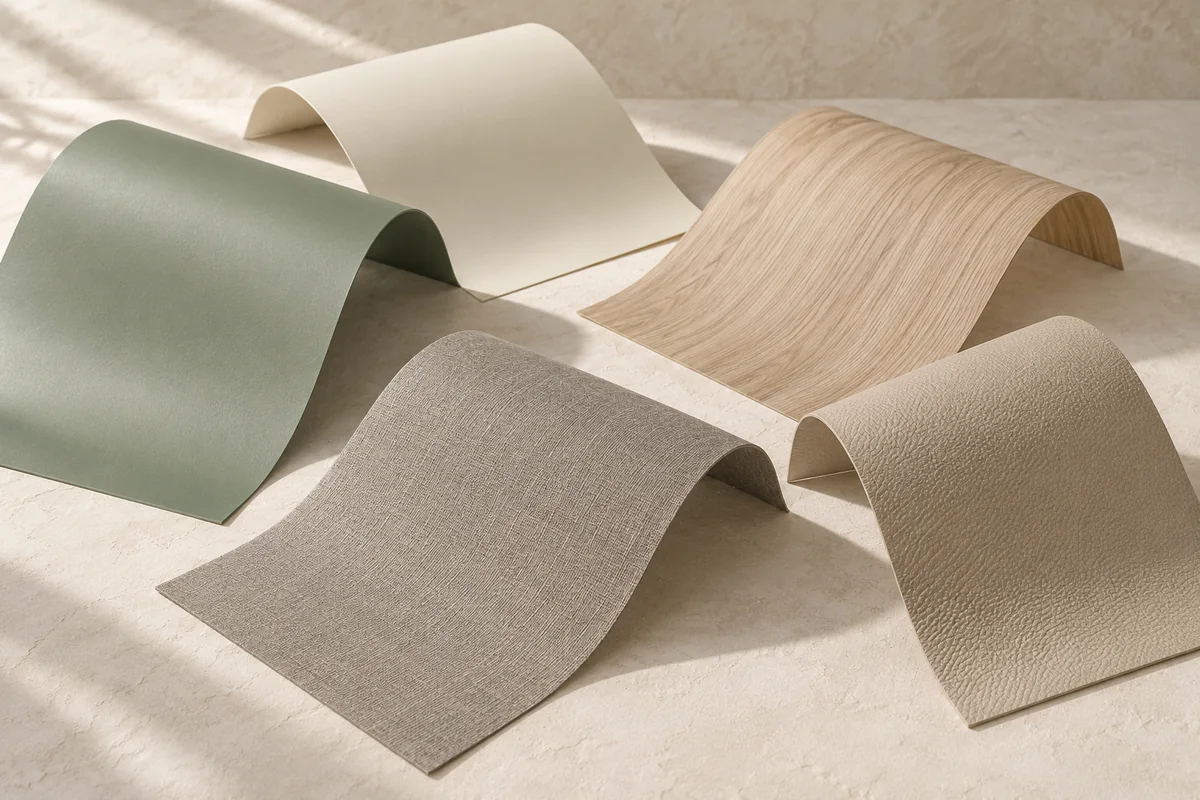
Material knowledge for your next surface project.


Tell us your application, substrate and preferred look to discuss sample options.