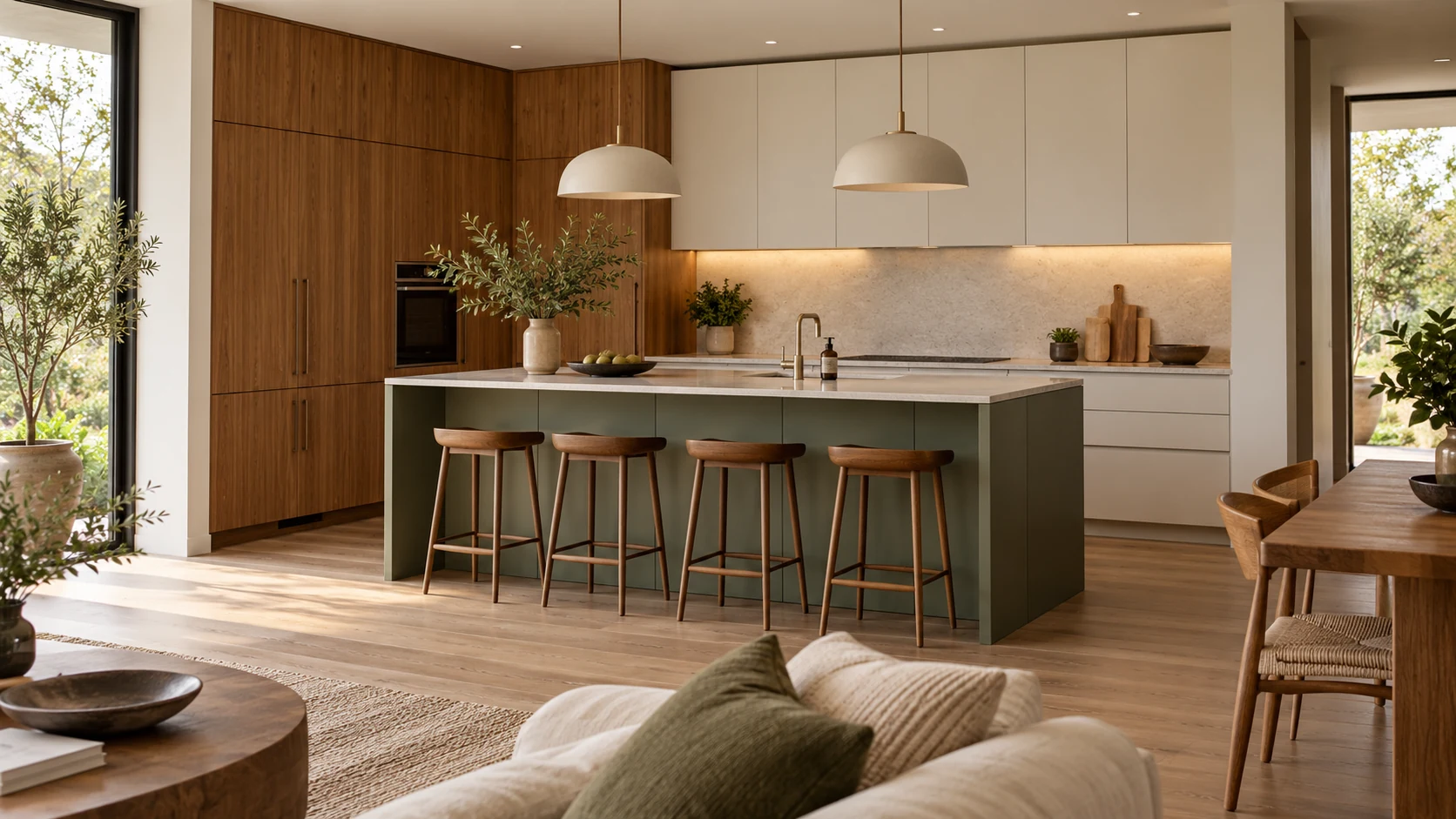
Kitchen cabinet trends 2027: current forecasts favor warmer wood and stained finishes, white chosen to suit the room, color on islands and lower cabinets, and storage or appliances concealed behind coordinated fronts. For your own kitchen, the useful decision is which of those ideas improves the room: a wood finish changes its appearance, while a concealed coffee area also changes how the cabinets use space.
What are the kitchen cabinet trends for 2027?
Warm wood, layered color, simpler cabinet fronts and visually integrated storage form the main direction in current previews. You can adopt one of those ideas without rebuilding the kitchen around every feature in a trend photograph.
| Direction | What it looks like on cabinets | Decision it creates |
|---|---|---|
| Warmer wood | Visible grain and light or medium wood tones | How much pattern and depth the room needs |
| Deliberate white | A white or off-white main run paired with other materials | Which white suits the fixed surfaces |
| Contained color | A green, blue or dark island or lower run | Where the room should draw attention |
| Simpler fronts | Slab faces or restrained framed profiles | Which door shape fits the material and room |
| Concealment | Coordinated appliance fronts or doors hiding a work area | What happens when the doors open |
The NKBA 2027 Kitchen Trends Report public summary, published October 14, 2026, draws on 830 North American industry professionals: 62% designers and 67% association members. Its outlook covers the next three years, with public themes including layered design and intentional simplicity. This is a professional forecast; its public summary supplies no cabinet-color market shares.
Start with the room’s layout and the parts you intend to keep. Our cabinet-finish comparison covers the underlying paint, stain and decorative-facing choices once a trend has given you a direction.
Are wood cabinets coming back in style?
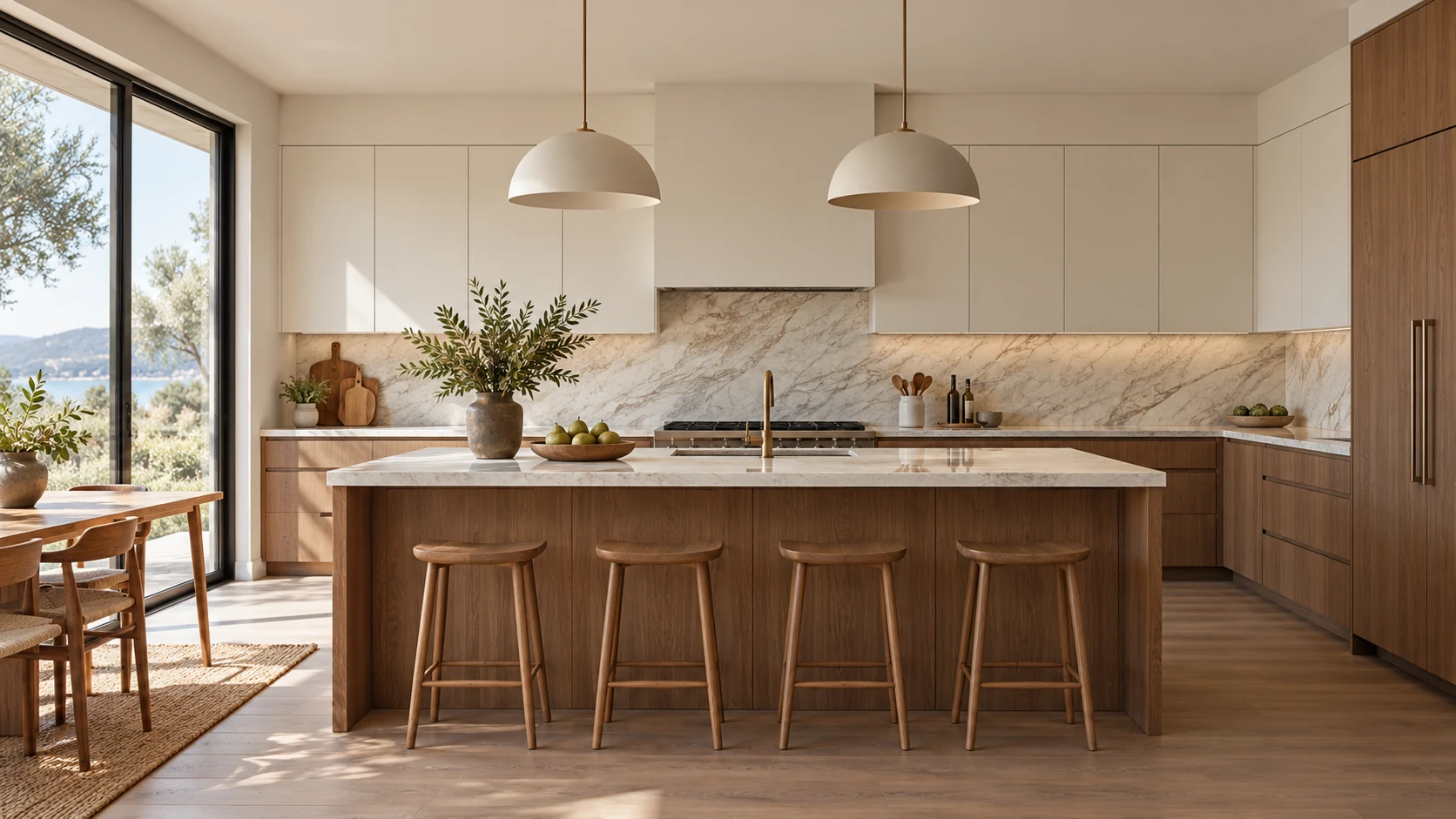
Yes, warm wood and grain-visible finishes are prominent in current kitchen forecasts, and the choice extends beyond pale oak. Medium wood tones deserve a place in the sample comparison when you want more depth without choosing a very dark cabinet run.
In its September 15, 2026 release about 2027 cabinetry trends, cabinet manufacturer MasterBrand reported that medium stains were joining light wood stains and creamy off-whites in the leading position for the first time in 15 years. That is the company’s interpretation of its dealer and designer research, based on two survey waves in 2025, rather than an independent household market-share ranking.
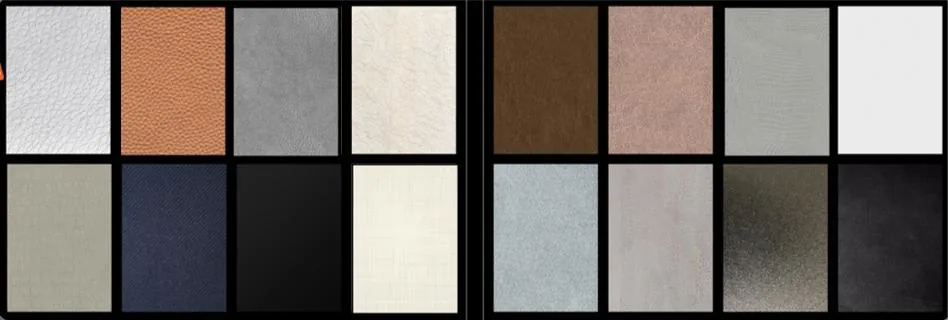
The practical response is to broaden the shortlist. Then put a medium wood sample beside a pale wood sample and your preferred warm white. Compare the amount of grain, the apparent depth of the wood color and its relationship with the floor. A pale wood floor does not require equally pale cabinets; it gives you an existing surface against which to judge the alternatives.
A wood appearance also leaves a material decision to make. Laminate and wood cabinets can follow a similar palette while using different face constructions. Compare those actual faces in the intended space. If the relationship changes as you move between daylight and electric light, the metamerism guide explains how to investigate that change.
Is white still in style for cabinets?
Yes, white remains an option, especially when it supports a wood element, a colored island or another material you want to emphasize. The current shift gives white a specific role in the composition instead of treating it as an automatic answer for every surface.
Warm white can provide a quiet main run beside a medium wood island. A clearer white may suit a different fixed palette. Compare the cabinet sample with the countertop and floor together; the label “white” covers more visual variation than it suggests.
An all-white scheme is also a valid choice when you prefer it. Add interest through the door profile, hardware, lighting or a neighboring material if those details suit the room. There is no need to add a dark island simply because a forecast includes contrasting islands.
For an existing kitchen, identify what is staying before choosing a replacement white. A new door face sits beside retained end panels, trim and adjoining surfaces. Reviewing those relationships in one view is more useful than trying to find the year’s universally correct shade.
Which cabinet colors are trending for islands and lowers?
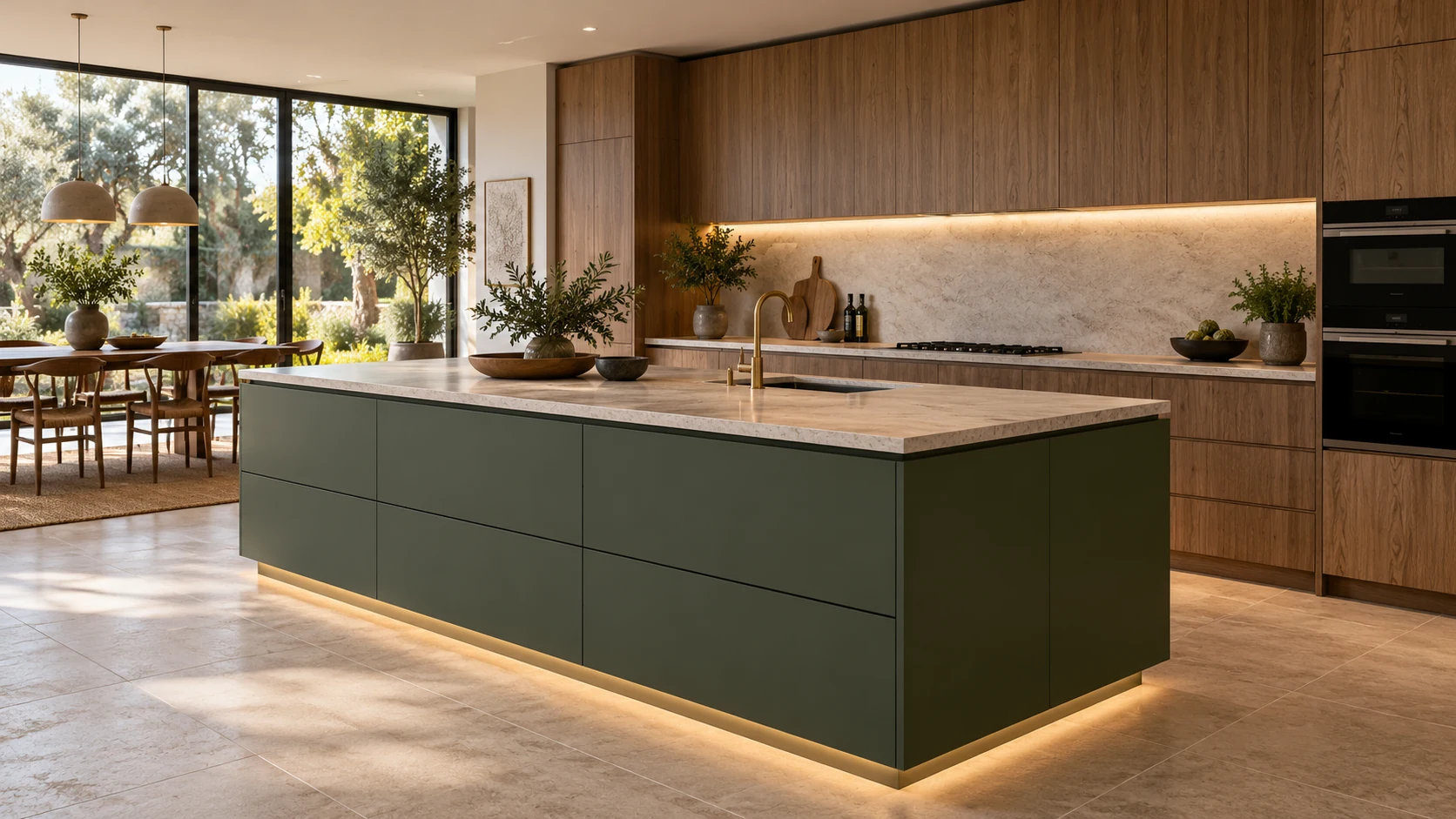
Greens, blues and deeper neutrals are useful accent directions, with the island or a lower cabinet run providing a contained area for stronger color. Wood can occupy that same role when you want a material contrast instead of another painted hue.
The Sherwin-Williams Industrial Wood KBIS and IBS 2026 report identifies blues, greens and two-tone combinations in its cabinetry observations. That is a show report from 2026, supporting the recent direction behind these choices; it supplies no national installation share for next year.
A muted green can sit between a warm white perimeter and a wood floor without creating the same contrast as a near-black island. Navy offers another stronger focal option. Compare both with the countertop, because the top occupies a large visible plane above the island color.
Black and charcoal can still serve a deliberate focal point, although the reports cited here lean toward greens, blues and deeper neutrals. They do not make the underlying cabinet physically more durable. Treat the color and the face material’s performance as separate decisions. With a dark island, check the dining-room view as well as the working side: its end and back may be the surfaces you see most often.
Which door styles and finishes are trending?
Simpler transitional fronts, narrower framed profiles and slab doors offer the restrained outlines described in current previews, while matte and satin appearances suit the warmer material palette. They are alternatives to compare, not evidence that every kitchen should use the same door.
A slab face gives the grain or solid color an uninterrupted field. The framed face introduces lines around the center panel, which can relate to an older home’s trim or a more traditional room. A narrower frame offers another balance between those effects. View a complete door sample, since a small color chip tells you little about the profile’s shadow lines.
Door appearance also needs a compatible material route. A flat decorative face and a shaped door involve different construction choices. Compare the desired grain and sheen on the actual door profile and its proposed facing construction.
Our matte versus gloss cabinet guide compares the visual choices. The ultra matte and soft-touch comparison explains why low reflection and tactile softness describe different properties. Ask for documented care and performance information for the actual face you are considering; the trend label “matte” cannot supply those results.
How are appliances and storage being hidden?
Coordinated appliance panels and doors over work areas reduce visible equipment, but they work in different ways. Decide whether you want to cover the appliance itself or close off the entire coffee, preparation or storage zone.
| Approach | What closes across the view | What the layout must resolve |
|---|---|---|
| Panel-ready appliance | A decorative front attached to a suitable appliance | The appliance’s panel requirements and opening clearances |
| Appliance garage | Doors enclosing a countertop work area | Access to the equipment and somewhere for open doors |
| Pocket-door enclosure | Doors retracting into dedicated side pockets | Space for the pockets as well as the usable work area |
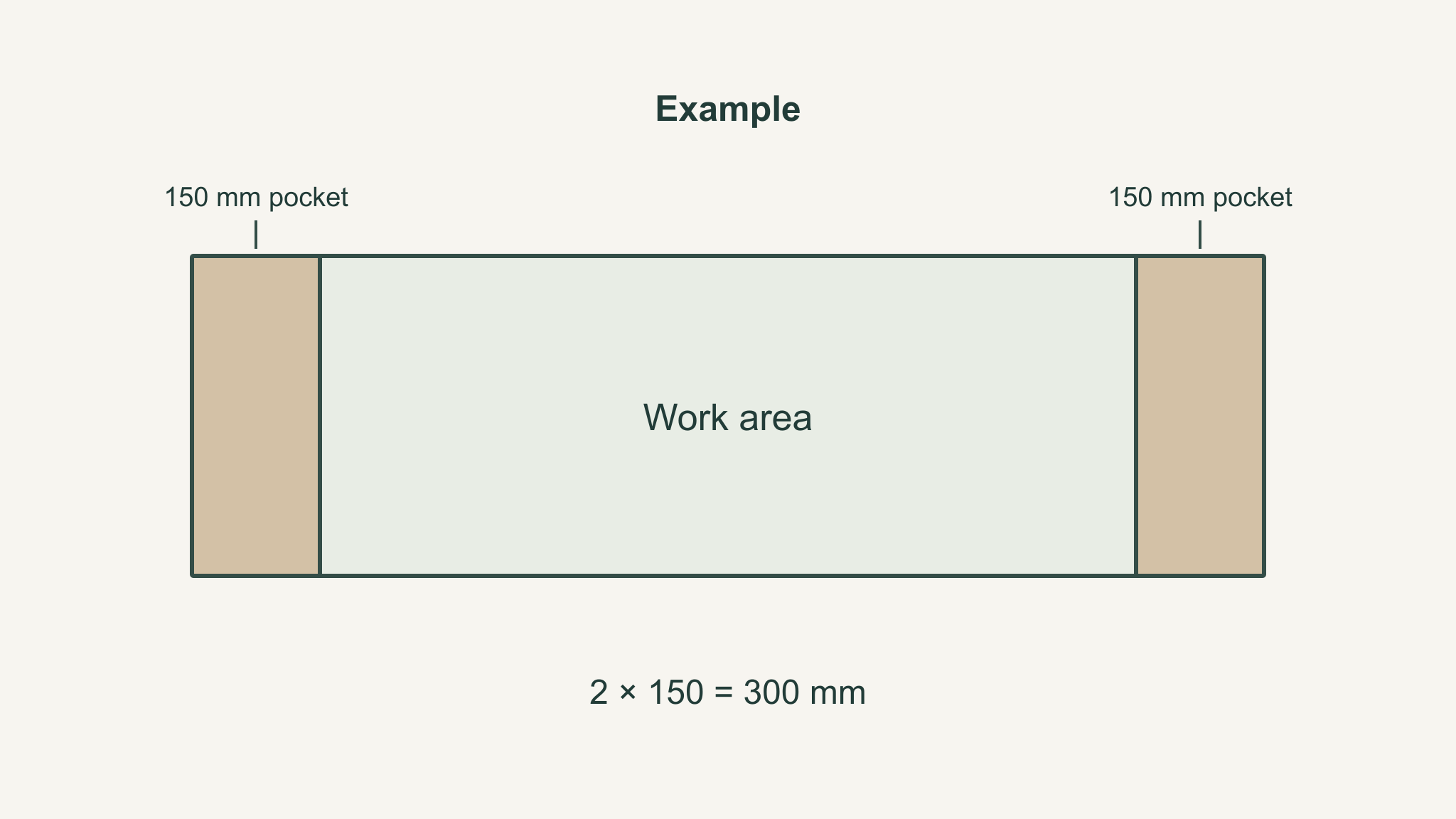
For a concrete example, the Blum REVEGO system uses a dedicated narrow cabinet to house its pocket mechanism. Its specified pocket installation width is 100 mm for uno and 150 mm for duo. In an arrangement with two duo pockets, the pockets alone account for 300 mm across the run. These are that system’s dimensions, not a standard allowance for every hidden-door cabinet.
Next, mark those side spaces on the plan before comparing the finished opening. A broad, uninterrupted closed front can conceal a narrower working area behind it. The supplier’s system drawing should show where the doors park and the actual clear opening, including the other construction allowances.
A panel-ready refrigerator works differently: its front follows the appliance door rather than sliding into a side pocket. Confirm the selected appliance before finalizing the cabinetry. Pocket doors also need a plan for how you use the work area while open. Compare the open arrangement as carefully as the closed elevation, especially for a coffee machine or storage zone used repeatedly through the day.
Which 2027 trends are worth committing to?
Commit first to storage and layout choices that support your daily use, then choose the amount of wood, color and concealment you want around them. A trend is more useful when it solves a specific problem in the room.
If countertop equipment is the problem, an accessible appliance garage may help more than a new color. If the kitchen feels visually cold to you, a wood island or warmer main finish may address that preference without changing the working layout. If storage is already tight, review the space taken by a pocket-door system before choosing it for a cleaner elevation.
A neutral main run with a more expressive island contains the color decision in one group. That can also make a future appearance change more focused, although refinishing or replacing those faces still depends on their construction and condition. Choose the accent because you like it with the retained surfaces.
Keep the cabinet box, door and face-material decisions visible in the comparison. The trend photograph usually shows the closed front; your daily experience includes drawers, shelves, open doors and access to the items behind them.
Where does a silicone-faced film fit with 2027 looks?
Puremorfilm produces furniture decorative film with a silicone functional surface for flat cabinet faces. Woodgrain and solid-color appearances can support the warmer, layered direction. Our range includes more than 100 patterns, with texture and gloss customizable on request. The patterns and finishes and woodgrain film options are starting points for comparing actual face samples.
Our silicone surface is inherently flame-retardant; higher grades up to UL 94 V-0 are available on request. In the manufacturer’s laboratory tests, coffee, red wine and soy sauce remained on the surface at 25°C for 24 hours, with no obvious change after wiping. Our formulation uses No DOP. Those statements concern the film and the stated laboratory exposure, not the performance of an assembled kitchen.
We primarily supply rolls for PUR flat lamination, and faced panels can be supplied on request. Our paint-free decorative material uses a silicone functional face, differing from PVC, melamine, PP and PETG decorative faces. Select a flat-door construction for this route; shaped profiles require a different facing process.
How do you use 2027 trends in your own kitchen?
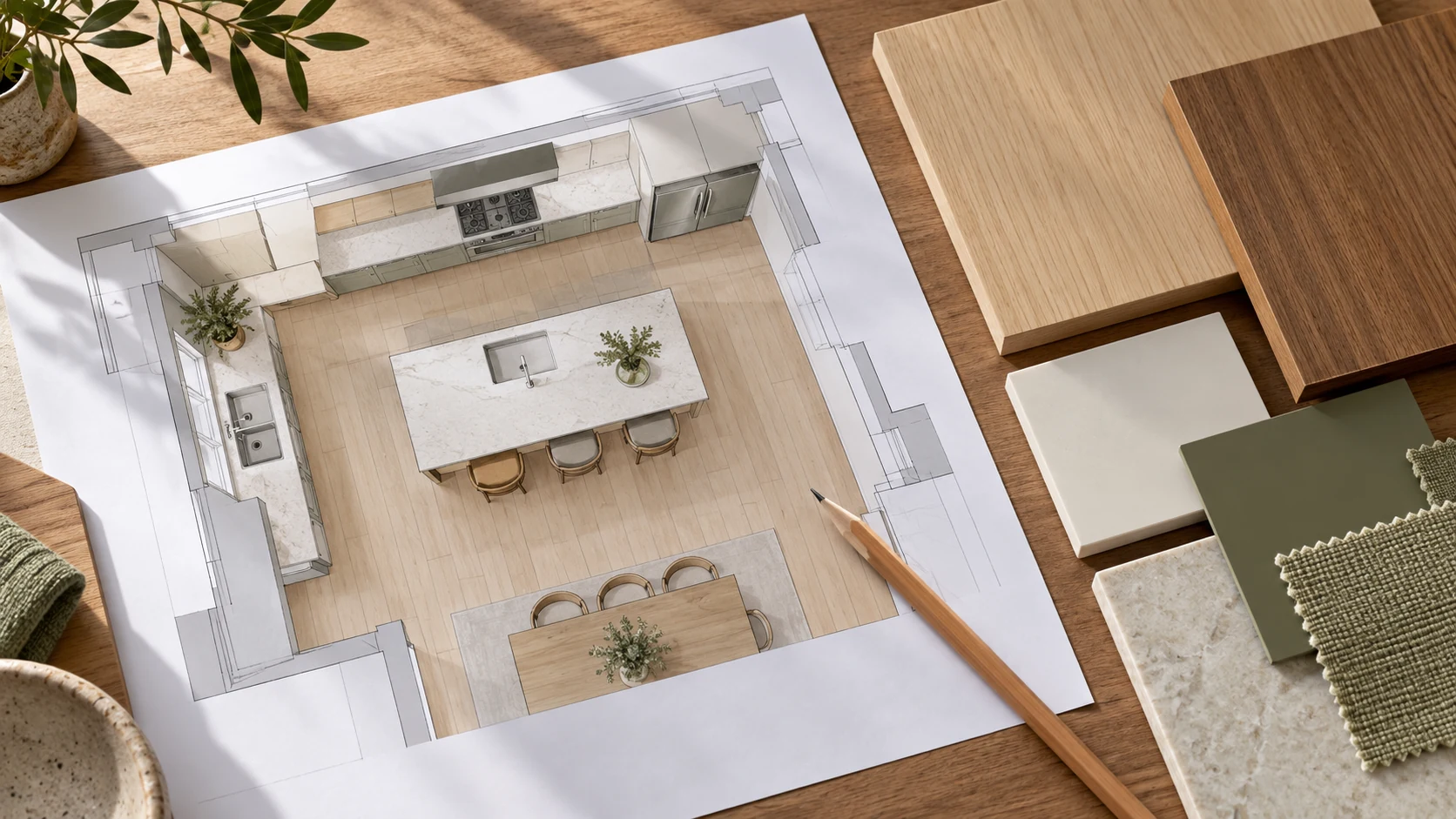
Use the forecasts to build a focused shortlist, then test each idea against your room, actual samples and available cabinet space. Choose each feature for a clear purpose in your kitchen.
| Idea you want | Confirm before committing |
|---|---|
| A warmer wood appearance | Compare pale and medium wood samples with the floor and preferred white |
| A contrasting island | Review the full island from the living area and working side |
| A quieter door face | Compare full doors with the intended profile, grain and sheen |
| A concealed work area | Check the open layout, door parking and usable opening |
Keep the proposed finish groups on the elevation and the concealment allowances on the plan. That lets the color decision and the space decision develop together. We can help you compare suitable film appearances against the flat door faces in that proposal.
Share your kitchen plan, preferred wood tones or colors and door style when you contact us.
Frequently Asked Questions
What are the future trends for kitchens?
Warmer materials, more personalized color and work areas that integrate storage and appliances are the main directions in current previews. Choose the features that suit how you cook, gather and use the room.
Are wood cabinets coming back in style?
Yes, wood and grain-visible finishes feature prominently in recent forecasts. Compare medium wood tones as well as pale wood, and decide whether you want a genuine stained-wood face or another material with a wood appearance.
Are black cabinets in for 2026?
Yes, as a deliberate accent, usually on an island or selected lower run. The 2026 and 2027 reports cited above lean more toward greens, blues, wood and deeper neutrals, so judge black against the whole room’s palette.
What are the trendy kitchen designs for 2026?
Warm wood, blue and green accents and two-tone combinations appear in recent cabinetry show observations. Those directions continue into 2027 previews alongside simpler fronts and integrated storage; the report year should stay attached to its original findings.
Are panel-ready appliances worth it?
Yes, when a coordinated cabinet-front appearance matters enough to justify the added appliance and panel expense. Confirm the selected appliance and its requirements before ordering cabinetry; a panel-ready front and a pocket-door enclosure solve different design problems.