
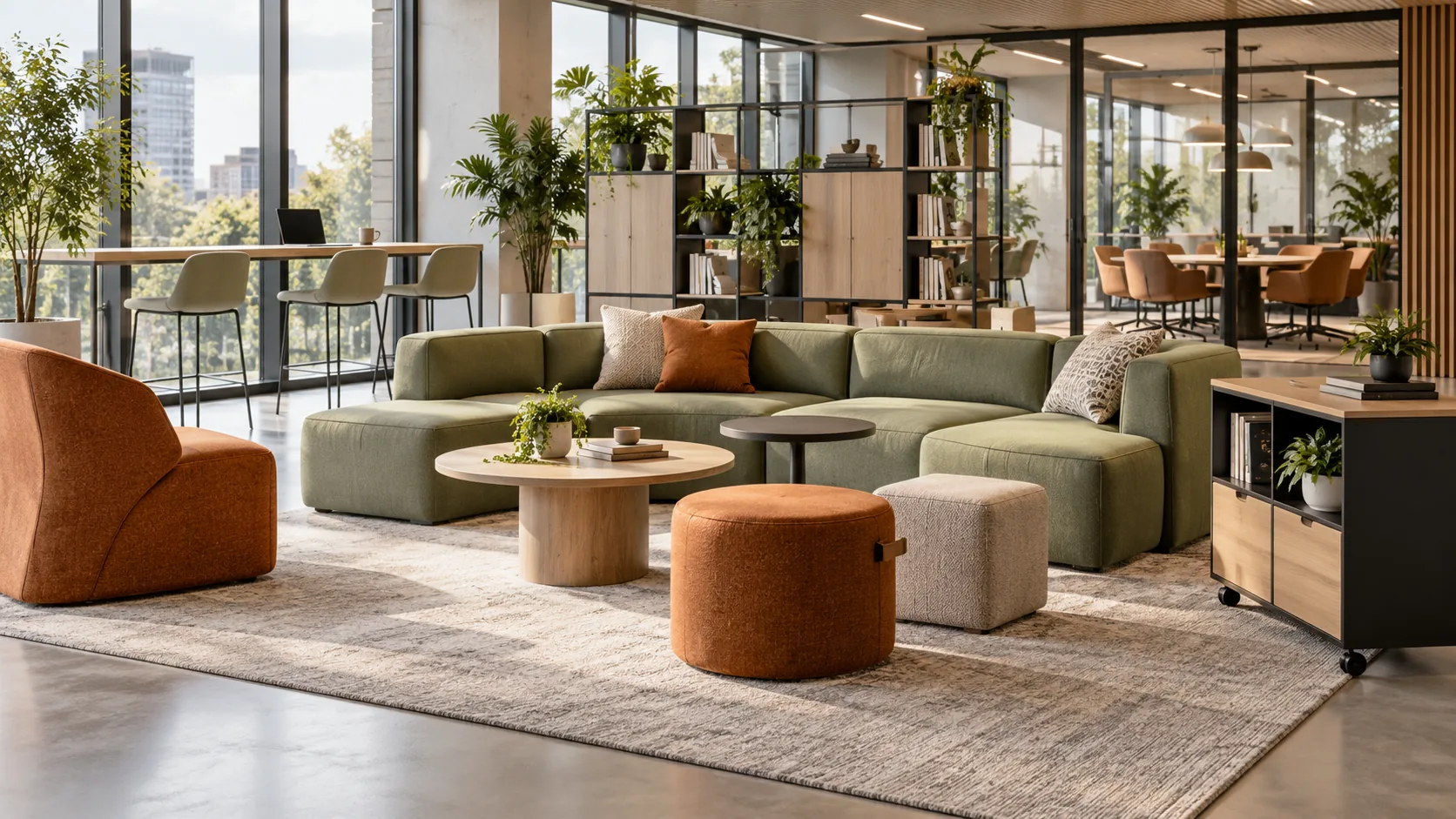
The office furniture trends worth specifying are tied to how people work: flexible meeting furniture, space for focused work and integrated power. Gensler’s 2026 Global Workplace Survey linked the ability to rearrange meeting-room furniture with workers rating their office effective for learning, in analyses controlling for workplace and demographic factors.
A useful trend gives you a question to test before buying. Can your team move the meeting furniture? Does a chair suit the person and workstation? Can a storage unit move without creating a different problem? Those questions help distinguish a useful change from a new appearance alone.
How current are the office furniture trends you are reading?
Flexible furniture, adjustable workstations, integrated power, quiet spaces and residential styling recur across several years of office furniture coverage. Read the publication date before treating a familiar idea as a new development.
The saved ranking articles span older advice and current commentary. Their dates explain what each list can support: an older article can establish that an idea has persisted, while a recent list describes its publisher’s present recommendations. Neither establishes market sales or the preferences of every office.
| Source in the reviewed search results | Date or year identified in the reviewed source | Useful coverage |
|---|---|---|
| OFDC | 2025 | Flexibility, technology, ergonomics and material choices |
| HBI Office Solutions | About 2019 in the saved result | Earlier office furniture trend advice |
| Lemon Tree Office Furniture | April 7, 2025 | Modular furniture and workplace arrangements |
| A wall-surface products supplier’s blog | 2025 | Collaboration and the office environment |
| Unisource Solutions | August 5, 2019 | Residential influences and natural materials |
| Commercial Office Interiors | 2026 | Flexible furniture, quieter spaces and choices intended to last |
Read a trend against your project’s actual requirement. A team that already has adequate meeting space may need better power access or storage instead of another collaboration setting. Record the problem a proposed purchase addresses before comparing its style with alternatives.
Why do flexible and modular pieces lead the list?
Flexible furniture is useful when the people using a room can change its arrangement for the work they do. That can mean movable tables, compatible seating modules or pieces that support more than one meeting format.
In Gensler’s 2026 research, the ability to rearrange meeting-room furniture was among the factors associated with workers judging the workplace effective for learning. The survey used an anonymous panel of 16,459 full-time office workers across 16 countries, collected in July–September 2025. The analysis identifies an association, rather than a furniture-caused improvement.
Test the proposed arrangement with the people who will change it. Ask them to move the pieces, find a place for anything removed and reconnect the equipment. A room can contain movable furniture while leaving users with a difficult reconfiguration process.
Check where modular pieces end and fixed construction begins. A casework and millwork comparison can help describe which elements travel with the team and which remain attached to the project. Furniture flexibility becomes useful when that distinction is clear on the drawings and in the purchase scope.
How should furniture handle power, data and technology?
Furniture should put the required power and data connections within a workable arrangement and keep cables organized through normal use. Review the desk, table, electrical installation and equipment together.
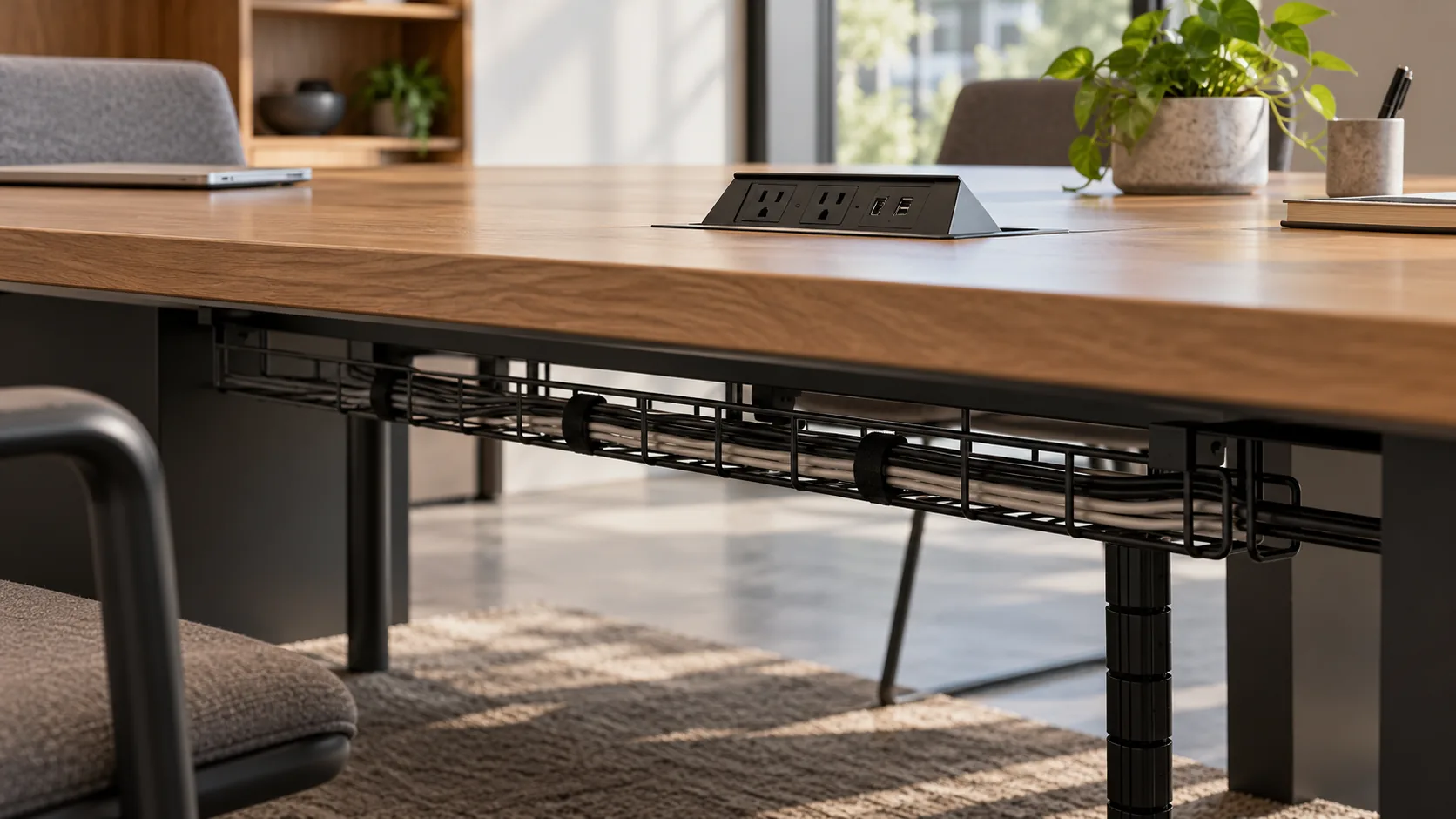
Integrated power and cable management recur in the ranking articles, but the label “technology-ready” leaves several practical questions unanswered. Identify the equipment people will bring, where they will sit and how the table changes between uses. Then trace the connection from the building supply to the device.
Inspect cable trays, access panels and connections in a sample piece. Staff may need to add or remove equipment after installation. A concealed route that cannot be accessed without dismantling furniture can complicate an otherwise simple change.
For a shared meeting room, try the furniture in each intended arrangement with its cables connected. Include the position of floor boxes and other building services in the review. A new table should not require people to route loose cables through a passage to use the advertised features.
What should ergonomic furniture be able to show?
Ergonomic furniture should show how its adjustments and dimensions suit the intended activity and users. Assess the whole workstation, including the chair, work surface, screen, input devices and the space needed to approach them.
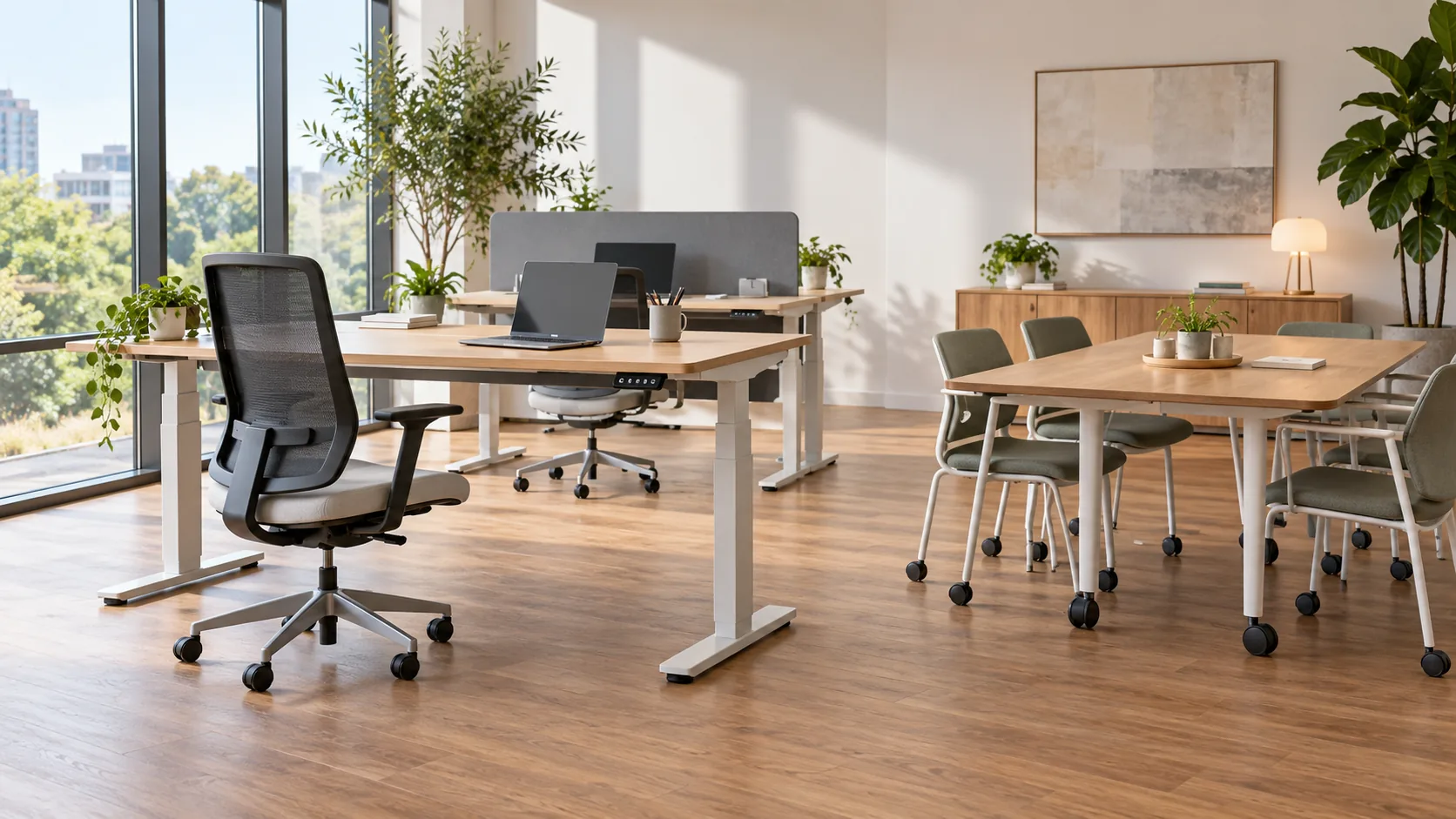
An adjustable chair has little value if the person cannot use its controls or if the desk arrangement prevents a workable position. Let intended users try the settings and explain the task they perform. For a sit-stand desk, review equipment placement and cable movement in both positions.
BIFMA’s published standards descriptions distinguish general-purpose office seating, desk and table products, and dimensional requirements for furniture designed for computer use. Those are different evidence questions. A claim about dimensions should identify the applicable furniture and standard, while a durability claim needs the corresponding test evidence.
The BIFMA scope table later in this guide identifies the published references. It supplies a route for checking a claim, without inventing test loads or suggesting that one furniture report answers every workstation question. For decorative faces, surface durability tests address a narrower part of the assembled furniture.
Are quiet rooms and pods part of the furniture plan?
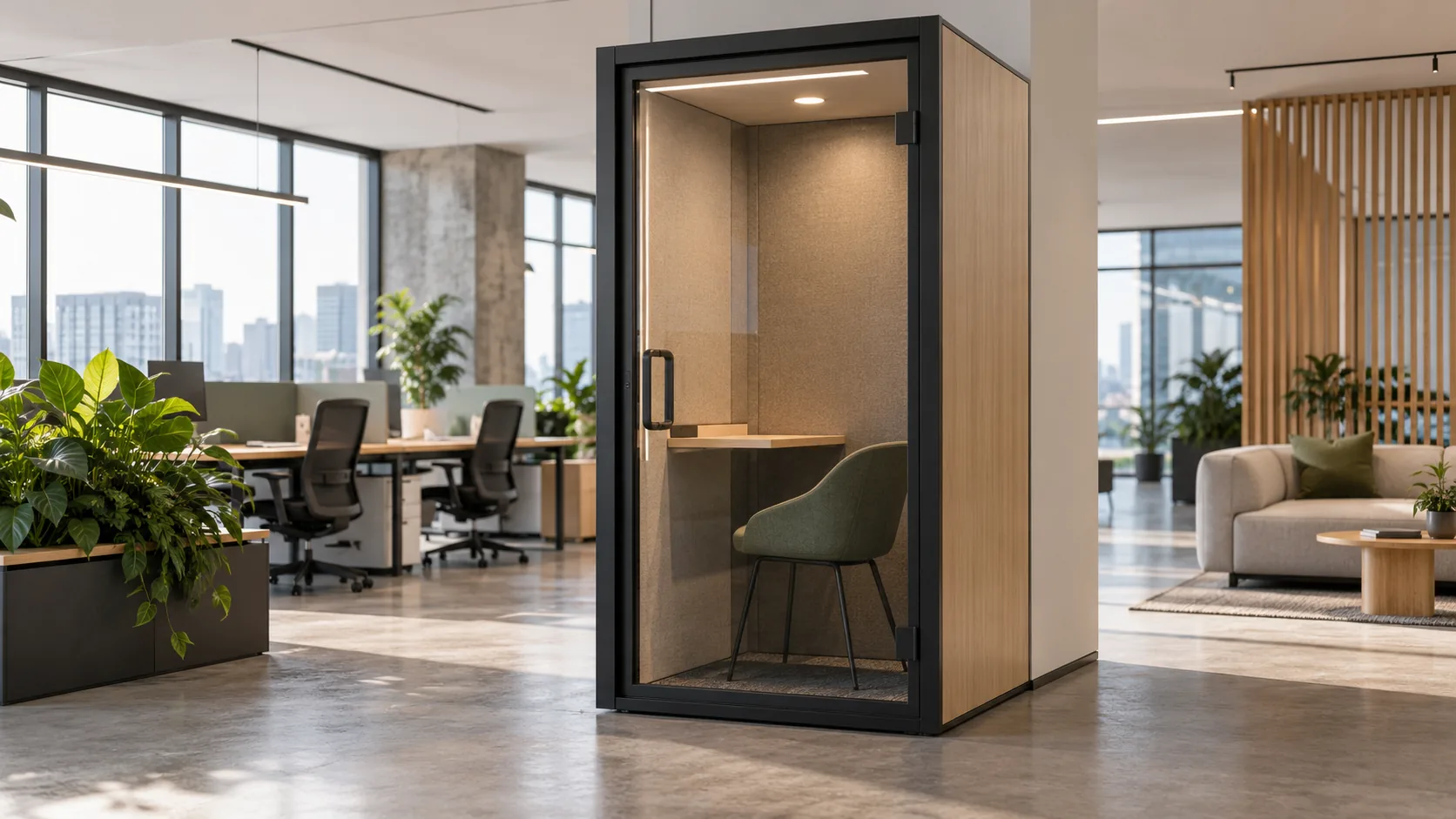
Yes, quiet rooms and pods belong in the furniture discussion when the team needs a place for calls, focused work or a short break. Establish the activity and location before deciding whether a pod, an enclosed room or another arrangement fits it.
Gensler’s March 27, 2026 discussion of employee hopes reports that 40% selected quiet, reflective spaces, 40% selected spaces for training and professional growth, and 34% selected collaborative workshop areas. These were choices among respondents’ top five hopes for the future physical workplace, rather than prescribed space allocations.
A pod’s appearance does not describe speech privacy, ventilation, services or access. Put those requirements into the project review alongside the furniture’s physical position. BIFMA’s X9.2 privacy-pod description concerns tests and evaluation of performance, durability and structural adequacy; the project still needs evidence for the particular claims being made.
Try the proposed setting in the activity it is intended to support. A place suitable for a short call may have different equipment and use requirements from a room used for training. Keep nearby workstations and the route to the setting in the same review.
How are residential looks, texture and natural colour used?
Residential styling brings familiar forms, softer upholstery and natural-looking colours into an office furniture palette. Use those visual choices where the furniture still meets the intended commercial use and maintenance requirements.
The older Unisource article and the more recent Commercial Office Interiors coverage both discuss residential influences. Their shared coverage shows that the idea predates the latest trend list. It can be a design choice for your project without being presented as a newly discovered workplace solution.
Compare colour and texture at the scale at which people will see them. A repeated pattern on a bank of storage units reads differently from the same sample held in your hand. Review the material board with the furniture form, lighting and adjacent finishes.
Put bold colour in a component you are prepared to replace or refinish when the design changes. Keep the replacement route practical: upholstery, a loose accessory and a fixed cabinet face each involve different work. For tactile decorative faces, tactile texture selection should consider both the visible pattern and the part people touch.
Which office furniture trends should you contain or skip?
Contain a trend when its useful life in your office is uncertain or when its form makes the intended activity harder. Give durable furniture and building work a more demanding review than an easily changed decorative layer.
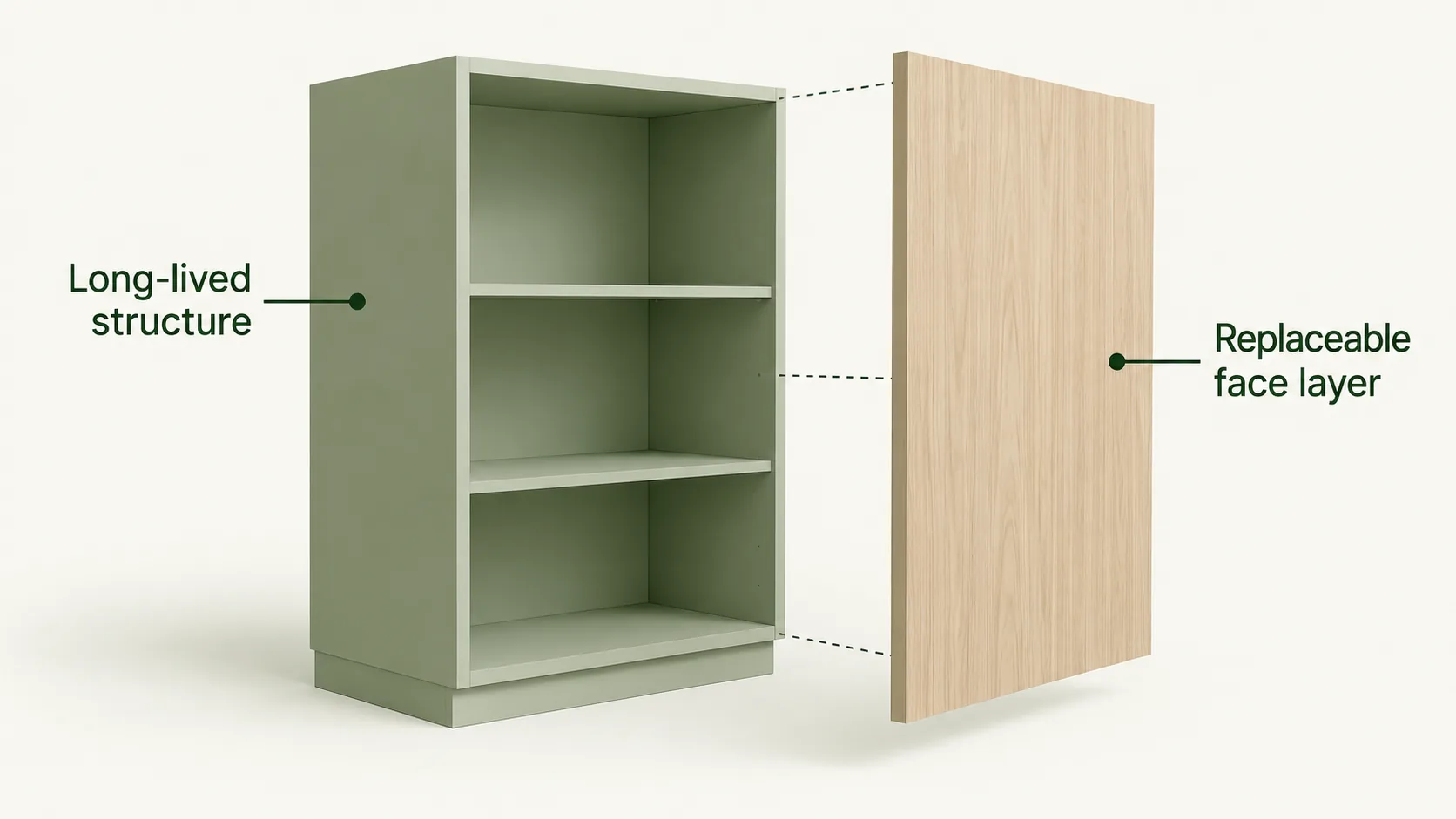
Commercial Office Interiors’ 2026 commentary argues for choices that last beyond short-lived styles and describes commercial furniture as potentially serving for 12 years or more. That is the publisher’s planning view, rather than a warranty or a predicted life for the items you buy. Its discussion also questions fully open layouts and exaggerated furniture forms.
| Proposed trend | Useful trial before commitment | Reason to limit its role |
|---|---|---|
| Rearrangeable meeting furniture | Staff change the setup with equipment connected | Pieces or cables make the change impractical |
| Enclosed call setting | Intended users try the actual task | The enclosure does not address the required privacy or access |
| Bold colour or unusual form | A full-size piece sits with the surrounding furniture | Appearance compromises use or creates difficult replacement work |
| New decorative storage face | The manufacturer makes a representative component | The face looks right but its edges, operation or maintenance do not suit the project |
The test should expose a decision, not confirm a purchase already made. An appealing piece can remain a small accent if it is unsuitable for repeated use across the office. Carry that choice into the value engineering review so a later substitution preserves the function you approved.
Which BIFMA standards match a desk, panel or storage claim?
Match the furniture category and the claim to the standard’s published scope. The published descriptions distinguish chairs, tables, panels, storage, pods and computer-use dimensions; a report for one category should not silently stand in for another.
The versions below are those listed in the reviewed official summaries. The published summaries explain that an “R” followed by a year indicates reaffirmation: a subcommittee judged the standard still relevant without revision.
| Furniture or claim | Reference listed by BIFMA | Published scope to match |
|---|---|---|
| General-purpose office chair | ANSI/BIFMA X5.1-2017(R2022) | General office and institutional seating, with the listed seating types |
| Desk or table, including height-adjustable products | ANSI/BIFMA X5.5-2021 | Desk and table products and the additional product types named in the description |
| Panel or screen system | ANSI/BIFMA X5.6-2016(R2021) | Panel systems, screens, supported systems and hang-on components |
| Freestanding, mobile or wall-mounted storage | ANSI/BIFMA X5.9-2019 | Storage-unit test methods |
| Privacy pod | ANSI/BIFMA X9.2 | Evaluation of pod performance, durability and structural adequacy |
| Computer-use furniture dimensions | BIFMA X10.1-2024 | Dimensional requirements applying the relevant measurable ergonomics principles |
Identify the actual product and configuration covered by the evidence. Review the complete standard and the report for the methods, conditions and results applying to the identified furniture. A millwork submittal can carry the component identification and supporting documents into the project review.
How do low-emission and sustainability claims differ?
Low-emission claims concern emissions evidence, while a sustainability standard addresses its own broader performance criteria. Ask which claim the document supports before comparing labels across furniture proposals.
BIFMA lists M7.1-2011(R2021) as a method for determining volatile organic compound emissions from office furniture systems, components and seating. X7.1-2011(R2021) specifies acceptance levels for low-emitting office furniture and seating. The e3-2024 Furniture Sustainability Standard establishes measurable definitions and performance criteria for sustainable furniture. These references perform different jobs.
A component’s formulation statement also has a defined scope. A formaldehyde-free film statement concerns the film, while the assembled furniture can contain substrates, adhesives and other components. Our healthy interior materials guide explains how to keep the product, evidence and claimed property aligned.
Compare documents for the actual furniture being considered. Record which configuration they cover and what the stated result means before accepting a general “sustainable” or “healthy materials” description. That review lets the project team retain a useful requirement when a proposed item changes.
Where can decorative film fit in office furniture?
Puremorfilm supplies decorative film for cabinet fronts, storage-unit faces and fixed desk side panels: a paint-free material with a silicone functional face, distinct from PVC, melamine, PP and PETG decorative faces. We mainly supply rolls for furniture manufacturers to PUR flat-laminate; faced panels are available on request.

Our inherently flame-retardant silicone surface can be supplied in higher grades up to UL 94 V-0 on request. In the manufacturer’s laboratory tests, coffee, red wine and soy sauce held at 25°C for 24 hours showed no obvious change after wiping. We use a No DOP, formaldehyde-free formulation and offer more than 100 patterns.
Film tests do not describe how a whole panel, fixture, wall or room performs. The film’s leather-like feel and elasticity make it unsuitable for floors, stovetop counters, shower floors or other walked-on areas.
- For movable furniture, settle the complete product, adjustment and evidence requirements first.
- For fixed storage, carry the chosen face into the component sample and drawing.
- For a decorative change, identify what will be replaced and how the adjoining pieces remain usable.
For free furniture decorative film samples for a proposed fixed face, contact us with the component, desired appearance and the manufacturer preparing the laminated sample.
Frequently Asked Questions
What Modern Office Design Trends Should You Be Considering?
Flexible furniture, integrated power, adjustable workstations and suitable quiet spaces are useful trends to assess. Each needs a project requirement and a practical trial. Residential colours and textures can support the appearance after the furniture’s function is settled.
What Should a Modern Office Look Like?
A modern office should look coherent while accommodating the work people do. Shared settings, enclosed spaces, organized storage and coordinated finishes can all contribute. An entirely open floor or a particular fashionable colour is optional.
How Do I Modernize My Office?
A review of current furniture, work patterns and unresolved problems is the starting point. Retain pieces that still suit the work, then test changes to meeting arrangements, power, seating and storage. Compare complete furniture evidence separately from decorative-face samples.
What are modern office furniture trends?
Modern office furniture trends include modular and flexible pieces, integrated power, adjustable furniture, quieter settings and residential styling. Their usefulness depends on the intended activity. Publication dates help distinguish persistent ideas from a publisher’s recent recommendations.
Should I still use older office furniture trend lists?
Yes, older lists can show which ideas have persisted and help frame a comparison. Keep their original dates visible and verify any technical claim against the applicable source. An old list is weaker evidence for what people are buying or choosing now.